INSIGHTS & WELLNESS

Managing styes: How can TCM help?

Have you experienced small red bumps forming around your eye before? Styes are very common in adults and can cause irritation and discomfort. While styes usually resolve on their own, TCM can help speed up recovery and lessen symptoms, especially for severe cases.

What is a stye?

A stye (or hordeolum) is a painful reddish lump on the edge of your eyelid. Similar to acne, a stye forms when a tiny oil gland near the eyelashes becomes blocked and gets infected. Styes are very common and occur equally in men and women. Additionally, styes may be more prevalent in adults than children.

There are two types of stye:

internal and external styes

External stye: More common than internal stye. It forms at the base of your eyelash, on the outer part of the eyelid, usually caused by an infection in your eyelash follicle. 

Internal stye: It forms on your inner eyelid and is caused by an infection in the oil-producing gland, in the inner eyelid, that helps keep your eyelid moist.

What are the symptoms of a stye?

Symptoms of a stye can include:

  • Painful reddish lump along the edge of the eyelid, near the eyelashes
  • Small pus spot at the centre of the lump
  • Swollen eyelid
  • Crustiness along the eyelid
  • Tearing in that eye
  • Light sensitivity
  • Soreness and itching
  • Feeling like there’s something in your eye

What causes styes?

Stye is caused by a type of bacteria called Staphylococcus aureus, which is part of our normal skin microbial flora, and does not usually cause harm. However when there is a blocked gland on your eyelid and coupled with low immunity, inflammation in your body, or an irritant in the localised area, infection is more likely to occur. 

woman putting on contact lenses

Some common causes are:

  • Touching or rubbing your eyes with unwashed hands
  • Inserting contact lenses without thoroughly disinfecting them or washing your hands
  • Leaving eye makeup on overnight
  • Using expired or contaminated eye makeup
  • Inflammation along the edge of the eyelid

Causes of Styes from TCM View


spleen graphicWhen triggered by exogenous Wind-Heat from the environment, the Heat in Spleen and Stomach travels to your eyelid through the Spleen and Stomach meridians, which then results in a blockage of Qi and blood at the eyelid. Blocked Qi and blood stasis, as well as the accumulated Heat can then contribute to tissue inflammation and pus formation.  

How Can TCM Help with Styes?

Chinese medicine treatments for styes focus on clearing excess Heat and speeding up the body’s natural healing process. The following are TCM treatment methods most commonly used for styes. 

Acupuncture
Performing acupuncture around the affected area and on selected acupoints can help to disperse the accumulated Heat from the eyelid.

chinese herbs

Herbal Medication
Chinese herbal medication can also be prescribed for styles; particularly herbs with a ‘Cooling’ nature and anti-inflammatory properties to reduce swelling, inflammation and Heat in the body.

Bloodletting
For patients who are comfortable with it, bloodletting at acupoints such as Er Jian (耳尖, EX-HN 6), and Da Zhui (大椎, GV 14) can also aid with dispelling heat.

As each stye sufferer’s body constitution and root causes may vary,  a proper consultation and assessment by a TCM physician is necessary to determine the most effective treatment methods.   

banner of pulse TCM treatments

DIY TCM Tips for Styes

Prevention is definitely better than the cure. As such, it is important for a person prone to styes to adopt a healthier lifestyle such as drinking enough water, limiting the consumption of spicy, oily, and fried food, as well as sleeping early so as to avoid Heat from accumulating.

Additionally these are some steps that can be taken to aid with the healing process.

Dos & Don’ts

The following are some precautions to take note of to prevent a stye from getting worse. 

Do: 

  • Use a warm compress
    1. Wet a clean towel with warm water.
    2. Wring the towel and place it over your eye for 5-10 minutes.
    3. Repeat this 3-4 times a day.
  • Clean your eyelid
    1. Wet a cotton swab with a mild soapy solution made from one part baby shampoo to one part water.
    2. Gently wipe away eye discharge.
    3. You can also use eyelid wipes available in most pharmacies.

Do not:

  • Squeeze or pop a stye.
  • Rub or touch your eyelid.
  • Wear makeup or contact lenses until the area has healed.

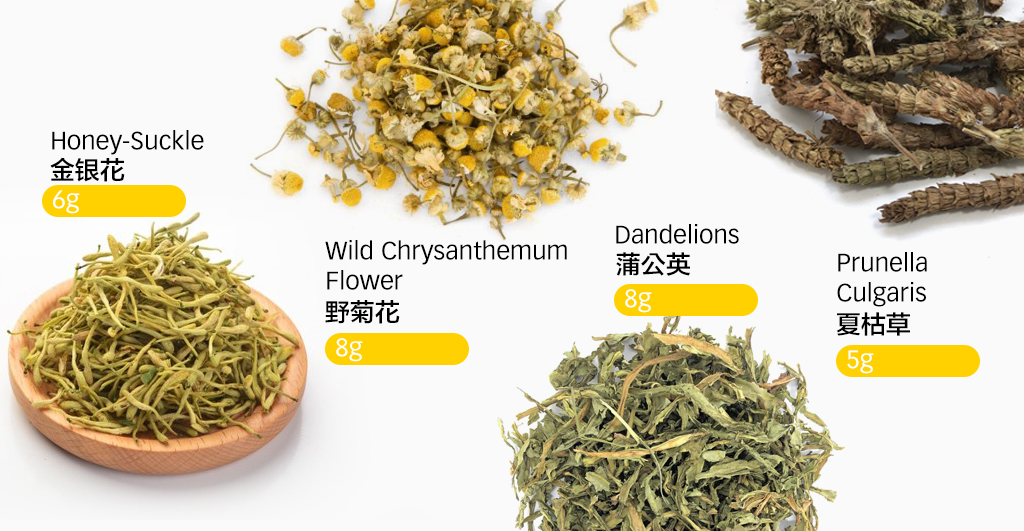
TCM Herbal Tea

A simple recipe to combat styes.

Ingredients:

Honeysuckle 金银花 6g
Wild chrysanthemum 野菊花 8g
Dandelions蒲公英 8g
Prunella vulgaris夏枯草 5g

Instructions:

  1. Place the ingredients required into a teapot.
  2. Add boiling water and let it steep for 5 minutes.
  3. Drink 3 times a day.

Frequently Asked Questions (FAQs)

A stye typically lasts anywhere from one to two weeks if left to heal on its own. It will usually swell for a few days before bursting and draining naturally. However, intervening early with a warm compress or seeking Traditional Chinese Medicine (TCM) treatments can significantly accelerate the healing process and provide faster relief.
Yes. While Western medicine often recommends waiting it out or using antibiotic ointments, TCM takes an active approach to speed up recovery. By using targeted acupuncture and cooling herbal medications, TCM helps clear the underlying "Heat" and inflammation, reduces localized swelling, and promotes faster blood circulation to the affected eyelid.
No, you should never pop or squeeze a stye. Squeezing a hordeolum can push the infected pus deeper into the eyelid tissue, causing the bacteria to spread and potentially leading to a much more severe eye infection. Instead, apply a warm compress to help the blocked gland open and drain naturally.
From a TCM perspective, styes are heavily linked to an accumulation of Heat in the Spleen and Stomach. To prevent worsening the inflammation, you should avoid "heaty" foods. Strictly limit or avoid:
  • Spicy foods (chili, pepper, curries)
  • Deep-fried and greasy foods
  • Refined sugars and heavy sweets
  • Alcohol and excessive caffeine
Opt for cooling, hydrating foods like cucumber, winter melon, and mung beans until the infection clears.
Styes themselves are not highly contagious, but the bacteria that cause them (Staphylococcus aureus) can be transferred. To prevent spreading the bacteria to your other eye or to another person, avoid sharing towels, pillowcases, or eye makeup, and always wash your hands thoroughly after touching the area around your face.
You should seek professional medical advice if:
  • The stye does not start to improve after 48 hours of home care.
  • The swelling is so severe that your eye is completely swollen shut.
  • You experience changes in your vision.
  • The stye bleeds or the redness spreads to your cheeks or other parts of your face.
  • You suffer from frequently recurring styes (a TCM physician can help rebalance your internal body constitution to prevent future breakouts).

References