

Rice is more than just a staple food; in Traditional Chinese Medicine (TCM), it is considered the primary source of Qi (vital energy). However, not all rice is created equal. Depending on your body constitution, the “healthiest” rice for your neighbor might not be the best for you.
With so many varieties lining the supermarket aisles in Singapore, from jasmine and basmati to wild and black rice, choosing the right grain can be overwhelming. Is white rice really that bad for you? Which type of rice is best for weight loss, blood sugar control, or improving digestion?
Polished vs. Unpolished Rice: Which is Healthier?

Polished rice, commonly known as white rice, has its hull, bran, and germ removed. This process extends shelf life because the bran oil left on the grain can turn rancid over time. However, polishing strips away the protein-rich aleurone and germ, heavily depleting the grain of essential nutrients. Refining a grain removes about 85% of its fat, 15% of protein, and up to 70% of B-vitamins.
Unpolished rice (brown rice) keeps the bran and germ intact. A grain is considered “wholegrain” when its three original parts—bran, germ, and endosperm—are present. Keeping these layers ensures essential vitamins, minerals, and dietary fibre remain available for your body to absorb. Fibre helps slow the breakdown of complex carbohydrates, preventing sharp spikes and crashes in blood sugar levels—making it highly beneficial for weight management.
Varieties of Unpolished Rice & Their Benefits
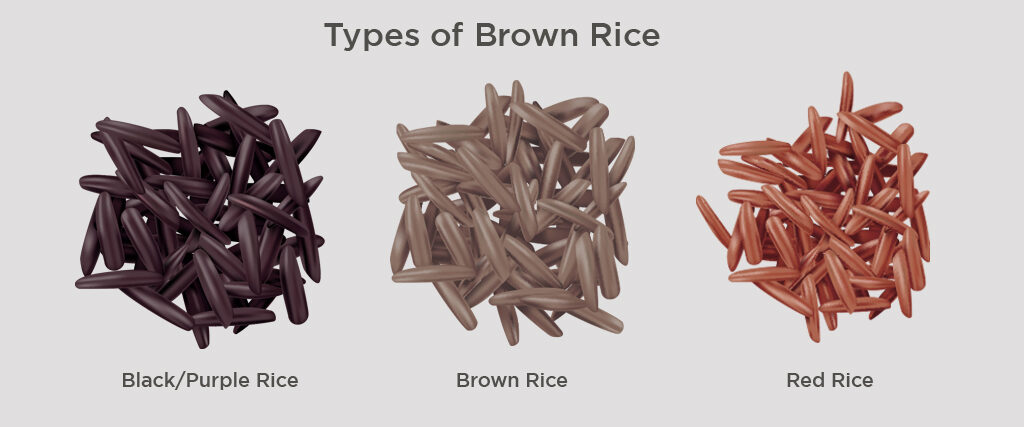
Did you know that black, purple, and red rice are actually varieties of brown (unpolished) rice?
Brown Rice
Brown rice acts as the umbrella category for unpolished rice. It has a signature nutty flavour and a chewy texture. Rich in B-vitamins, dietary fibre, and essential amino acids, it acts as a steady energy source. The colour pigments (anthocyanins) in the rice bran determine the specific colour of the grain.
a. Black / Purple Rice
Once known as “forbidden rice” in ancient China, black rice turns deep purple when cooked. It contains a unique combination of anthocyanins, powerful antioxidants that protect cells against damage and aging.
b. Red Rice
The earthy, slightly beany flavour of red rice comes from oxidised proanthocyanidins. These phenolic compounds give the grain its red hues and offer excellent cardiovascular and anti-inflammatory benefits.
c. Germinated (Sprouted) Rice
Germination is achieved by soaking brown rice in water to initiate sprouting. This process softens the bran layer, resulting in a softer texture that is easier to digest. It also breaks down phytates, allowing your body to absorb more nutrients.
Wild Rice
Wild rice isn’t technically rice, it is the harvested seed of a grain-producing grass native to North America. It boasts a higher protein content than regular rice and is packed with zinc, folate, and magnesium, offering an earthy, robust flavor.
Varieties of Polished Rice
Polished rice, commonly known as white rice, has its hull, bran, and germ removed. While this process strips away some nutrients and fibre, it significantly extends the grain’s shelf life and creates a softer, more easily digestible texture.
Indica Rice
Indica varieties are characteristically long-grain. After cooking, the grains remain distinct, fluffy, and non-sticky, making them ideal for curries, pilafs, and fried rice.
a. Basmati Rice (White)
Known for its distinct aromatic fragrance and elongated grains, Basmati is a staple in Indian and Middle Eastern cuisines. Even when polished, Basmati tends to have a slightly lower Glycemic Index (GI) compared to other white rice, causing a slower rise in blood sugar.
b. Jasmine Rice (White)
A beloved staple in Southeast Asia, Jasmine rice offers a subtle floral aroma and a slightly softer, more clinging texture than Basmati. It pairs perfectly with Asian stir-fries and rich sauces.
Japonica Rice
Japonica varieties are short or medium-grain. They contain a higher proportion of amylopectin (a type of starch), which causes the grains to become sticky and clump together when cooked.
a. Japanese (Sushi) Rice
This short-grain rice is famously used in Japanese cuisine. Its stickiness makes it easy to eat with chopsticks and perfect for molding into sushi rolls or onigiri.
b. Arborio Rice
An Italian short-grain rice, Arborio is the foundation of a traditional risotto. As it cooks, it releases starch, creating a rich, creamy texture while retaining a firm, chewy core (al dente).
Parboiled Rice
Parboiled (partially boiled) rice is soaked, steamed, and dried while still in its inedible husk, *before* being polished. This unique process forces nutrients from the bran directly into the starchy endosperm. As a result, parboiled white rice retains much more vitamins (like B-vitamins) than regular white rice and cooks up into firm, separate grains.
TCM Perspective: How Different Rice Affects Your Body
In Traditional Chinese Medicine, food is viewed not just for its macro-nutrients, but for its energetic properties and how it interacts with the body’s organ systems.
- White Rice (Polished): Neutral in nature and sweet in flavour. It directly nourishes the Spleen and Stomach Qi. Because it is so easy to digest, it is highly recommended for individuals recovering from illness or those with weak digestive systems.
- Brown/Red Rice (Unpolished): Slightly warm. While highly nutritious, it is harder to break down. Individuals with severe Spleen Qi Deficiency (characterised by bloating, fatigue, and loose stools) should consume it in moderation or opt for germinated rice instead.
- Black Rice: Highly valued in TCM for its ability to nourish the Kidney and Liver Yin, and build Blood. It is an excellent grain for promoting longevity, improving hair health, and supporting women’s health and fertility.
TCM Perspective: Which Rice Should You Choose?
In Traditional Chinese Medicine, food is evaluated by its energetic properties and how it interacts with the body’s organ systems.
Polished Rice (Indica & Japonica)
Properties: Neutral in nature, sweet in flavour.
Benefits: Polished white rice directly tonifies the Spleen and Stomach Qi. Because it lacks the fibrous bran, it requires very little energy to break down. It is highly recommended for individuals with weak digestive systems, chronic fatigue, or those recovering from illness. Japonica (sticky) varieties are slightly warmer and more tonifying, but should be eaten in moderation if you suffer from phlegm or dampness.
Unpolished Rice (Brown, Red, Black, Wild)
Properties: Slightly warm.
Benefits: Highly nutritious and excellent for long-term vitality. Black rice, in particular, is prized for nourishing the Kidney and Liver Yin, making it beneficial for hair health and fertility. However, unpolished grains are harder to digest. Individuals with Spleen Qi Deficiency (characterised by bloating, fatigue, and loose stools) should consume them in moderation or opt for germinated (sprouted) rice, which is gentler on the gut.