INSIGHTS & WELLNESS

Beyond Pills: Chinese Medicine Tips for Migraine Relief

Migraine, a recurring headache that occurs usually on one side of the head, is usually accompanied with blurred vision, nausea, as well as sensitivity to light and sound. This condition can last up to a couple of days and significantly affects the quality of life. The pain may be triggered by many factors including food, environment, stress, and for some women, it may be more frequent during menstruation.

Migraine, a recurring headache that occurs usually on one side of the head, is usually accompanied with blurred vision, nausea, as well as sensitivity to light and sound. This condition can last up to a couple of days and significantly affects the quality of life. The pain may be triggered by many factors including food, environment, stress, and for some women, it may be more frequent during menstruation.

The TCM’s Perspective

In TCM perspective, migraine is mainly associated with pathogenic wind (风), phlegm and fire. The common diagnostic patterns are poor blood circulation, phlegm accumulation, pathogenic wind and cold, liver fire, as well as ‘qi’ and blood deficiency. The use of herbal medicine and acupuncture can effectively treat a migraine using the TCM treatment principle to eliminate the patterns of disharmony.

Acupuncture is a well sought out treatment modality especially in pain management due to its analgesic effect. In a migraine, acupuncture is shown to affect the pain mechanism via vasodilatory effect.

Patients who suffer from a migraine are encouraged to:

  1. Avoid food like cheese, fatty food and alcohol that encourage damp accumulation in the body
  2. Avoid spicy and ‘heaty’ food
  3. Keep the body warm to prevent pathogenic wind from entering the body
  4. Exercise regularly for better blood circulation and psychological well-being
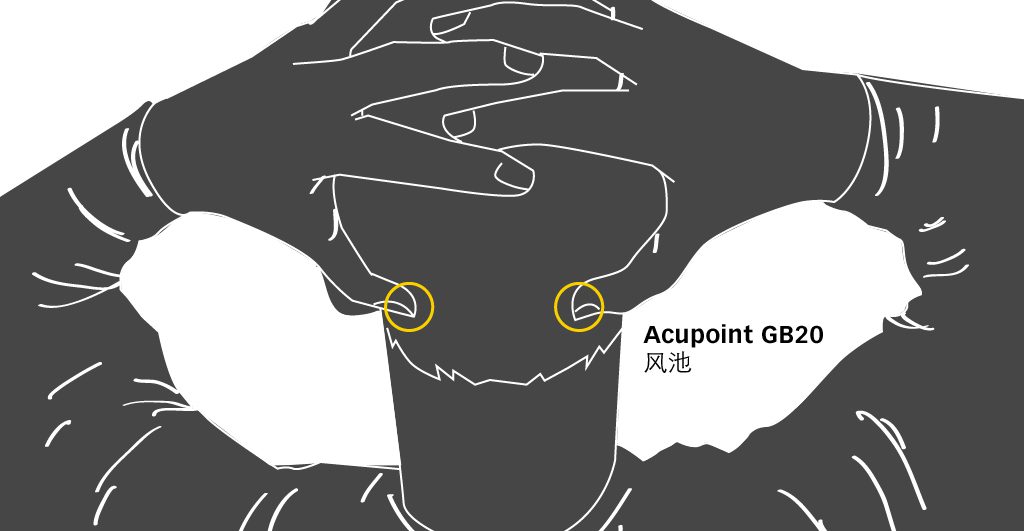
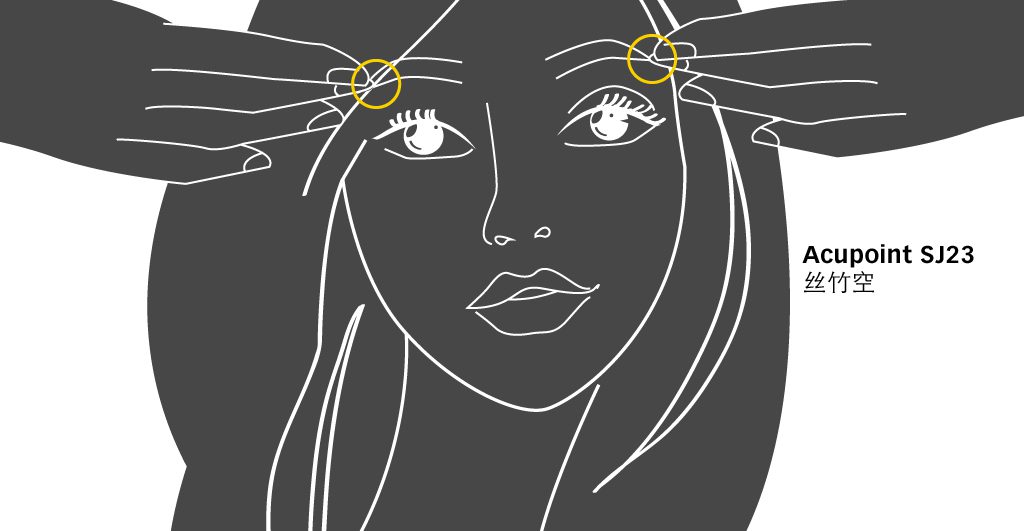
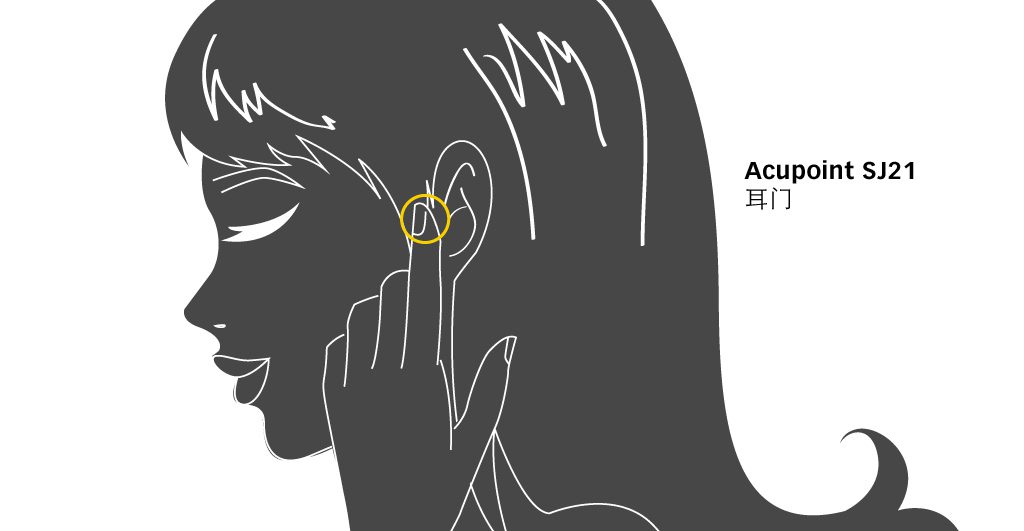
  5. Try pressing on the below acupoints

GD20 Acupressure point for MigraineGB20 风池, at the depression point on the back of head, to ease generic migraine pain

PULSE TCM Clinic Tips
SH23 丝竹空, located at the end of eyebrows, to help with eye-related migraine pain

PULSE TCM Clinic Migraine Tips
Acupoint SJ21 耳门 if your ears are affected during migraine pain

If you are suffering from chronic migraines or headaches and would like to manage it naturally through TCM, we can help. Book your appointment with a PULSE TCM physician today. 

Frequently Asked Questions (FAQs)

While some patients experience immediate relief from acute pain after a single acupuncture session, chronic migraine management typically requires a course of 6 to 8 sessions. TCM focuses on rebalancing the body’s "Qi" and blood circulation; therefore, frequency and intensity of attacks usually decrease progressively over a few weeks as the underlying "pathogenic wind" or "liver fire" is cleared.
Yes. In TCM, menstrual-related migraines are often linked to "Qi" and blood deficiency or stagnation. Acupuncture and herbal prescriptions help regulate the endocrine system and improve blood flow to the pelvic and cranial regions. For the best results, treatments are often timed 3–5 days before the menstrual cycle begins to prevent the onset of hormonal headaches.
TCM can effectively complement conventional treatments. Many patients use acupuncture to reduce their reliance on painkillers (NSAIDS) and avoid "medication overuse headaches." However, it is essential to inform your TCM physician of any blood-thinning medications or specific triptans you are taking so they can tailor your herbal prescriptions and treatment plan safely.
Not all migraines are treated the same. A "heat-type" migraine often involves throbbing pain, a red face, and irritability (Liver Fire), requiring cooling herbs and specific drainage points. A "cold-type" migraine may feel like a tight band or a heavy sensation, often triggered by air-conditioning or cold weather, and is treated using warming therapies like Moxibustion to expel "pathogenic cold."
Yes, acupressure is a powerful self-care tool. Beyond the points on the head (like GB20), you can massage the LI4 (Hegu) point—located in the webbing between your thumb and index finger. This is a "command point" for the face and head in TCM and is widely used to disperse pain and "wind" during the early stages of a migraine.
The fatigue and "brain fog" felt after a migraine attack are often signs of "Qi" depletion. TCM focuses on tonifying the Spleen and Heart systems to restore energy levels and mental clarity. Incorporating specific herbal soups and gentle acupuncture can significantly shorten the recovery time of the postdrome phase.

References

  • National Center for Complementary and Integrative Health. (2019, April). Traditional Chinese medicine: What you need to know. NCCIH. https://www.nccih.nih.gov/health/traditional-chinese-medicine-what-you-need-to-know/
  • World Health Organization: WHO. (2019, November 25). Traditional, complementary and integrative medicine. https://www.who.int/health-topics/traditional-complementary-and-integrative-medicine
  • Ministry of Health Singapore (MOH). (n.d.). TCM Practitioners. [ Ministry of Health Singapore - moh.gov.sg ]
  • Zhang, X., Chen, Q., Liu, Y., Li, J., Nie, L., Miao, Q., Fu, F., Lyu, T., Tan, Z., Kong, Y., Li, B., & Liu, L. (2026). Acupuncture for Migraine Without Aura and Connection-Based Efficacy Prediction: A Randomized Clinical Trial. JAMA network open, 9(1), e2555454. https://doi.org/10.1001/jamanetworkopen.2025.55454
  • Yang, C., Wu, M., Luo, Q., Xu, G., Huang, L., Tian, H., Sun, M., & Liang, F. (2024). Acupuncture for migraine: A systematic review and meta-regression of randomized controlled trials. Complementary therapies in medicine, 86, 103076. https://doi.org/10.1016/j.ctim.2024.103076
  • Liu, A. R., Zhu, Q., Li, J., Cao, Y., Pei, T., & Shi, L. (2025). Efficacy of Acupuncture and Pharmacotherapy for Migraine Prophylaxis: A Systematic Review and Meta-Analysis. Journal of pain research, 18, 2521–2540. https://doi.org/10.2147/JPR.S519846