Persistent acne is more than just a surface, level skin issue; it is often a reflection of internal imbalances within the body’s organ systems. While topical treatments offer temporary relief, Traditional Chinese Medicine (TCM) focuses on identifying the root cause, whether it be hormonal shifts, digestive heat, or emotional stress to provide long-lasting clarity for your skin.
Brief introduction of acne
Acne is a very common issue that everyone faces at least once in their lifetime.
Acne is an inflammatory condition when the pores of our skin become clogged. This leads to formation of whiteheads, blackheads, papules, pustules, nodules and cystic lesions.
The main causes of pore blockage are excess oil production, dead skin cells, bacteria, and inflammation. Other causes identified can be due to hormonal changes, certain medications, diet and stress.
In this article, we will provide more insight into the TCM perspective on the causes of acne, its identification methods, and various treatment solutions. For further information on the impact of diet on acne, you can read our comprehensive article exploring the relationship between certain foods and acne!
Top 3 Internal Imbalances Causing Acne (According to TCM)
Cause 1: Lung Meridian Heat (肺经郁热证)

In TCM, the Lungs govern the health of your skin and hair. When excess heat gets trapped in the lungs (often due to environmental factors, stress, or diet), it depletes the skin’s moisture and triggers breakouts.
- Acne Type: Red papules or pustules that may itch or hurt. Skin often feels dry and inflamed.
- Face Mapping Location: Primarily the forehead and lower cheeks.
- Accompanying Symptoms: Constipation, frequent thirst, and a dry throat.
- TCM Solution: Herbal formulations and treatments focused on clearing heat, detoxifying, and moisturizing the lungs.
For this kind of acne, a recommended food remedy is to drink chrysanthemum tea or honeysuckle tea to clear away heat in the lungs. Alternatively, our cystic acne supplement would help as it contains herbs that can clear heat and toxins. The supplement is also targeted to help reduce redness and inflammation of the skin.
Cause 2: Dampness & Phlegm Stagnation (湿热痰瘀证)

A diet heavy in greasy, spicy, or sweet foods can impair the Spleen’s digestive function, leading to an accumulation of “dampness.” Over time, this dampness transforms into phlegm and heat, which rises to the face and clogs the pores.
- Acne Type: Deep, cystic, or nodular acne that takes a long time to heal and leaves scars. Skin tends to be very oily.
- Face Mapping Location: Often concentrated around the mouth, chin, and jawline.
- Accompanying Symptoms: Bloating, poor appetite, sticky stools, and a feeling of heaviness in the body.
- TCM Solution: Strengthening the spleen, resolving dampness, and promoting better digestion.
What causes Dampness?
Dampness can be viewed as “heavy” water in our body. It encapsulates the characteristics of heaviness, slowing the processes in our body. Dampness is generally a result of:
- A diet high in spicy, oily and sweet food
- Humid environment
- Frequent drinking and smoking
What causes Phlegm?
Phlegm in the body is similar to the phlegm that occurs during cough and flu. It resembles viscous liquid such as honey, and is characterised by being sticky, heavy, slow, and has a high tendency to clump together. Phlegm is normally a result of:
- A diet high in oily, sweet, and cold food
- Humid environment
- Lack of exercise
- Imbalance in the Spleen
Characteristics of phlegm are highly similar to dampness, therefore when there are both dampness and phlegm in the body, it will easily cause stagnation of Qi and blood flow. This stagnation impedes on the provision of nutrients to the skin, slowing down its metabolism and clogs the pores. This, coupled with heat in the body leads to further aggravation in the skin, resulting in acne.
There are some food remedies that could help with this. For acne caused by heat-dampness, mung bean soup coupled with Chinese barley is recommended to help clear heat and remove dampness in the body.
For acne caused by phlegm-dampness, it would be good to drink dried orange peel (陈皮) and poria (茯苓) tea.
However, as this cause of acne is more complex or have other underlying causes, it would be recommended for individuals to seek a consultation with our physicians for more professional advice and treatment.
Cause 3: Innate Heat & Yin Deficiency (阴虚内热证)

Chronic stress, overworking, and lack of sleep can deplete the body’s “Yin” (cooling, moisturizing fluids), leading to “Innate Heat”. This is a common cause of persistent adult and hormonal acne.
- Acne Type: Stubborn breakouts that may flare up during periods of stress or around menstruation. They are often less red but can be tender.
- Face Mapping Location: Chin, jawline, and neck.
- Accompanying Symptoms: Night sweats, dry mouth, insomnia, and irregular menstruation.
- TCM Solution: Nourishing the Yin, cooling the blood, and regulating hormones naturally.
As with most of the other causes, innate heat will exhaust our body’s Yin, causing a lack of moisture in our body and skin.
This makes the skin more sensitive and appears drier as compared to other forms of acne.
In addition, the innate heat can also trigger heat in other organ meridians such as Liver, Lungs, and Heart. With the overall body being overheated, pores of the skin will be enlarged and inflamed.
This occurs more commonly in adults aged 25 and above, and is normally termed as adult acne.
This acne normally occurs around the chin and jawline area, however, it can also occur on the neck, back, shoulder, and chest area.
For this acne, a good food remedy is winter melon winter pear soup(冬瓜雪梨汤) to help in nourishing Yin and clearing heat. Alternatively, our adult acne supplement would help as it contains herbs that can nourish the Yin, quell the heat, and regulates hormones naturally. This minimises stress-induced breakouts, clears stubborn acne around chin & jawline and controls sebum production.
TCM Face Mapping: What Is Your Acne Telling You?
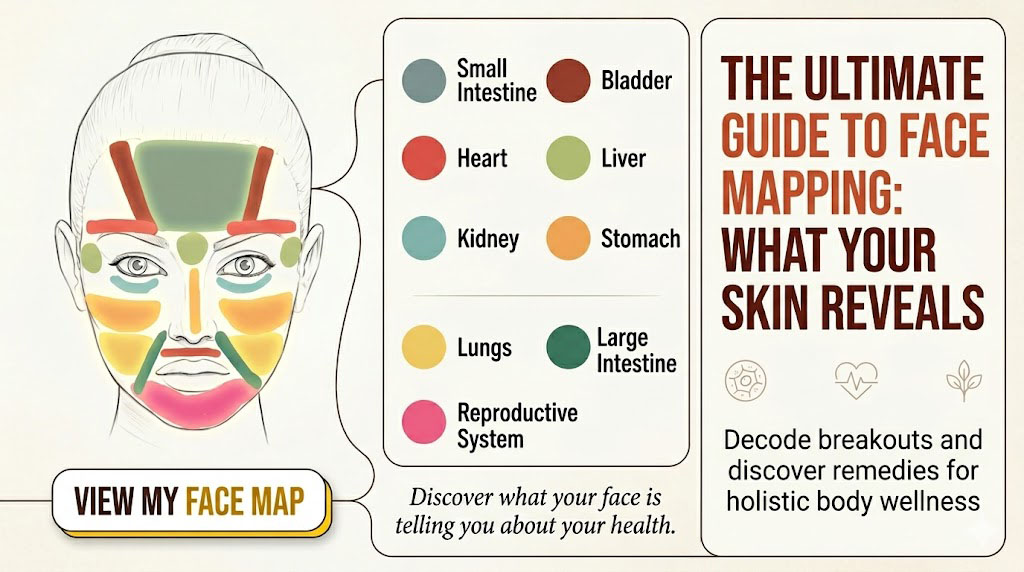
TCM Face Mapping is an ancient diagnostic tool that connects specific areas of the face to different internal organs. By observing where your breakouts consistently occur, a TCM physician can pinpoint which meridian system needs attention. For a deeper dive into what your breakout locations mean, explore our comprehensive guide on TCM face mapping for acne.
Managing your Acne with PULSE TCM
From a TCM point of view, acne can be due to a variety of internal disharmony. Ultimately, your face mirrors your internal health. When problems manifest on the skin, it is often signalling a deeper imbalance going on somewhere in the body. Each type of imbalance is reflected in its characteristic symptoms and signs, i.e. shape and appearance of pimples, body areas in which pimples develop.
If your acne is more complex, a more personalised treatment may be needed to effectively tackle the root causes of your acne. Learn more about PULSE TCM Acne Management programme.