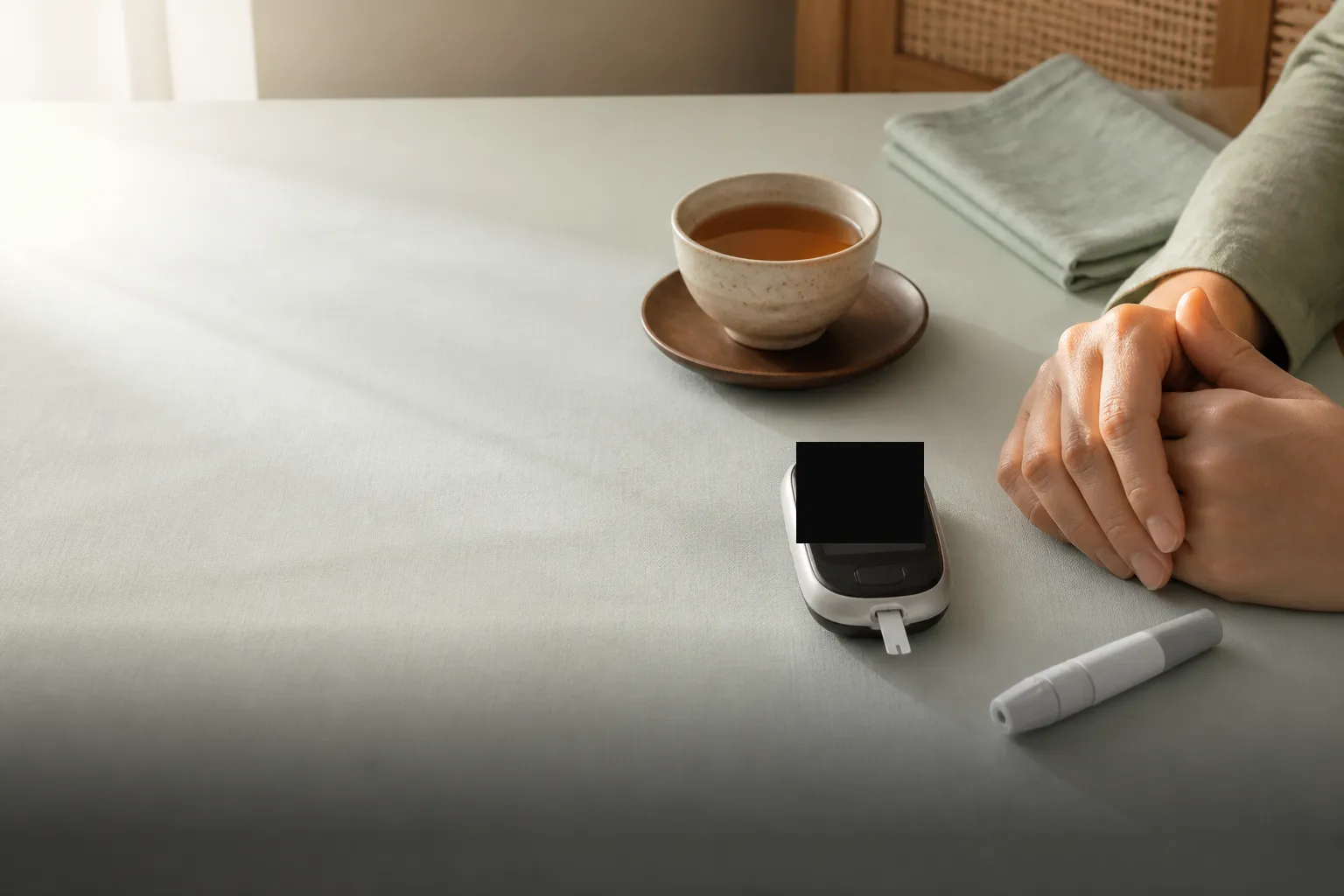
Hands resting beside a blank glucose meter and ceramic tea cup on a sage-mist table

Insights · General Health

Can happiness help to manage diabetes?

Mood and stress sit on the same metabolic stage as insulin. Calmer load and steadier self-care can ease glucose spikes beside your GP plan, not instead of it.

In brief

Happiness alone does not treat diabetes. Stress hormones such as adrenaline and cortisol can raise blood glucose, and low mood can weaken exercise and meal habits that keep sugar steadier. Evidence links better subjective well-being, especially life satisfaction, with better health status. Use that support beside monitoring, medicines, and your GP or endocrinology plan.

01 · Context

Glucose care is the baseline

Type 2 diabetes is a chronic metabolic picture: insulin resistance or not enough insulin, so blood glucose stays high and can damage heart, vessels, eyes, kidneys, and nerves over time.

Mood and stress do not replace monitoring, insulin, or oral medicines. They sit beside that plan. For the TCM Xiao-Ke map and clinic care, see Diabetes from a TCM perspective.


02 · Behaviour path

When low mood weakens self-care

Depression and chronic low mood often cut the habits that keep glucose steadier.

Mood and blood sugar share a behaviour path as well as a hormone path. When drive falls, the day-to-day work of diabetes care is the first thing to slip.

Common shifts

Habits that can raise glucose

These are educational clusters, not a diagnosis of depression.

1. Less movement

Exercise drops when energy and drive fall. Muscles take up less glucose, and insulin sensitivity often worsens.

2. Stress-eating

Comfort food and irregular meals can push carbohydrate load up and make day-to-day glucose harder to steady.

3. Skipped monitoring

When mood is low, finger-pricks, logs, and medicine timing are easier to miss, so spikes go unseen longer.

03 · Hormone path

How stress hormones raise blood glucose

Under stress, the body releases adrenaline and cortisol. Both can lift glucose even when you have not eaten.

Adrenaline and cortisol on blood glucose
Hormone What it does Glucose effect
Adrenaline Signals the liver in a fight-or-flight surge. Liver releases more glucose into the blood.
Cortisol Can inhibit insulin signalling to cells. Cells take up less sugar; circulating glucose rises.

Insulin normally helps glucose enter cells for energy and keeps circulating levels steadier. When that signal is disrupted, blood glucose rises. For presses, teas, and stress pictures in TCM language, see Stress management.

04 · Evidence

Life satisfaction, not mood alone

A 2017 systematic review and meta-analysis in the European Journal of Public Health found health status positively associated with subjective well-being.

The link was stronger for life satisfaction than for happiness alone. Feeling content with life may therefore support better management of health issues, including diabetes.

When people feel well, the body tends to produce fewer stress hormones. That can limit extra glucose release into the bloodstream and help prevent spikes. Everyday contentment and workable routines are one support for steadier health, beside monitoring and medical care.

05 · What may help

Practical supports beside glucose care

Mood care does not replace insulin, oral medicines, or monitoring. These habits support the hormone load and self-care that sit with daily diabetes management.

Supports that may sit with diabetes care
Focus Why it matters Try this week
Ease chronic stress load Adrenaline and cortisol can raise liver glucose and blunt insulin. Protect a fixed wind-down before sleep; keep one short daily reset you can repeat.
Keep movement on the calendar Less exercise worsens insulin sensitivity and leaves more sugar circulating. A 10–20 minute walk after one main meal most days.
Steady meals, fewer stress snacks Stress-eating and skipped meals both unsettle day-to-day glucose. One regular mealtime you will not bargain away; plan a non-food reset for stress peaks.
Keep monitoring visible Low mood makes logs and medicine timing easier to miss. Pair finger-pricks or CGM checks with an existing habit (tea, toothbrush, breakfast).
Build life-satisfaction routines Evidence links life satisfaction more strongly with health status than happiness alone. Two small weekly commitments you can keep (sleep window, walk with a friend, clinic follow-up).

When stress, thin sleep, or metabolic load keep stacking, book a consult. Patterned TCM care can sit beside your GP plan; start with the Xiao-Ke Insight or the Sleep & Stress programme.

Next step

When stress and glucose keep stacking

If mood load, thin sleep, or metabolic signs keep returning, bring your glucose results to a consult. We will decide what belongs beside your GP plan.

Dr Sim Beng Joo

Clinically reviewed

Reviewed by Sim Beng Joo

Advisor (Science & Strategy) / Consultant Physician · TCMPB T1303003A

MOH-licensed TCM physician and biomedical scientist, with clinical work in digestion, pain, sleep or fatigue, and constitution patterns that show as damp, phlegm, or metabolic load.

View full profile

Educational information on emotions, stress hormones, and blood glucose. Not a substitute for personalised consultation, blood glucose monitoring, endocrinology, insulin or oral diabetes medicine, or urgent care. Feeling happier does not replace prescribed diabetes care. Speak with your physician and GP before changing medicines, diet, or activity. Seek urgent care for confusion, fainting, chest pain, or severe breathlessness.

FAQs

Questions, answered

Common questions before you change mood habits, stress load, or diabetes routines.

Can happiness help manage diabetes?

Happiness alone does not treat diabetes. Stress hormones such as adrenaline and cortisol can raise blood glucose, and low mood can weaken exercise and meal habits that keep sugar steadier. Evidence links better subjective well-being, especially life satisfaction, with better health status. Use that support beside monitoring, medicines, and your GP or endocrinology plan.

How do emotions affect blood sugar?

Low mood can make self-care harder. People may move less, lean on stress-eating, and skip monitoring more often. Those habits can raise blood glucose over time.

How does stress raise blood glucose?

Stress releases adrenaline and cortisol. Adrenaline prompts the liver to release more glucose. Cortisol can inhibit insulin, so cells take up less sugar and levels in the blood rise.

What is the difference between happiness and life satisfaction for health?

A 2017 systematic review and meta-analysis found health status was linked with subjective well-being, and the association was stronger for life satisfaction than for happiness alone.

Does depression make diabetes harder to manage?

Depression can reduce the drive to exercise and keep meal routines, and may increase stress-eating. Those behaviour shifts can raise glucose and make day-to-day diabetes management harder.

Should I change diabetes medicine based on mood alone?

No. Mood and stress care sit beside your diabetes plan. Do not change insulin, oral medicines, or monitoring schedules without your GP or endocrinology team. Seek urgent care for confusion, fainting, chest pain, or severe breathlessness.

References

Selected sources

  1. Kayonda Hubert Ngamaba, Maria Panagioti, Christopher J. Armitage. How strongly related are health status and subjective well-being? Systematic review and meta-analysis. European Journal of Public Health, Volume 27, Issue 5, October 2017, Pages 879–885. https://doi.org/10.1093/eurpub/ckx081
  2. National Center for Complementary and Integrative Health. Traditional Chinese medicine: What you need to know. 2019. https://www.nccih.nih.gov/health/traditional-chinese-medicine-what-you-need-to-know/
  3. Ministry of Health Singapore. TCM practitioners (Healthcare Professional Portal). https://hpp.moh.gov.sg/tcm-practitioners/
  4. World Health Organization. Traditional, complementary and integrative medicine. https://www.who.int/health-topics/traditional-complementary-and-integrative-medicine
  5. Original article author: Lead Clinical Psychologist Dr Jaswyn Chin.

Next step

Ready to steady mood load beside glucose care?

Bring your latest glucose results and medication list. We will name what sits with stress, sleep, and metabolic load, then decide what belongs in your plan beside GP care.

Hours
Most clinics daily 11:00 AM – 8:00 PM
Care
Physician-led consultation