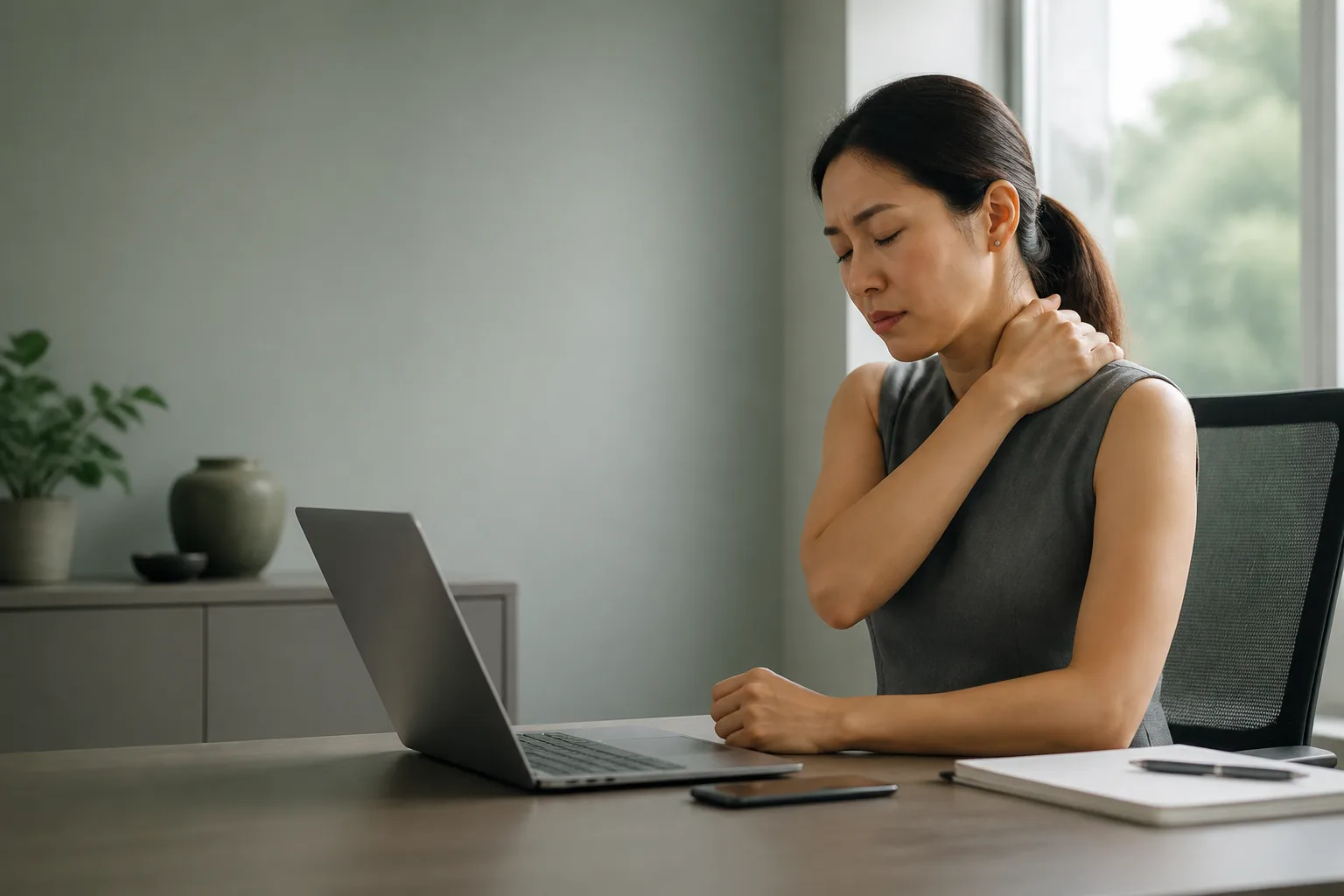
Person seated in calm repose after desk tension, illustrating a quiet stress reset

Insights · Stress

Stress management

Eustress vs distress, five organ-emotion pairs, and a home toolkit of presses, teas, and moves. For gut, sleep, desk, or cycle pictures, go deeper next.

In brief

Eustress is useful stress that can motivate. Distress is load beyond what you can handle. In TCM, the five zang pair with joy, anger, contemplation, grief, and fear; sudden or chronic stress can disorder qi and show as headache, neck tension, mood change, thin sleep, or gut signs. Start with matching presses, kitchen teas, and three release moves. When gut, 1–3am waking, desk tension, or cycle change dominates, see Managing Stress the TCM Way. Book Sleep & Stress when thin sleep stacks with burnout.

01 · Causes

The causes of stress

Stress often rises when life changes abruptly, when a situation feels out of control, when worry piles up, when responsibilities overwhelm, or when the future stays uncertain.

Hectic days make some stress inevitable. Eustress is useful stress. It can produce a positive feeling of excitement that keeps you motivated. Distress is load beyond what you can handle; it leaves you stressed out.

A 2019 Cigna 360 Well-Being Survey found 92 per cent of working respondents in Singapore reported work-related stress. Naming external and internal drivers helps you decide what to reduce and what to support.

Common external and internal stressors
Type Examples
External Long hours working or studying; tight deadlines; major life changes such as bereavement or relationship change; financial worries
Internal Pessimism; negative self-talk; rigid thinking or lack of flexibility; unrealistic expectations or perfectionism

Stressors can unsettle mental and physical health. Where possible, reduce exposure to the sources you can change.
02 · TCM view

Stress from a TCM point of view

「百病生于气也,怒则气上,悲则气消,恐则气下,思则气结。」

黄帝内经

In TCM education, each of the five zang pairs with an emotion. When an organ is imbalanced, its paired emotion may appear more often.

Sudden or chronic stress can harm the zangfu. Anger drives qi upward; grief dissipates qi; fear collapses qi; contemplation stagnates qi. Disordered qi can compromise metabolism, allow pathogenic accumulation, and stack as fatigue, poor posture, and aches.

Five zang, paired emotions, and stress clues
Zang Emotion When stressed may show as
Heart 心 Joy 喜 Restlessness, palpitations, or joy that tips into agitation
Liver 肝 Anger 怒 Irritability, sighing, rib tightness, or heat rising to the head
Spleen 脾 Contemplation 思 Worry loops, poor appetite, bloating, or heavy limbs
Lung 肺 Grief 悲 Heaviness in the chest, low spirits, or easy tearfulness
Kidney 肾 Fear 恐 Startling easily, low back ache, or depleted drive

03 · Body effects

How stress can affect the body

Stress load often clusters into physical, emotional, and behavioural signs. Match the cluster to presses, teas, or moves below.

Stress sign clusters and what may help
Cluster Common signs May help
PhysicalHead, neck, and back load. Headache; dizziness; digital eye strain; stiff neck and shoulders; lower back pain Head and neck presses; headache or eye tea; neck stretch
EmotionalMood and spirit unsettled. Irritable; depressed; moody; anxiety Bai Hui and Nei Guan; Mind Relaxing Tea; 4-7-8 breathing
BehaviouralSleep and gut change. Insomnia; poor appetite; indigestion; stomach bloatedness Zhong Wan and Zu San Li; anti-bloating tea; child pose

04 · What may help

Presses, teas, and moves to de-stress

Acupressure stimulates points without needles. Locate the point, press with the thumb or fingers to a dull soreness, then massage in small circles for two to three minutes. Start with the press that matches the cluster you feel most.

Primary presses

Four first presses for common stress clusters

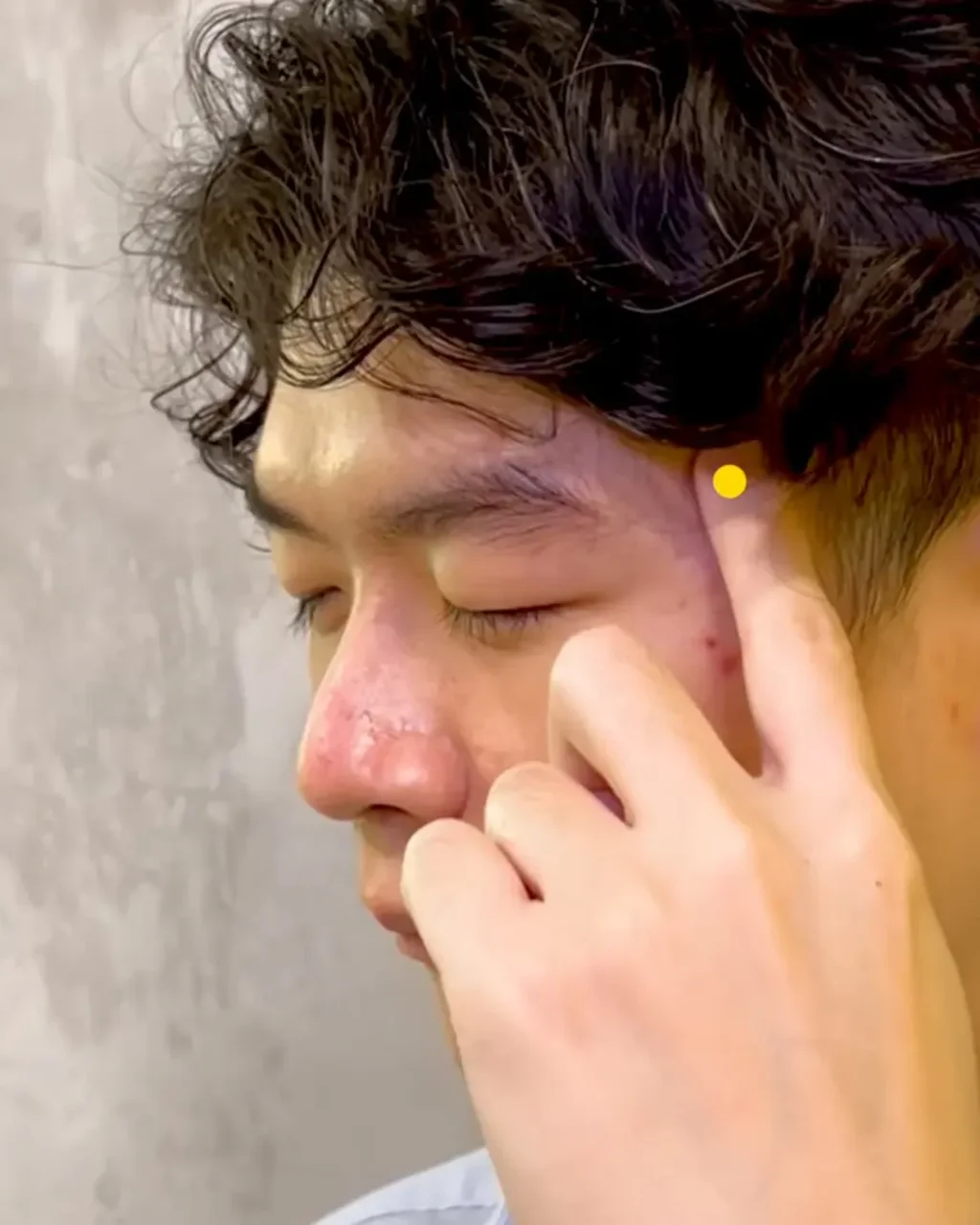
Fingers locating Tai Yang EX-HN5 at the temple

Head and eyes

Tai Yang (太阳 · EX-HN5)

About one cun posterior to the midpoint between the end of the eyebrow and the outer canthus. Circle when temple tightness, headache, or eye fatigue builds with stress.

Press Tai Yang
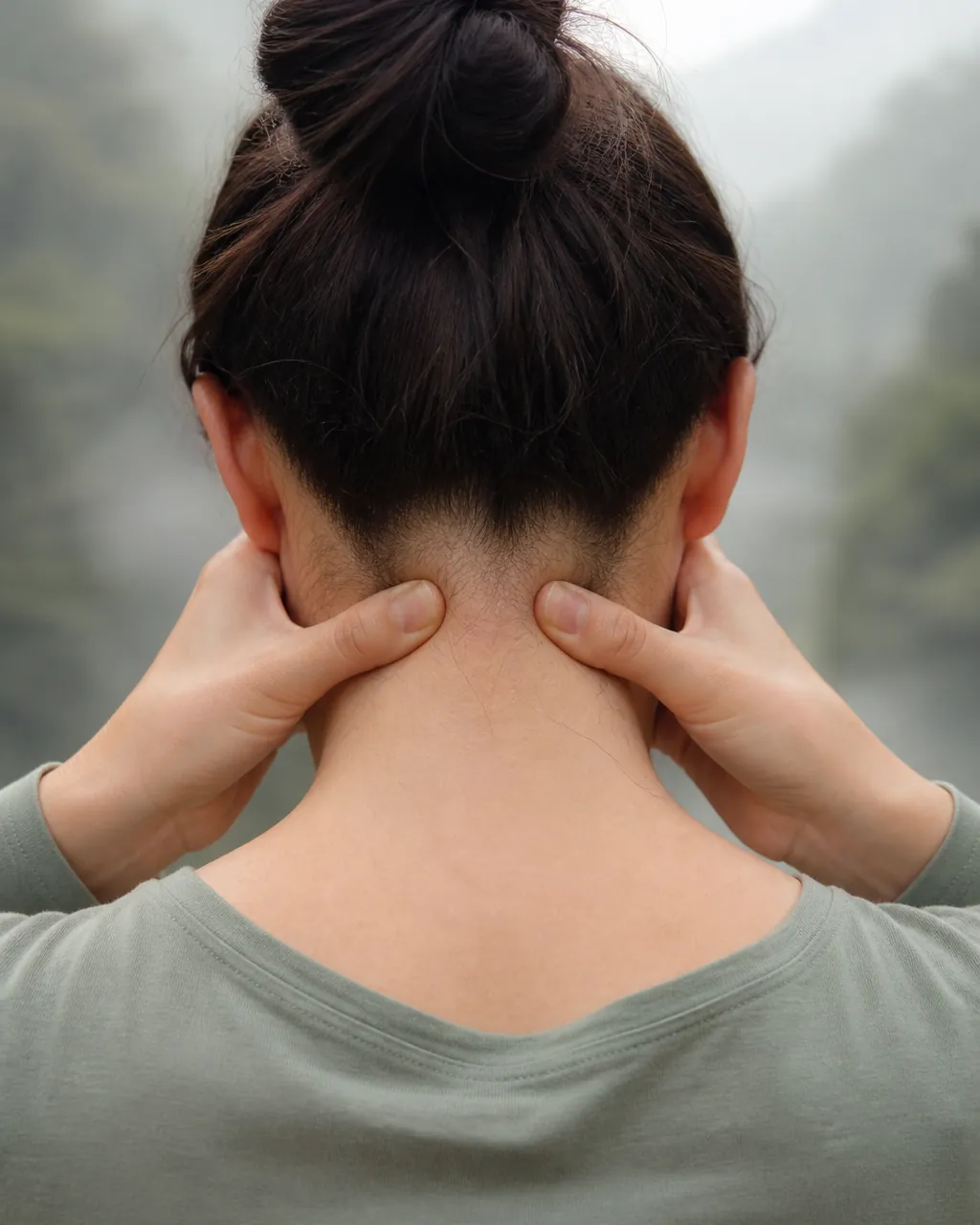
Hands locating Feng Chi and Jian Jing for neck tension

Neck and shoulders

Feng Chi and Jian Jing

Feng Chi (风池) in the hollows under the occiput; Jian Jing (肩井) at the highest point of the shoulder. Press when desk load and stress clamp the nape and trapezius.

Skip strong pressure on Jian Jing in pregnancy.

Press neck points
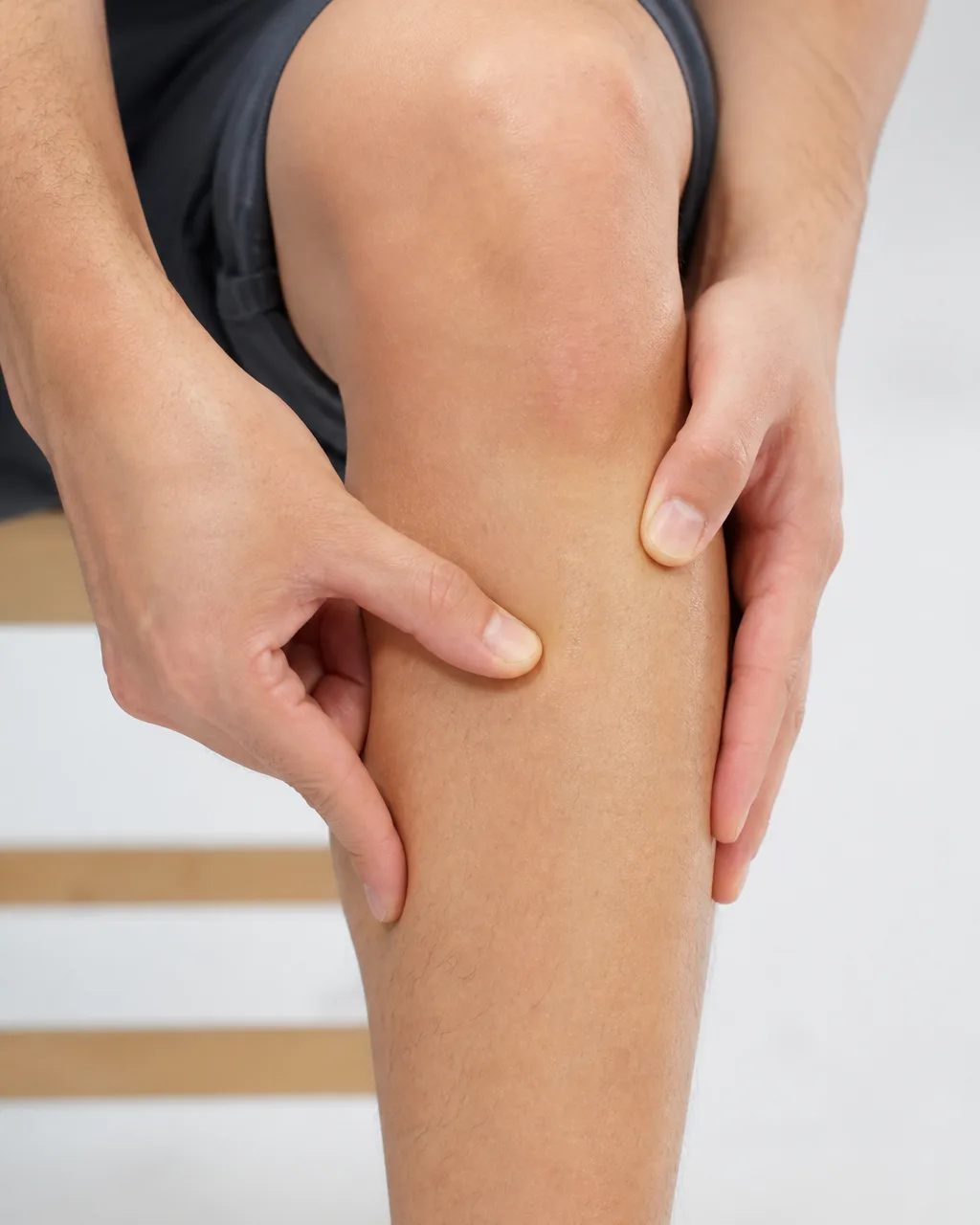
Hands locating Zu San Li ST36 below the outer kneecap

Digestion

Zu San Li (足三里 · ST36)

Three cun below the outer eye of the knee, one finger-width lateral to the shinbone. Press when stress sits with weak digestion, bloating, or fatigue.

Press Zu San Li
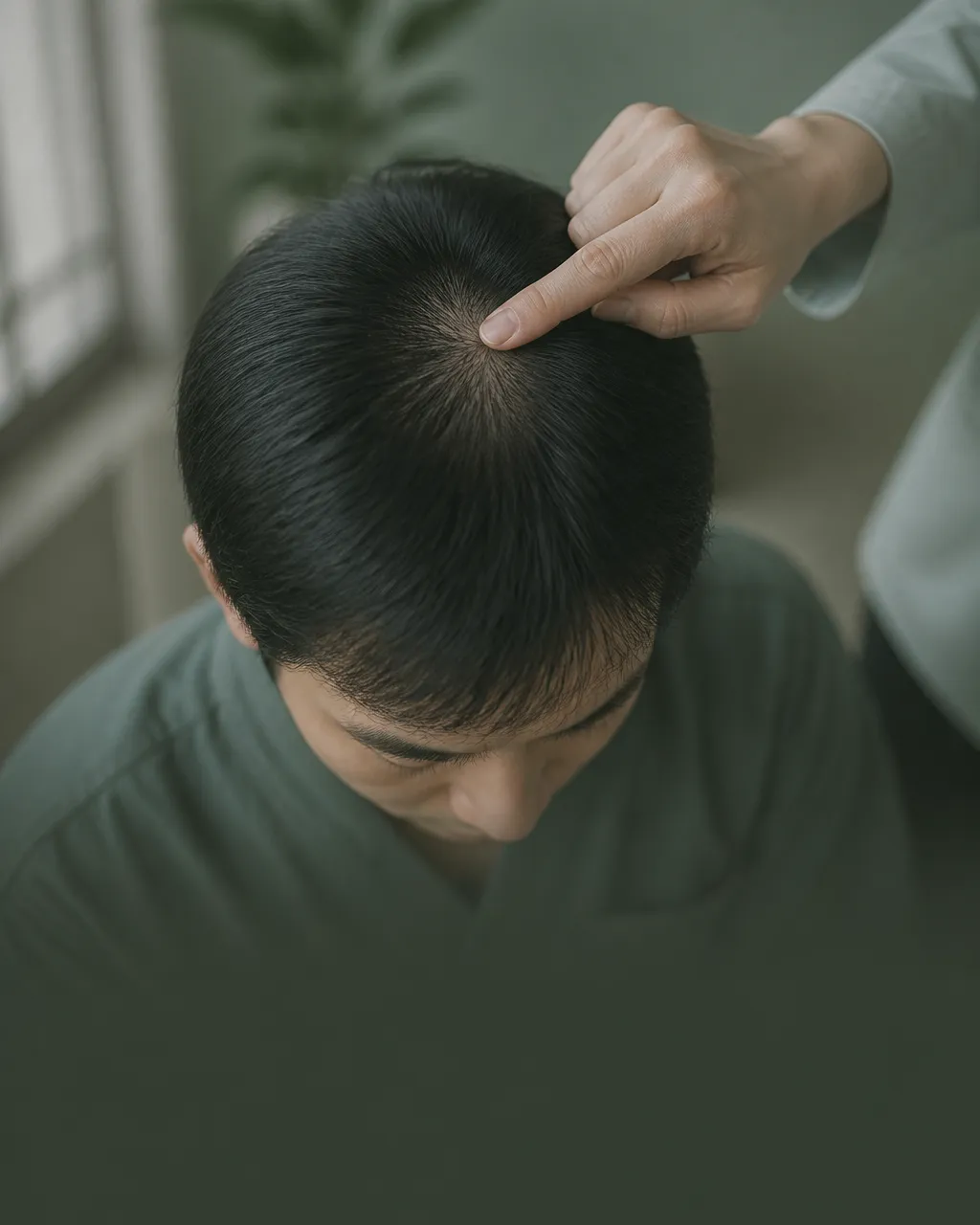
Finger locating Bai Hui GV20 at the crown of the head

Emotion and sleep

Bai Hui (百会 · GV20)

At the crown, where a line across the apex of both ears meets the midline. Massage kindly when emotional stress breaks sleep or the mind will not settle.

Press Bai Hui

Also used

More presses for matching stress signs

Use these when the primary press is not enough, or when the sign sits in a narrower site.

  • Jing Ming (睛明 · BL1) Eye socket

    In the depression at the inner top corner of the eye socket, beside the nose bridge. Press kindly when digital eye strain or headache sits with stress. Do not press into the eyeball.

    Jing Ming eye care
  • He Gu (合谷 · LI4) Hand

    In the finger web between the first and second metacarpal bones. Press when headache or face tension sits with stress load.

    Press He Gu
  • Wai Guan (外关 · SJ5) Forearm

    On the outer forearm, about three finger-widths from the wrist crease, between the two bones. Press when neck and shoulder tightness travels down the arm channel.

  • Zhong Wan (中脘 · CV12) Upper abdomen

    On the anterior midline of the upper abdomen, four cun above the umbilicus. Circle kindly when post-meal fullness sits with stress.

    Press Zhong Wan
  • Nei Guan (内关 · PC6) Inner wrist

    On the inner forearm, about three finger-widths from the wrist crease, between the two tendons. Press when anxiety, chest tightness, or thin sleep sits with stress.

    Press Nei Guan

Teas

Kitchen teas when stress builds

Match the steep to the cluster: headache, gut load, thin sleep, or tired eyes.

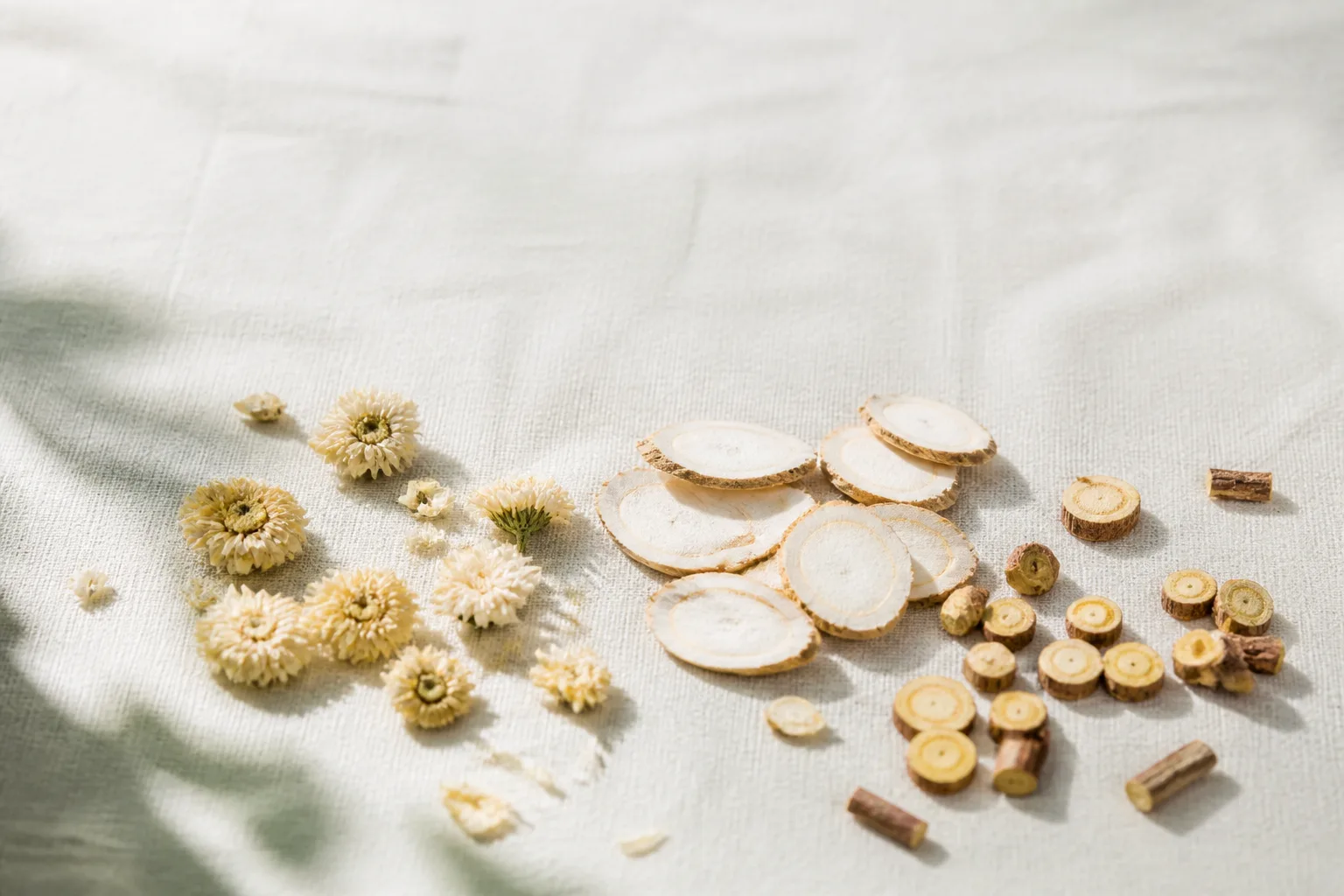
Dried chrysanthemum, white peony root, and liquorice for headache tea

Tea · headache

Chrysanthemum white peony tea

Ju Hua, Bai Shao, and Gan Cao steeped briefly when a mild heaty or tension-type headache builds with stress.

Not care for sudden worst-ever headache.

Make headache tea
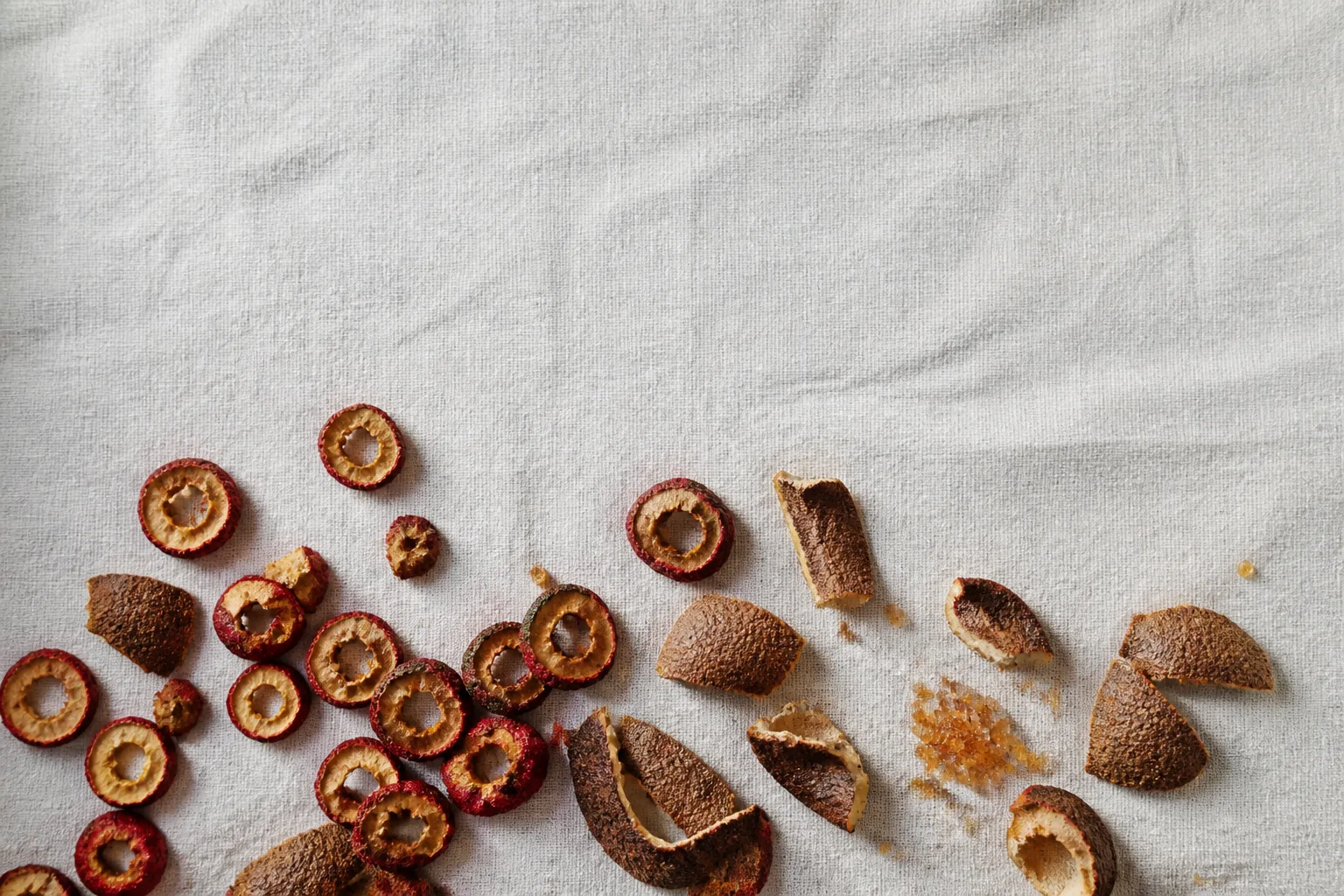
Dried hawthorn slices, chen pi peel, and brown sugar for anti-bloating tea

Tea · indigestion

Anti-bloating tea

Hawthorn, dried mandarin peel, and brown sugar when stress sits with post-meal fullness.

If there is any chance of pregnancy, do not use this. Hawthorn can move Blood.

Make anti-bloating tea
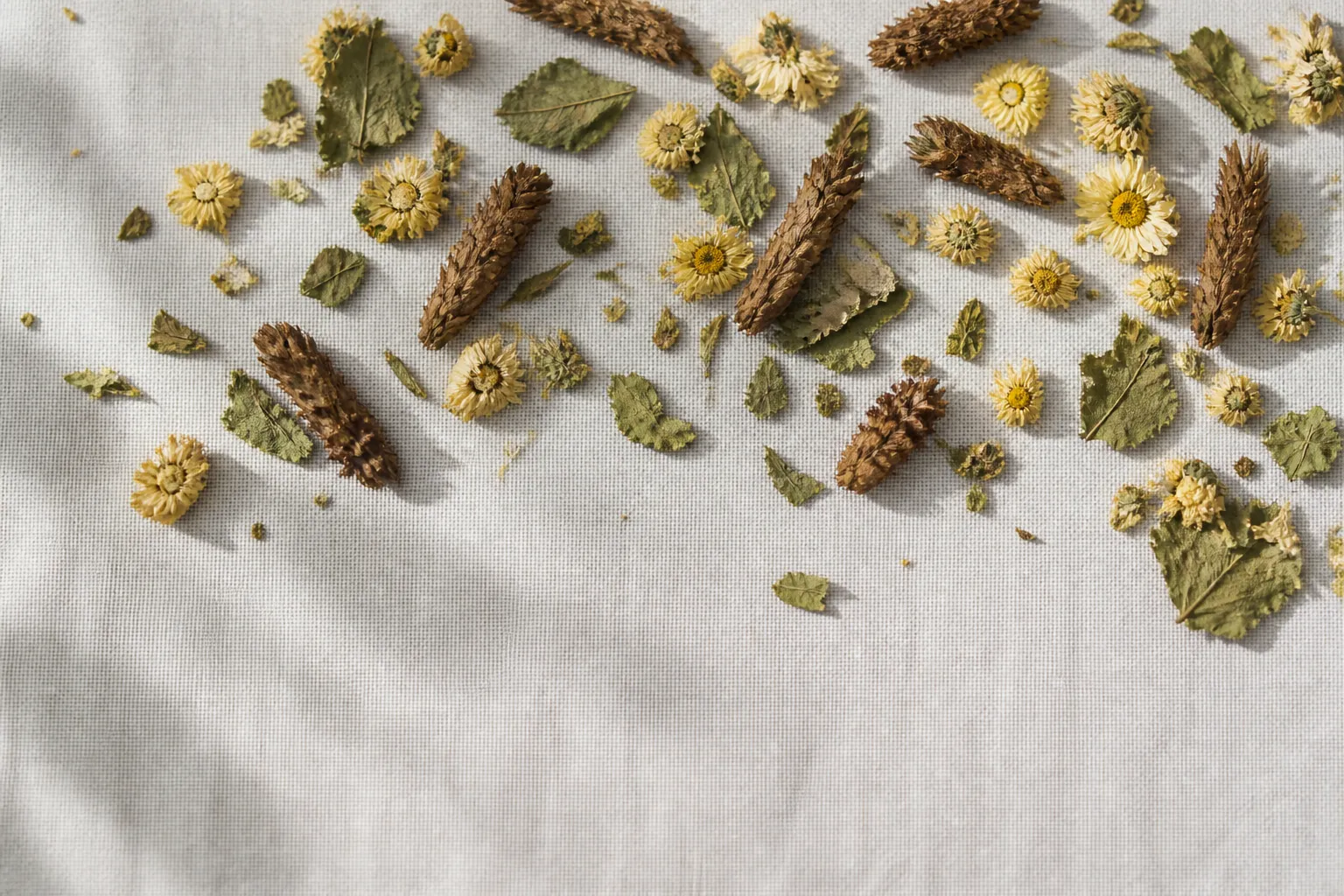
Dried chrysanthemum, mulberry leaf, and Prunella for Mind Relaxing Tea at PULSE TCM

Tea · emotion / sleep

Mind Relaxing Tea

Chrysanthemum, mulberry leaf, and Prunella (Xia Ku Cao) when emotional stress or Liver-linked thin sleep returns.

Ease off if you run cold. Ask a physician before use in pregnancy.

Make Mind Relaxing Tea
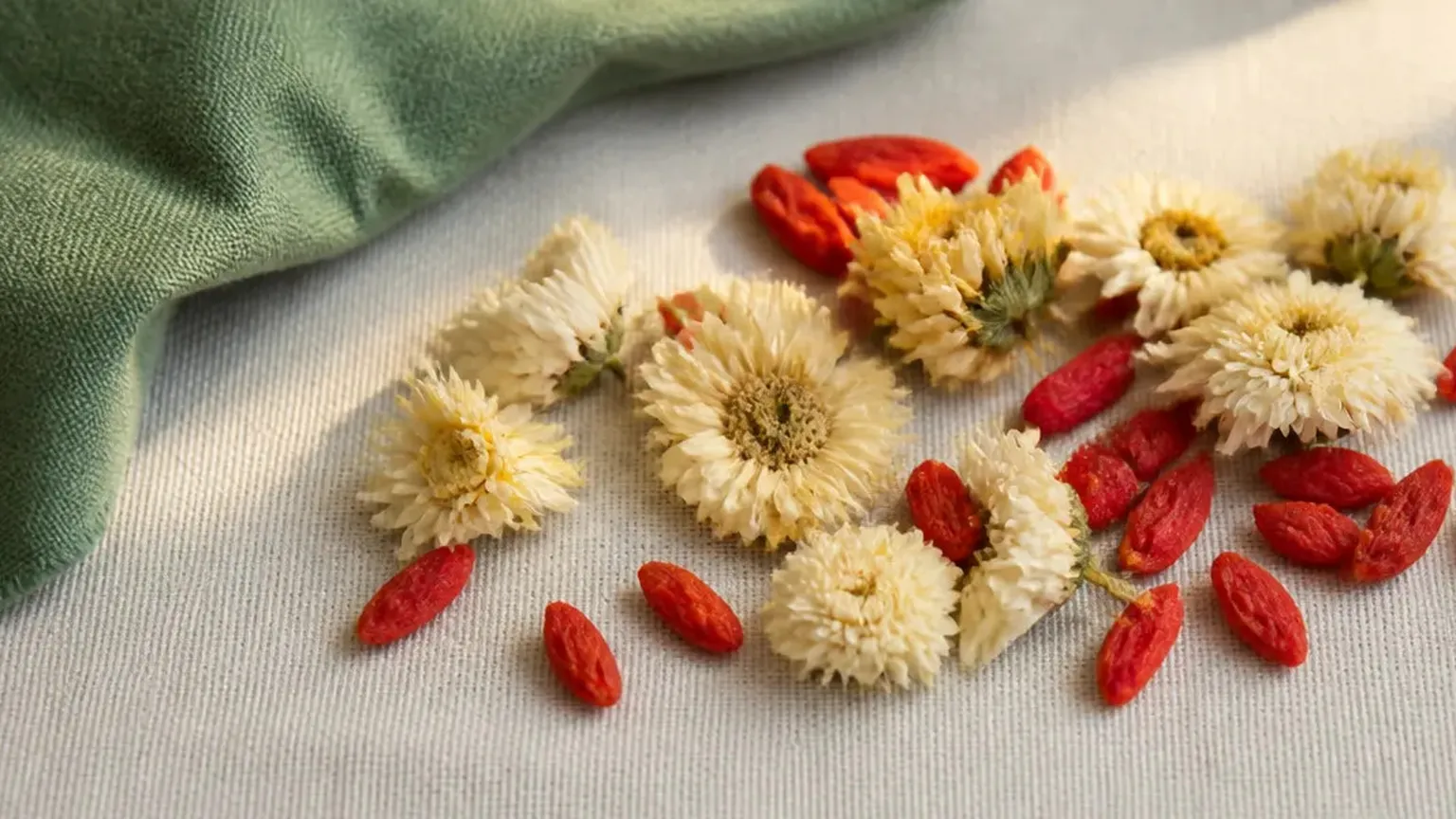
Dried white chrysanthemum and wolfberries for tea at PULSE TCM

Tea · tired eyes

White chrysanthemum and wolfberry tea

White chrysanthemum and wolfberry when screen load and stress leave the eyes dry or tired.

Book if vision change is sudden.

Make eye tea

Moves

Three moves to release stress load

A standing neck stretch, child pose, and 4-7-8 breathing can ease neck tension, low-back brace, and rising anxiety the same day you feel the clamp.

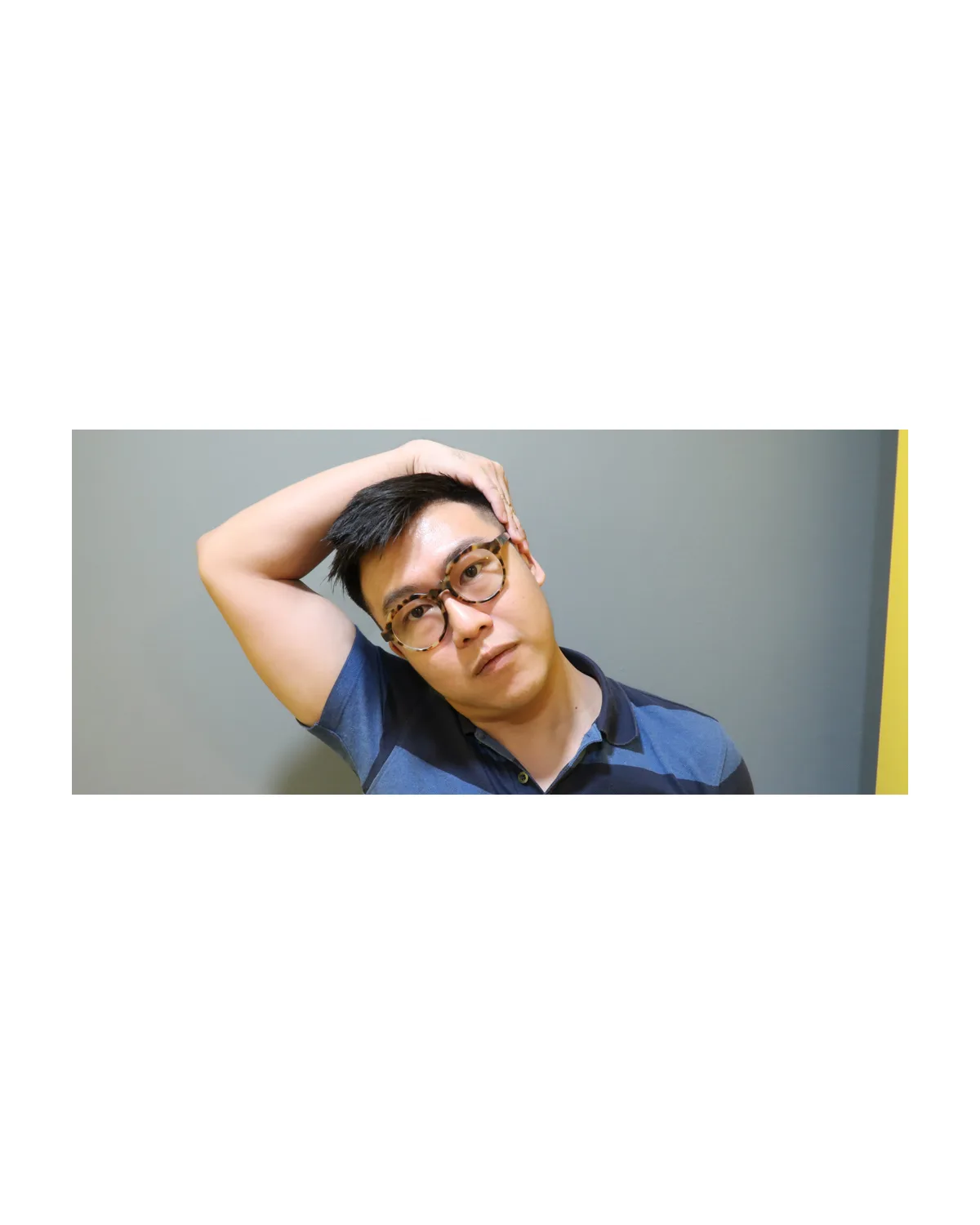
  • Neck stretch: hold twenty to thirty seconds each side, two to three rounds.
  • Child pose: hold about sixty seconds, breathe, repeat three times.
  • 4-7-8 breathing: inhale four, hold seven, exhale eight; three breaths twice a day.
Person doing a gentle standing neck stretch for stress-linked tension

Move

Stress release moves

Full steps for the neck stretch, child pose, and 4-7-8 set, with stop cues for sharp pain or dizziness.

Stay inside a kind range. Ease off if the move feels sharp.

Do the release moves
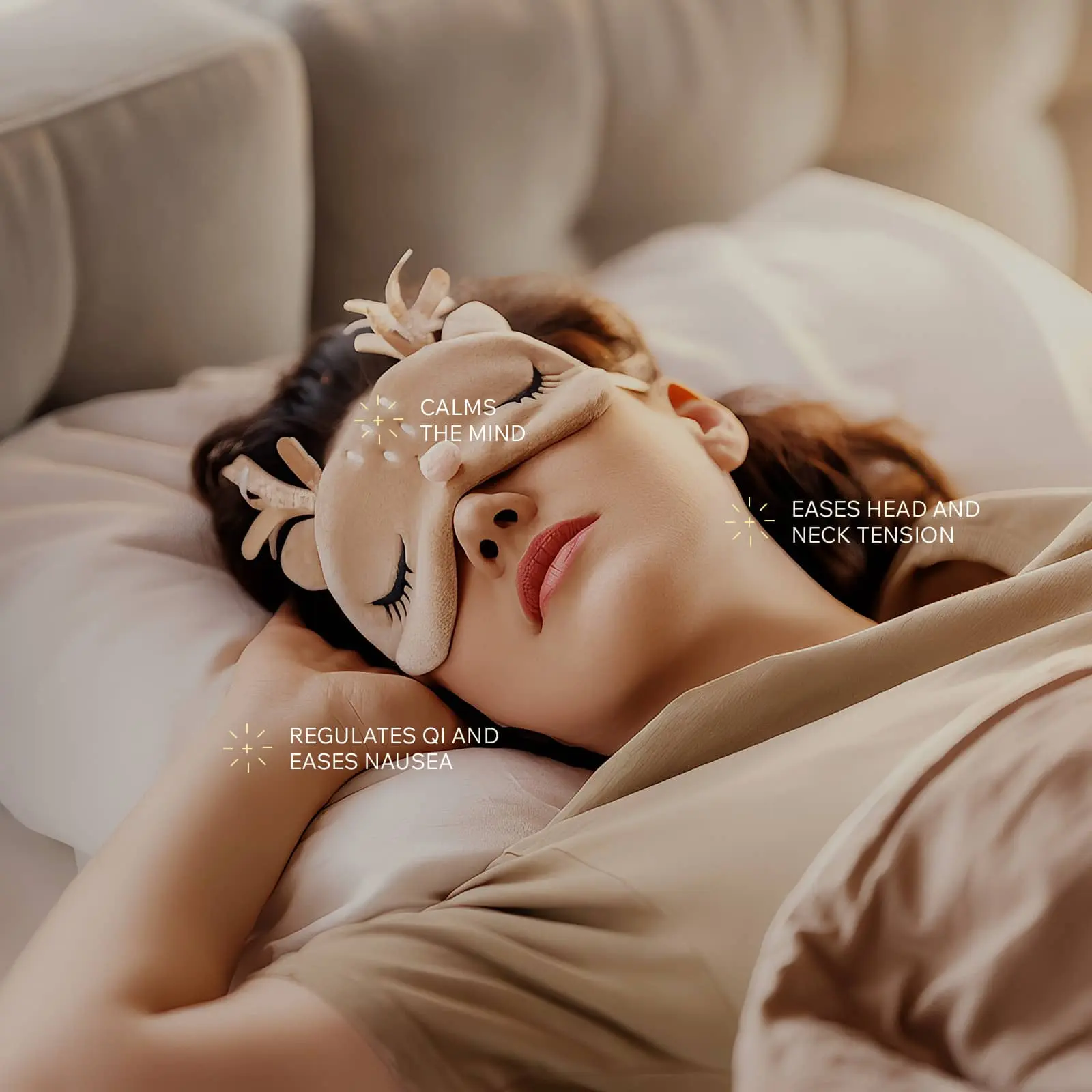
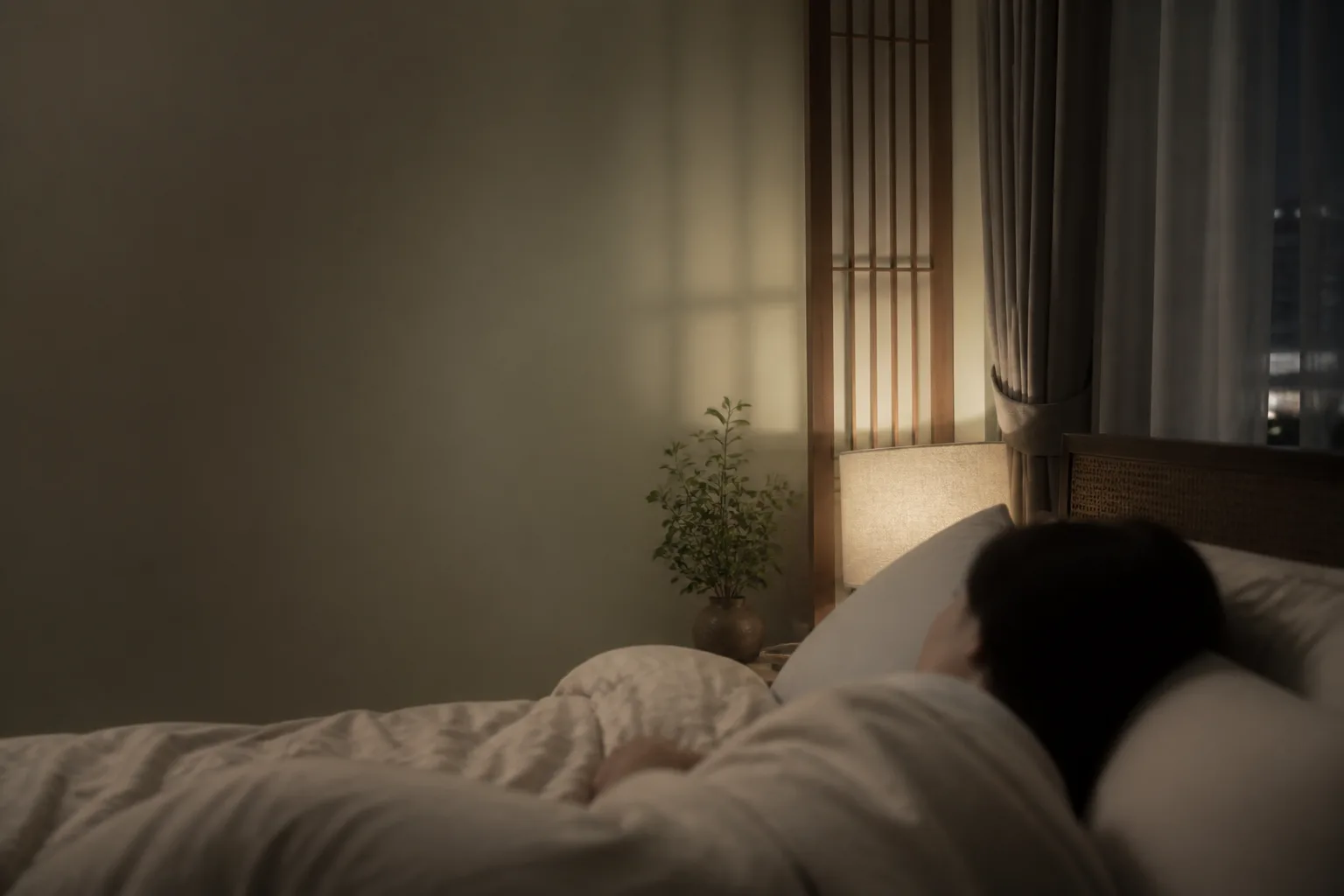
Quiet rest illustrating the Sleep and Stress programme at PULSE TCM

Next step

When stress keeps returning in one picture

If gut change, 1–3am waking, desk tension, or cycle shift stacks with stress, Managing Stress the TCM Way names those four pictures. If thin sleep stacks with burnout, Sleep & Stress is a close clinic option.

This page is educational, not a substitute for physician or medical care. Constitutions differ. Speak with a licensed TCM practitioner before starting herbs or new self-press in pregnancy or with a chronic condition.

Dr Sim Beng Joo

Clinically reviewed

Reviewed by Sim Beng Joo

Advisor (Science & Strategy) / Consultant Physician · TCMPB T1303003A

MOH-licensed TCM physician and biomedical scientist, with clinical work in digestion, pain, sleep or fatigue, and constitution patterns that show as stress-linked gut, sleep, or tension load.

View full profile

Educational information based on clinical experience and TCM principles. Not a substitute for personalised consultation, medical care, or urgent attention. Constitutions differ. Speak with a licensed TCM practitioner before starting herbs or new self-press in pregnancy or with a chronic condition. Seek urgent care for sudden chest pain, severe panic, collapse, or sleep loss after a head injury.

FAQs

Questions, answered

Common questions on eustress and distress, organ-emotion pairs, body signs, self-help, and when to book care.

What is the difference between eustress and distress?

Eustress is useful stress. It can produce a positive feeling of excitement that keeps you motivated. Distress is load beyond what you can handle; it leaves you stressed out and can unsettle mental and physical health.

How does TCM map stress to the five organs and emotions?

Each of the five zang pairs with an emotion: Heart with joy (喜), Liver with anger (怒), Spleen with contemplation (思), Lung with grief (悲), and Kidney with fear (恐). When an organ is imbalanced, its paired emotion may appear more often, for example Liver with irritability or Spleen with worry and bloating. The Huangdi Neijing links anger, grief, fear, and contemplation to disordered qi movement.

How can stress show in the body?

Educational clusters include physical signs such as headache, dizziness, digital eye strain, stiff neck and shoulders, and lower back pain; emotional signs such as irritability, low mood, mood swings, and anxiety; and behavioural signs such as insomnia, poor appetite, indigestion, and stomach bloating. Match the cluster to presses, teas, or moves on this page.

Which acupressure points help stress load?

Method: locate the point, press with thumb or fingers to a dull soreness, then massage in small circles for two to three minutes. First presses often include Tai Yang, Feng Chi with Jian Jing, Zu San Li, and Bai Hui. Also used are Jing Ming, He Gu, Wai Guan, Zhong Wan, and Nei Guan for matching head, arm, gut, or chest signs.

Which herbal teas help when stress sits with headache, gut, sleep, or tired eyes?

Educational kitchen options linked from this page include chrysanthemum white peony tea for headache, anti-bloating tea for indigestion, Mind Relaxing Tea for emotional stress or insomnia, and white chrysanthemum wolfberry tea for tired eyes. Skip pregnancy-stop teas if there is any chance of pregnancy.

When should I book the Sleep & Stress programme?

When thin sleep, burnout, or tension keep returning with stress load, book a consult. Sleep & Stress focuses on sleep quality with stress and burnout. When gut change, 1–3am waking, desk tension, or cycle shift is the main picture, see Managing Stress the TCM Way. A physician names the closer programme after pulse and tongue.

References

Selected sources

  1. Cigna. 2019 Cigna 360 Well-Being Survey — Well and Beyond (92% of working respondents in Singapore reported work-related stress). https://www.hrinasia.com/press-release/cigna-well-being-survey-reveals-decline-in-singaporeans-wellness/
  2. National Center for Complementary and Integrative Health. Traditional Chinese medicine: What you need to know. 2019. https://www.nccih.nih.gov/health/traditional-chinese-medicine-what-you-need-to-know/
  3. Ministry of Health Singapore. TCM practitioners (Healthcare Professional Portal). https://hpp.moh.gov.sg/tcm-practitioners/
  4. World Health Organization. Traditional, complementary and integrative medicine. https://www.who.int/health-topics/traditional-complementary-and-integrative-medicine
  5. Original article authors: Physicians Chelsea and Hao Li.

Next step

Ready for a stress pattern read?

Bring the signs that keep returning with stress load, plus any GP notes. We will name the picture in plain language and decide whether Sleep & Stress or another programme sits closer.

Hours
Most clinics daily 11:00 AM – 8:00 PM
Care
Physician-led consultation