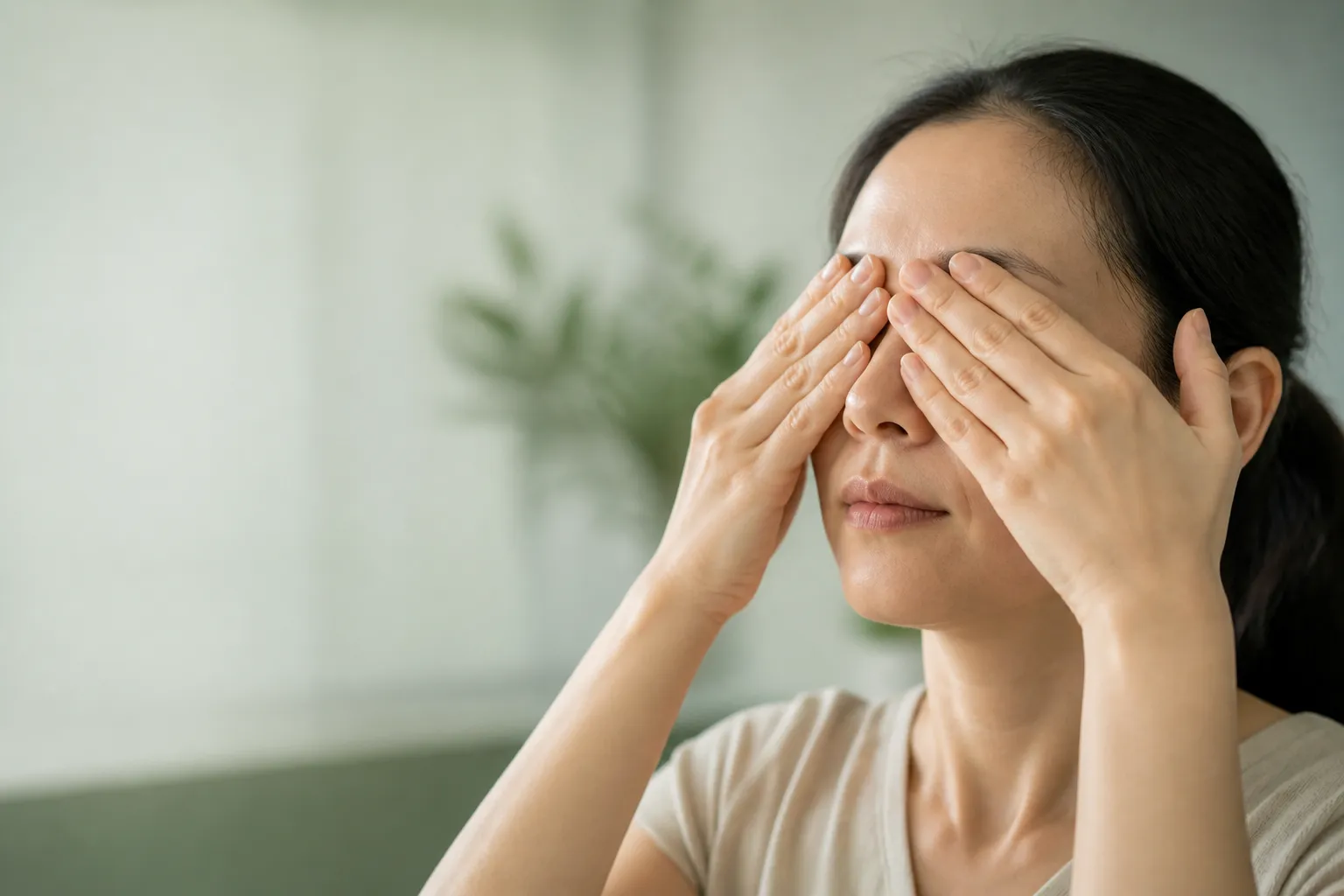
Warm palms covering closed eyes for Chinese eye exercises

Insights · Eye Care

6 Chinese eye exercises for screen strain

Long screen days tire the eyes. Simple acupoint massage and palming, paired with rest habits and cooling kitchen tea, can support comfort between visits.

In brief

Chinese eye exercises for digital eye strain: wash your hands, palm the eyes for about 30 seconds, then massage Feng Chi (GB20), Jing Ming (BL1), Tai Yang (EX-HN5), Si Bai (ST2), and the orbital rims about nine times each. Rest every 20 minutes by looking into the distance. Leafy greens, orange produce, omega-3 fish, and a cool chrysanthemum-wolfberry steep may support comfort. Book if strain persists or vision changes.

01 · Screen strain

Why modern screens tire the eyes

Sight carries almost every daily task. Long stretches on phones, tablets, computers, and consoles leave many people with digital eye strain: physical discomfort after two or more hours at a screen. Common tells include tired or dry lids, fewer blinks, temple ache, and brief blur when you look up. Dry-eye discomfort is also rising in adults and children.
02 · Eye exercises

Six Chinese eye exercises for screen strain

A few minutes a day of palming and gentle acupoint massage can support comfort between visits. Wash your hands before you massage around the eyes. Soft pressure only; never press into the eyeball. Stop if the press turns sharp or vision changes.

Six Chinese eye exercises at a glance
Move Where How
Eye palmingWarm palms over closed eyes. Both eyes, seated or standing. About 30 seconds.
Feng Chi (GB20)Base of skull, nape hollows. Lateral to trapezius tendons. About nine times each side.
Jing Ming (BL1)Inner eye socket. Where nose bridge meets brow. Pinch and slide up-down ×9.
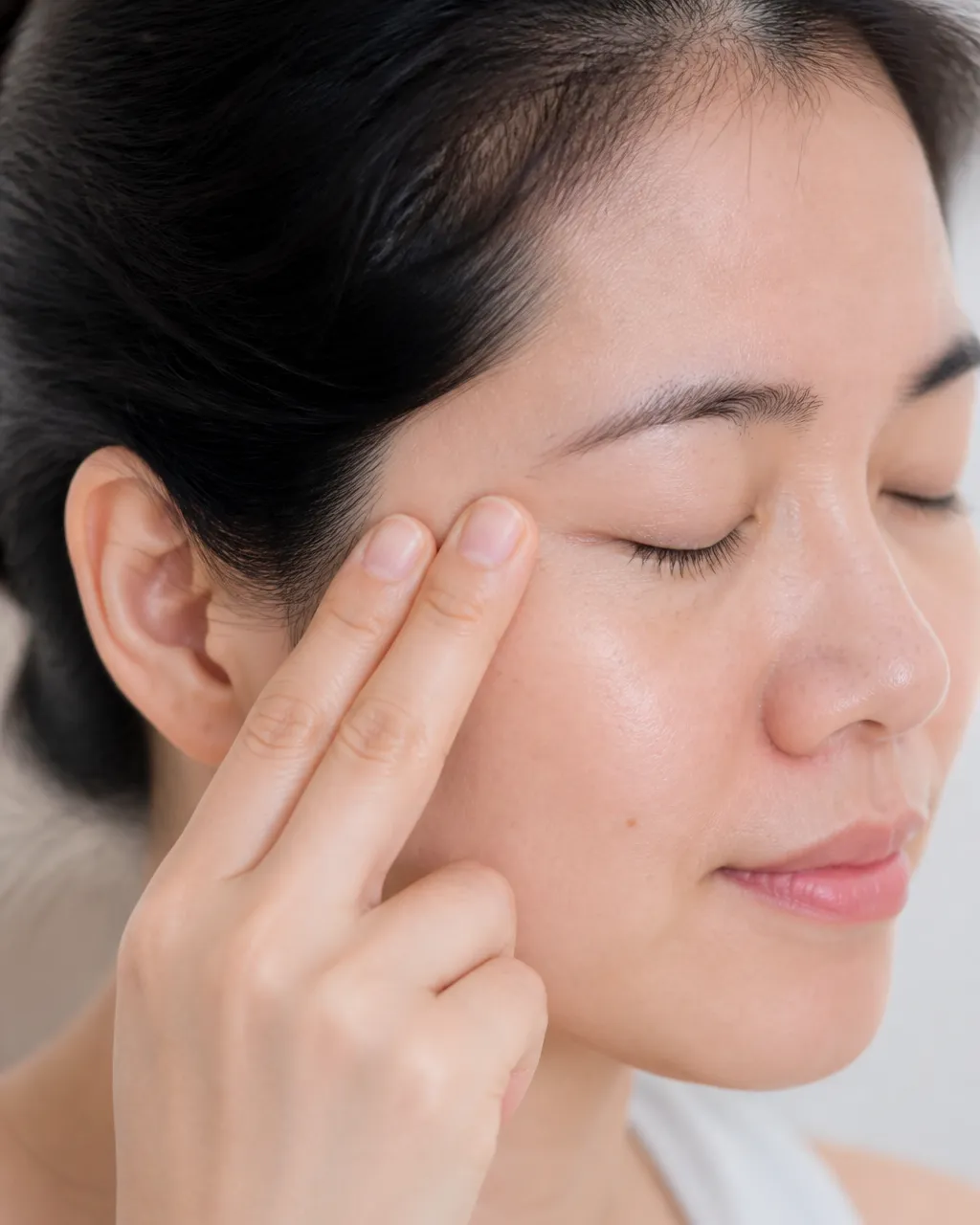
Tai Yang (EX-HN5)Temple depression. One finger lateral to outer canthus. About nine times each side.
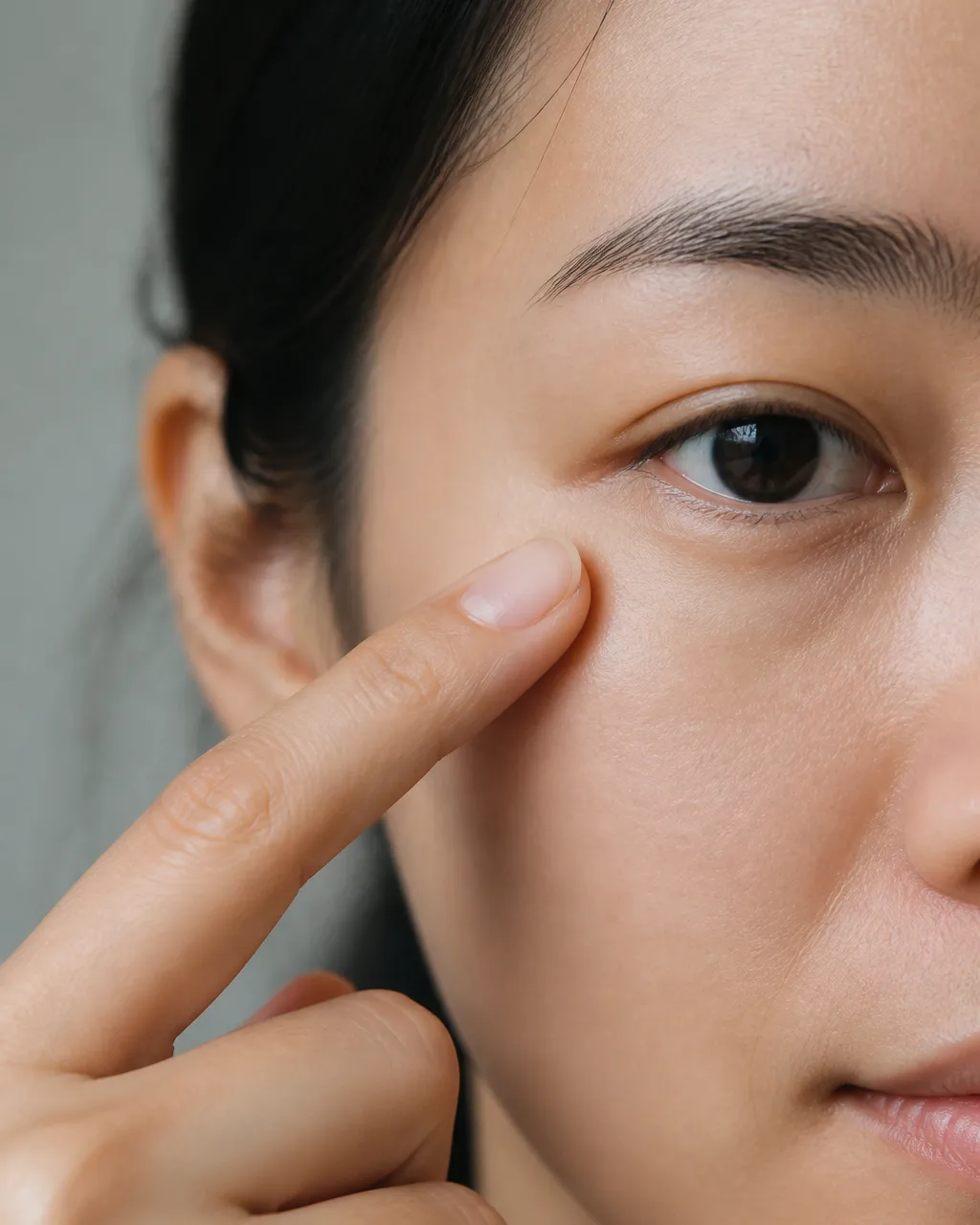
Si Bai (ST2)Below the pupil. Infraorbital foramen hollow. About nine times each side.
Eye socket massageUpper and lower orbital rims. Both eyes closed together. Slow circles ×9 each rim.
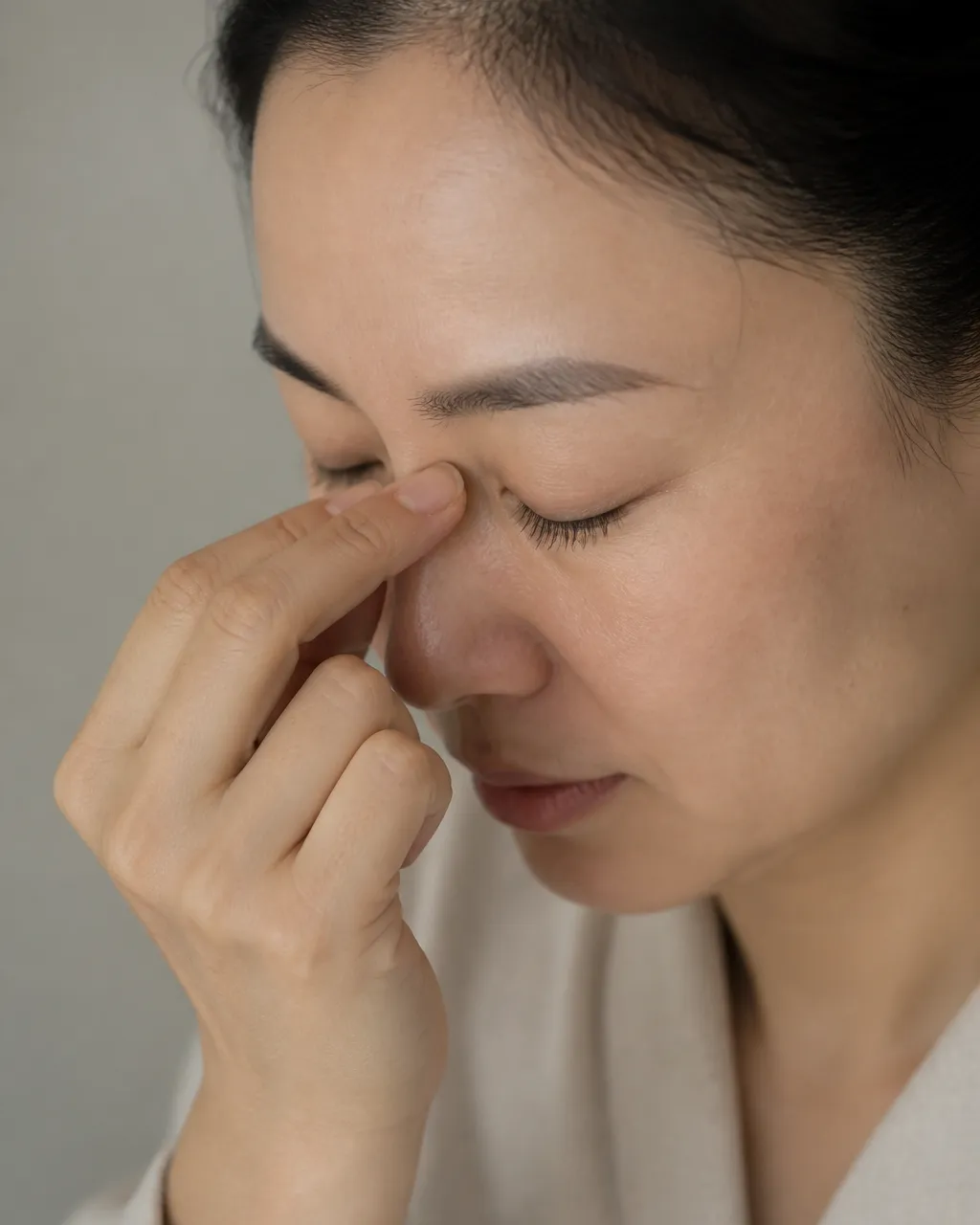
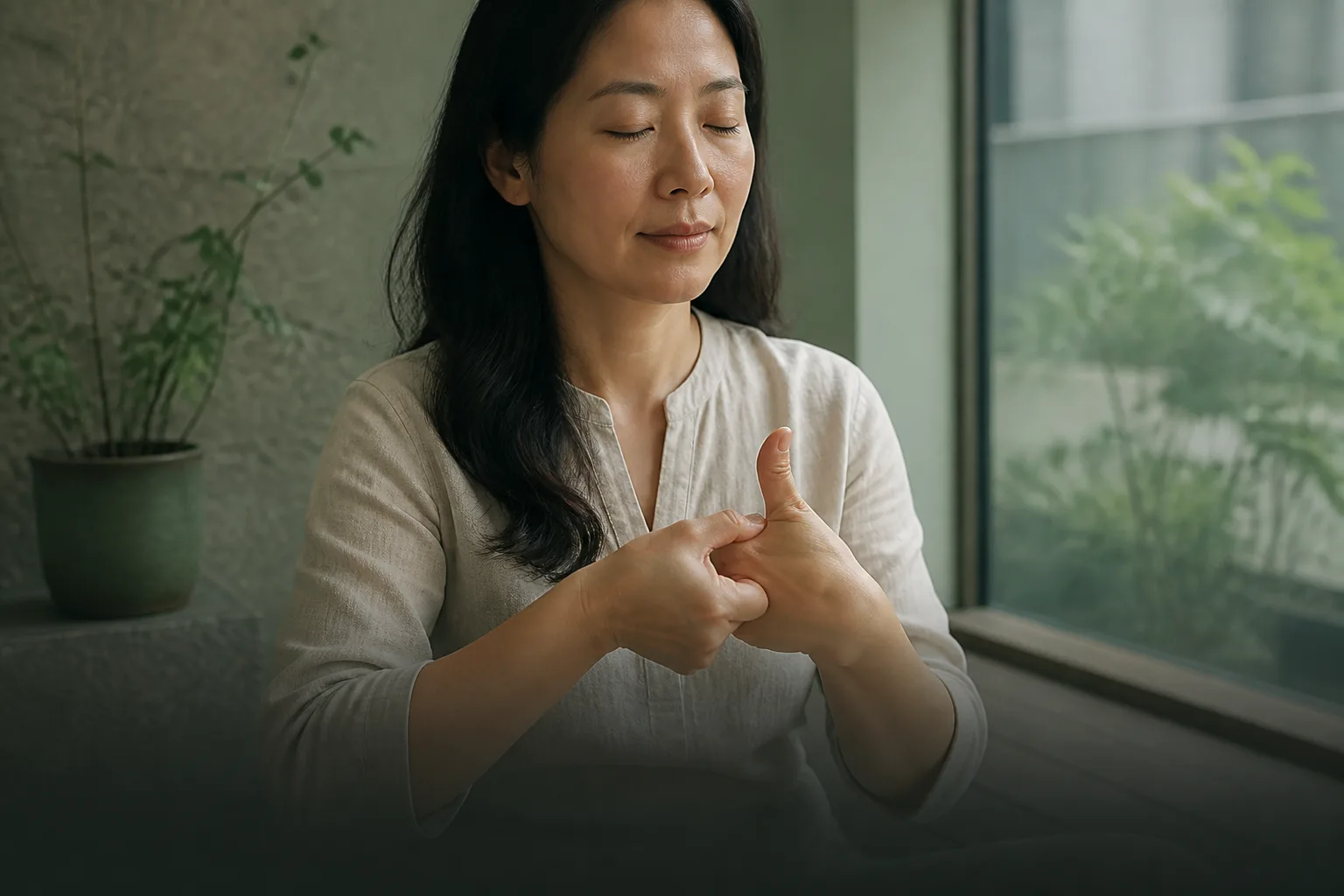
Warm palms covering closed eyes for Chinese eye exercises palming

Exercise 1

Eye palming

About 30 seconds

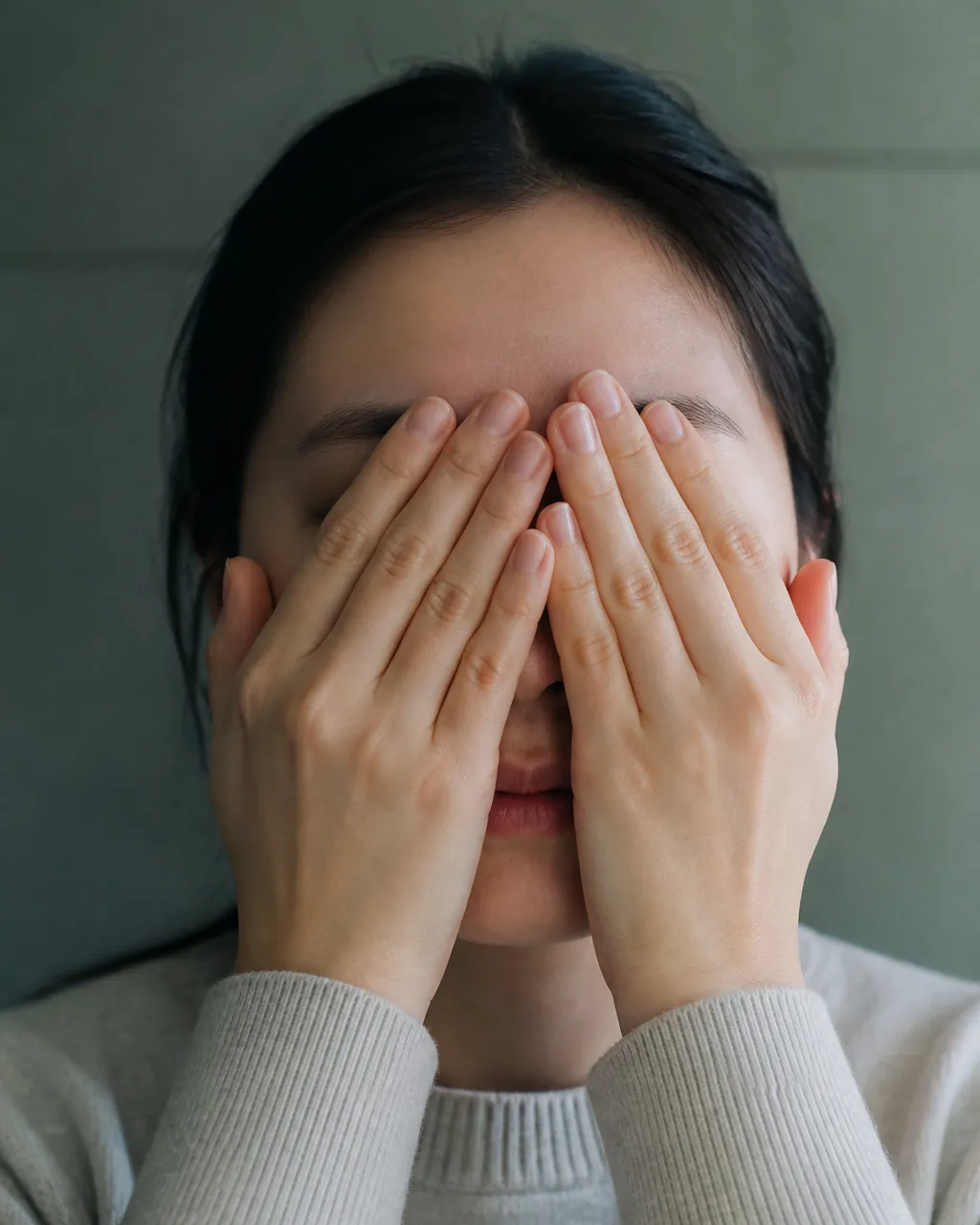
Warm the palms, then rest them over closed eyes so the mind and the eyes can quiet.

  • Rub both palms briskly until they feel warm.
  • Close the eyes and cup the warm palms over them without pressing the eyeballs.
  • Hold for about 30 seconds, then lower the hands slowly.

Exercise 2 · GB20

Massage Feng Chi (风池)

About nine times each side

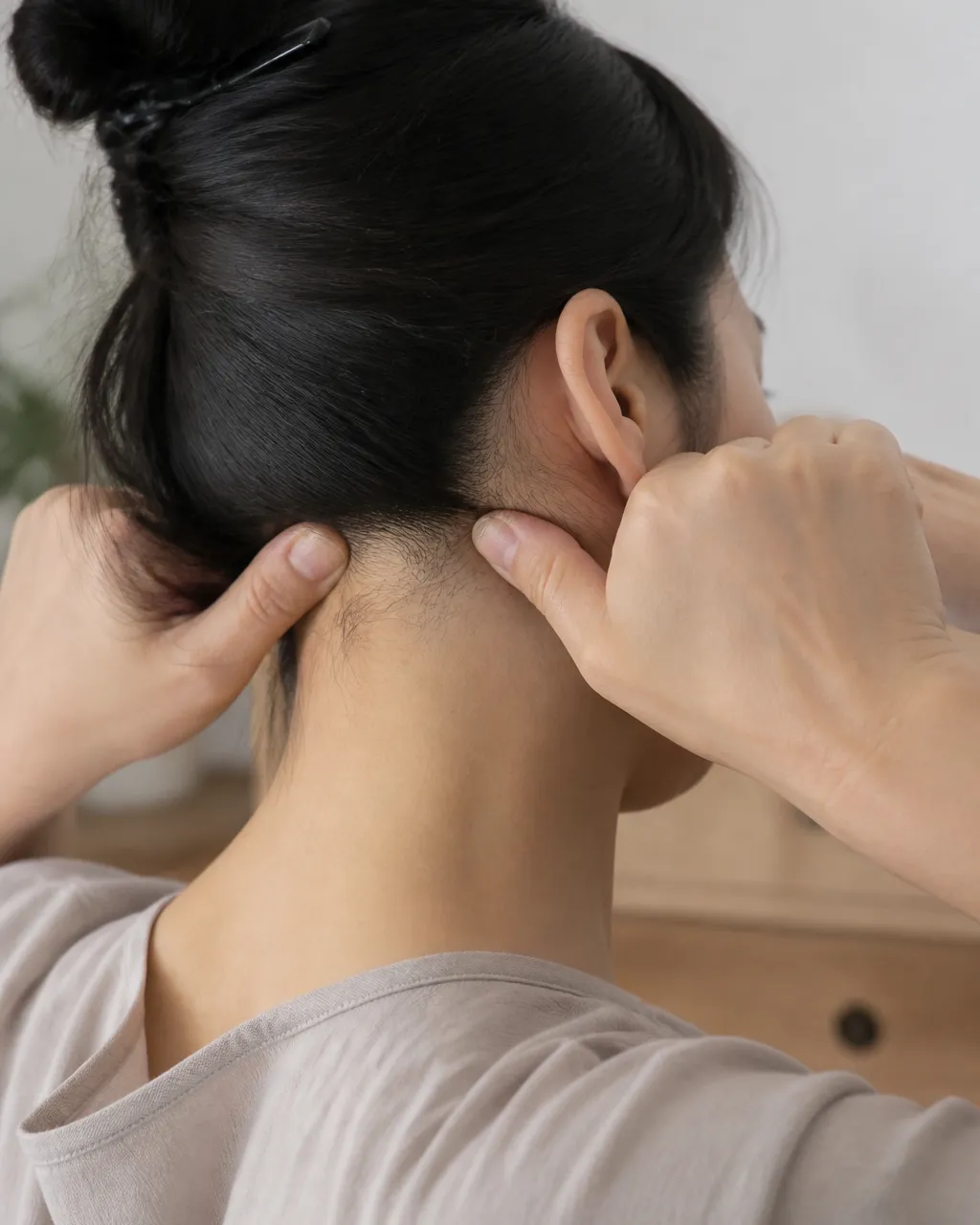
Feng Chi sits in the soft depressions at the base of the skull. It supports eye comfort and often eases neck tension that travels with screen strain.

  • Cup the hands behind the head.
  • Place the thumbs in the hollows at the top of the nape, lateral to the thick trapezius tendons.
  • Circle or press gently about nine times each side.
Thumbs locating Feng Chi GB20 at the base of the skull for eye strain
Fingers locating Jing Ming BL1 at the inner eye socket

Exercise 3 · BL1

Massage Jing Ming (睛明)

About nine times

Jing Ming sits in the indentation of the inner eye socket, where the nose bridge meets the eyebrow ridge.

  • Wash your hands. Soft pressure only.
  • Pinch the hollow with thumb and index finger.
  • Slide gently up and down about nine times. Do not press into the eyeball.

Caution

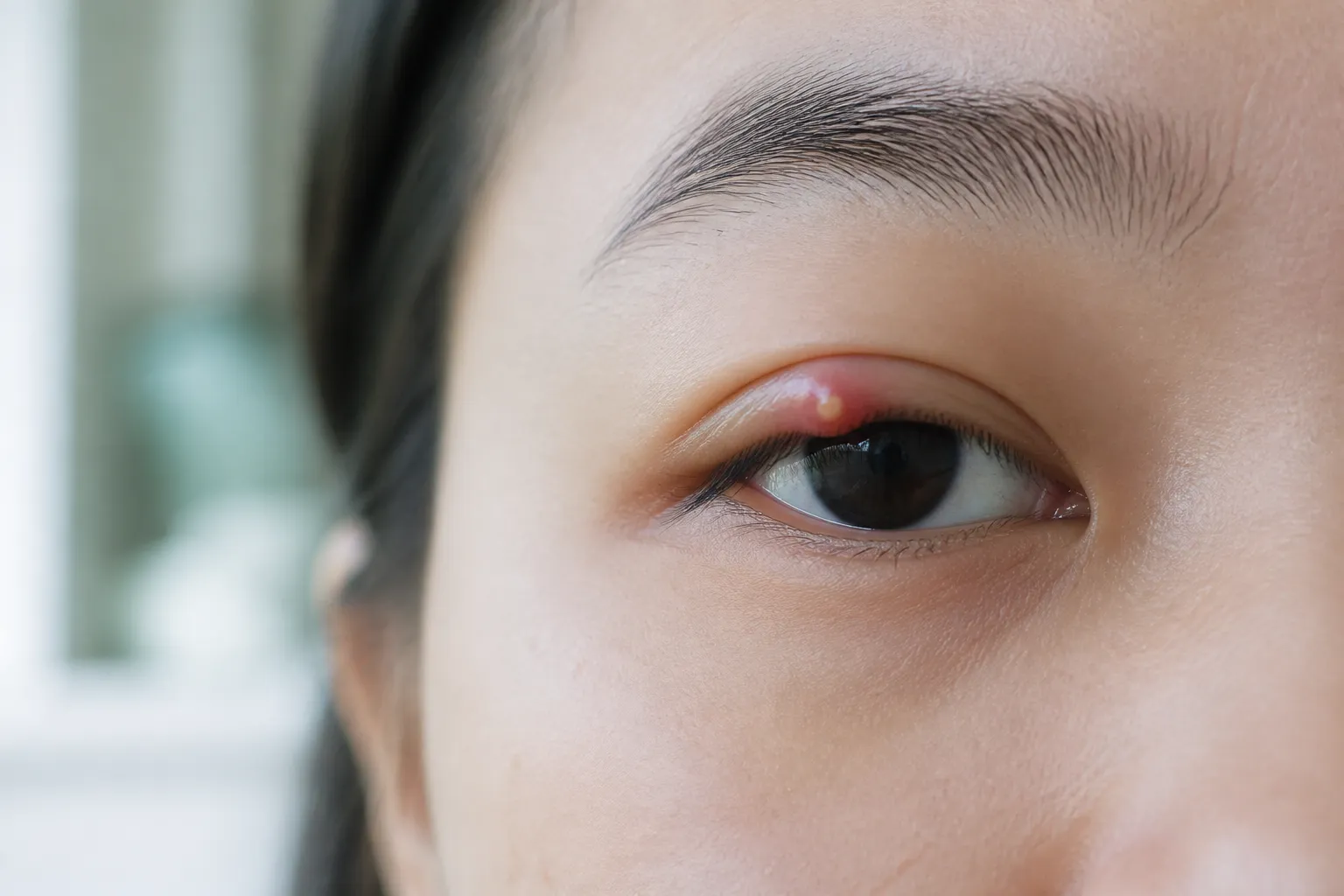
Skip over cuts, rashes, or active styes. Stop if pain sharpens or vision changes.

Exercise 4 · EX-HN5

Massage Tai Yang (太阳)

About nine times each side

Tai Yang sits in the tender temple depression, about one finger lateral to the outer canthus and the outer end of the eyebrow.

  • Find the soft hollow at each temple.
  • Circle gently with the pads of the fingers.
  • About nine times each side.
Fingers pressing Tai Yang EX-HN5 at the temple for eye strain
Finger locating Si Bai ST2 below the pupil for Chinese eye exercises

Exercise 5 · ST2

Massage Si Bai (四白)

About nine times each side

Si Bai sits in the depression at the infraorbital foramen, directly below the pupil on the cheekbone hollow.

  • Look straight ahead and find the hollow below each pupil.
  • Circle gently with a fingertip.
  • About nine times each side.

Exercise 6

Eye socket massage

About nine times · both eyes

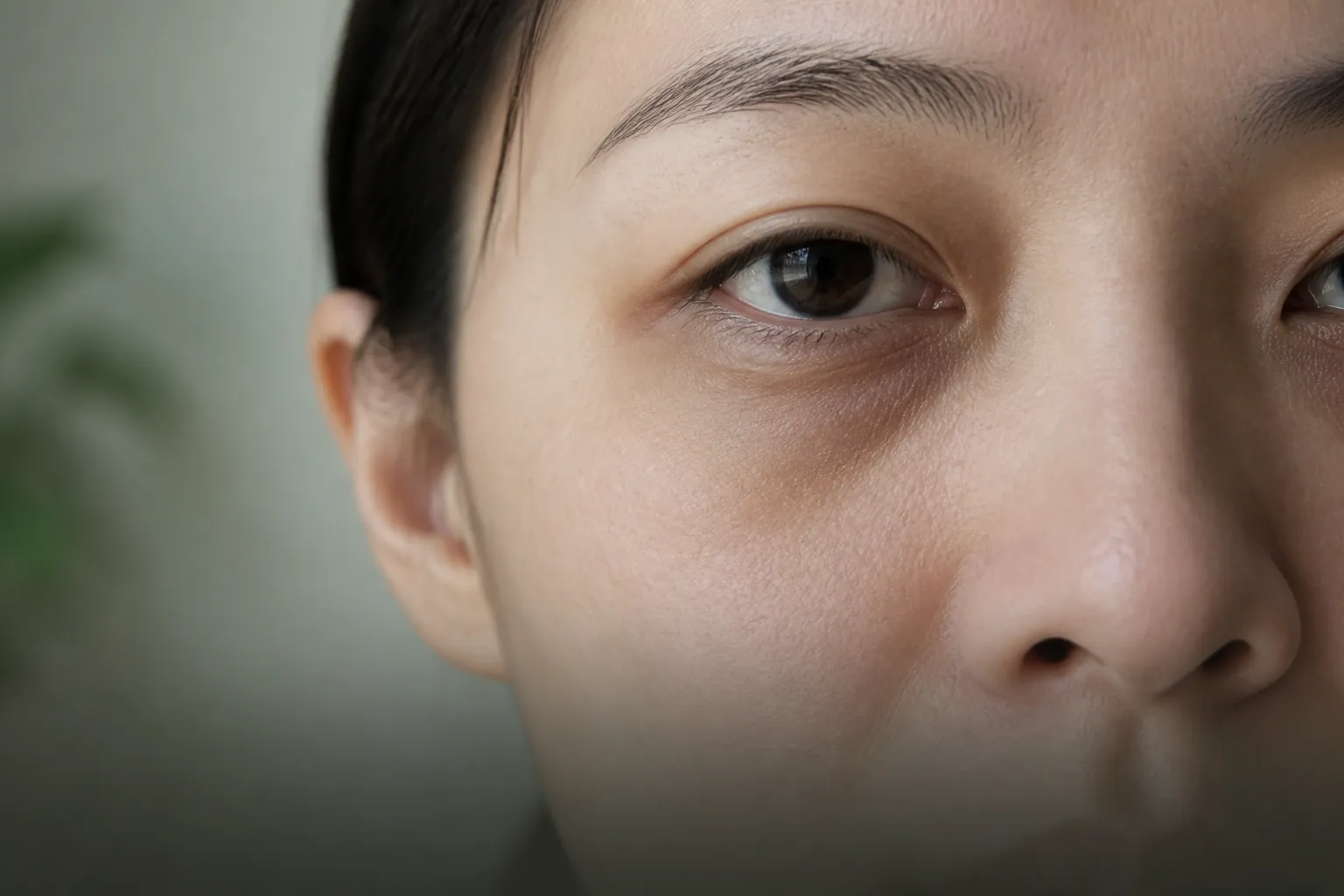
Work both eyes together with the lids closed. Gentle orbital work may also support the look of dark under-eye circles when local tension sits there.

  • Upper rim: thumb pads from the inner corner near the nose bridge, slow circular press toward the outer eyelid edge.
  • Lower rim: curl the fingers and press the knuckles gently along the bony hollow under each eye (bottom of the socket), from the inner corner toward the outer corner.
  • About nine rounds on each rim. Soft pressure only.

Caution

Stop if the press turns sharp. Socket massage supports comfort; it does not replace care for fatigue, anaemia, or other causes of dark circles.

TCM for dark eye circles
Curled fingers with knuckles pressing the lower eye socket for eye strain massage

03 · Good practices

Habits that protect tired eyes

Exercises help most when screen posture and lighting support them.

1. Give your eyes a rest

Long screen or focus time often means fewer blinks and more fatigue. Take a break about every 20 minutes and look at distant objects.

3. Keep safe viewing distances

Aim for about 50 cm from monitors and about 30 cm for reading. Keep an upright posture so the neck and eyes share the load.

4. Use enough light

Read and write in light that is bright enough without forcing a squint.

5. Ease glare and excess brightness

Avoid harsh glare on the screen. Match display brightness to the room so the eyes are not fighting the backlight.

TCM for dry eyes covers tear patterns, acupuncture, and matched kitchen steeps when screen dryness is the main picture.

04 · What may help

Food and tea for the eyes

Kitchen habits support Liver-linked eye comfort. They do not replace optometry or a physician visit.

1. Dark leafy greens

Spinach, kale, and broccoli are everyday supports for eye comfort.

2. Orange produce

Carrot, sweet potato, apricot, and mango round out a colour-rich plate.

3. Omega-3 fish

Salmon and tuna are common kitchen choices when screen strain sits with dryness.

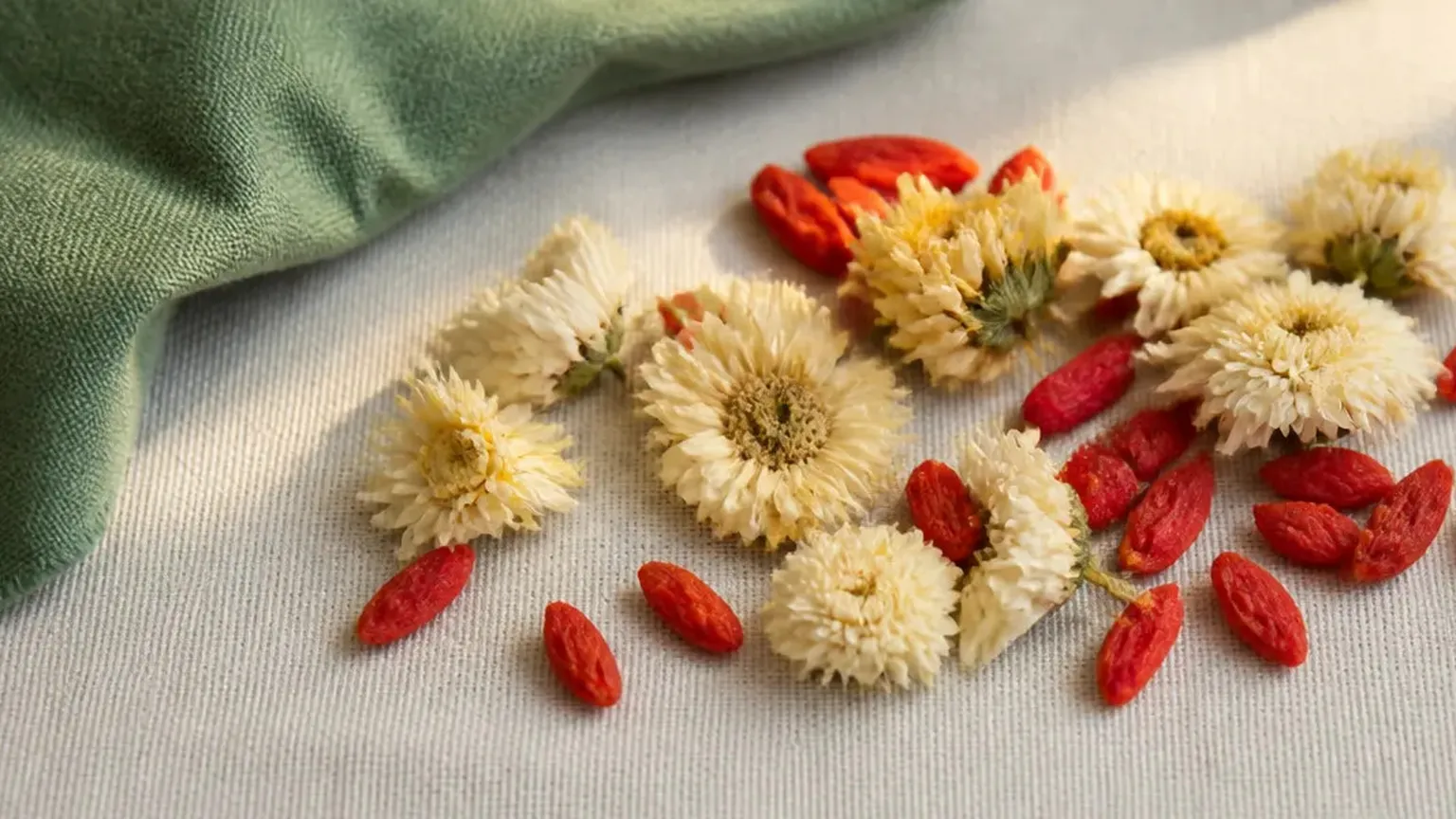
Dried white chrysanthemum and wolfberries for tea at PULSE TCM

Tea · Liver and eyes

Chrysanthemum and wolfberry tea

Steep about four to five chrysanthemum flowers with about 10 g wolfberry in boiling water for five minutes. Optional honey or rock sugar. Two to three cups a week is a classic rhythm for Liver-linked eye strain.

Chrysanthemum is cool-natured. People who feel cold easily should not drink it too often.

Make the chrysanthemum tea

When to book for eye strain

Seek urgent Western eye care for sudden vision change, severe pain, injury, or infection that is spreading. If strain persists despite breaks and home care, keeps returning, or sits with wider fatigue, a physician can name the pattern and decide whether acupuncture, herbs, or food shifts belong in your plan.

Dr Sim Beng Joo

Clinically reviewed

Reviewed by Sim Beng Joo

Advisor (Science & Strategy) / Consultant Physician · TCMPB T1303003A

MOH-licensed TCM physician and biomedical scientist, with clinical work in digestion, pain, sleep or fatigue, and constitution patterns that show as Heat or dryness on the face and eyes.

View full profile

Educational information based on clinical experience and TCM principles. Not a substitute for personalised consultation, optometry, ophthalmology, or urgent care. Speak with your physician before starting herbs or new self-care in pregnancy or with a chronic condition. Seek urgent care for sudden vision change, severe eye pain, injury, or infection that is spreading. TCM complements Western eye care; it does not replace it.

FAQs

Questions, answered

Common questions on Chinese eye exercises, point locations, screen breaks, tea, and when to book.

What are Chinese eye exercises?

A short home sequence used to ease tired eyes: warm palming for about 30 seconds, then gentle massage at Feng Chi (GB20), Jing Ming (BL1), Tai Yang (EX-HN5), Si Bai (ST2), and along the eye sockets, usually about nine times each. Wash your hands first. These moves support comfort; they do not replace optometry or prescription care.

How long should I palm my eyes?

Rub the palms until warm, close the eyes, and rest the warm palms over the eyes for about 30 seconds. The aim is quiet relaxation of the mind and the eyes, not pressure on the eyeballs.

Where is Feng Chi (GB20) for eye care?

Feng Chi sits in the soft depressions at the base of the skull, at the top of the back of the neck, lateral to the thick trapezius tendons. Massage each side about nine times. The same point is often used when neck tension sits with eye fatigue.

Where are Jing Ming, Tai Yang, and Si Bai?

Jing Ming (BL1) is the hollow at the inner eye socket where the nose bridge meets the brow. Tai Yang (EX-HN5) is the temple depression about one finger lateral to the outer canthus. Si Bai (ST2) is the infraorbital hollow below the pupil. Soft circular or sliding press about nine times each; never press into the eyeball.

How often should I take screen breaks for eye strain?

After long focus on a screen, take a break about every 20 minutes and look at distant objects. Blink more when the eyes feel dry. Keep monitors about 50 cm away and reading material about 30 cm away, with enough light and without harsh glare.

Can eye socket massage help dark circles?

Gentle circular massage along the upper and lower orbital rims, about nine times with the eyes closed, is traditionally used to ease local tension and may support the look of dark under-eye circles. Stop if the press turns sharp. It does not replace care for fatigue, anaemia, or other causes.

Is chrysanthemum and wolfberry tea good for the eyes?

A short steep with a few chrysanthemum flowers and about 10 g wolfberry, two to three times a week, is a classic kitchen habit for Liver-linked eye strain. Chrysanthemum is cool-natured; people who feel cold easily should not drink it too often. The white chrysanthemum and wolfberry tea recipe has the full steep method.

When should I see a physician or eye doctor for eye strain?

Book when strain persists despite breaks and home care, keeps returning, or sits with wider fatigue or sleep change. Seek urgent Western eye care for sudden vision change, severe pain, injury, or infection that is spreading. TCM complements optometry and ophthalmology.

References

Selected sources

  1. National Center for Complementary and Integrative Health. Traditional Chinese medicine: What you need to know. 2019. https://www.nccih.nih.gov/health/traditional-chinese-medicine-what-you-need-to-know/
  2. Ministry of Health Singapore. TCM practitioners (Healthcare Professional Portal). https://hpp.moh.gov.sg/tcm-practitioners/
  3. World Health Organization. Traditional, complementary and integrative medicine. https://www.who.int/health-topics/traditional-complementary-and-integrative-medicine
  4. Original article author: Physician Tan Kang Ting.

Next step

Book a consult for eye strain

Bring how long the strain has lasted, daily screen hours, and any optometry notes. We will name the pattern and decide whether acupuncture, herbs, or food shifts belong in your plan. The Eye Care programme is for ongoing dry-eye comfort and screen strain.

Hours
Most clinics daily 11:00 AM – 8:00 PM
Care
Physician-led consultation