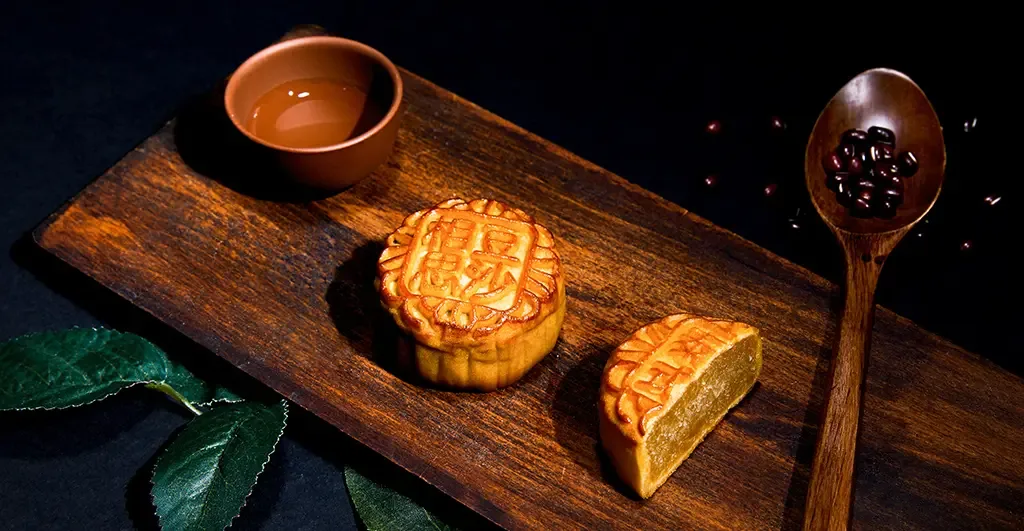
Red bean mooncakes with tea and adzuki beans for healthier Mid-Autumn portions

Insights · General Health

How to enjoy mooncakes the healthier way

Mid-Autumn cake with family tea is meant to be shared. Use the calorie and portion map below so dessert stays festive without guessing.

In brief

A regular full-sized traditional mooncake is about 900 calories, close to half of a 1500–2000 calorie day. “Healthier-choice” labels usually mean less sugar; fat from oil or lard still drives most of the energy. Snowskin is not automatically lighter. Treat cake as dessert: eat after a meal, keep to about ⅛ (or at most ¼) of a cake, and trim rice or noodles to about ¾ bowl.

01 · Mid-Autumn

Share the cake, keep the portion

Singapore · family tea · dessert

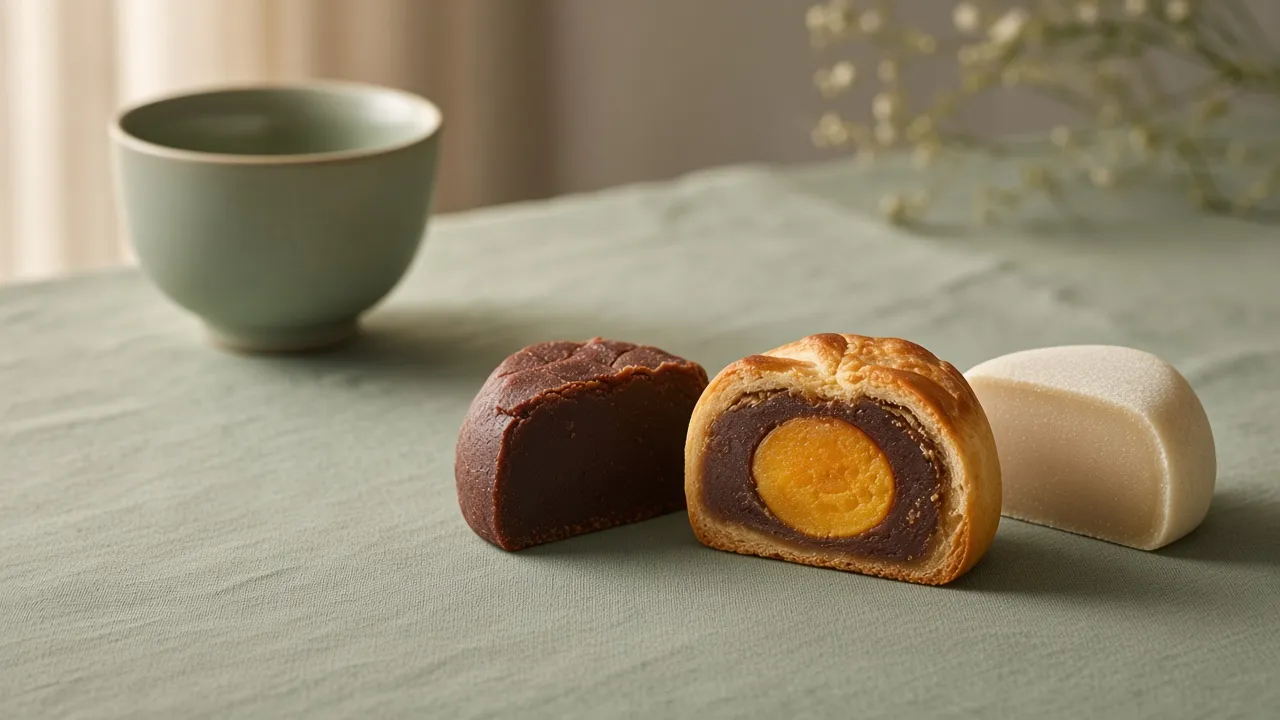
Mid-Autumn marks the harvest moon. Families buy or bake mooncakes to share with tea. Singapore tins now run from classic lotus paste to strawberry, durian, chocolate, and matcha. Flavour variety does not cancel the sugar and fat in a full cake; use the calorie map and habits below so dessert stays festive.

02 · What’s inside

What’s in a mooncake?

Paste · fat · sugar · flour

A traditional baked cake stacks paste, fat, and sweetener in a thin pastry shell. Modern flavours change the filling story; the energy density usually stays high.

  • Lotus paste (with or without white bean paste): dense sweet filling and the main sugar stack.
  • Vegetable oil or lard: in skin and filling; the largest calorie driver even when sugar is cut.
  • Sugar (glucose syrup or white sugar): sweetness and browning; “healthier-choice” often trims this first.
  • Cake flour or glutinous rice flour (snowskin): carbohydrate in the shell; soft skin is not low-energy.
  • Nuts or salted egg yolks: extra fat and flavour; still count toward the portion.

03 · Calorie map

Mooncake calories by portion

900 kcal · ⅛ · ¼

A regular full-sized traditional cake is about 900 calories, close to half of a 1500–2000 calorie day. Health Promotion Board-style figures put a roughly 192g baked lotus cake with two egg yolks near 890 kcal. Brands and minis vary; treat the rows as typical commercial portions.

Typical mooncake portions, calories, and festive tips
Portion Calories Share of day Festive tip
Full traditional baked cake~190g · often with yolks About 900 kcal ~½ of 1500–2000 kcal Share the tin; do not solo a whole cake
¼ cake About 225 kcal Dessert-sized sitting Upper limit when sampling several flavours
⅛ cake About 110 kcal Small dessert Default festive sitting after a meal
Snowskin, rich filling (full)Durian and similar fills Can still near baked density Soft feel misleads Judge filling and portion, not texture
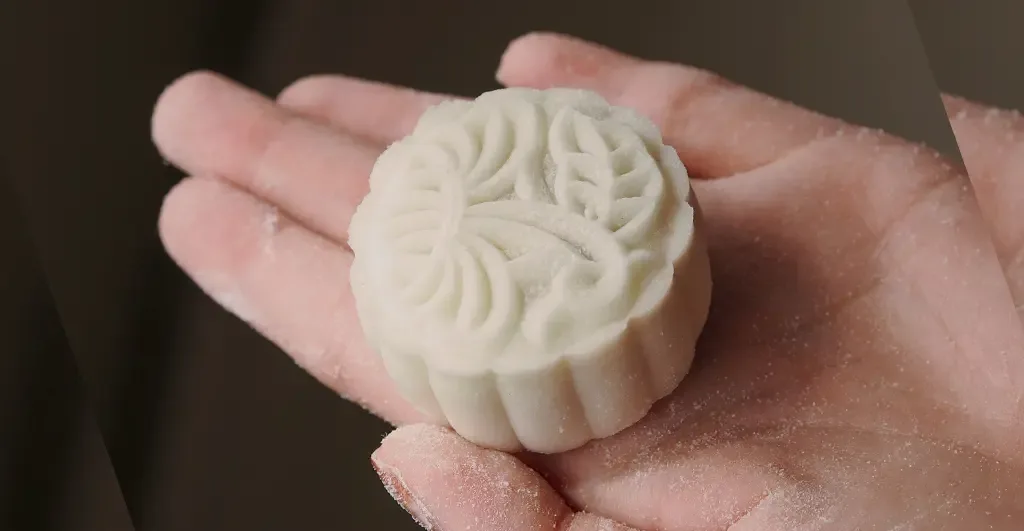
Snowskin mooncake in a hand for the Mid-Autumn soft-skin calorie myth

04 · Labels and myths

Soft skin is not a free pass

Snowskin · reduced sugar · fat

Snowskin often feels lighter and less oily. That texture is usually misleading: filling and skin still use oil and sugar. Soft ≠ low calorie.

  • “Healthier-choice” ≈ less sugar: how much less is often unpublished. Fat from oil or lard remains the largest calorie driver.
  • Low-fat mooncakes are rare: fat carries mouthfeel; cutting it seriously changes texture.
  • Still a dessert: place the cake in the overall diet, then portion it. Energy is high; micronutrient return is low.

05 · Healthier habits

How to enjoy mooncakes the healthier way

Mid-Autumn comes once a year. Moderation keeps the tin enjoyable without cutting cake out entirely. Mooncakes are high in fat and carbohydrate from sugar and flour, so make room on the plate.

1. Dessert after a balanced meal

Have the cake after a healthy meal rather than on an empty stomach, so grazing from the tin is less tempting.

2. Keep to ⅛ cake, or at most ¼

Control portions to about one-eighth of a cake at a time, or a maximum of one-quarter in total even when sampling several flavours.

3. Choose lower-fat meals around cake day

Pair Mid-Autumn dessert with lower-fat, lower-oil mains so the cake’s fat load is not stacked on a greasy dinner.

4. Trim rice or noodles to about ¾ bowl

A standard serving is about one rice bowl of rice or noodles. Reducing to about three-quarters of a bowl makes carbohydrate room for the cake.

5. Add pomelo and pumpkin seeds

Enjoy pomelo and pumpkin seeds beside the cake. Moderation still applies; these sides are usually lighter than a second wedge of pastry.

06 · After Mid-Autumn

When sweet oily cake feels heavy

In TCM, repeated sweet and oily desserts can tax Spleen transport and add damp load, especially with late nights and air-conditioning. Calorie counts guide portions; pulse and tongue still name the pattern.

1. Fullness or greasy mouth after tea

Food stagnation and damp pictures are common when paste, yolks, and pastry stack across several evenings.

2. Throat dryness or mouth heat

Rich fillings and late grazing can sit on the warming side of the food chart for some constitutions.

3. Appetite or weight still swinging

Festive sugar-and-fat load can keep appetite unsettled after the festival even when the tin is put away.

When to book after the festive tin

If digestion stays heavy, sleep is off, or weight and appetite keep swinging after Mid-Autumn, bring what you have been eating. A physician can name the pattern; Medical Nutrition Therapy can set a personal festive plan when macros need a closer read.

Dr Sim Beng Joo

Clinically reviewed

Reviewed by Sim Beng Joo

Advisor (Science & Strategy) / Consultant Physician · TCMPB T1303003A

MOH-licensed TCM physician and biomedical scientist, with clinical work in digestion, constitution patterns, and how festive diet load shows on pulse and tongue.

View full profile

Educational information based on clinical experience, nutrition guidance, and TCM principles. Calorie figures are typical estimates for common full-sized mooncakes, not a personal meal plan. Not a substitute for personalised consultation, medical care, or urgent attention. Speak with your physician or dietitian before starting a restrictive diet, herbs, or new self-care in pregnancy or with a chronic condition.

FAQs

Questions, answered

Calories, snowskin myths, and portion habits before the next Mid-Autumn tin.

How many calories are in a mooncake?

A regular full-sized traditional mooncake is about 900 calories. That is close to half of an average adult’s 1500–2000 calorie day. About one-eighth is roughly 110 calories; one-quarter is about 225. Brands and mini cakes vary; treat the figures as typical commercial portions, not a lab label for every tin.

Are snowskin mooncakes healthier?

Usually not. Soft skin is not a free pass. Snowskin can feel lighter and less oily, but filling and skin still carry meaningful oil and sugar. Rich fills can still approach baked-cake density. Judge the whole dessert and the portion, not the cool texture alone.

Are reduced-sugar or “healthier-choice” mooncakes healthier?

Most “healthier-choice” cakes cut sugar. Fat from oil or lard remains the largest calorie driver, and true low-fat mooncakes are rare because fat carries texture. Reduced sugar helps, but the cake is still a dense dessert.

How much mooncake should I eat?

Aim for about one-eighth of a cake (about 110 calories) at a sitting, or at most one-quarter (about 225 calories) in total even when you sample several flavours. Keep the rest for later days or share the tin.

When should I eat mooncake during Mid-Autumn?

Have it as dessert after a balanced meal rather than on an empty stomach. Choose a lower-fat main, and trim rice or noodles to about three-quarters of a bowl so the cake’s carbohydrate fits the day.

When should I see a dietitian or physician about festive desserts?

Book if digestion stays heavy after Mid-Autumn, weight or appetite keep swinging, or you need a personal plan for diabetes, pregnancy, or other chronic conditions. Medical Nutrition Therapy sets macros with a dietitian; dietary therapy names the TCM pattern after pulse and tongue.

References

Selected sources

  1. Channel NewsAsia. Mooncake madness: Why overindulging in these festive treats could be a health risk. https://www.channelnewsasia.com/singapore/mooncake-madness-why-overindulging-these-festive-treats-could-be-health-risk-1000461
  2. Raffles Health. How to turn your mooncakes into a healthier snack. https://www.raffleshealth.com/health-articles/how-to-turn-your-mooncakes-into-a-healthier-snack/
  3. National Center for Complementary and Integrative Health. Traditional Chinese medicine: What you need to know. 2019. https://www.nccih.nih.gov/health/traditional-chinese-medicine-what-you-need-to-know/
  4. World Health Organization. Traditional, complementary and integrative medicine. https://www.who.int/health-topics/traditional-complementary-and-integrative-medicine
  5. Ministry of Health Singapore. TCM practitioners (Healthcare Professional Portal). https://hpp.moh.gov.sg/tcm-practitioners/

Next step

Want a festive dessert plan that still fits you?

Bring what you usually take from the mooncake tin and how digestion sits afterwards. We will name the pattern in plain language and decide whether dietary therapy, Medical Nutrition Therapy, or acupuncture belong in your plan.

Hours
Most clinics daily 11:00 AM – 8:00 PM
Care
Physician-led consultation