Fresh kitchen herbs, chilli, and spice on a pale board for TCM food therapy

Insights · General Health

Food for health: five flavours and four natures

Bloated after cold salads, flushed after chilli, or sluggish after sweet drinks: TCM asks what each flavour and food nature does after you eat, and whether that plate fits your constitution.

In brief

The same healthy plate can leave one person energised and another bloated or heaty. Meals are classed by Five Flavours (sour, bitter, sweet, salty, pungent) that nourish paired organs, and Four Natures (cold, cool, warm, hot, plus neutral) that warm or cool the body after eating, not by serving temperature. The aim is balance for your constitution, not one diet for everyone. When food alone is not enough, herbs and other care follow a physician read.

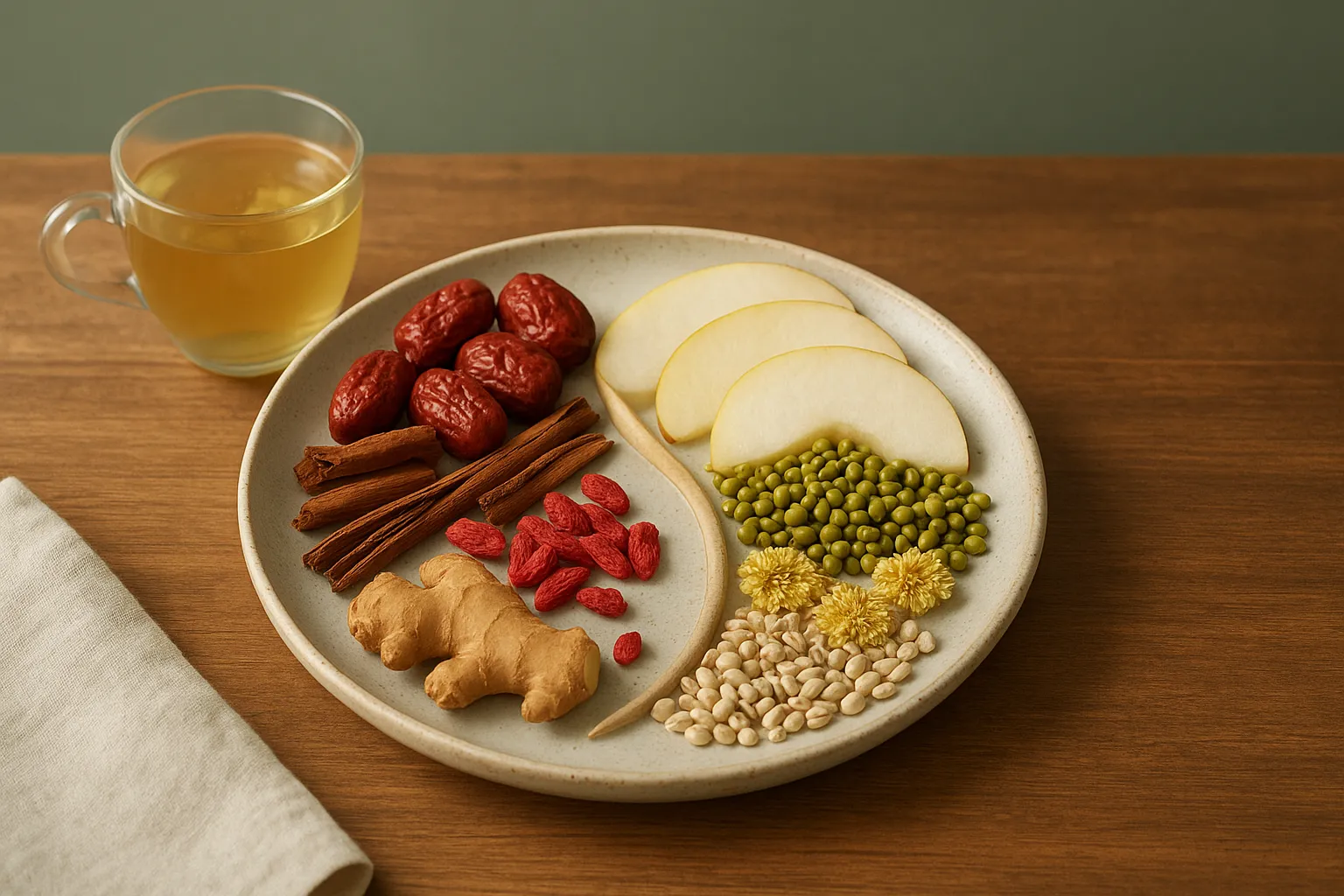
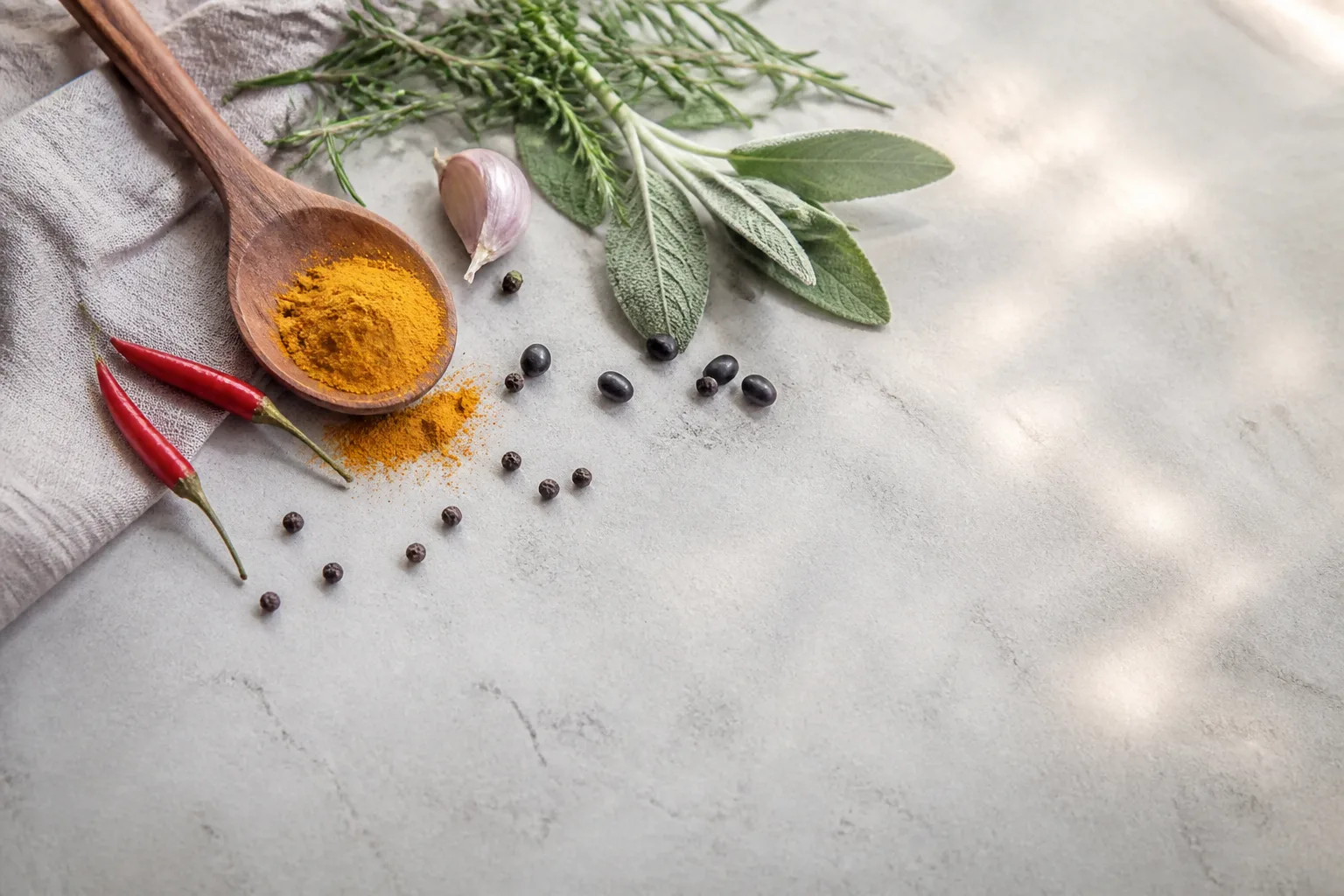
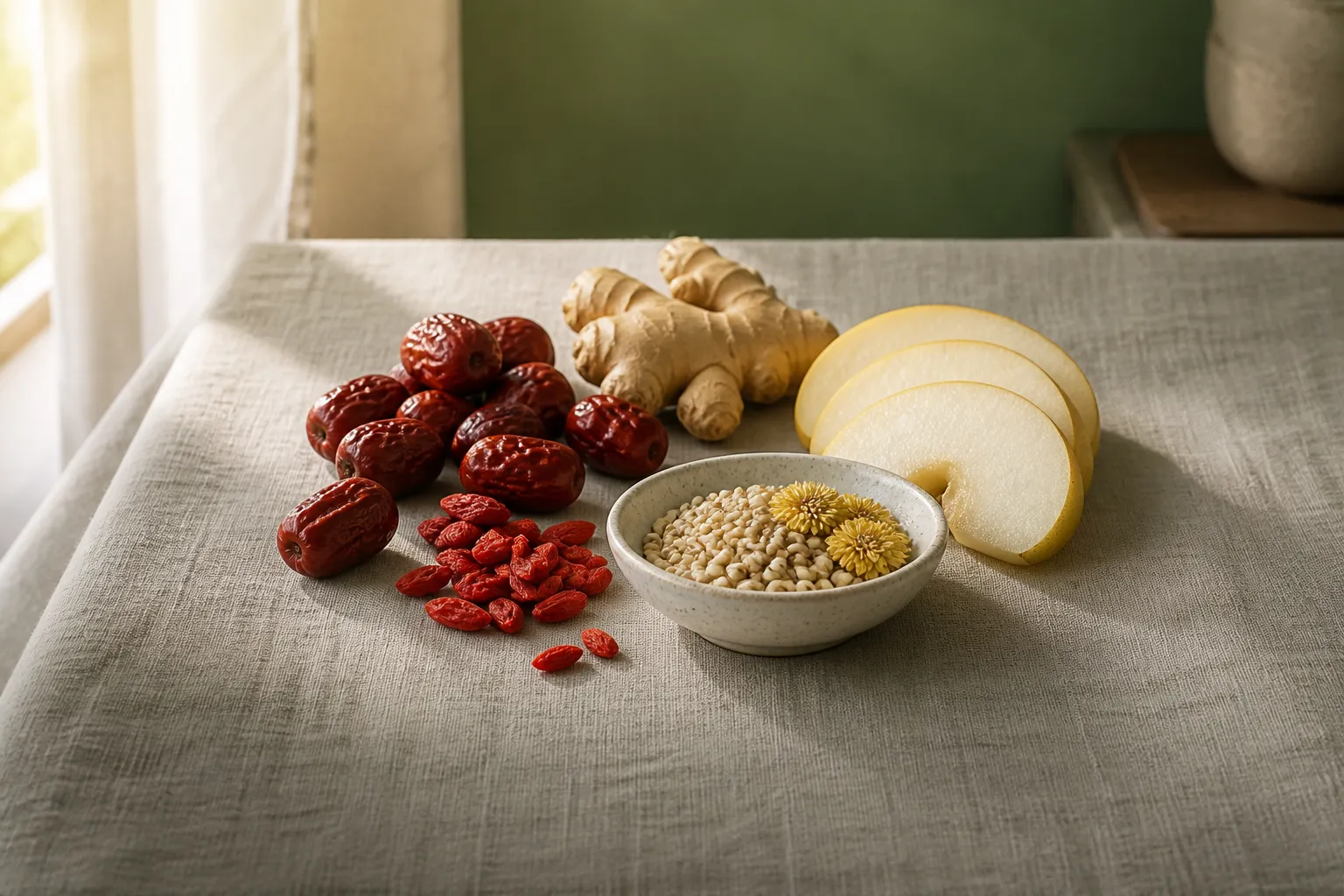
Kitchen ingredients used as food therapy in TCM dietary care

01 · Food as medicine

So what should we really eat?

食疗 · food therapy

Macro counts shift with every Western headline, yet how you feel after eating still matters. TCM also asks what each meal does to Yin and Yang once it is digested.

  • Food and medicine overlap: watermelon is food, and on a hot day its hydrating, cooling nature can act like mild medicine.
  • Food therapy first: meals are often the first care for staying well or easing mild imbalance. When food alone is not enough, herbs and other treatments carry stronger effect.
  • Energetic classes: TCM sorts food by Five Flavours and Four Natures more than by calorie tables alone.
02 · Five Flavours

Five Flavours: more than taste

五味 · sour · bitter · sweet · salty · pungent

Sour, bitter, sweet, salty, and pungent (spicy) are familiar names. In TCM each flavour also directs nutrition toward paired organs, carries a direction of action, and has uses and cautions when taken in excess.

Sour

Liver · Gallbladder · 酸

Cooling, contracting, and astringent. Helps hold fluids in and firm tissues when leakage is the picture.

  • Often used for: incontinence, excess sweating, haemorrhage, diarrhoea, flaccid skin, haemorrhoids.
  • Limit when: tendon or joint problems, dampness, or constipation.
  • Examples: lemon, lime, pickle, sour plum; in Singapore kitchens, pickled vegetables and plum powder sit in the same sour lean.

Bitter

Heart · Small intestine · 苦

Cooling and descending. Clears and reduces; can dry fluid, drain dampness, and open the bowels.

  • Often used for: inflammation, infection, high cholesterol, overweight, high blood pressure, yeast infection, swelling, oedema, constipation.
  • Limit when: osteoporosis issues.
  • Examples: burdock, alfalfa, romaine lettuce, rye; bitter gourd and strong Chinese barley drinks are familiar local bitter notes.

Salty

Kidney · Bladder · 咸

Cooling and descending. Moistens, softens hard lumps, eases stiffness, and can purge the bowel.

  • Often used for: abdominal swelling, low appetite, sore throat, and skin problems that need softening.
  • Limit when: high blood pressure.
  • Examples: seaweed, kelp, salt, miso, soy sauce; hawker soy and seaweed snacks still count as salty load.

Sweet

Spleen · Stomach · 甘

Ascending and outward. Harmonising and tonifying; builds fluids and can slow acute stress on the system.

  • Often used for: easing common cold or flu load, stress and tension, and tonifying when the Spleen is weak.
  • Limit when: overweight or a damp lean (sweet can add dampness).
  • Examples: beans, peas, lentils, dates, potato, yam, almond, sesame and sunflower seeds; sugars and most dairies. Red dates and sweet potato are common Singapore sweet tonics.

Pungent (spicy)

Lung · Large intestine · 辛

Disperses and expands. Stimulates circulation with an ascending, outward push.

  • Often used for: digestion support, early common cold, inducing sweat, lifting energy, and patterns where parasites are named.
  • Limit when: fever or a heaty constitution.
  • Examples: spearmint, rosemary, garlic, onion, cinnamon, hot peppers, cayenne, fennel; chilli crab, white pepper, and ginger in local cooking sit here.

03 · Four Natures

Four Natures: warm, cool, and neutral

四气 · cold · cool · warm · hot · ping

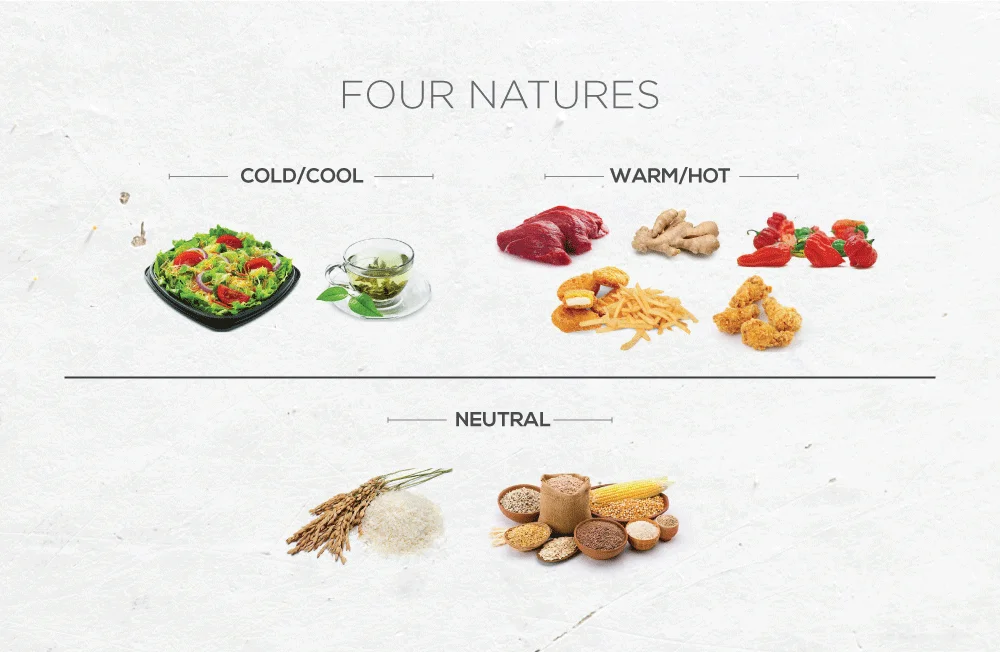
Cold, cool, warm, and hot name the effect on the body after eating, not serving temperature. Neutral (ping) foods sit between warm and cool. Eating only one nature for a long stretch can push the body too hot or too cold.

Four Natures with everyday examples
Nature After-effect Everyday examples
Cold / coolCools the body. Clears heat and can lower metabolic warmth when taken often Salad, green tea, iced drinks, cucumber; barley or green-bean pots when heat has stacked
Warm / hotBrings heat to the body. Warms circulation and can stack heat when fried or spicy meals dominate Beef, ginger, hot chillies, fried food; kopi and chilli-heavy hawker plates
NeutralNeither strongly warm nor cool. Nourishes without a sharp Yin-Yang shift; a safe lean when unsure Rice, grains, oats; plain porridge as a starting plate

For heaty and cooling signs, Singapore food lists, and empty heat, see heaty vs cooling in TCM.

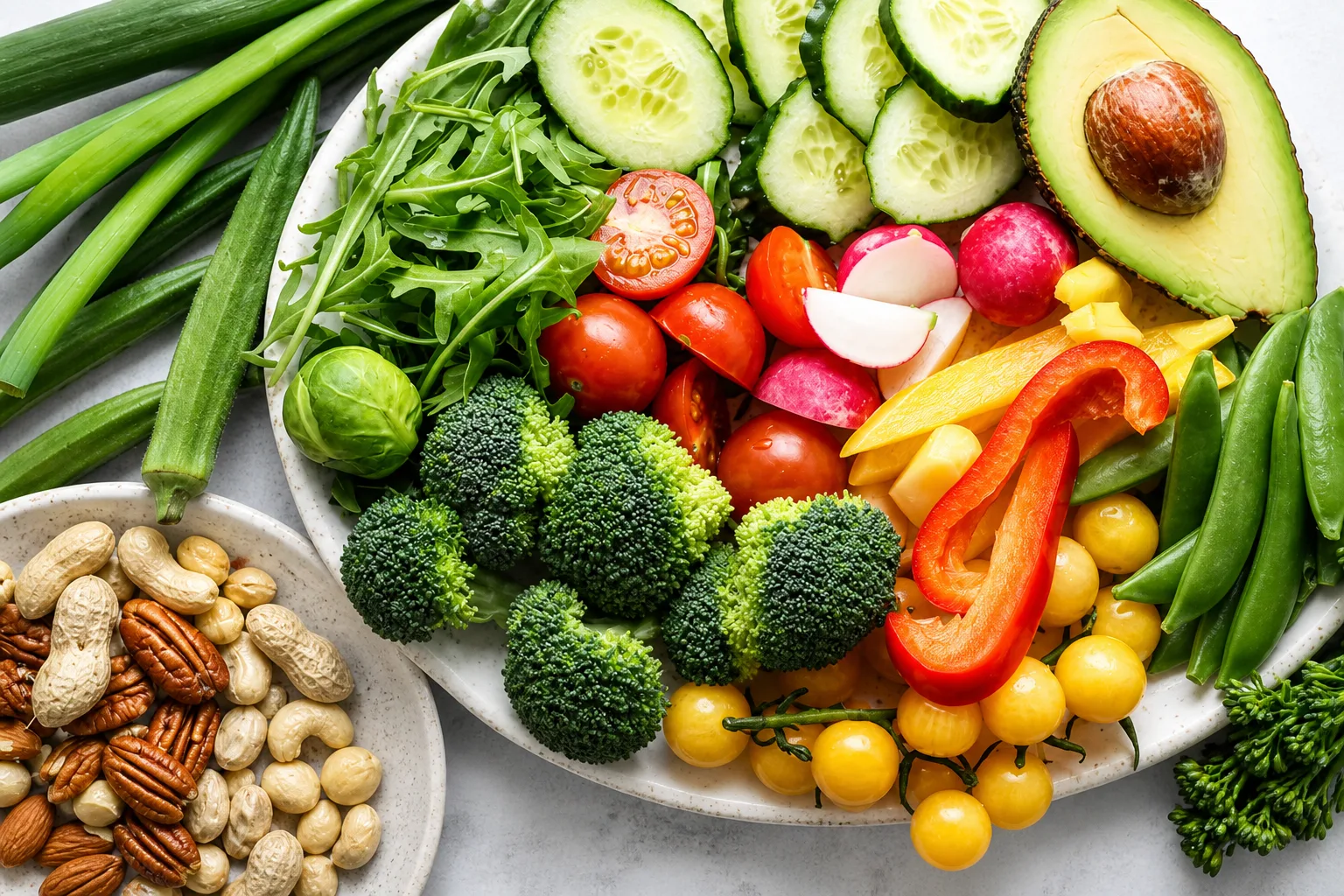
Cold or cool salad and tea, warm or hot meats and spices, and neutral rice and grains

04 · Body signs

When one nature has stacked

Physicians watch groups of signs, not any single clue alone. The aim is food natures that keep your body nearer to neutral for your type.

1. Too much heat

Feeling hot, sweating often, irritability, or constipation. Strongly warming or fried meals can add to this lean.

2. Too much cold

Pale face, cold hands and feet, weakness, or poor circulation. Long iced-drink habits and raw salads can add cold load when Yang is already low.

05 · Constitution

Eat for your body type

体质 · pattern · dampness

Personalities differ. Constitutions do too. The same “healthy” plate does not fit every body. Matching nature and flavour to the pattern matters more than copying a universal menu.

  • Dampness example: easy weight gain, sweating, or an oily face often needs bitter foods to drain dampness.
  • Sweet caution: sweet foods can add dampness and may worsen that picture when taken in excess.
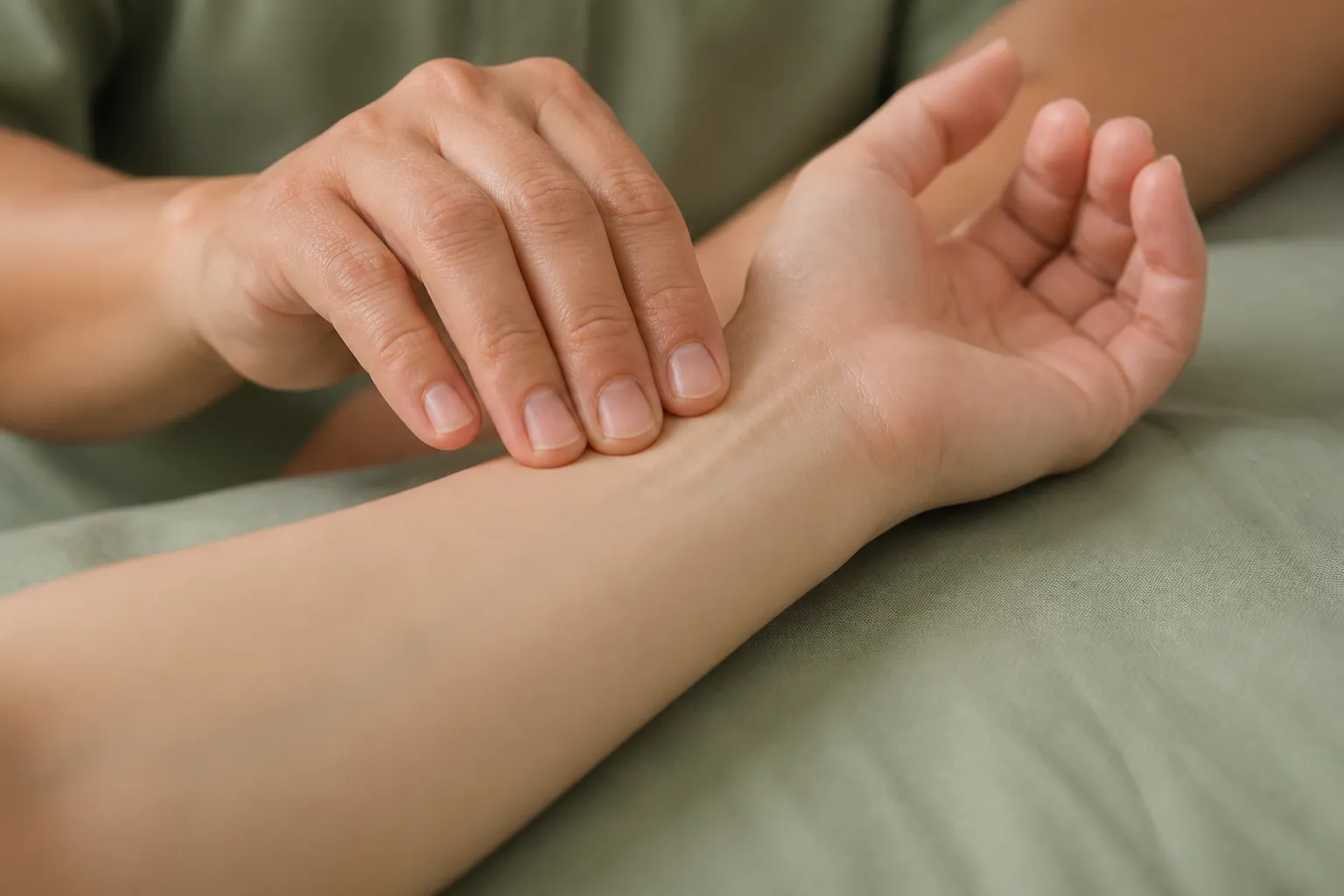
  • Clinic read: naming your type needs tongue, pulse, and a full picture, not a food chart alone.

For the nine body constitution types and how food matches each, see understanding your body constitution.

06 · Kitchen

Cooling or warming pots to try

食疗 · soup · tea

When heat or cold has stacked from meals, a matched pot can help while you sort the longer pattern.

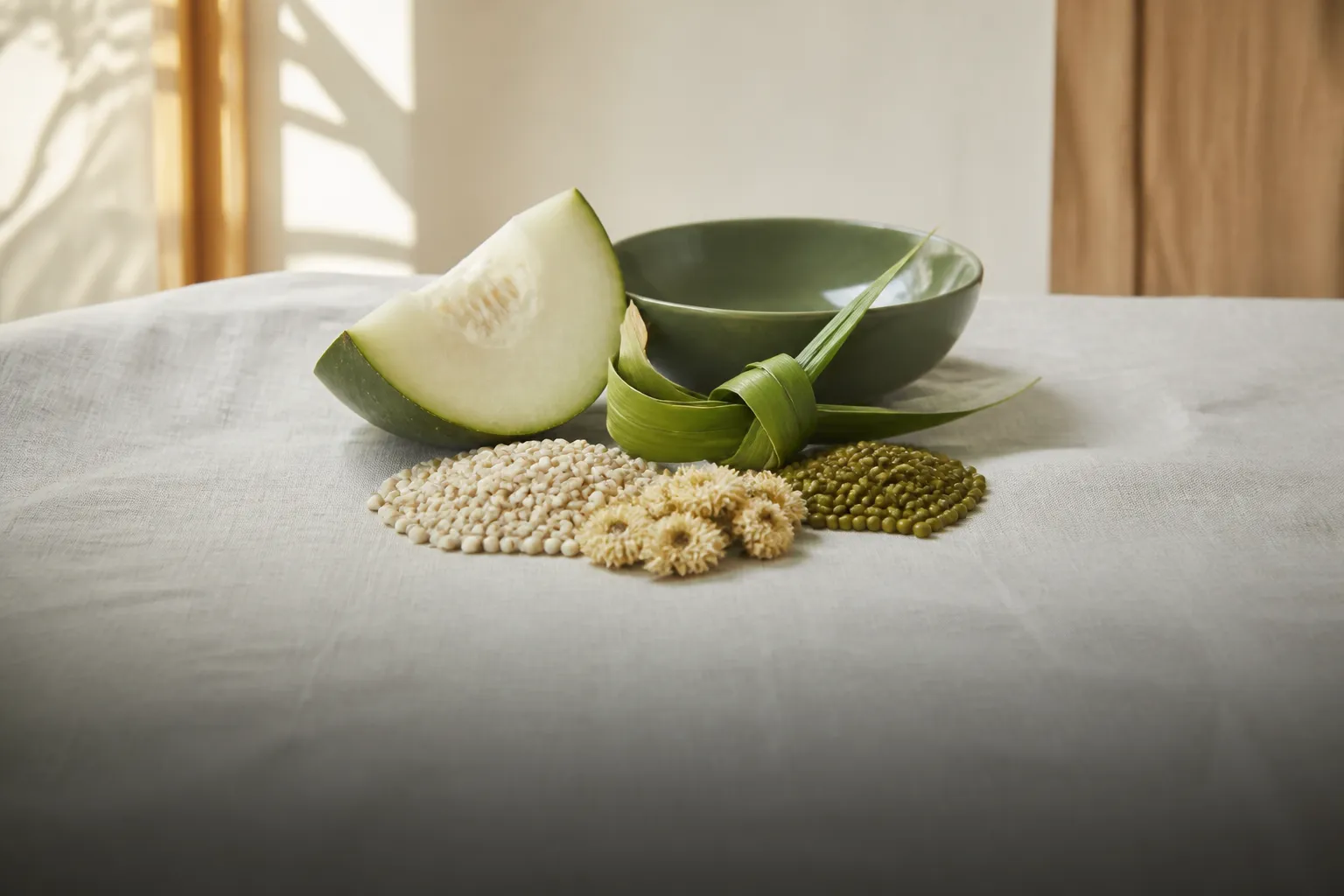
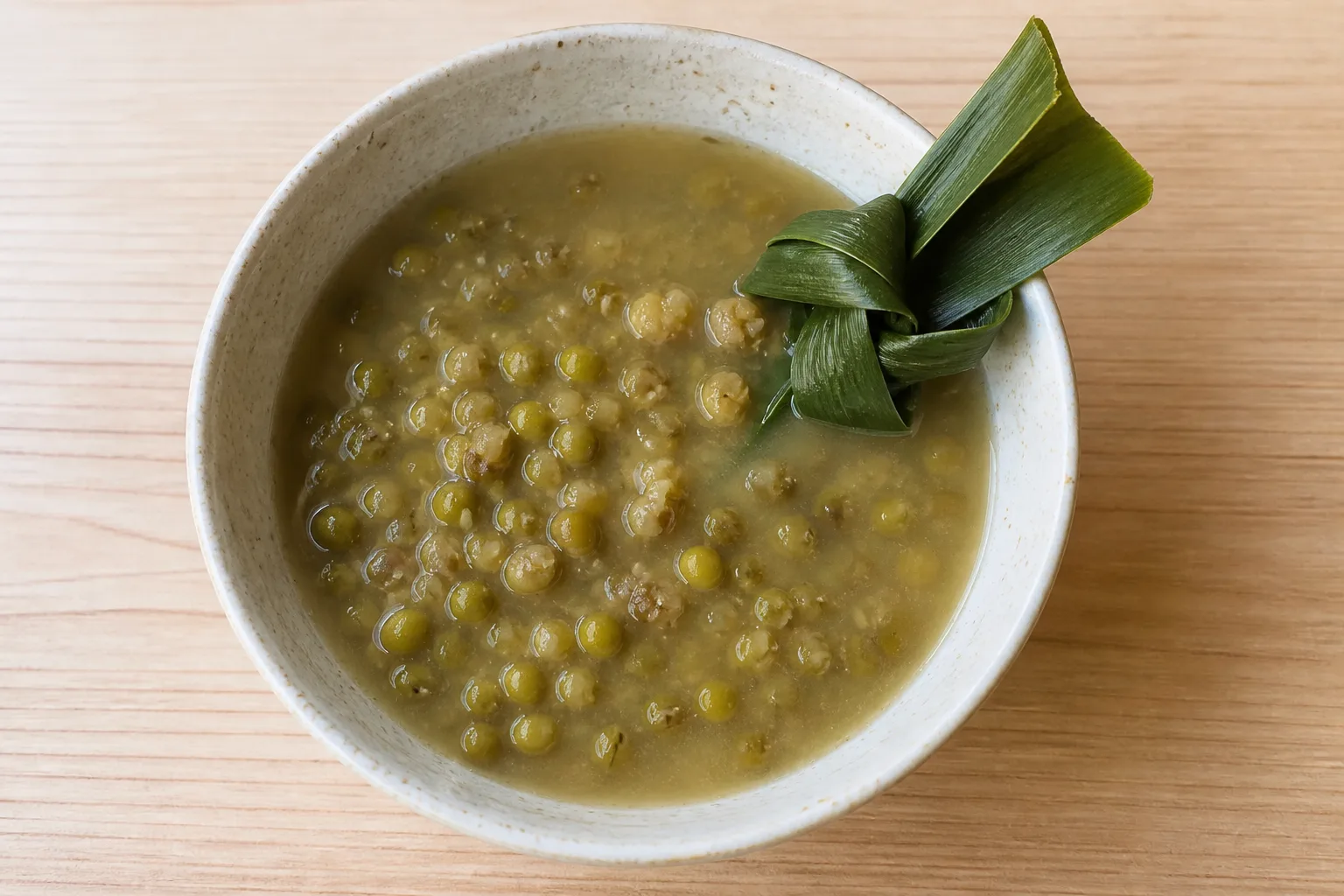
Bowl of mung bean soup with pandan

Cooling soup

Mung bean (green bean) soup

A classic cooling pot when spicy or fried food has stacked up. Often discussed with Stomach fire patterns.

Stop or avoid long-term use if you have diarrhoea.

Make the mung bean soup
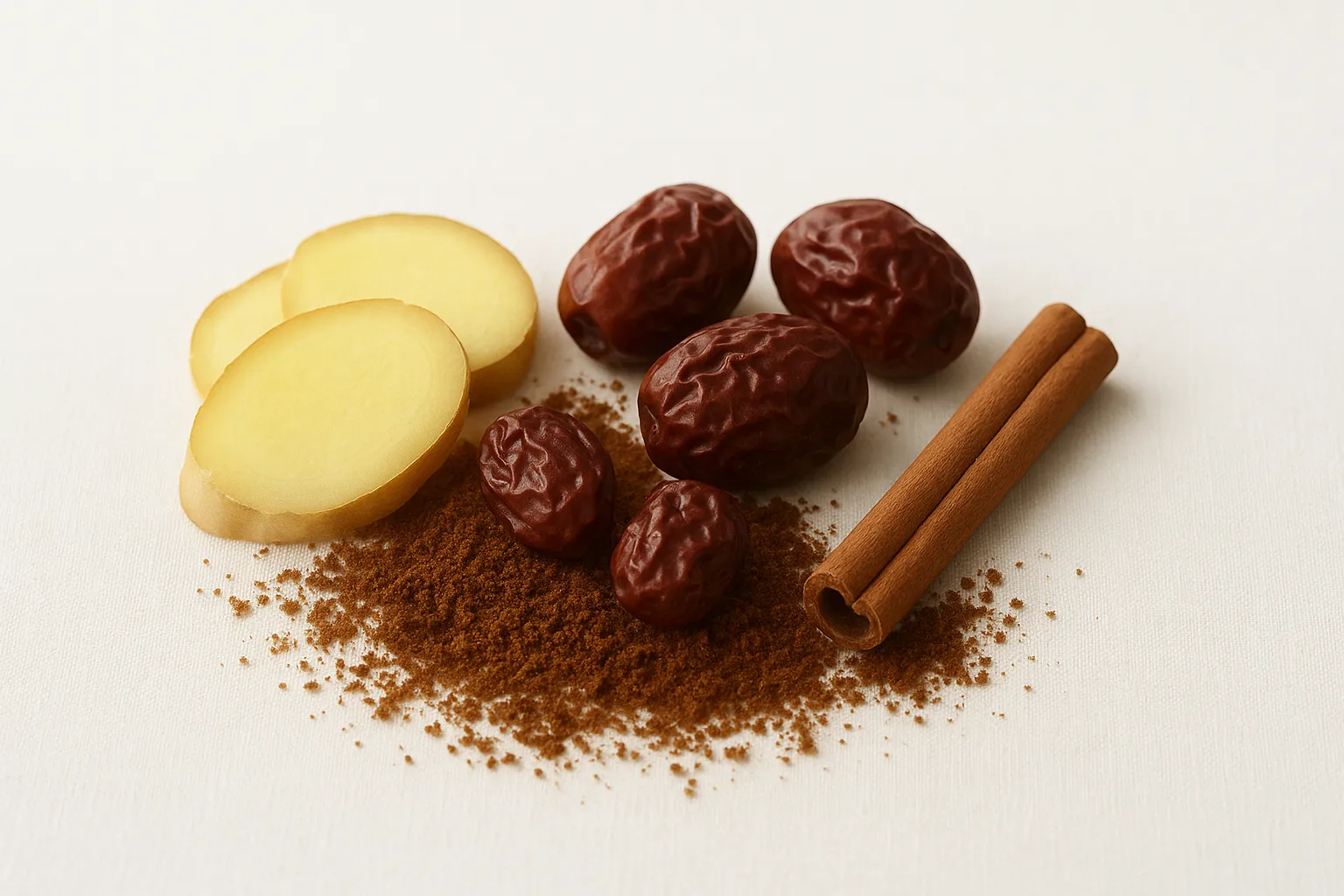
Ginger, red dates, cinnamon, and brown sugar for tea

Warming tea

Cinnamon ginger tea

Ginger and cinnamon with red dates for chilly hands, a cold low belly, or a cooling lean.

Skip if you run strongly heaty, or if pregnancy diet limits apply.

Make the cinnamon ginger tea

07 · Balance

Every food can nourish when balanced

五谷 · 五菜 · 五畜 · 五果

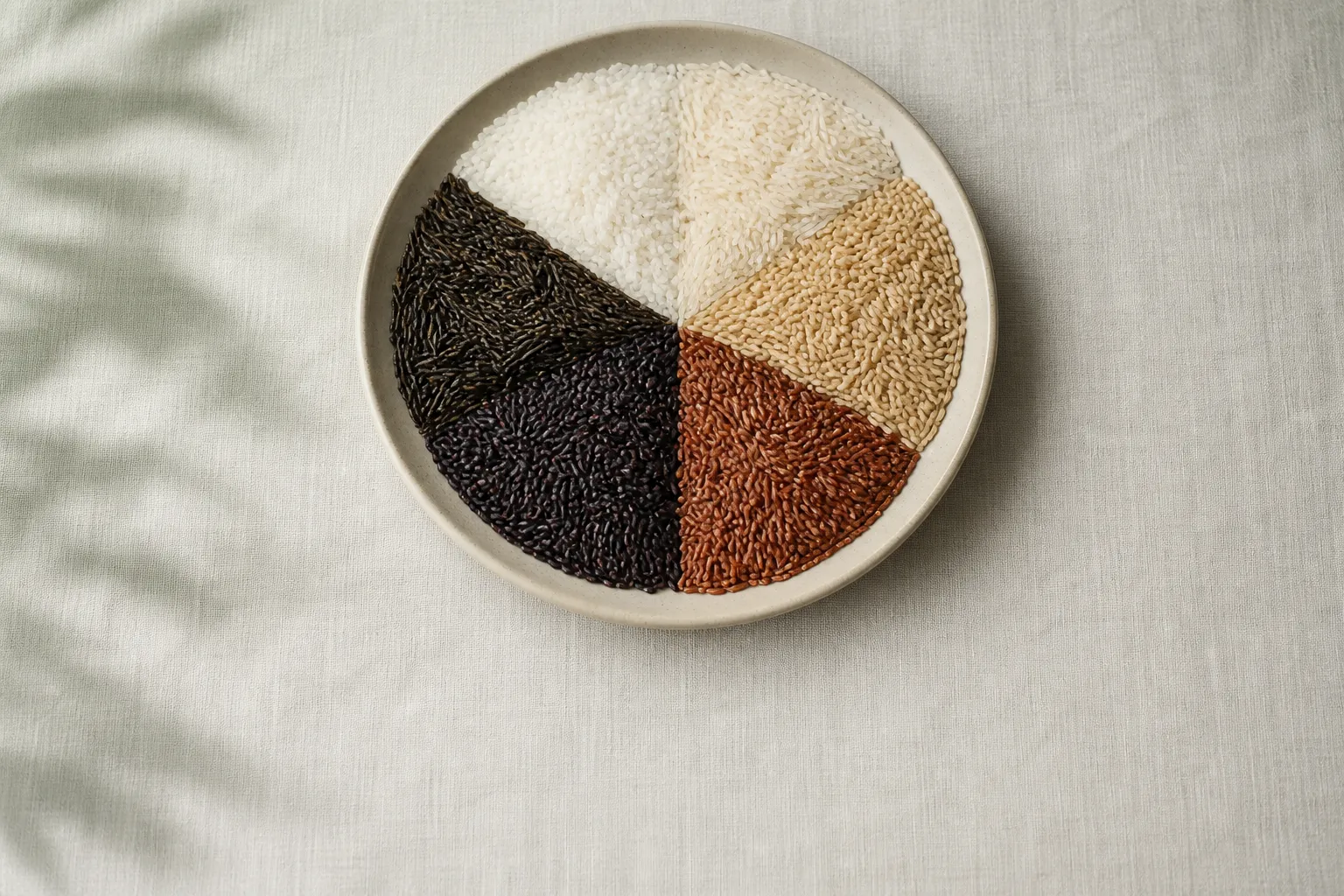
In TCM, every food can be nutritious when a healthy person does not lean too hard on any one item. A Chinese saying captures the mix: the five grains provide nourishment; the five vegetables provide filling; the five domestic animals provide enrichment; the five fruits provide support.

A balanced diet combines natures and flavours so the essence the body needs is topped up without extremes. One of the golden rules is never to take extremes. Health here is balance for your constitution, not a single superfood.

Physician consult setting where pulse and tongue inform food guidance

08 · Clinic

When food therapy is not enough

Pulse · tongue · shi liao

Food therapy is often first-line care for staying well or easing mild imbalance. When meals alone do not reverse the pattern, herbal medicine and other treatments can carry stronger effect after a physician read.

Dietary therapy at PULSE is pattern-led shi liao after pulse and tongue, not a one-size menu.

Ready for food guidance that fits your type?

Bring what you usually eat and how you sleep. A physician can match flavours, natures, and next steps to your constitution.

Dr Sim Beng Joo

Clinically reviewed

Reviewed by Sim Beng Joo

Advisor (Science & Strategy) / Consultant Physician · TCMPB T1303003A

MOH-licensed TCM physician and biomedical scientist, with clinical work in digestion, pain, sleep or fatigue, and constitution patterns that guide food therapy.

View full profile

Educational information based on clinical experience and TCM principles. Not a substitute for personalised consultation, medical care, or urgent attention. Speak with your physician before starting herbs, strong warming or cooling foods, or new self-care in pregnancy, with allergies, or with a chronic condition. Seek urgent care for high fever, severe pain, or acute illness.

FAQs

Food therapy questions

Common questions before you change diet or book a first visit.

What should we really eat according to TCM?

Eat a mix of flavours and natures that keep your body nearer to neutral for your constitution, not one trending diet for everyone. Food that nourishes one person can aggravate dampness, heat, or cold in another. A physician read of tongue and pulse settles which plate fits.

What are the five flavours in TCM?

Sour, bitter, sweet, salty, and pungent (spicy). Each flavour is more than taste: it directs nutrition toward paired organs, carries properties such as contracting or dispersing, and has uses and cautions when taken in excess. Examples sit in the Five Flavours table on this page.

What are the four natures of food in TCM?

Cold, cool, warm, and hot, with neutral foods that are neither strongly warming nor cooling. Nature is the effect after eating. Warming examples include beef, ginger, chilli, and fried food. Cooling examples include salad and green tea. Rice and grains are often treated as neutral.

Is food nature the same as serving temperature?

No. Nature is how the food tends to warm or cool the body after you eat it, not whether the dish came out of the fridge or a hot pot. Green tea can still read cooling when served warm; fried food can still read heating when it has cooled on the plate.

Should everyone eat only neutral foods?

Not necessarily. Neutral foods are a safe starting point when you are unsure. Healthy eating in TCM is food that fits your body type, not only a list of “healthy” ingredients. Extreme reliance on one nature or one flavour can create imbalance over time.

How does dampness change which flavours fit?

A damp lean can show as easy weight gain, sweating, or an oily face. Bitter foods are often used to drain dampness. Sweet foods can add dampness and may worsen that picture when taken in excess. Pattern diagnosis still decides the plan.

When is food therapy not enough?

Food therapy is often the first step for staying well or easing mild imbalance. When meals alone do not reverse the pattern, a physician may add herbal medicine and other treatments with stronger effects. Seek care rather than stacking stronger kitchen remedies on your own.

References

Selected sources

  1. National Center for Complementary and Integrative Health. Traditional Chinese medicine: What you need to know. 2019. https://www.nccih.nih.gov/health/traditional-chinese-medicine-what-you-need-to-know/
  2. World Health Organization. Traditional, complementary and integrative medicine. https://www.who.int/health-topics/traditional-complementary-and-integrative-medicine
  3. Ministry of Health Singapore. TCM practitioners (Healthcare Professional Portal). https://hpp.moh.gov.sg/tcm-practitioners/
  4. Original article author: Physician Lim Xiang Jun.

Next step

Ready for a constitution-matched plate?

Bring what you usually eat and how you sleep. We will name the pattern in plain language and decide whether food guidance, herbs, or acupuncture belong in your plan.

Hours
Most clinics daily 11:00 AM – 8:00 PM
Care
Physician-led consultation