04 · Body
Why this works on the body
Unprocessed plants add volume and variety while trimming calories. Fat loss still depends on a calorie deficit.
Calories measure energy in from food and drink, and energy out from activity and everyday living. Eat more than you expend and weight rises; the reverse supports fat loss. Total intake draws from protein, carbohydrate, solid fat, liquid oil, and alcohol.
Food and fitness trackers estimate intake and burn, yet people often underestimate how much they eat and overestimate how much they burn. Even a watch cannot know how much oil a hawker put in “500-calorie” noodles, or how large the serving really was.
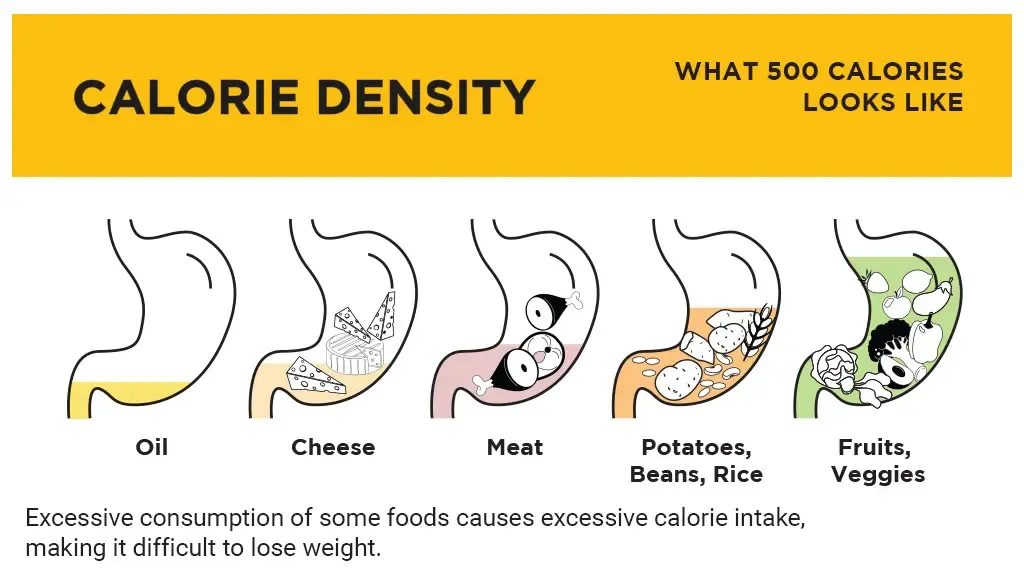
The diagram above is for illustration and is not drawn to scale. Plants can fill more stomach space for a limited calorie count, so you can feel satisfied without overloading energy, provided sauces and toppings have not poured oil or refined carbohydrate back in.
Fibre is the quiet reason. It makes up much of plant bulk, adds volume, and contributes few calories. It also supports bowel regularity and wider metabolic benefits described in the importance of fibre. Processing often strips that fibre while adding oil, salt, and sugar.