1. Posterior vitreous detachment
The gel inside the eye can pull away from the retina more readily when the eyeball is elongated.

Insights · Eye Care
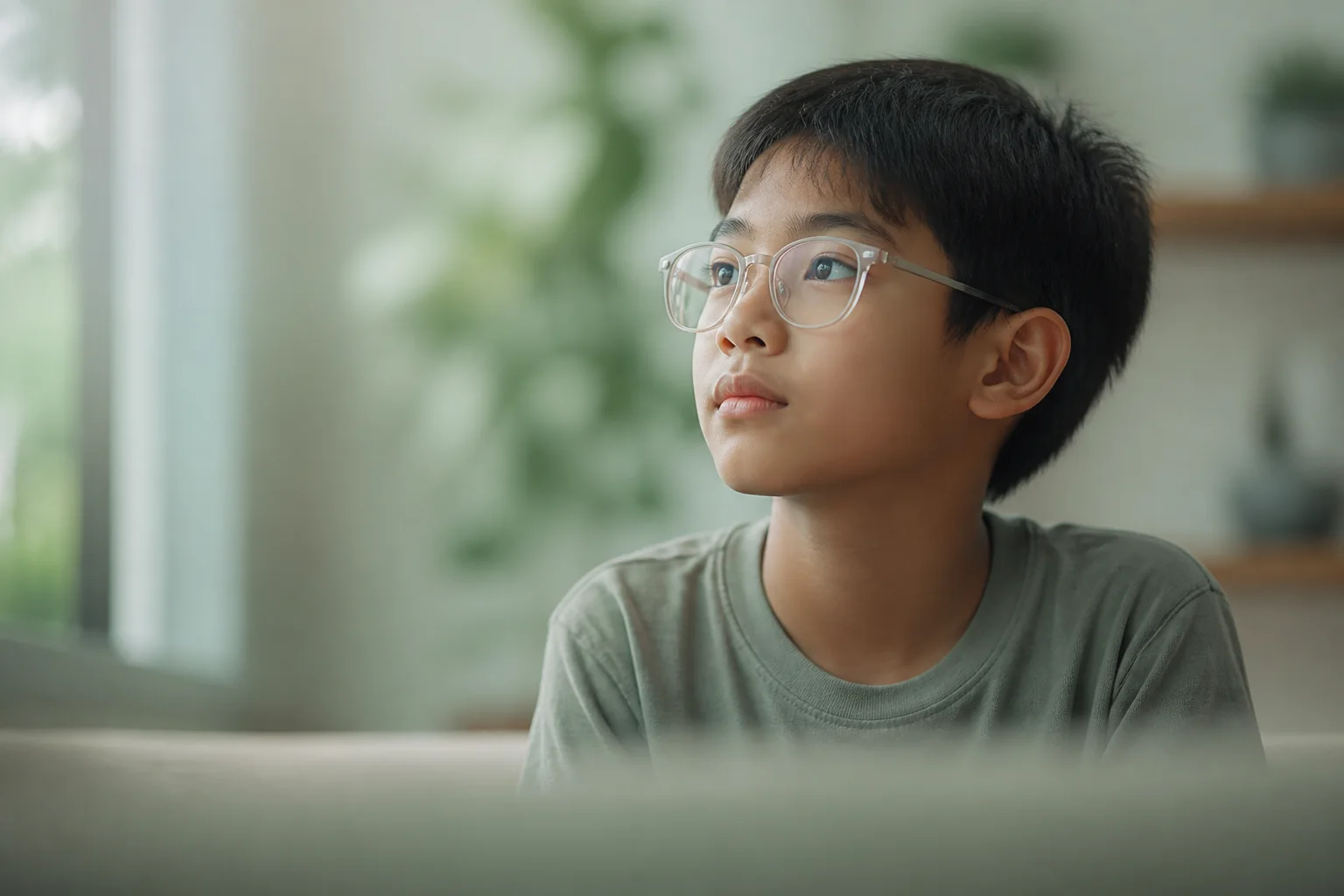
Short-sightedness is common in Singapore children. Supporting the eyes early with clinic care and daily habits can help reduce how quickly prescription climbs.
In brief
In Singapore, about one in two children develops myopia (short-sightedness) by age 12. High myopia can sit with later risks such as retinal problems and glaucoma. Spectacles and optometry myopia-control plans stay primary. TCM reads Heart, Liver, and Kidney patterns and may combine acupuncture, herbs, eye massage, and lifestyle change beside that care. Rest every 45 minutes, sleep before 11pm, outdoor time over games, and book when prescription keeps climbing or vision changes suddenly.
01 · Why it matters
In Singapore, about one in two children develops myopia (short-sightedness) by age 12. Spectacles feel normal, yet a rising prescription still deserves attention. High myopia can sit with later eye problems that go beyond thicker lenses.
The gel inside the eye can pull away from the retina more readily when the eyeball is elongated.
Stretch on the central retina can threaten fine detail vision over time.
Peripheral thinning raises the chance of breaks, degeneration, or detachment.
High myopia also sits with higher glaucoma risk, and in severe cases with blindness.
Supporting the eyes early will not replace spectacles or an optometry plan. It can help reduce how quickly short-sightedness deepens while Western eye care watches the retina and pressure.
02 · Optics
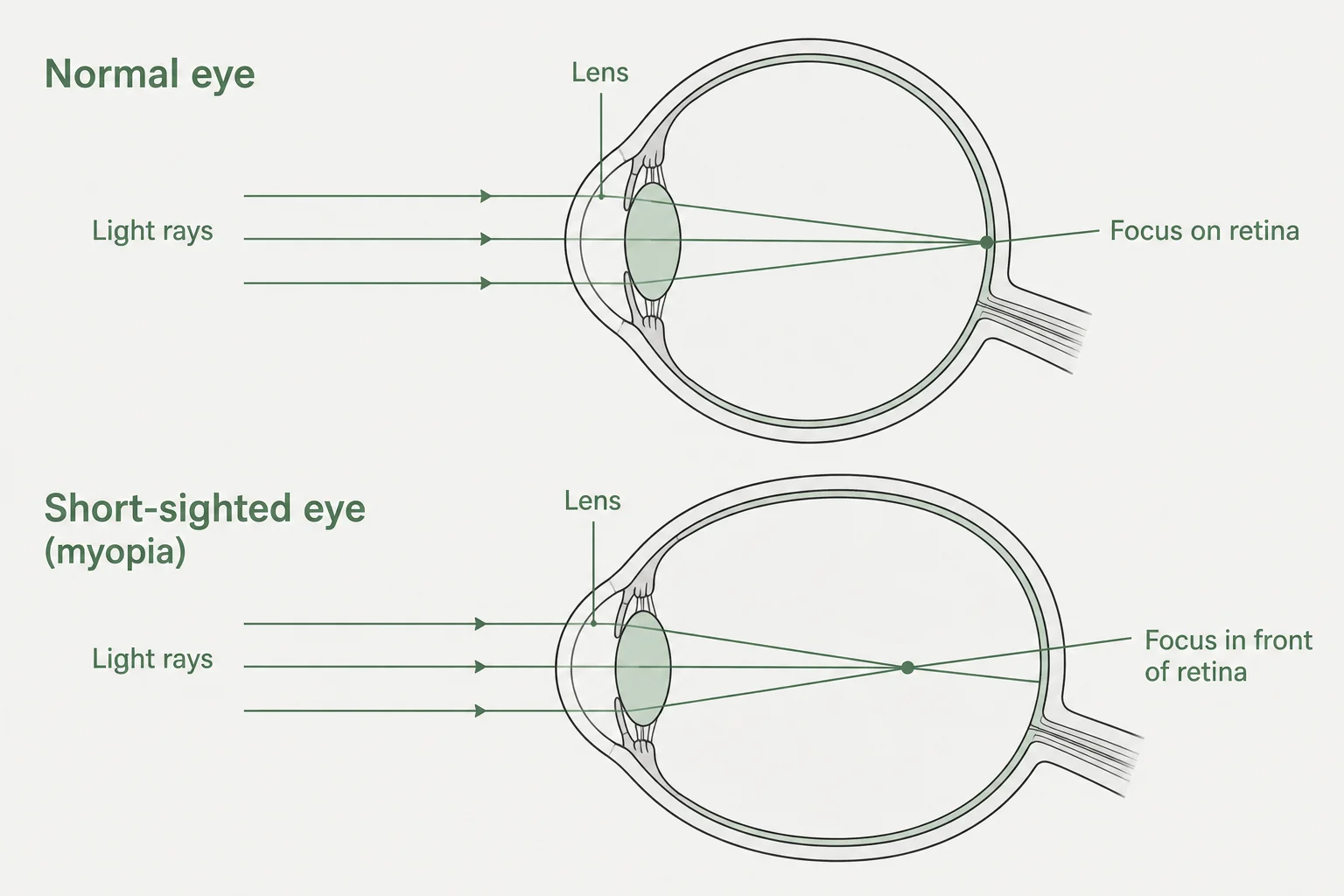
In a typical eye, light focuses on the retina so distant objects stay sharp. In myopia, the focus falls in front of the retina, so far objects look soft while near work feels clearer.
03 · TCM view
TCM links myopia patterns with the Heart, Liver, and Kidney. Long eye strain, poor neck posture, and short or late sleep can load those systems so the eyes tire more easily and the prescription climbs.
Hours on books, phones, or screens without a rest keep the orbit and the Liver channel under demand.
A forward head while reading or gaming tightens the nape and often travels with eye fatigue.
Sleeping past 11pm or cutting rest short is a common load on Kidney and Heart patterns that show in the eyes.
04 · Clinic care
Spectacles, contact lenses, and myopia-control plans from your optometrist or ophthalmologist remain the primary tools for focusing light and watching the retina. TCM does not replace those plans. After assessment, clinic care may ease local tension, support Heart-Liver-Kidney patterns, and help daily habits so prescription climb is not fighting the same load alone.
| Method | What it may support |
|---|---|
| AcupuncturePeriocular + distal | Periocular and body points to ease eye-muscle tension and support channel Qi and Blood for the vision pattern. Guangming (GB37) is often taught for Liver-Gallbladder visual strain; clinic teaching and reported imaging work have linked it with occipital cortex responses. That is adjunct education, not proof that needles reverse myopia. |
| Chinese herbsMatched formula | Matched formulas once pulse and tongue are checked when constitution and organ patterns need support beyond needles alone. |
| Eye massageOrbit work | Gentle orbit work in clinic to relax periocular muscles and support local circulation. |
| Auricular acupunctureNeedle-averse | Ear points when children or needle-averse patients prefer not to start with body needling. |
| Child massagePaediatric Tuina | Child massage when the physician judges Tuina a better fit than needles for age or temperament. |
| Lifestyle changeHome rhythm | Rest timing, sleep, diet, and outdoor time so clinic sessions are not fighting the same daily load. |
Younger patients aged about 5 to 16 often show clearer change after a cycle of about ten sessions. How many cycles you need still depends on environment and lifestyle. See the Eye Care programme when vision strain, dryness, or floaters sit with the myopia picture.
05 · Periocular points
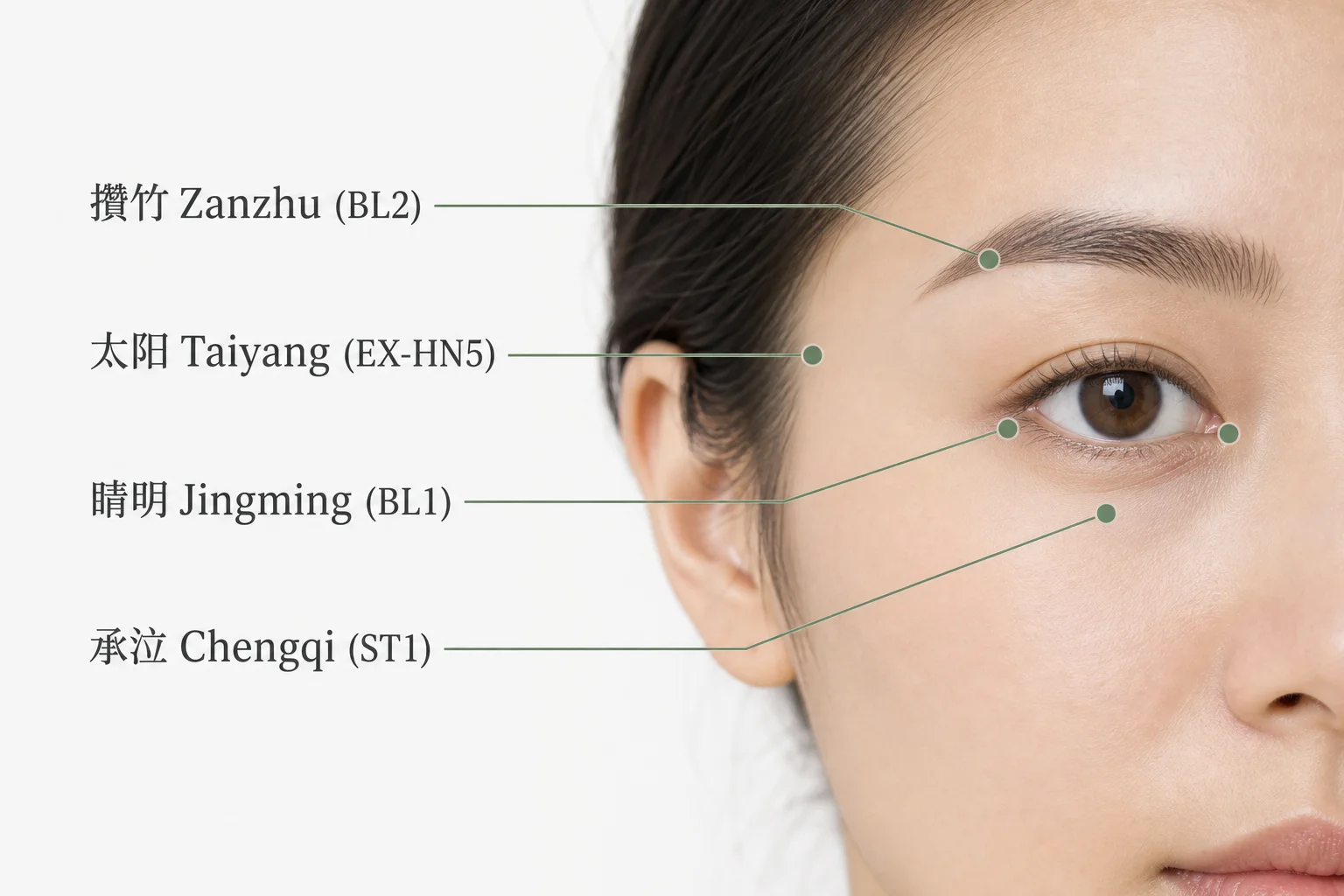
These four points are commonly used in clinic to ease eye-muscle tension, support local circulation, and work with body and ear points. Soft home press is educational only. Never press into the eyeball.
| Point | Where | Clinic use |
|---|---|---|
| Jingming (BL1)睛明 | Hollow at the inner eye socket, where the nose bridge meets the brow. | Ease inner-canthus tension; support local circulation. |
| Zanzhu (BL2)攒竹 | Hollow at the medial end of the eyebrow, near the bridge of the nose. | Ease brow and inner-orbit strain. |
| Chengqi (ST1)承泣 | Directly below the pupil on the infraorbital ridge. | Support lower-orbit comfort; light pressure only at home. |
| Taiyang (EX-HN5)太阳 | Temple hollow beside the outer corner of the eye. | Ease temple tightness that travels with near focus. |
Caution
Skip over cuts, rashes, or active styes. Stop if the press turns sharp or vision changes. Home press is not needle acupuncture.
Acupoint · Orbit
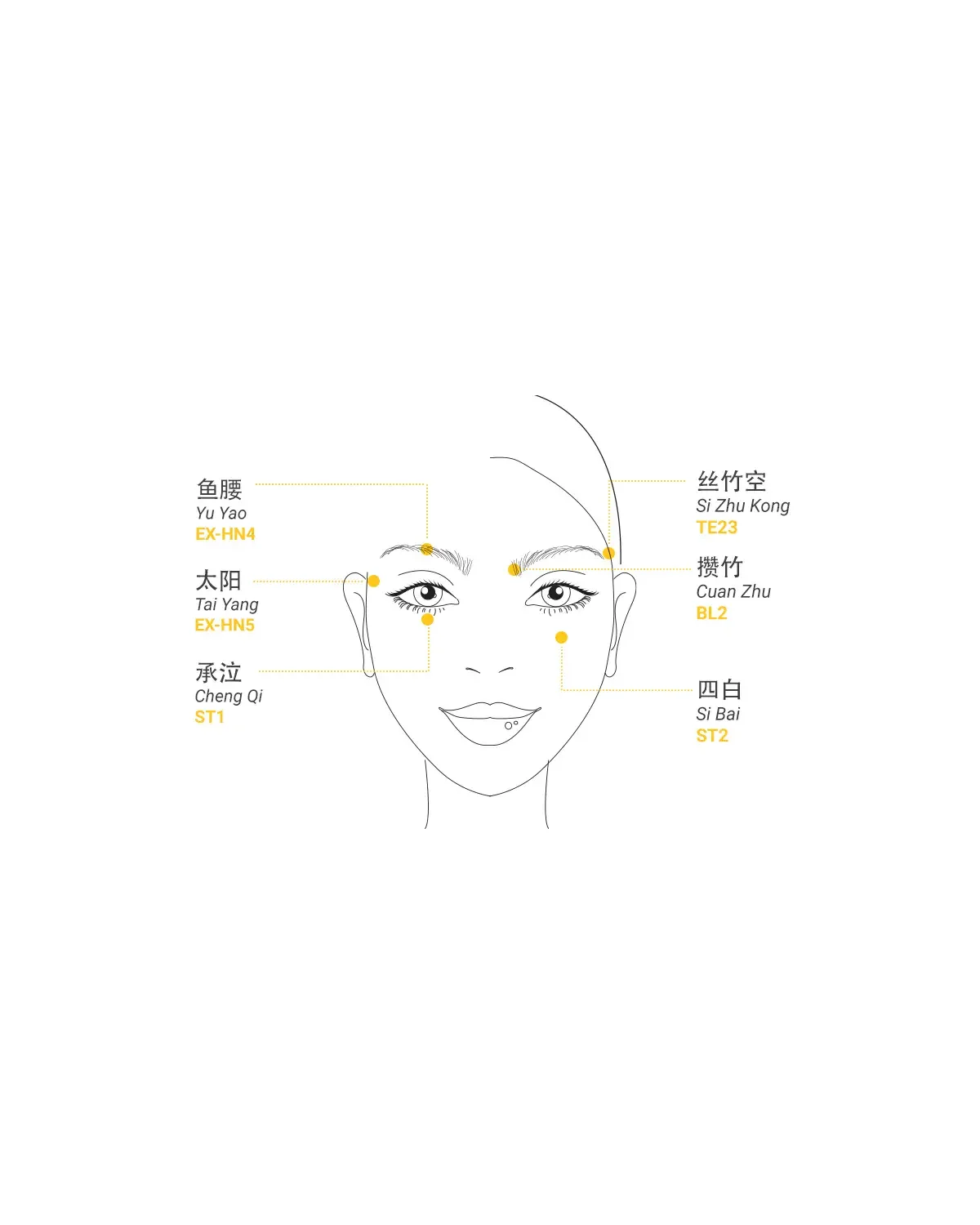
Gentle circular press around the orbit can support comfort between visits when the lids feel strained. Locate the labeled points, keep pressure soft, and stop if pain sharpens.
Never press into the eyeball. Chengqi on the infraorbital ridge needs light fingertip pressure only.
Press the periocular points06 · Lifestyle
Clinic sessions work best when the day is not fighting the same load. These habits sit beside spectacles and optometry plans. Prevention and early support matter more than waiting for high myopia to arrive.
Look away from near work about every 45 minutes so the orbit can release long focus.
Earlier sleep supports Heart and Kidney patterns that often show when the eyes tire easily.
A balanced plate with enough protein, zinc, and vitamin B1 supports everyday recovery better than sugar-heavy snacks.
Cutting excess sweets is a simple kitchen shift when progression sits with high screen and snack habits.
Choose outdoor activity when you can. Long electronic games keep the eyes in near focus for hours.
Seek urgent Western eye care for sudden vision change, flashes, a curtain over vision, severe pain, or injury. Book TCM when prescription keeps climbing, strain returns quickly after rests, or sleep and posture load sit with the vision picture. Bring recent spectacle or optometry notes to the first visit.

Clinically reviewed
Advisor (Science & Strategy) / Consultant Physician
MOH-licensed TCM physician and biomedical scientist, with clinical work in digestion, pain, sleep or fatigue, and constitution patterns that show as Heat or dryness on the face and eyes.
View full profileEducational information based on clinical experience and TCM principles. Not a substitute for personalised consultation, optometry, ophthalmology, or urgent care. Speak with your physician before starting herbs or new self-care in pregnancy or with a chronic condition. Seek urgent care for sudden vision change, severe eye pain, injury, or infection that is spreading. TCM complements Western eye care; it does not replace spectacles, myopia-control plans from your eye doctor, or urgent ophthalmology.
FAQs
Childhood myopia, periocular points, lifestyle habits, and when to book.
In Singapore, about one in two children develops myopia by age 12. Spectacles are common, yet a rising prescription still deserves attention. Slowing how quickly short-sightedness deepens can reduce the chance of high myopia later.
High myopia may sit with posterior vitreous detachment, myopic macular degeneration, peripheral retinal breaks or degeneration, retinal detachment, glaucoma, and in severe cases vision loss. These risks are why early support matters alongside optometry and ophthalmology.
TCM links myopia patterns with the Heart, Liver, and Kidney. Long eye strain, poor neck posture, and short or late sleep can load those systems. A physician names the pattern from history, pulse, and tongue rather than from spectacle degree alone.
Common periocular points include Jingming (BL1), Zanzhu (BL2), Chengqi (ST1), and Taiyang (EX-HN5). In clinic they are used to ease local tension, support circulation around the orbit, and work with body and ear points. Home press should stay soft and never press into the eyeball.
Guangming (GB37) is taught to regulate Qi and Blood between the Liver and Gallbladder and is often used when visual strain sits in that channel picture. Clinic teaching and reported imaging work have linked stimulation of this point with occipital cortex responses; it is adjunct education, not a stand-alone proof of cure.
Rest the eyes about every 45 minutes, sleep before 11pm, eat enough protein, zinc, and vitamin B1, reduce sugar, and favour outdoor activity over long electronic games. Habits sit beside clinic care; they do not replace spectacles or myopia-control plans from your eye doctor.
Children and needle-averse patients may use auricular acupuncture or child massage instead of body needling. A physician chooses the method after assessment. Paediatric Tuina is one related path when massage fits the case.
Book TCM when prescription keeps climbing, eye strain returns quickly, or sleep and posture load sit with the vision picture. Seek urgent Western eye care for sudden vision change, flashes, floaters with curtain vision, severe pain, or injury. TCM complements optometry; it does not replace it.
Selected sources
Continue
Pathways and care options that sit next to this guide.
Programme
TCM ophthalmology for dry eyes, floaters, and under-eye pattern care.
Explore
Insight
Palming, periocular points, screen habits, and cooling kitchen tea.
Explore
Insight
Patterns, acupuncture, teas, and periocular press for tear comfort.
Explore
Insight
Child massage pathways that can support short-sightedness patterns after assessment.
Explore
Bite
Gentle orbit points for home press beside prescribed eye care.
Explore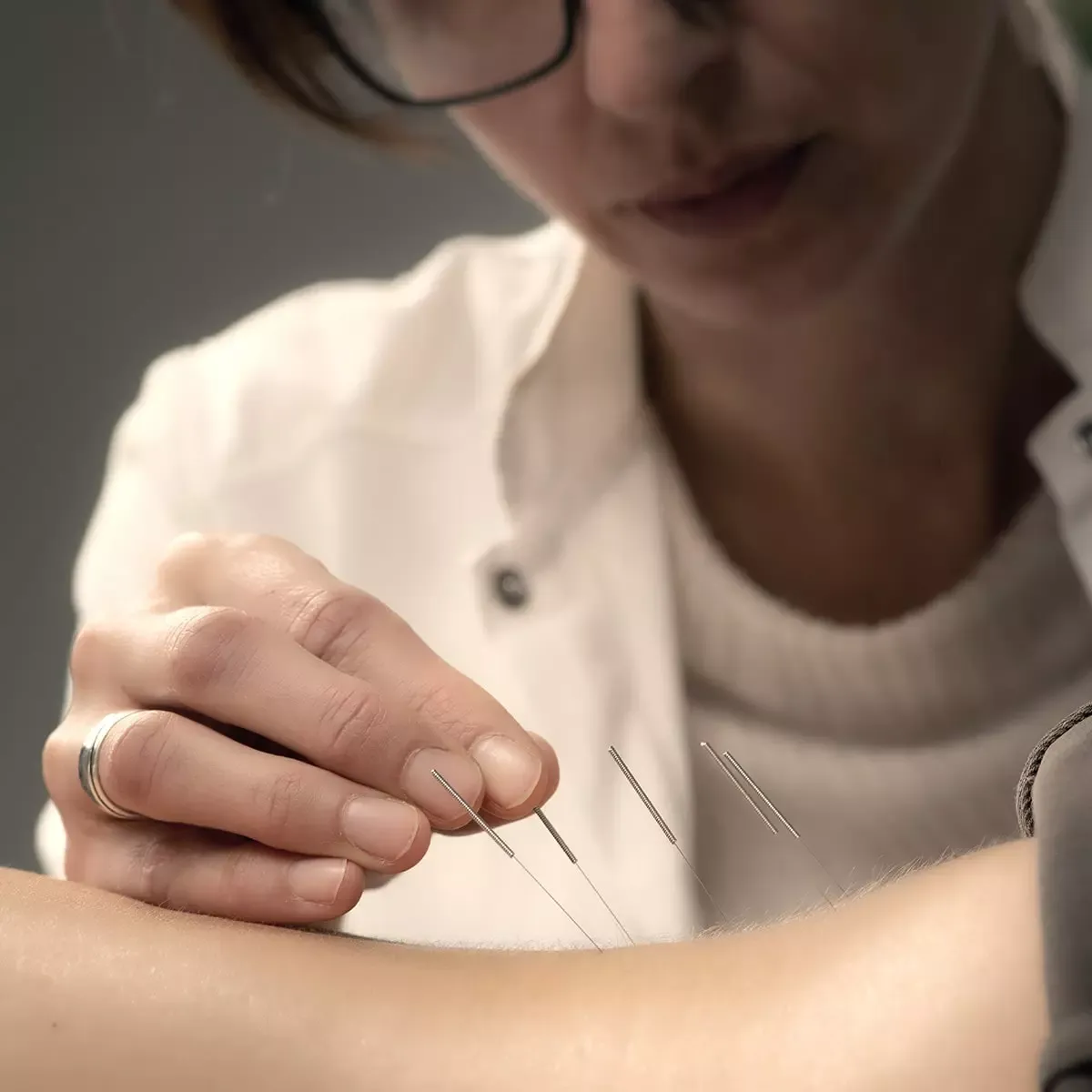
Treatment
Needle care that can include periocular and channel points for eye patterns.
Explore
Physician
TCM ophthalmology for dry eyes, floaters, and lid-area Heat patterns.
Explore
Next step
Bring recent spectacle or optometry notes, daily screen hours, sleep timing, and outdoor time. We will name the pattern and decide whether acupuncture, herbs, eye massage, or paediatric massage belong in the plan. The Eye Care programme supports ongoing vision and screen-strain care.