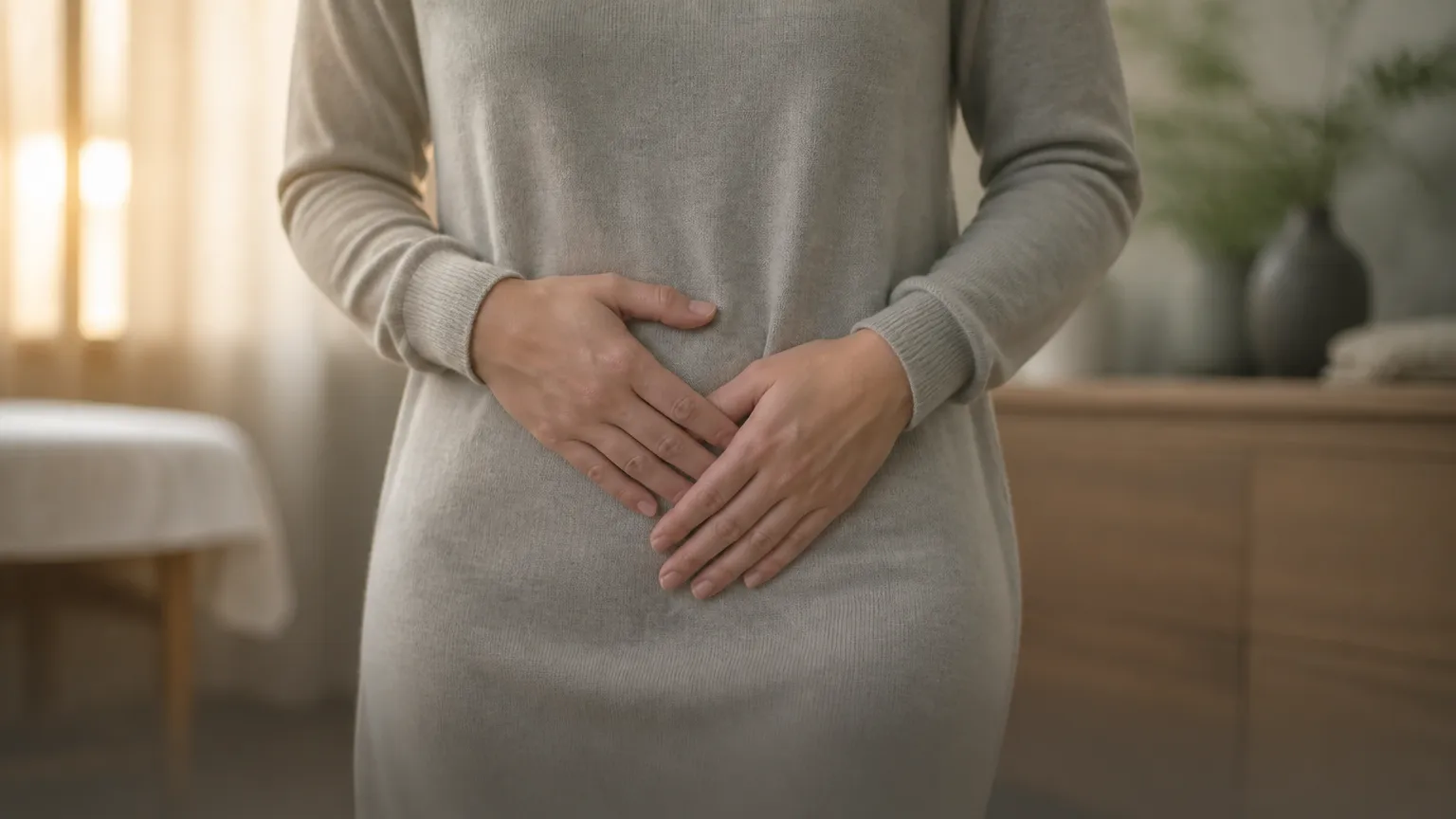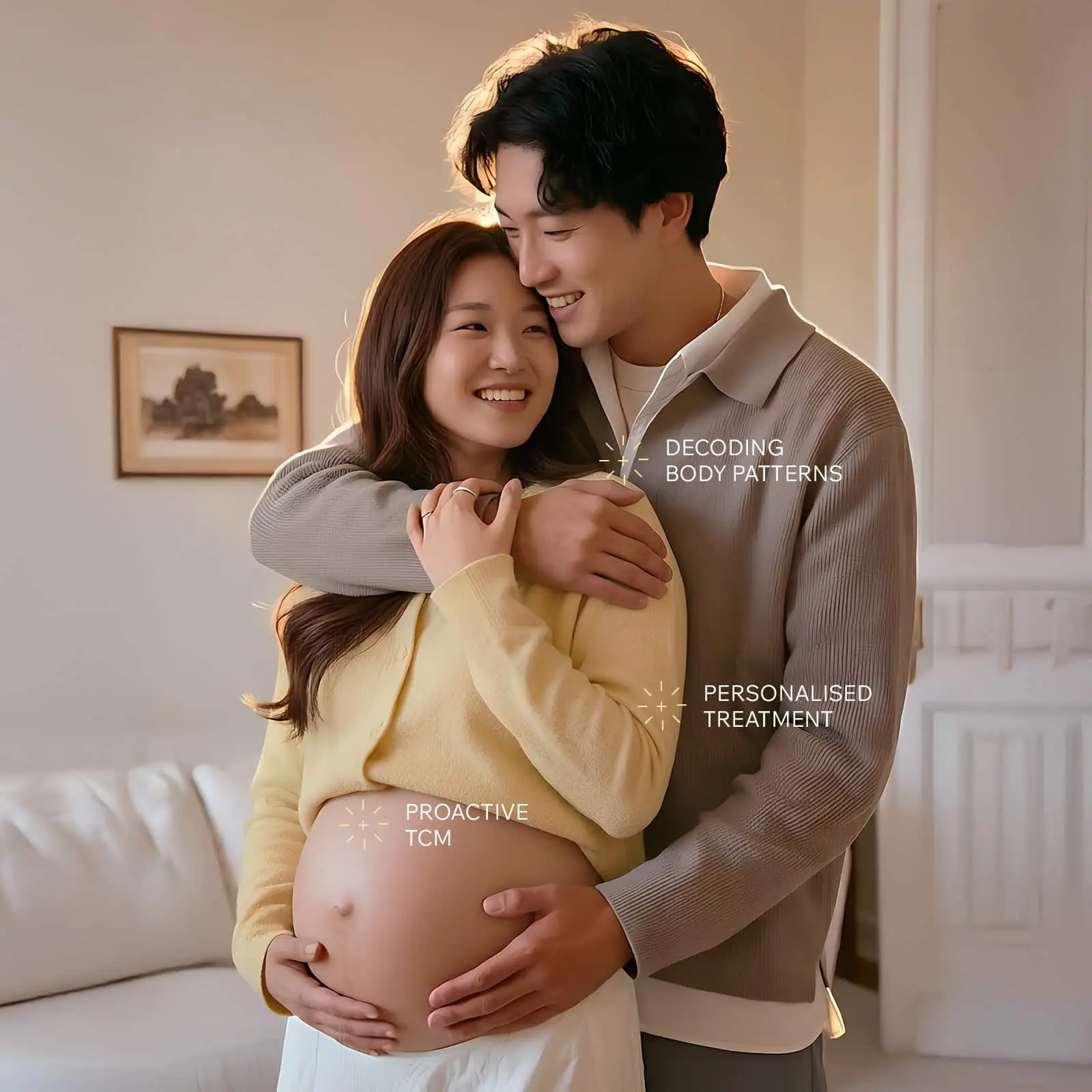
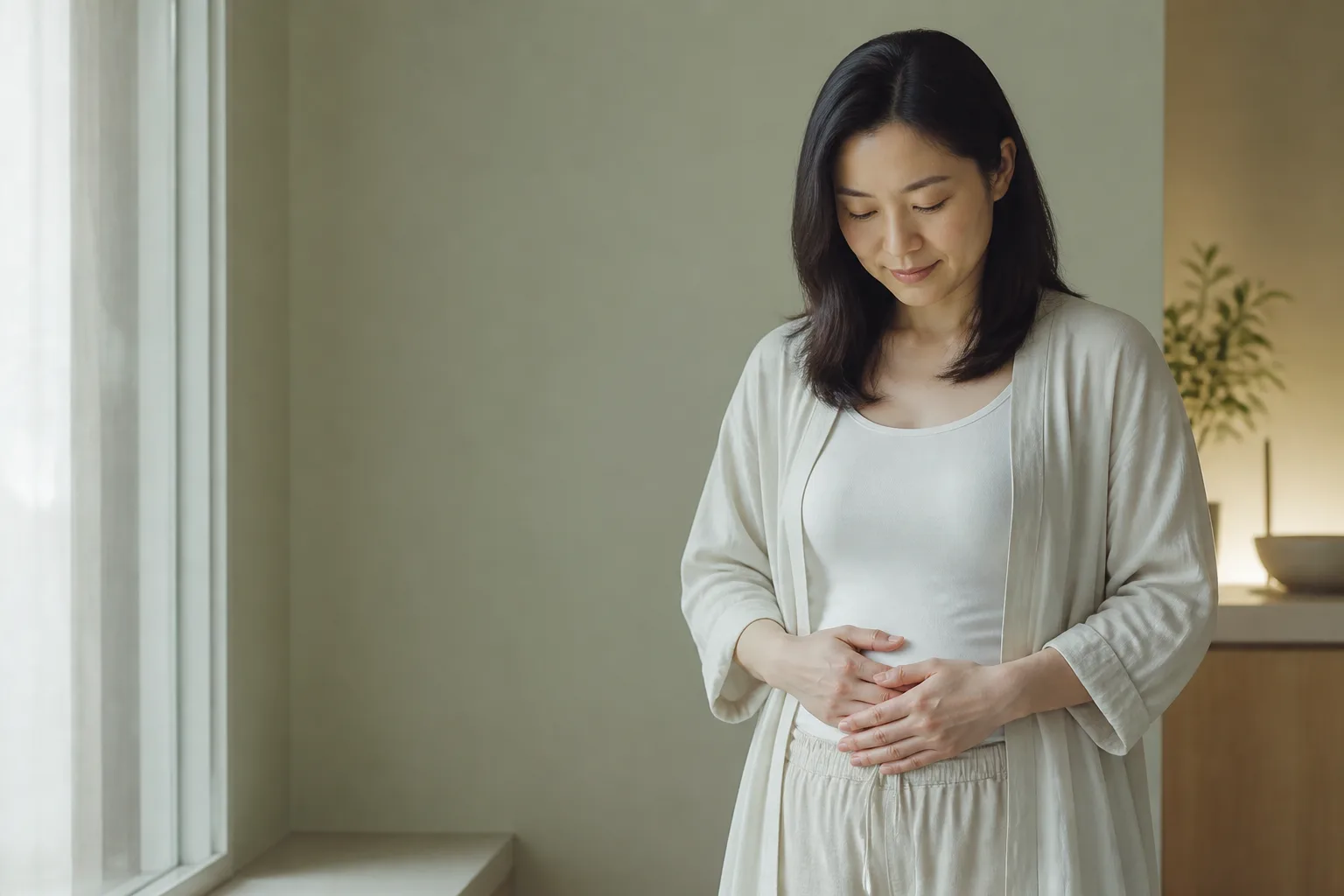
Hands resting on the lower abdomen for TCM fertility and womb warmth

Insights · Women's Health · Women's Health

Boosting Fertility Naturally: How TCM Can Help You Conceive

TCM frames conception as seed, soil, and timing, then maps Jing, Qi, Blood, and constitution patterns that can weigh on fertility readiness.

In brief

Infertility is commonly framed as no pregnancy after a year or more of trying; male and female factors can each play a role. In TCM, conception needs fertile “soil” (uterus and endometrium), a healthy “seed” (egg and sperm), and the right time (ovulation). Jing, Qi, and Blood shape that quality. Patterns such as Qi deficiency, Liver Qi stagnation, Blood stasis, and Kidney deficiency can sit behind infertility. A physician maps your constitution and barriers before acupuncture, herbs, or moxibustion.

01 · Analogy

Understanding fertility from a TCM perspective

Seed and soil · 种子论

Conception is analogous to gardening. Three prerequisites must line up for fertilisation: fertile soil, a healthy seed, and the right time.

Seed and soil prerequisites for conception
Prerequisite What it means
Fertile soil肥沃的土地 A healthy uterus and endometrium, without “weeds” such as endometriosis or fibroids that can hinder implantation and growth.
Seed种子 · 种子必先育卵 Healthy egg and sperm. Seed includes both partners; male Jing quality matters alongside the uterine soil.
Time对的时间点 Sperm and follicle meet at the correct time and place, usually during ovulation around days 12 to 16 of the cycle.

02 · Fundamentals

Jing, Qi, and Blood for fertility

Essence · Qi · Xue

Abundance of Jing, Qi, and Blood supports the quality of the seed and soil.

Essence (Jing)

精 · Kidneys

Stored in the Kidneys; supports growth, reproduction, and egg or sperm quality. Essence is believed to decline markedly from about age 35 onwards.

Qi

气 · vital energy

Animates the body and helps protect it from illness. Stagnation or deficiency can affect reproductive organs, processes, and the menstrual cycle.

Blood (Xue)

血 · nourishment

Nourishes tissues including the reproductive system and is closely linked to the cycle. Deficiency or stagnation can contribute to conception difficulty.

03 · Patterns

Body constitutions and infertility

Constitutions reflect your baseline balance of yin, yang, Qi, and Blood. They can form a root of infertility. Broad buckets include balanced (neutral), deficient (insufficient Qi, yin, or yang), and imbalanced (excess or stagnation of Blood, phlegm, or damp).

1. Qi deficiency

Fatigue, chills, weakness, and frequent colds or flu often cluster here. When Qi is too low to carry pregnancy load, cycles can feel depleted and conception harder to sustain.

2. Liver Qi stagnation

Irregular menses, stress, anxiety, irritability, mood swings, headaches, muscle tension, insomnia, fatigue, and digestive issues. Stuck Liver Qi can scramble ovulation timing and make the second half of the cycle feel forced.

3. Blood stasis

Painful periods with clots, sharp stabbing pain, dark or purplish skin or lips, varicose veins, numbness, and tingling. Sluggish Blood in the pelvis can hinder implantation readiness in the uterine soil.

4. Kidney deficiency

Irregular cycles, fatigue, backache, frequent urination, and cold hands and feet. The Kidneys govern reproduction and store Essence; when Essence depletes (especially from the mid-30s), egg or sperm quality and hormonal rhythm often need support.

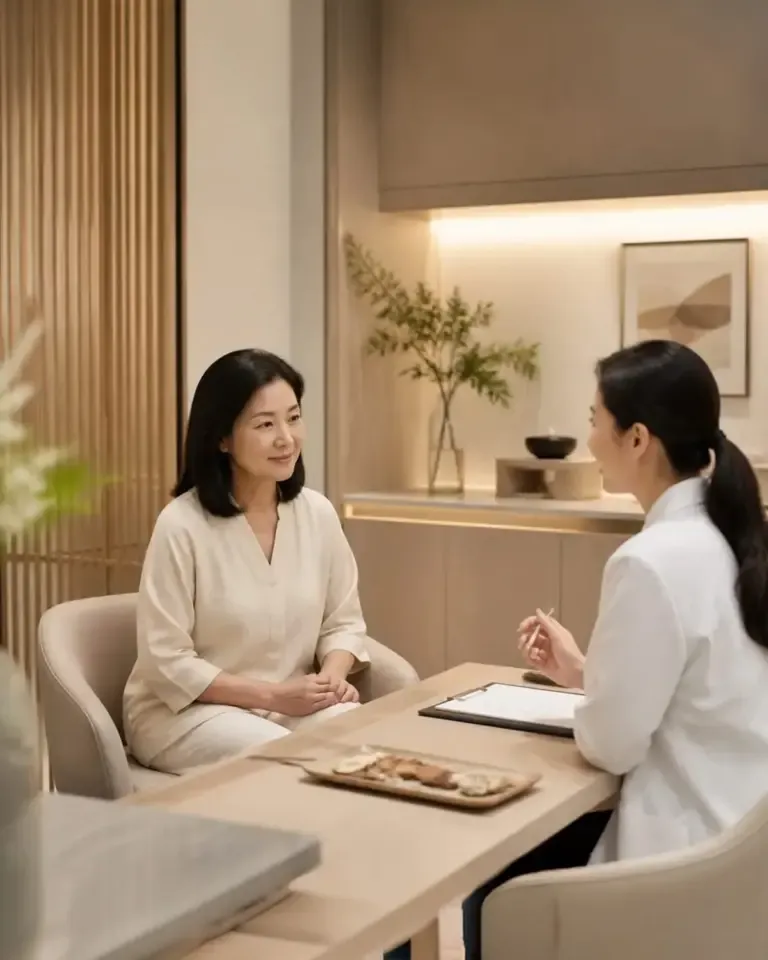
Fertility consult at PULSE TCM mapping constitution and cycle patterns

04 · Care

How TCM can help with fertility

Consult · acupuncture · herbs · moxibustion

For each patient or couple, a physician gathers cycle and reproductive history, assesses with TCM methods such as tongue and pulse, and names the constitution and fertility barriers before any treatment plan.

1. Acupuncture

The most common fertility modality in clinic. Needling supports Qi and Blood movement for the pattern named at consult. Acupuncture at PULSE.

2. Chinese herbal medicine

Formulas may be prescribed when constitution and fertility barriers need systemic support. Chinese herbal medicine.

3. Moxibustion

Warming care when Yang or cold-womb patterns sit behind cycle and implantation readiness. Moxibustion at PULSE.

Plans can sit alongside IUI or IVF when both teams coordinate. Cold extremities and a chilly low belly often point toward warming care in the cold womb (Gong Han) guide. Stress-linked irregular cycles and dark clotted flow are mapped in the stress and fertility signs guide.

Programme

Fertility Planning at PULSE

If you want a TCM map of constitution and fertility barriers, or support alongside IUI or IVF, book a consult or read how the programme works.

Dr Sim Beng Joo

Clinically reviewed

Reviewed by Dr Sim Beng Joo

Advisor (Science & Strategy) / Consultant Physician · TCMPB T1303003A

MOH-licensed TCM physician and biomedical scientist, with clinical work in digestion, pain, sleep or fatigue, and women's health patterns.

View full profile

Educational information based on clinical experience and TCM principles. Not a substitute for personalised consultation or fertility medical care. Speak with your physician or reproductive specialist before starting new treatments. Seek urgent care for severe pain, bleeding, or acute illness.

FAQs

Questions, answered

Seed and soil, constitutions, and how TCM sits with fertility care.

What does “seed and soil” mean for fertility in TCM?

Conception is framed like gardening. Fertile soil means a healthy uterus and endometrium without “weeds” such as endometriosis or fibroids that can hinder implantation. The seed is healthy egg and sperm. Timing means sperm and follicle meet at ovulation, often around days 12 to 16 of the cycle.

Which body constitutions are linked with infertility in TCM?

Constitutions reflect your baseline yin, yang, Qi, and Blood balance. Patterns often discussed with infertility include Qi deficiency, Liver Qi stagnation, Blood stasis, and Kidney deficiency. A physician reads the cluster of signs, not any single symptom alone.

How do Jing, Qi, and Blood relate to conception?

Abundance of Jing (Essence), Qi, and Blood supports the quality of the seed and soil. Jing stored in the Kidneys governs growth, reproduction, and egg or sperm quality, and often declines from about age 35. Qi and Blood move and nourish reproductive tissues and the menstrual cycle.

Can TCM sit alongside IUI or IVF?

Many patients use TCM alongside reproductive medicine when their fertility doctor agrees. Tell both teams what you are taking and how you feel. TCM does not replace IUI or IVF protocols or specialist instructions.

When should I book a fertility consult at PULSE?

Book if you want a TCM map of constitution and fertility barriers, or support while preparing for or recovering between IUI or IVF cycles. Bring recent specialist notes when you have them so care stays coordinated.

References

Selected sources

  1. National Center for Complementary and Integrative Health. (2019, April). Traditional Chinese medicine: What you need to know. NCCIH. https://www.nccih.nih.gov/health/traditional-chinese-medicine-what-you-need-to-know/
  2. Ministry of Health Singapore (MOH). (n.d.). TCM Practitioners. https://hpp.moh.gov.sg/tcm-practitioners/
  3. World Health Organization: WHO. (2019, November 25). Traditional, complementary and integrative medicine. https://www.who.int/health-topics/traditional-complementary-and-integrative-medicine
  4. Original article author: Physician Kang Ting.

Book

Start with a fertility consult

Share your cycle history and any reproductive-medicine plans. We will match you with a suitable physician.

Hours
Most clinics daily 11:00 AM – 8:00 PM
Care
Physician-led consultation