1. Colour
Pink is the usual baseline. Pale, red, or purple-red shifts often track Qi, Blood, Yin, Yang, or stasis patterns.


Insights · General Health
Colour, coating, shape, and region help physicians read constitution. Nine common tongue pictures map to the patterns pulse confirms in clinic.
In brief
In TCM, tongue observation is one of the four main diagnostic methods. Physicians look at colour, coating, movement, cracks or teeth marks, and which region of the tongue shows the change. A healthy tongue is typically pink with a thin coating. Pale, red, swollen, greasy, or spotted tongues often track Yin, Yang, Qi, Blood, damp-heat, phlegm-damp, or blood-stasis patterns. Where the sign sits (tip, centre, sides, root) helps link organs.
Tongue diagnosis
Observing the tongue is one of the four main TCM diagnostic methods. Alongside asking, listening or smelling, and pulse reading, the tongue gives a quick map of colour, fluids, and organ load. A quiz can suggest a constitution type; pulse and tongue confirm it.
Check in natural light, before coffee, tea, coloured food, or brushing. One photo is a clue, not a diagnosis.
Healthy (normal) tongue: typically pink with a thin coating, calm shape, without heavy scalloping, thick grease, or dense purple spotting.

01 · Five axes
Physicians typically read these five axes before naming a constitution pattern.
Pink is the usual baseline. Pale, red, or purple-red shifts often track Qi, Blood, Yin, Yang, or stasis patterns.
A thin coat is common when fluids are balanced. Thick white, yellow greasy, or almost bare coats point to dampness, heat, or Yin strain.
How freely the tongue extends and holds still can support or challenge the rest of the picture in clinic.
Cracks often sit with Yin deficiency. Scalloped edges (teeth marks) commonly travel with Qi deficiency and dampness.
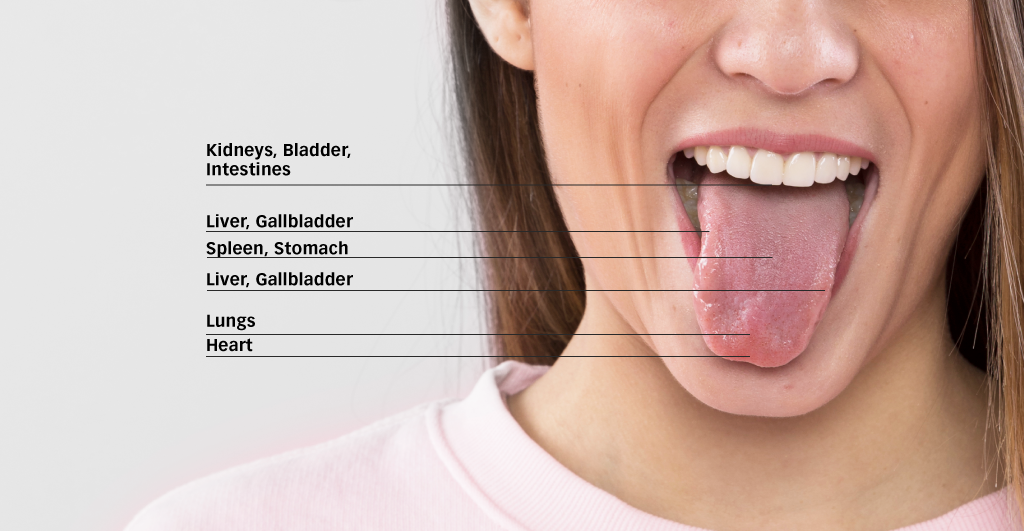
Where the change sits (tip, centre, sides, root) helps link Heart, Lungs, Spleen-Stomach, Liver, or Kidney systems.
02 · Regions
Tip · centre · sides · root
The tongue is divided into sections linked with different organs. Where a colour or coat change sits helps a physician narrow diagnosis and treatment.
03 · Atlas
Tongue colour and coating often track the same nine constitution patterns used across TCM care.
| Pattern | Tongue sign | May help |
|---|---|---|
| NormalBalanced constitution. | Pink tongue with thin coating | Body constitution guide |
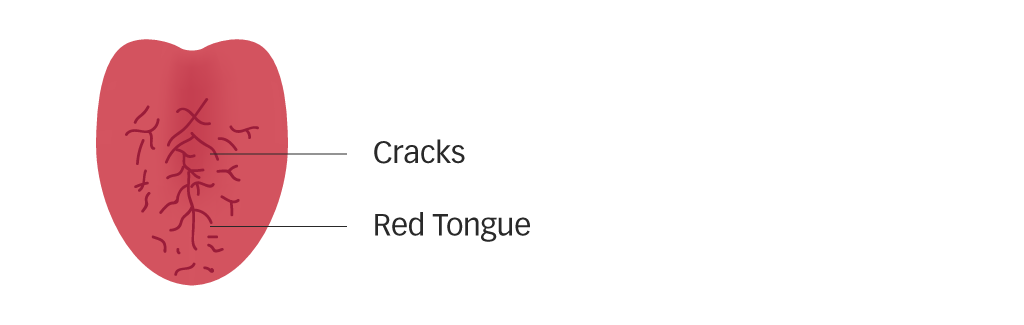
| Yin deficiencyDry heat at night. | Red tongue, little or no coating, cracks | Yin deficiency type |
| Yang deficiencyCold lean. | Pale swollen tongue or white coating | Yang deficiency type |
| Qi deficiencyLow drive and damp edges. | Pale or pink tongue with teeth marks | Qi deficiency type |
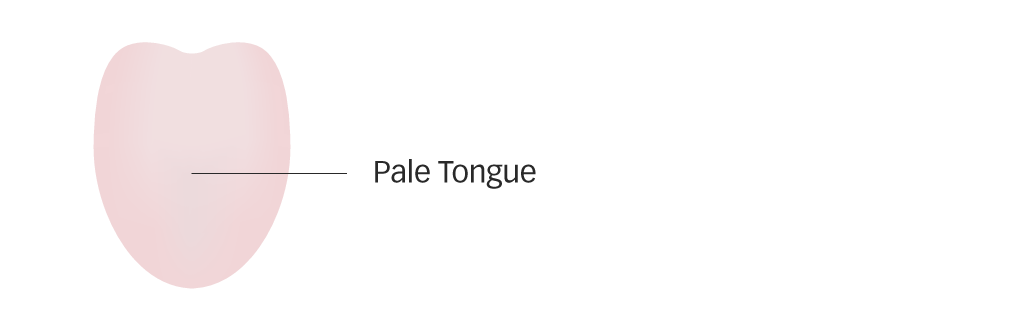
| Blood deficiencyThin nourishment. | Pale tongue with little or no coating | Constitution + food match |
| Qi stagnationEmotion and chest tightness. | Red tip with thin white coating | Heaty vs cooling |
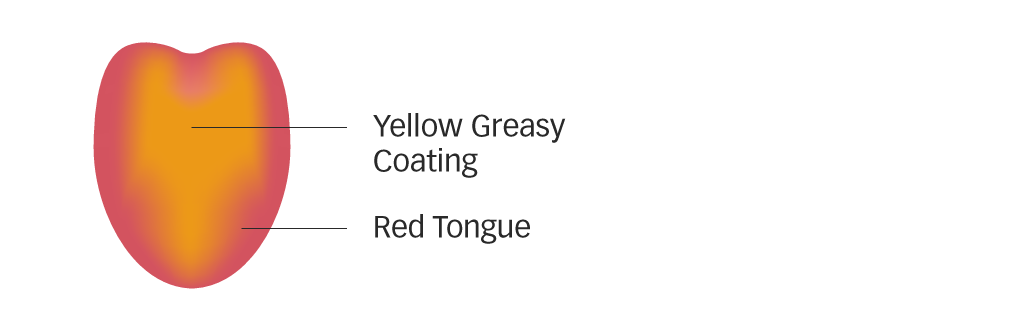
| Damp heatSticky heat. | Red tongue with yellow greasy coating | Acne face map |
| Phlegm-dampHeavy damp load. | Pink swollen tongue with thick white coating | Phlegm-damp type |
| Blood stasisStuck circulation. | Purple-red tongue with black spots | Dietary therapy |
04 · Yin deficiency
Red · scant coat · cracks
A red tongue with little or no coating, often with cracks, commonly tracks Yin deficiency.

05 · Yang deficiency
Pale · swollen · white coat
A pale swollen tongue, or one with a white coating, often tracks Yang deficiency and a cold lean.

06 · Qi deficiency
Pale or pink · teeth marks
A pale or pink tongue with teeth marks along the sides commonly suggests Qi deficiency, often with damp edges.
07 · Blood deficiency
Pale · scant coat
A pale tongue with little or no coating often tracks Blood deficiency and thin nourishment.

08 · Qi stagnation
Red tip · thin white coat
A tongue with a red tip and thin white coating often tracks Qi stagnation, especially when emotion and chest tightness sit together.
09 · Damp heat
Red · yellow greasy coat
A red tongue with a yellow greasy coating commonly tracks damp-heat.

10 · Phlegm and dampness
Pink · swollen · thick white coat
A pink, swollen tongue with a thick white coating often tracks phlegm and dampness.

11 · Blood stasis
Purple-red · black spots
A purple-red tongue with black spots often tracks blood stasis and stuck circulation.
Consult
If tongue signs keep shifting with fatigue, skin flares, digestion, mood, or fertility concerns, book a physician visit. Photos help; pulse and history still decide the plan.

Clinically reviewed
Advisor (Science & Strategy) / Consultant Physician
MOH-licensed TCM physician and biomedical scientist, with clinical work in digestion, pain, sleep or fatigue, women's health, and skin-related internal patterns.
View full profileEducational information based on clinical experience and TCM principles. Not a substitute for personalised consultation, medical care, or urgent attention. Tongue signs vary by constitution and recent food or drink. Speak with a licensed TCM physician for diagnosis. Seek urgent care for unexplained bleeding, sudden neurological change, or severe systemic illness.
FAQs
Common questions before reading your tongue with a physician.
A typical healthy tongue is pink with a thin coating. The body is not swollen or scalloped, the tip is not bright red, and there are no dense purple spots or thick greasy coats. Mixed signs are common; pulse and tongue together decide the pattern more reliably than a photo alone.
They read colour, coating, movement, cracks or teeth marks, and which region shows the change. Those five axes help map Yin, Yang, Qi, Blood, dampness, and blood-stasis patterns before treatment is chosen.
A pale tongue often tracks Qi deficiency, Blood deficiency, or Yang deficiency, especially when the body looks swollen or the coating is white. Fatigue, cold hands, loose stools, or anaemia-leaning signs often sit with it. A physician confirms with pulse and the rest of the consult.
Red body with scant coating or cracks often points to Yin deficiency. People may feel warm palms and soles at night, dry mouth, thirst, night sweats, or dry stools. It is different from a red tongue with a thick yellow greasy coat, which more often tracks damp-heat.
Scalloped edges (teeth marks) with a pale or pink body commonly suggest Qi deficiency with dampness. Easy fatigue, catching colds, light sweat with little activity, worry, and watery stools often travel with this picture.
The tip often links Heart; the area behind the tip links Lungs; the centre links Spleen and Stomach; the sides link Liver and Gallbladder; the root links Kidneys, Bladder, and Intestines. Where a colour or coat change sits helps narrow which systems need support.
No. A clear photo helps, but constitution is a clinic pattern. Physicians also use pulse, history, and how signs change with weather, stress, and diet. Online quizzes and self-photos can suggest a lean; they do not replace a consult.
Yes. Hot drinks, coloured food, and brushing can strip or stain the coat for a while. For a fair look, check in natural light before coffee, tea, or brushing, and tell your physician what you ate or drank that morning.
Selected sources
Continue
Pathways and care options that sit next to this guide.

Insight
Nine TCM constitution types, inborn versus acquired factors, and how food matches the pattern.
Explore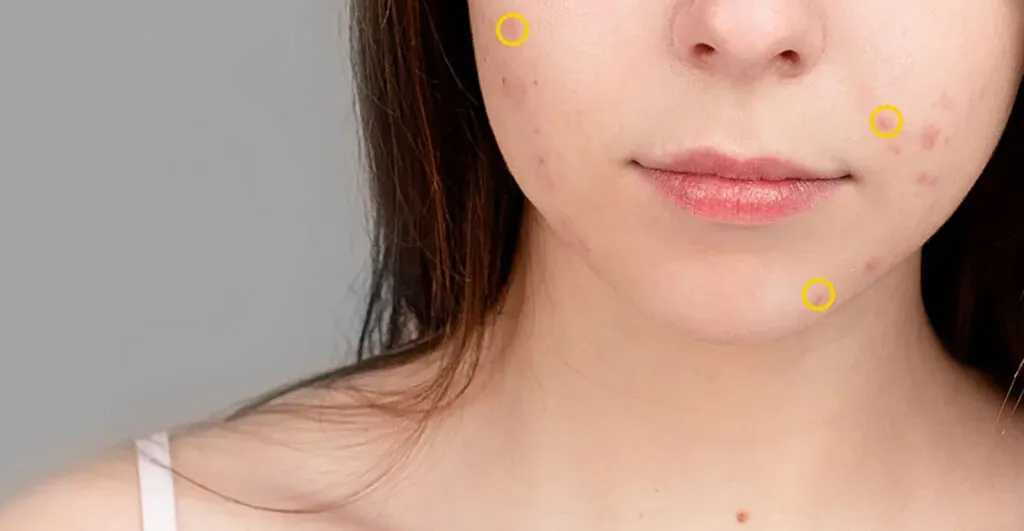
Insight
How damp-heat and organ patterns can show as zone acne on the face.
Explore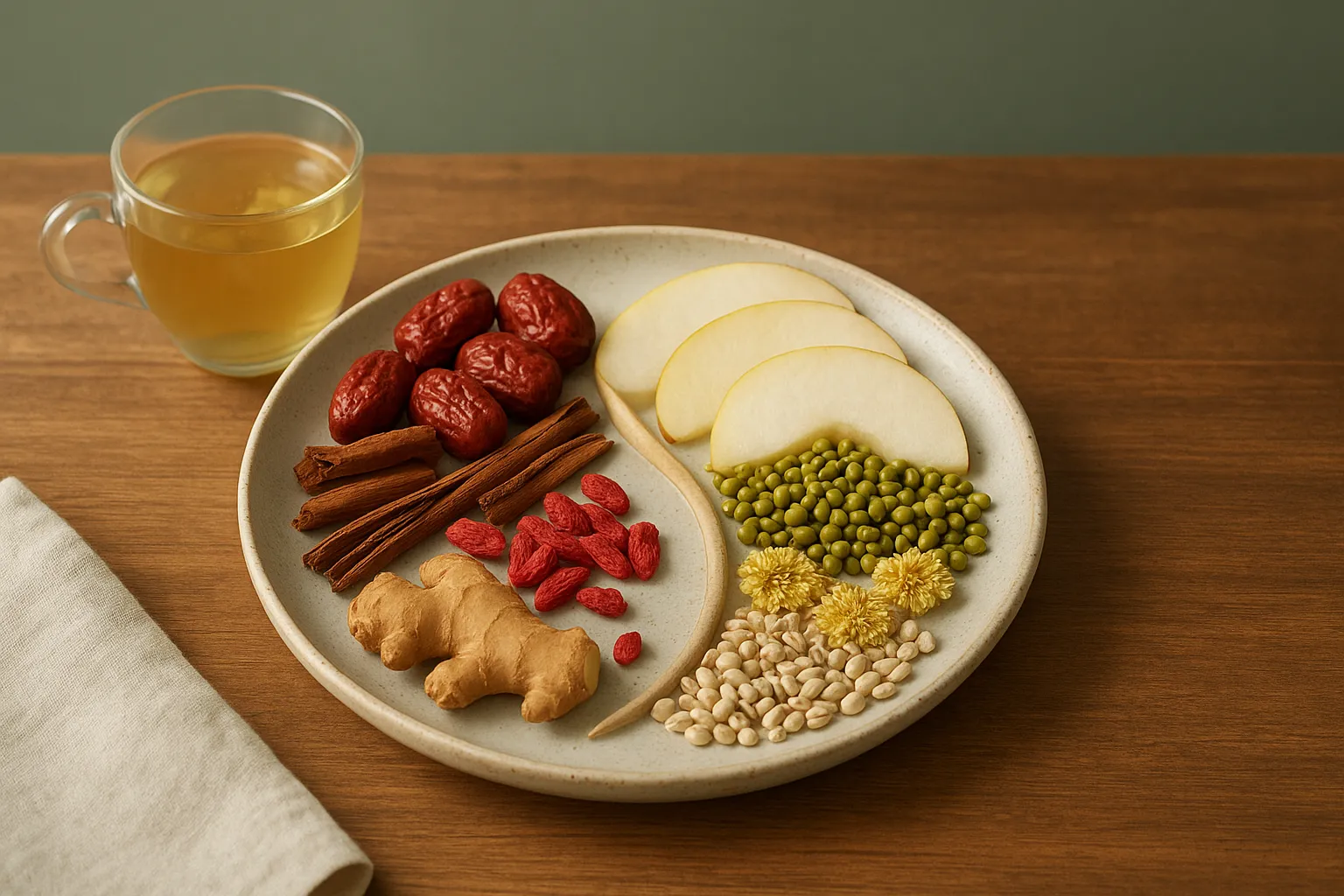
Insight
What heaty and cooling mean for food, constitution, and mixed Singapore signs.
Explore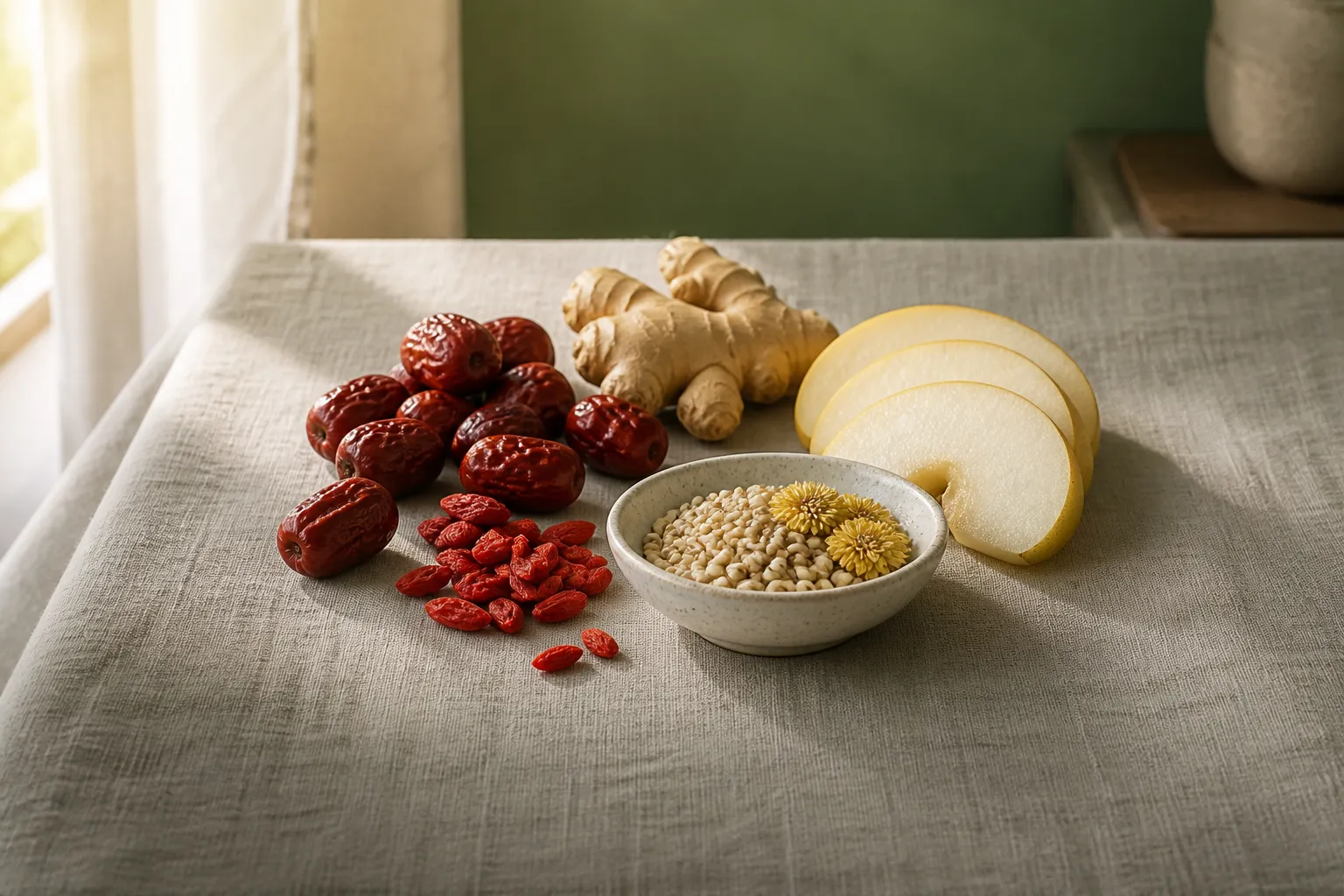
Treatment
Pattern-led shi liao food guidance once pulse and tongue are checked.
Explore
Programme
Physician-led care for sub-health, digestion, fatigue, and everyday constitution support.
Explore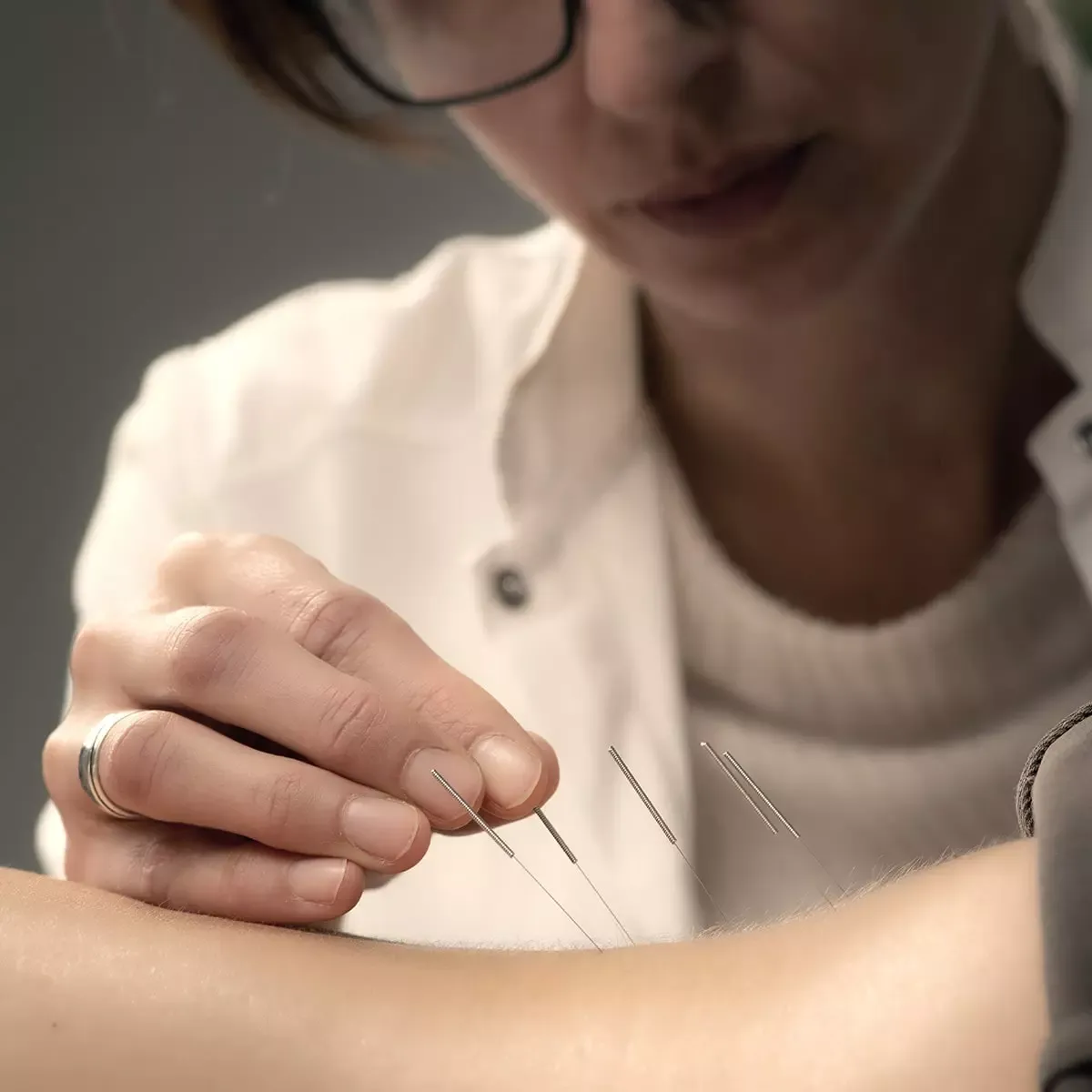
Treatment
What a visit includes and how acupuncture may sit in a constitution-support plan.
Explore
Book
Share what you notice on your tongue and how you feel day to day. We will match you with a suitable physician.