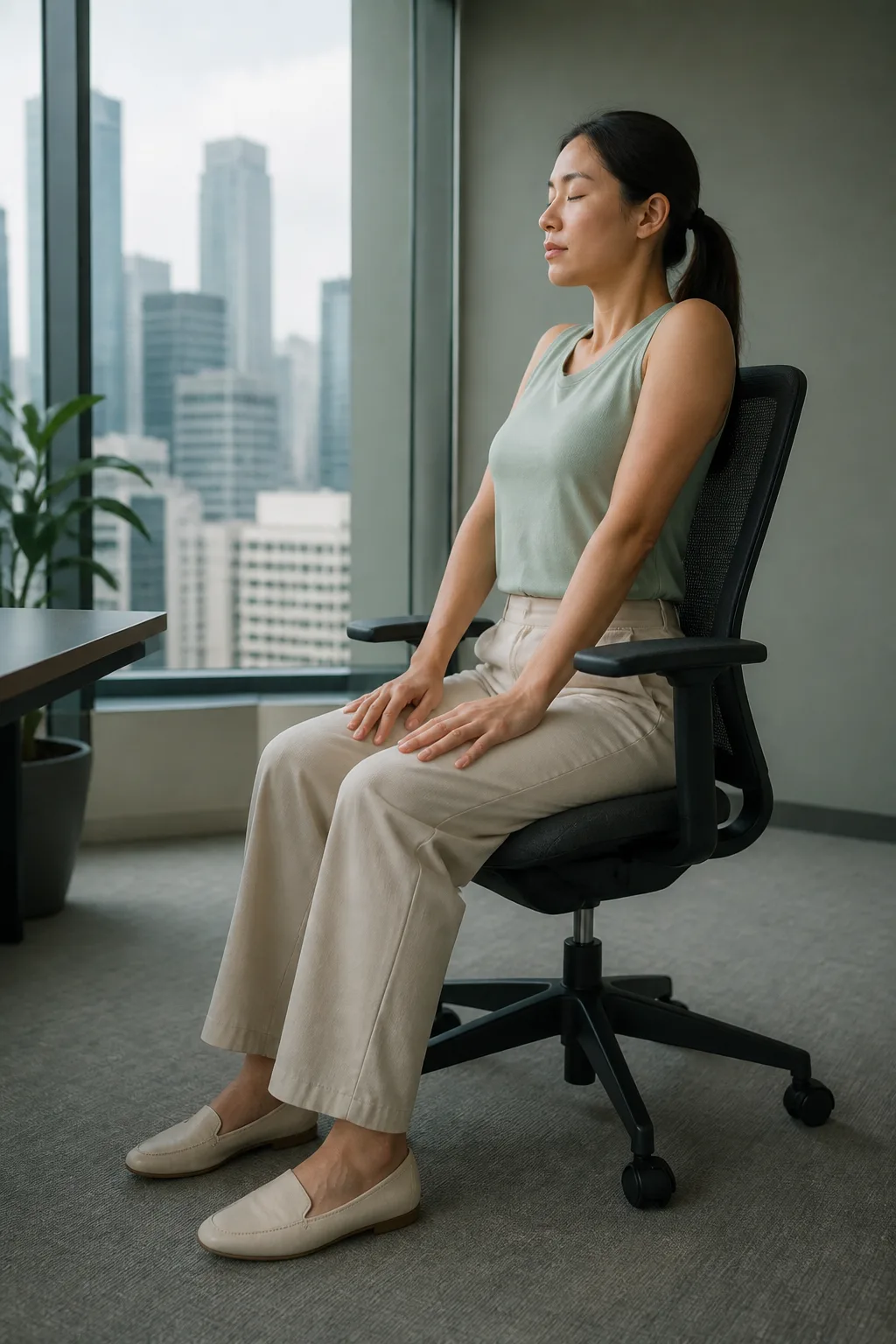

Person beside a desk doing a still neck hold for better posture

Insights · Pain & Injuries

5 workplace workouts for better desk posture

Long sitting softens muscle strength as well as spring. About fifteen minutes of short strength moves supports posture between clinic visits.

In brief

Workplace workouts for desk posture: once a day on a break, spend about fifteen minutes on still neck holds for the sides and back (15 seconds × 3 sets), upper-back shoulder-blade squeezes (3 × 10), a seated chair hip shift on a stable chair (30 seconds × 3), wall calf heel raises (3 × 10–20), and a wall side-hip hike (3 seconds × 10 × 3 each side). TCM names prolonged sitting as harmful to muscle (久坐伤肉); pair these with the workplace stretches set for spring and give. Stop for numbness or dizziness and book if pain keeps returning.

01 · Posture

How you sit, stand, and how qi moves

Posture is how your body parts line up with each other at any moment. Good posture helps you breathe easier and feel less sore. Poor posture can make breathing feel shallow, leave organs and focus working harder, pull muscles out of balance, and slow the flow of qi. Muscle imbalance and sluggish qi often show up as pain that hangs around, and the slumped sit then gets worse.

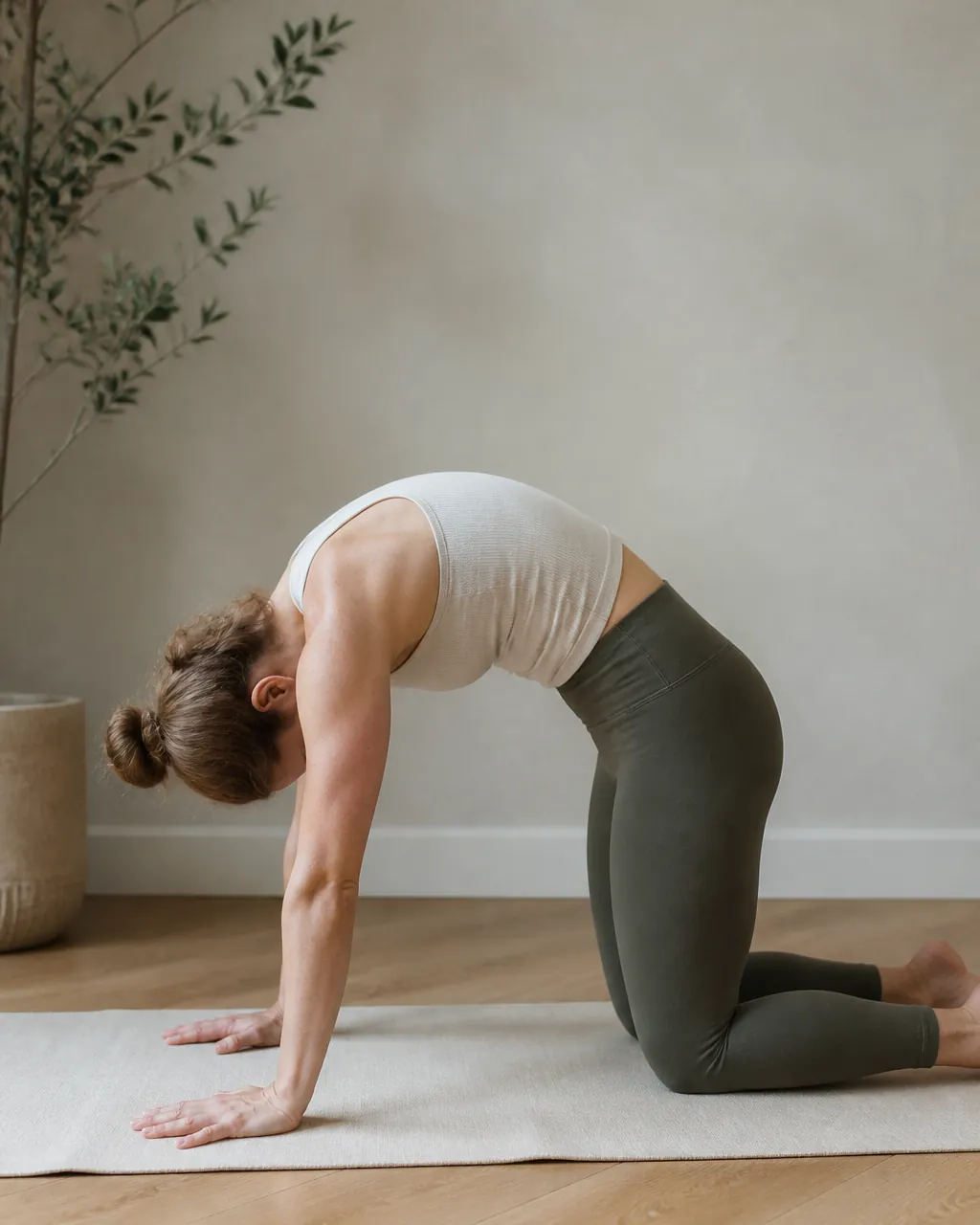
Opposing muscles

When one side shortens and the other lengthens

Joints move well when opposing muscle pairs share the work. If you keep using one group and barely train its opposite, one side gets overstretched and the other tightens or shortens. Leave that pattern alone long enough, and the tissues settle into the new lengths.

TCM · Prolonged sitting

Why TCM says long sitting harms muscle

久视伤血,久卧伤气,久坐伤肉,久立伤骨,久行伤筋,是谓五劳所伤

黄帝内经 · 素问 · 宣明五气篇

久坐伤肉 means long sitting wears on the flesh: muscle loses strength and spring, so joints feel less supported. In Singapore, about eight hours of screen work with cold air-con and thin clothes often stacks that load before a break arrives.

02 · When to train

One break, about fifteen minutes of strength

These strength moves do not replace sit-stand breaks. Do them once a day on a break, ideally after the workplace stretches have opened the tight spots, or on a day when the body already feels free enough for gentle load.

5 workplace stretches for better desk posture

1. Pick one daily break

Set aside about fifteen minutes once a day. Soft effort only. This is desk care, not a gym session.

2. Run top to bottom

Neck sides and back, upper-back squeeze, chair hip shift, wall calf raises, then wall hip hike. Keep that order so the set stays easy to remember.

3. Keep sit-stand and stretches

Still stand and move every 45 to 60 minutes of sitting. Use the stretches article for spring and give, and this set for strength. Do not swap one for the other.

03 · Five workouts

About fifteen minutes for sitting weakness

These five short strength moves rebuild muscle that softens from long sitting. Soft effort only. Stop at once if numbness, dizziness, or other discomfort appears, and seek professional advice before continuing.

Five workplace workouts at a glance
Move Focus Hold / reps
NeckStill holds for the sides and back. Side and back of the neck. 15 seconds × 3 sets.
Upper backShoulder-blade squeeze. Shoulder blades. 3 sets of 10.
Chair hip shiftSide-to-side sit for hips and knees. Hips and knees. 30 seconds × 3 sets.
CalfWall heel raises. Back of the lower leg. 3 sets of 10–20.
Side-hip hikeWall hip hike for the side hip. Side hip (gluteus medius). 3 seconds × 10 × 3.
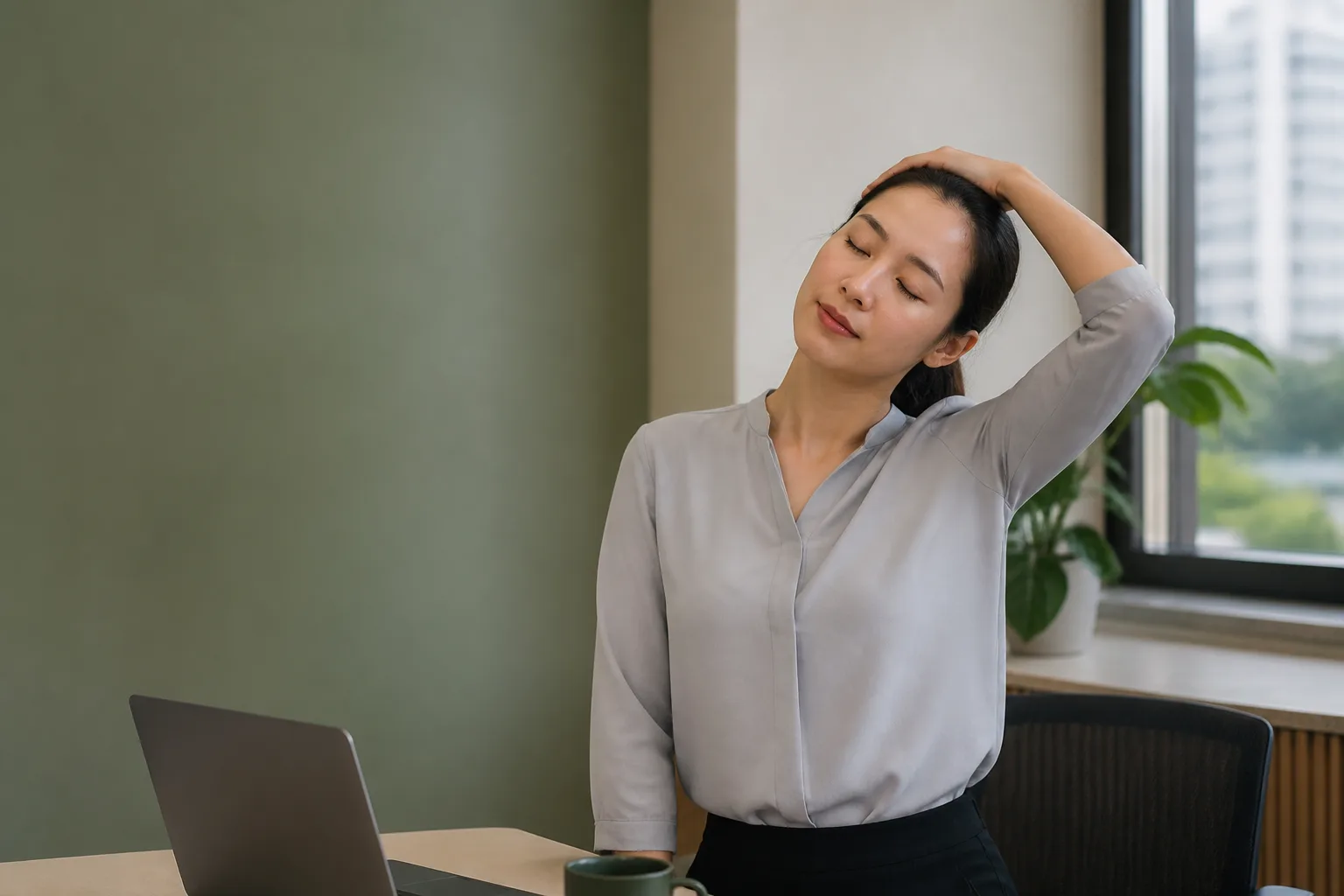
Person at a desk pressing the hand against the side of the head for a still neck hold

Workout 1a · Neck

Neck sides (still hold)

15 seconds each side · 3 sets

A still side hold wakes the side of the neck after screen hours, with almost no visible tilt.

  • Keep the head upright and facing forward. Place the right hand on the right side of the head.
  • Tilt the head slightly to the right while the hand pushes the other way with equal force. The head should barely move.
  • Hold this still press for 15 seconds, then switch sides.
  • Repeat for a total of three sets.
  • Common mistake: turning this into a stretch with a big side bend. Match the hand force so the head barely moves.

Caution

Stay in a comfortable range. Stop if the effort turns sharp, or if numbness or dizziness appears.

Workout 1b · Neck

Neck back (still hold)

15 seconds · 3 sets

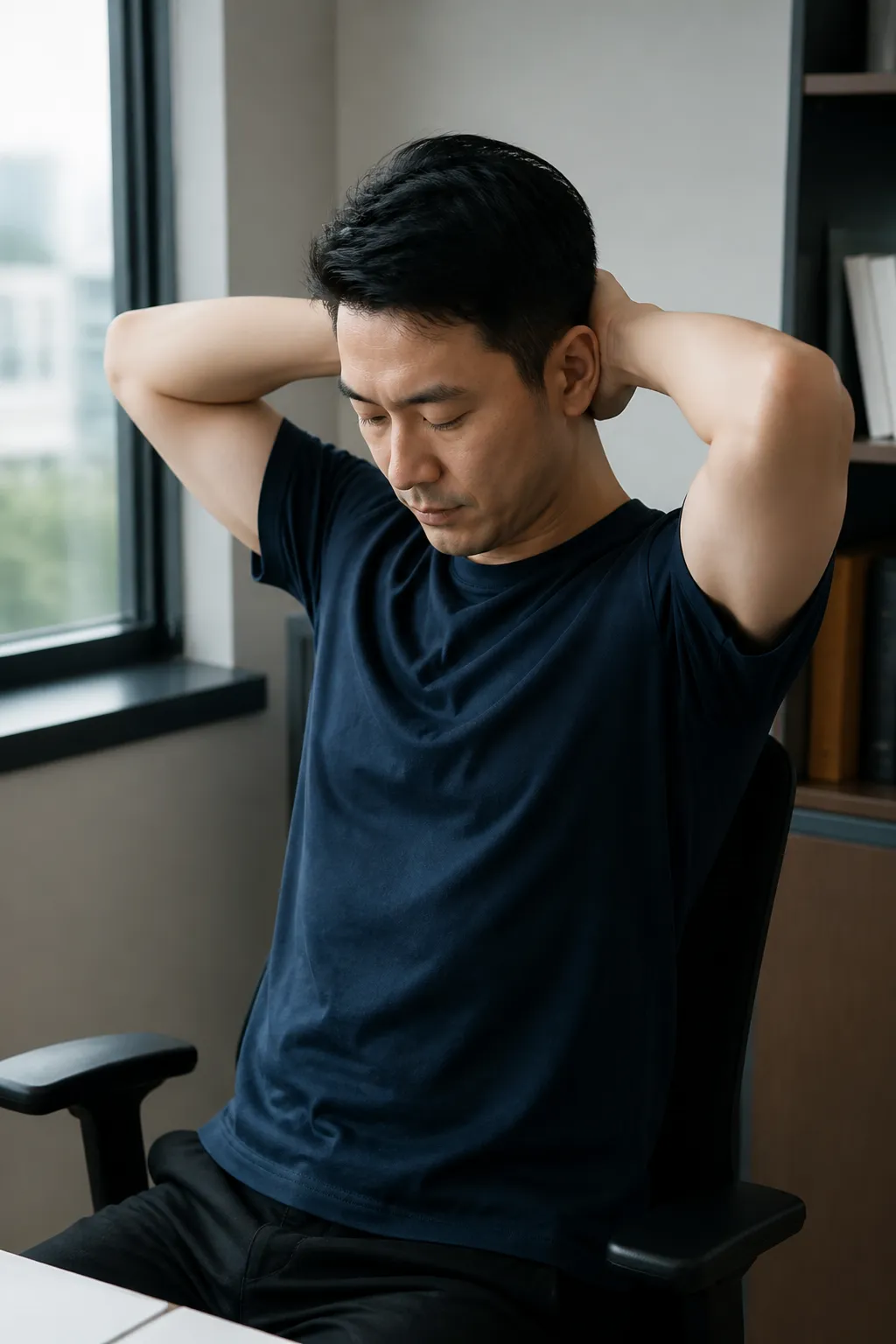
Pressing the head gently into the hands with the chin tucked wakes the back of the neck without a big range.

  • Keep the head upright and facing forward. Interlace the fingers and place both hands at the back of the head.
  • Push the head back into the hands while keeping the chin tucked in.
  • Hold for 15 seconds.
  • Repeat for a total of three sets.
  • Common mistake: lifting the chin or arching the lower back. Keep the chin tucked and the torso quiet.
Person with hands behind the head pressing gently for a still neck hold
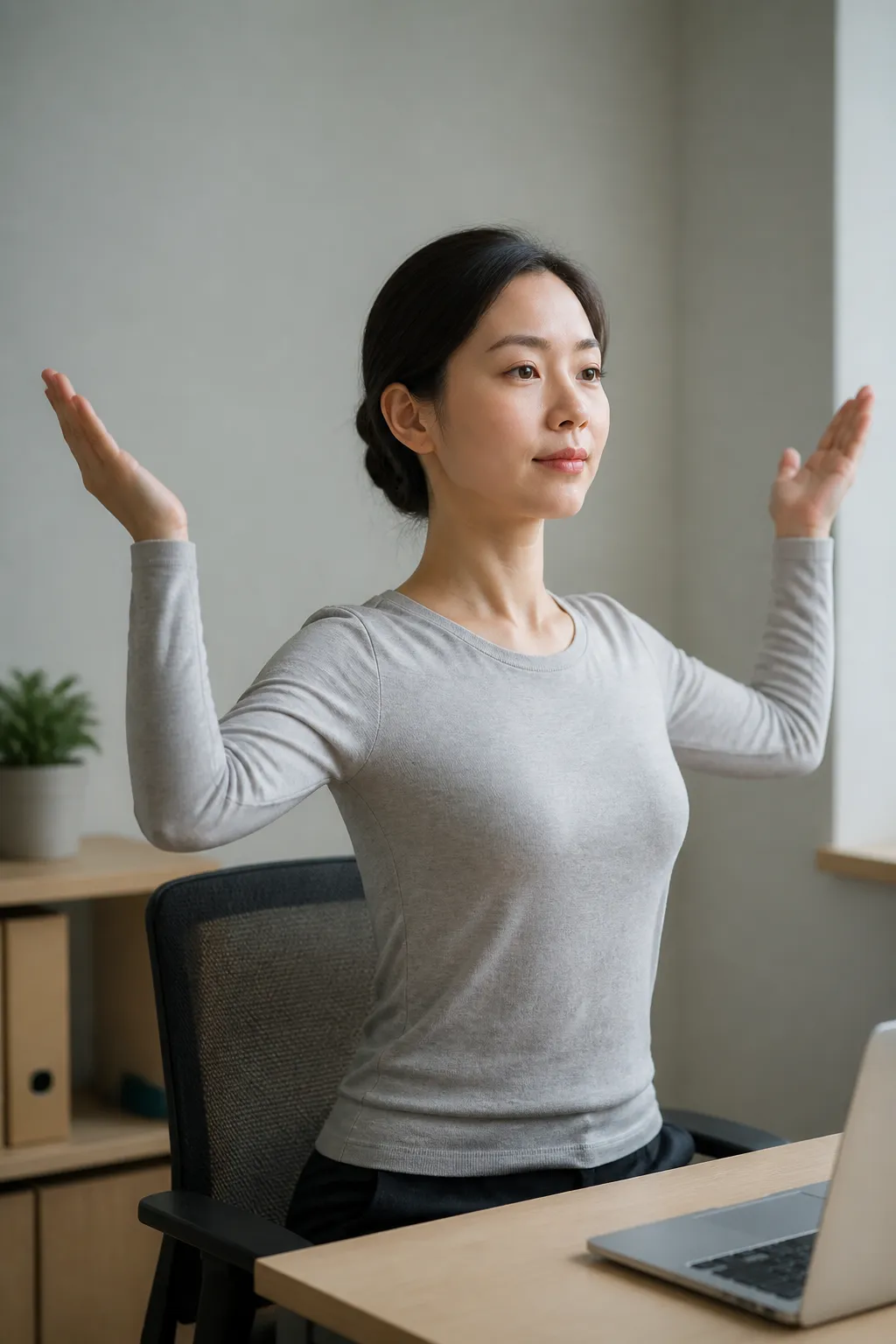
Person with arms raised squeezing the shoulder blades for desk posture

Workout 2 · Upper back

Shoulder-blade squeeze with arms raised

3 sets of 10

Breath-timed shoulder-blade squeezes wake mid-back muscle that desk work underuses.

  • Lift the arms out to the sides above shoulder level with the palms facing upward.
  • On the inhale, pull the shoulder blades backward and hold one to two seconds.
  • On the exhale, relax the shoulder blades while keeping the arms above shoulder level. That is one repetition.
  • Do three sets of ten repetitions.
  • Common mistake: shrugging the ears toward the shoulders. Keep the neck long and move only the blades.

Workout 3 · Chair hip shift

Seated hip shift

30 seconds · 3 sets

A controlled side-to-side sit on a stable chair trains hip and knee control without leaving the desk.

  • Sit at the edge of a stable chair or stool with only the seat of the hips in full contact, knees together, and hands on the knees for support.
  • Shift so only the left side of the hips contacts the chair. That is the starting position.
  • Lift the hips off the chair, shift to the left, and sit with the right side in contact.
  • Lift again and return to the starting position. That is one repetition.
  • Do as many repetitions as you can for 30 seconds, then repeat for a total of three sets.
  • Common mistake: using a wheeled or soft chair. Choose a stable seat with no roll or sink.

Caution

Use a stable chair or stool only. Stop if numbness, dizziness, or other discomfort appears.

Person on a stable chair shifting the hips side to side for desk posture
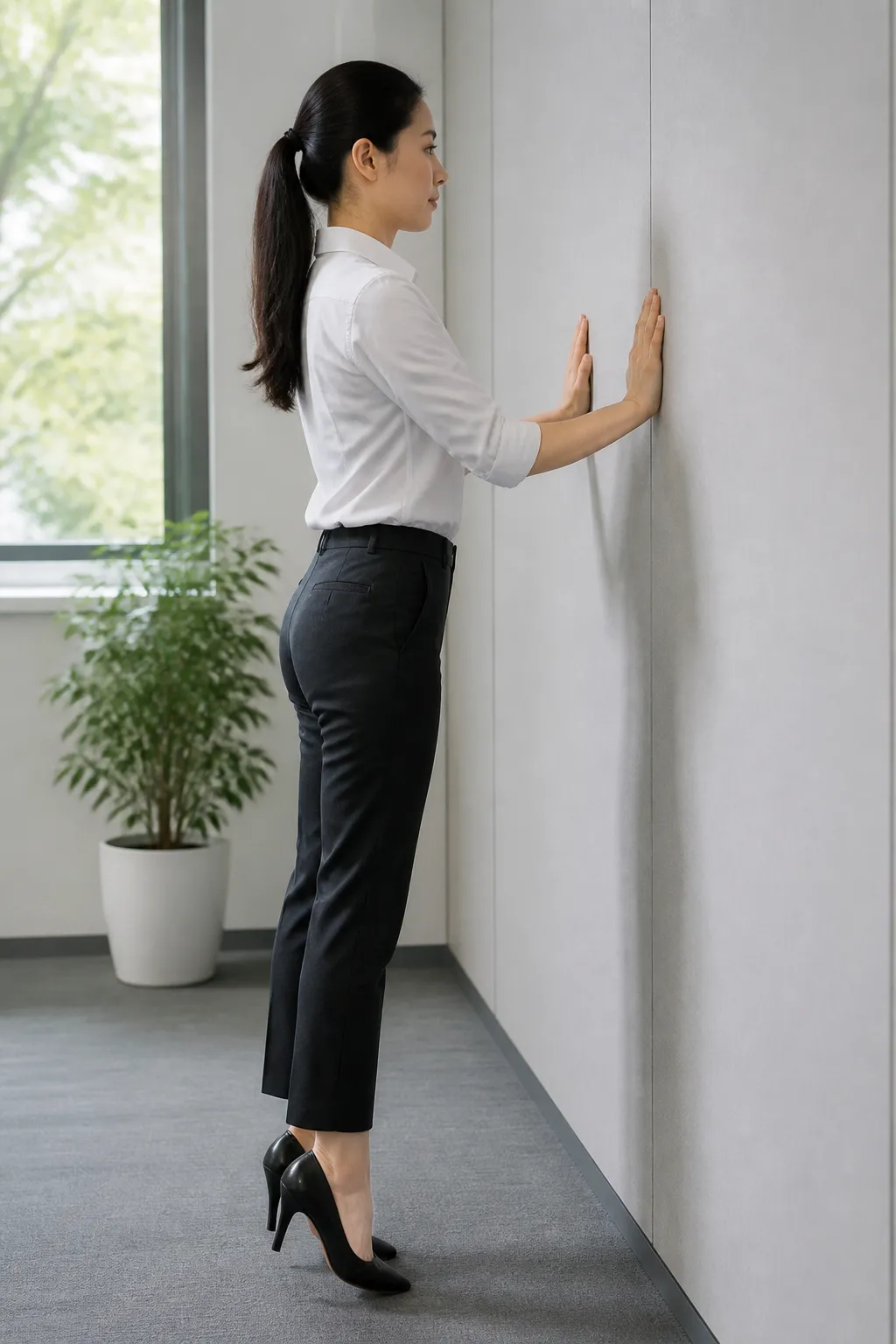
Person facing a wall doing slow calf heel raises for desk posture

Workout 4 · Calf

Wall heel raises

3 sets of 10–20

Slow heel raises against a wall wake the calves after hours of pointed toes under the desk.

  • Stand about one arm’s length from a wall, facing it, with both hands on the wall for stability.
  • Lift both heels off the floor while keeping the body upright and the midsection steady.
  • Slowly lower the heels until they are about to touch the floor, then lift them again. That is one repetition.
  • Do three sets of 10 to 20 repetitions.
  • Common mistake: bouncing or locking the knees hard. Move slowly and keep a soft upright stance.

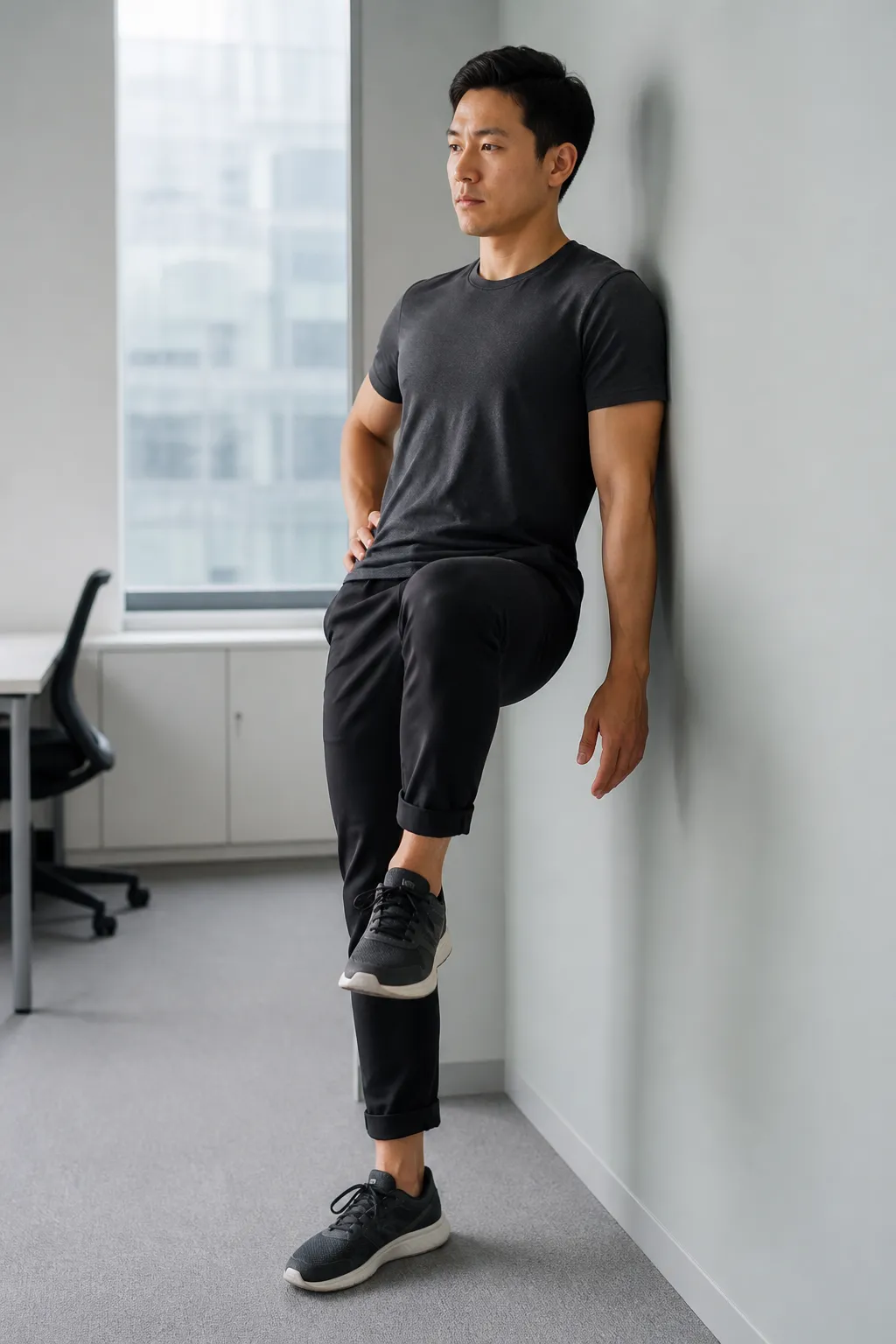
Workout 5 · Side-hip hike

Wall hip hike for the side hip

3 seconds · 10 reps · 3 sets each side

A side-hip hike against the wall wakes gluteus medius, the side-hip muscle that often goes quiet in a long sit.

  • Stand sideways with the left shoulder against the wall.
  • Lift the left leg with a bent knee until the thigh is parallel to the floor.
  • Lift the left hip up and toward the wall. Done well, you should feel the work mainly in the right (standing) hip.
  • Hold for three seconds.
  • Repeat ten times, then switch sides. Perform three sets on each side.
  • Common mistake: feeling the work only in the lifted leg. The standing-side hip should do most of the work.

Caution

If numbness, dizziness, or other discomfort appears during any of these moves, stop at once and seek professional advice before continuing.

Person beside a wall lifting the hip for a side-hip strength move

When to book for desk pain

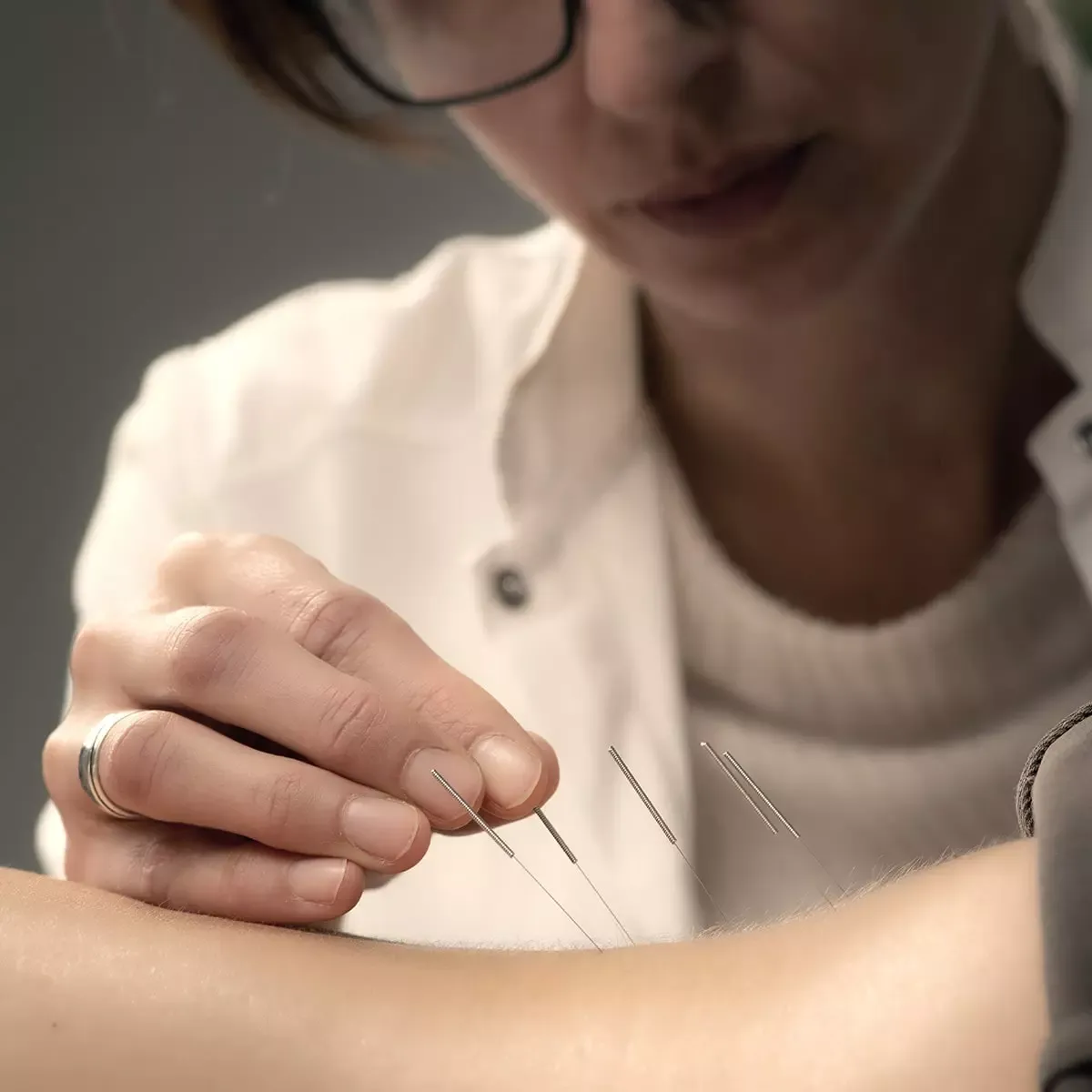
Daily strength moves and the workplace stretches set support desk care. Book when tightness keeps returning, or after a fall or injury, growing weakness, or pain that spreads with numbness or tingling. A physician can name the pattern and decide whether acupuncture, tuina, or other care belongs in your plan.

Dr Sim Beng Joo

Clinically reviewed

Reviewed by Sim Beng Joo

Advisor (Science & Strategy) / Consultant Physician · TCMPB T1303003A

MOH-licensed TCM physician and biomedical scientist, with clinical work in digestion, pain, sleep or fatigue, and constitution patterns that show as tendon and joint load.

View full profile

Educational information based on clinical experience and TCM principles. Not a substitute for personalised consultation, physiotherapy, orthopaedics, or urgent care. Speak with your physician before starting new workouts in pregnancy or with a chronic condition. Stop immediately if numbness, dizziness, or other discomfort appears, and seek professional advice before continuing. Seek urgent care after a fall or injury, growing weakness, or pain that spreads with numbness or tingling. TCM complements Western muscle and joint care.

FAQs

Questions, answered

Common questions on desk strength moves, still neck holds, 久坐伤肉, and when to book.

What workplace workouts help desk posture?

Five short strength moves used after long sitting: still neck holds for the sides and back; upper-back shoulder-blade squeezes with the arms raised; a seated chair hip shift on a stable chair; wall calf heel raises; and a wall side-hip hike. The full set takes about fifteen minutes.

How often should I do workplace posture workouts?

Do the five strength moves once a day during a break, about fifteen minutes in total. Keep sit-stand breaks every 45 to 60 minutes of sitting, and pair these with the workplace stretches set for spring and give.

How do still neck holds work at a desk?

Sides: head upright facing forward, place the right hand on the right side of the head, tilt slightly right while the hand pushes the opposite way so the head barely moves, hold 15 seconds, switch, three sets. Back: interlace the fingers behind the head, push the head back against the hands with the chin tucked, hold 15 seconds, three sets.

How do I do the seated chair hip shift safely?

Sit at the edge of a stable chair with only the seat of the hips in full contact, knees together, hands on the knees. Shift so only the left side contacts the seat, then lift and sit onto the right side, then return. That is one repetition. Do as many as you can for 30 seconds, three sets. Avoid wheeled or soft chairs.

How do I feel the side-hip muscle in the wall exercise?

Stand sideways with the left shoulder against the wall. Lift the left knee until the thigh is parallel to the floor, then lift the left hip up toward the wall. Done well, you should feel the work mainly in the right (standing) hip. Hold three seconds, ten times, three sets each side.

What is the difference between workplace stretches and workouts?

The stretches article targets spring and give after long sitting. This workouts set rebuilds strength in the same desk-loaded regions in about fifteen minutes. Both support posture; neither replaces care for a fresh injury.

When should I stop workplace workouts and book?

Stop at once if numbness, dizziness, or other discomfort appears, and seek professional advice before continuing. Book when desk pain keeps returning despite daily strength moves and gentle stretching, or after a fall or injury, growing weakness, or pain that spreads with numbness or tingling.

References

Selected sources

  1. National Center for Complementary and Integrative Health. Traditional Chinese medicine: What you need to know. 2019. https://www.nccih.nih.gov/health/traditional-chinese-medicine-what-you-need-to-know/
  2. Ministry of Health Singapore. TCM practitioners (Healthcare Professional Portal). https://hpp.moh.gov.sg/tcm-practitioners/
  3. World Health Organization. Traditional, complementary and integrative medicine. https://www.who.int/health-topics/traditional-complementary-and-integrative-medicine
  4. Original article author: Physician Lyonel Ng.

Next step

Book a consult for desk pain

Bring how long the tightness has lasted, daily sitting hours, and whether numbness or dizziness appears with these moves. We will name the pattern and decide whether acupuncture, tuina, or other care belongs in your plan. The Pain & Injuries programme is for ongoing desk and soft-tissue load.

Hours
Most clinics daily 11:00 AM – 8:00 PM
Care
Physician-led consultation