01 · Desk load
Why long sitting softens muscle
Desk work is a common driver of aches that hang around. In Singapore that often means eight hours behind a screen. Cold air-con, thin clothes, and a slumped sit make the body feel stiff and sore.

Insights · Pain & Injuries
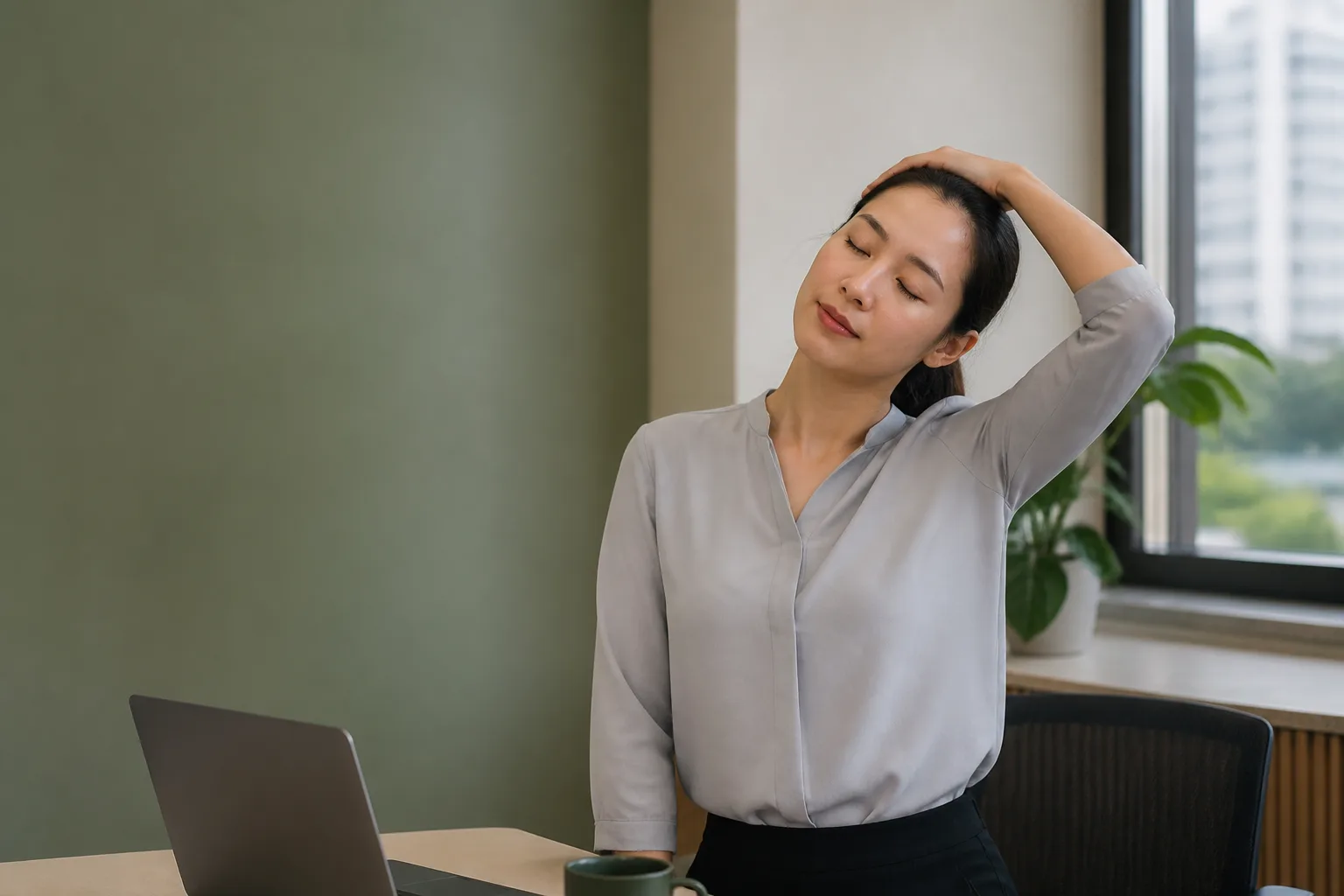
Hours at a desk leave the neck, hips, and calves tight. Stand often, then spend five minutes on these stretches between visits.
In brief
Stuck after a long sit? Stand and move for five to ten minutes every 45 to 60 minutes of sitting, then spend about five minutes on neck (sides, back, front), shoulder circles, a doorway chest stretch, a kneeling hip-flexor lunge, and wall calf stretches with the back leg straight then bent. Hold most stretches about 15 seconds each side. Cold office air and a slumped sit can leave the body stiff; TCM names long sitting as harmful to muscle (久坐伤肉). Stop for numbness or dizziness and book if pain keeps returning.
01 · Desk load
Desk work is a common driver of aches that hang around. In Singapore that often means eight hours behind a screen. Cold air-con, thin clothes, and a slumped sit make the body feel stiff and sore.
TCM · Prolonged sitting
久视伤血,久卧伤气,久坐伤肉,久立伤骨,久行伤筋,是谓五劳所伤
久坐伤肉 means long sitting wears on the flesh: muscle loses strength and spring, so joints feel less supported and pain shows up more easily.
02 · Sit-stand
Layers help in a cold office. So does upright posture paired with a simple sit-stand rhythm before the stretch set below.
Work in a block, then treat the clock as a cue to change posture before the neck and hips stiffen.
Walk the floor, fill water, or stand while you take a call. Motion wakes the limbs after a cold, still sit.
When tightness from sitting builds, spend about five minutes on the neck-to-calf set below.
03 · Five stretches
These five stretches ease the tight, less springy feel that builds from long sitting. Soft range only. Stop immediately if numbness, dizziness, or other discomfort appears, and seek professional advice before continuing.
| Move | Focus | Hold / reps |
|---|---|---|
| NeckSides, back, and front. | Side and back of the neck. | 15 seconds each. |
| ShouldersFull circular rolls. | Shoulders and upper back. | 3–4 sets of 10–15. |
| ChestDoorway high-lunge. | Front of the chest. | 15 seconds × 2 sets. |
| Hip flexorKneeling lunge. | Front of hip. | 15 seconds × 2 sets. |
| CalfStraight then bent knee. | Calf. | 15 seconds each side. |
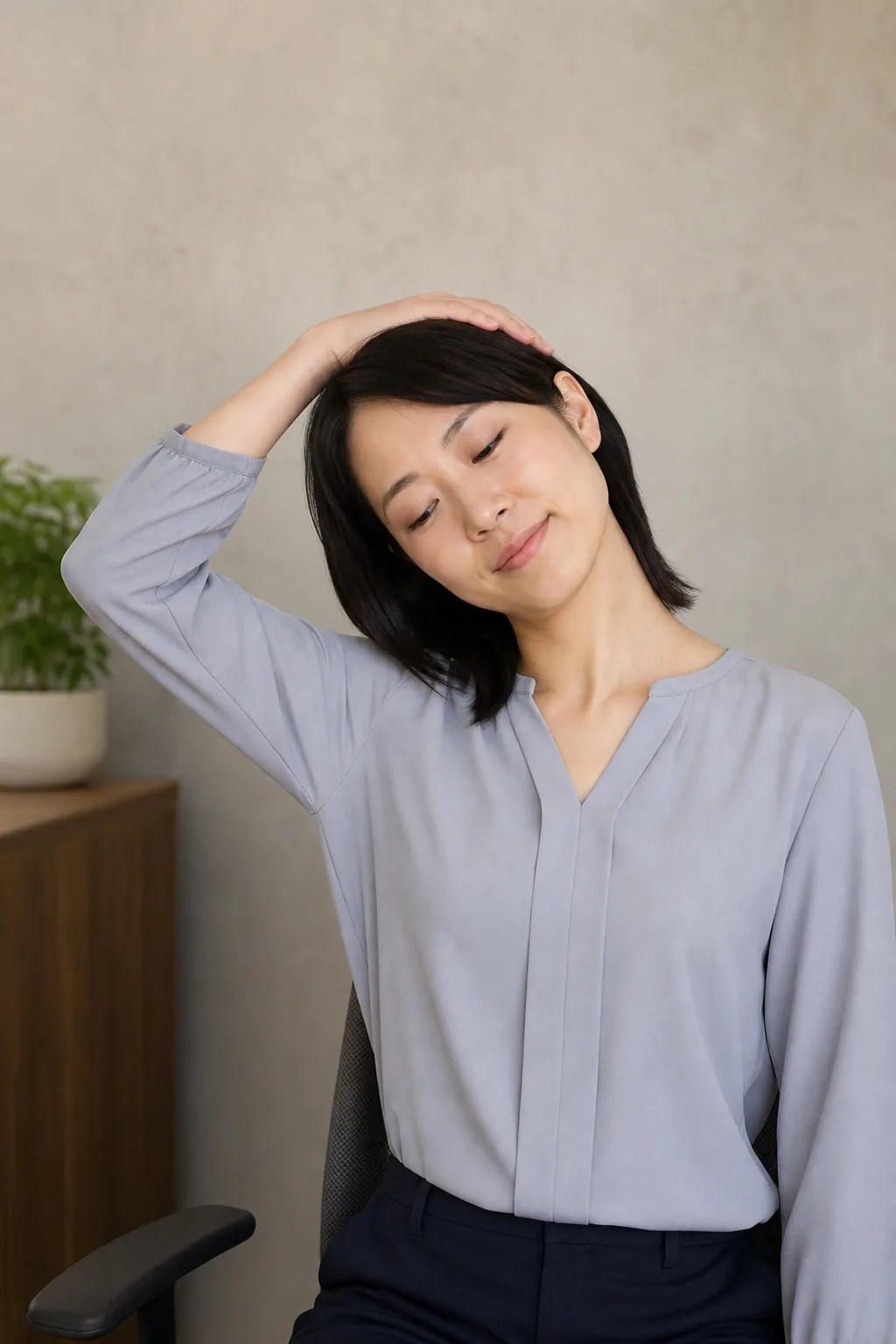
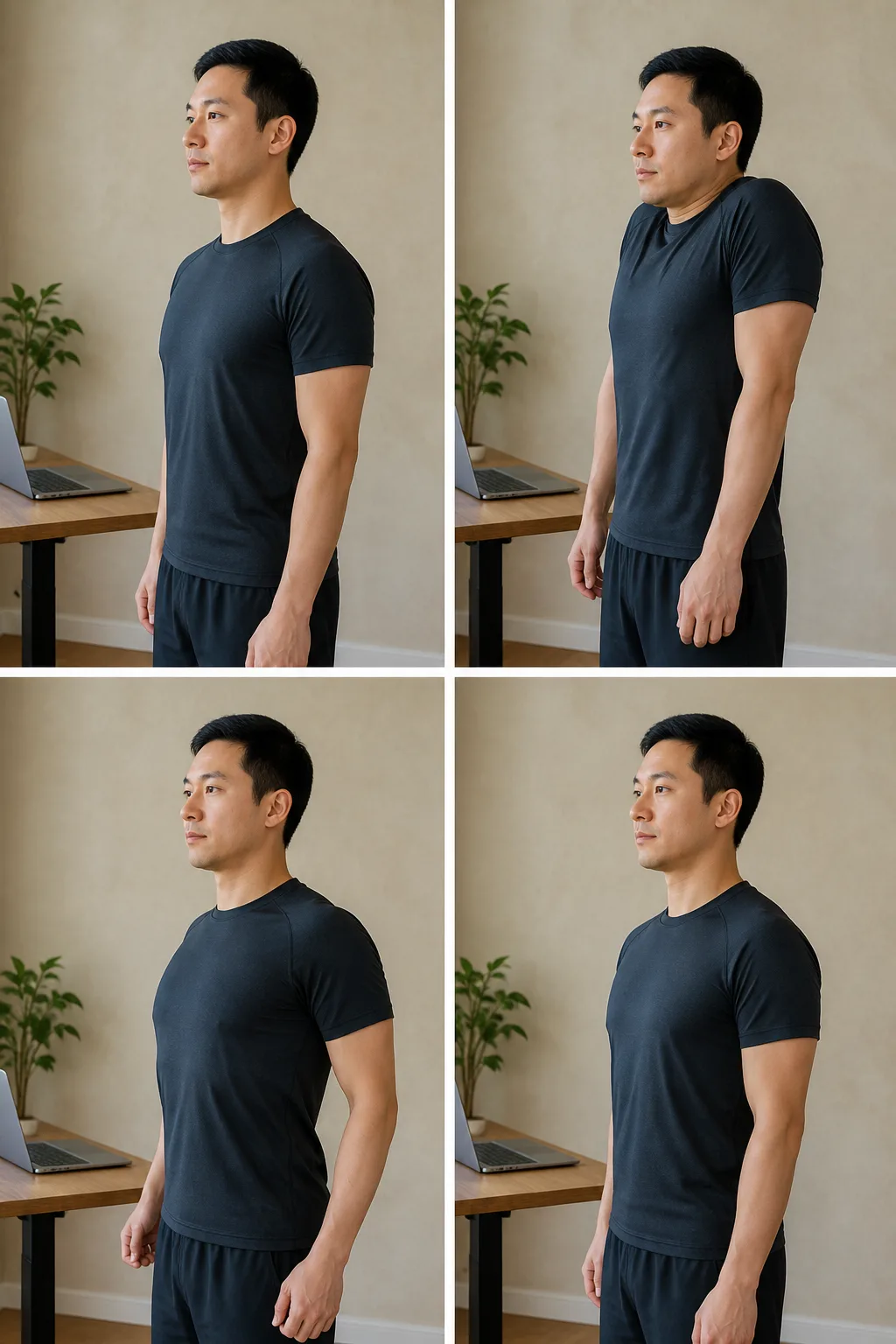
Stretch 1a · Neck
15 seconds each side
A gentle side tilt unloads the lateral neck after screen hours.
Caution
Stay inside a kind range. Stop if the stretch turns sharp, or if numbness or dizziness appears.
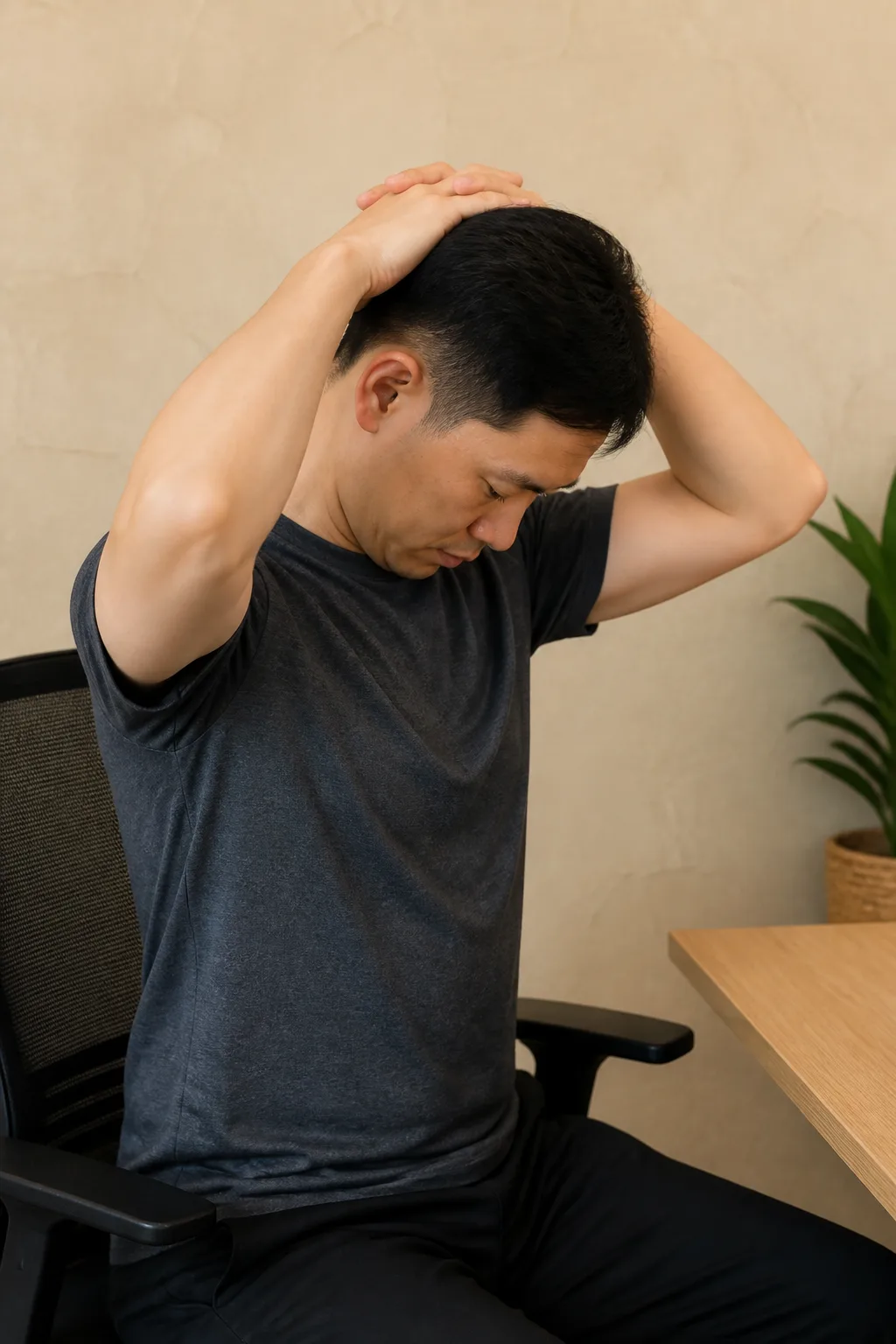
Stretch 1b · Neck
15 seconds
A soft forward bend lengthens the back of the neck without forcing the chin to the chest.
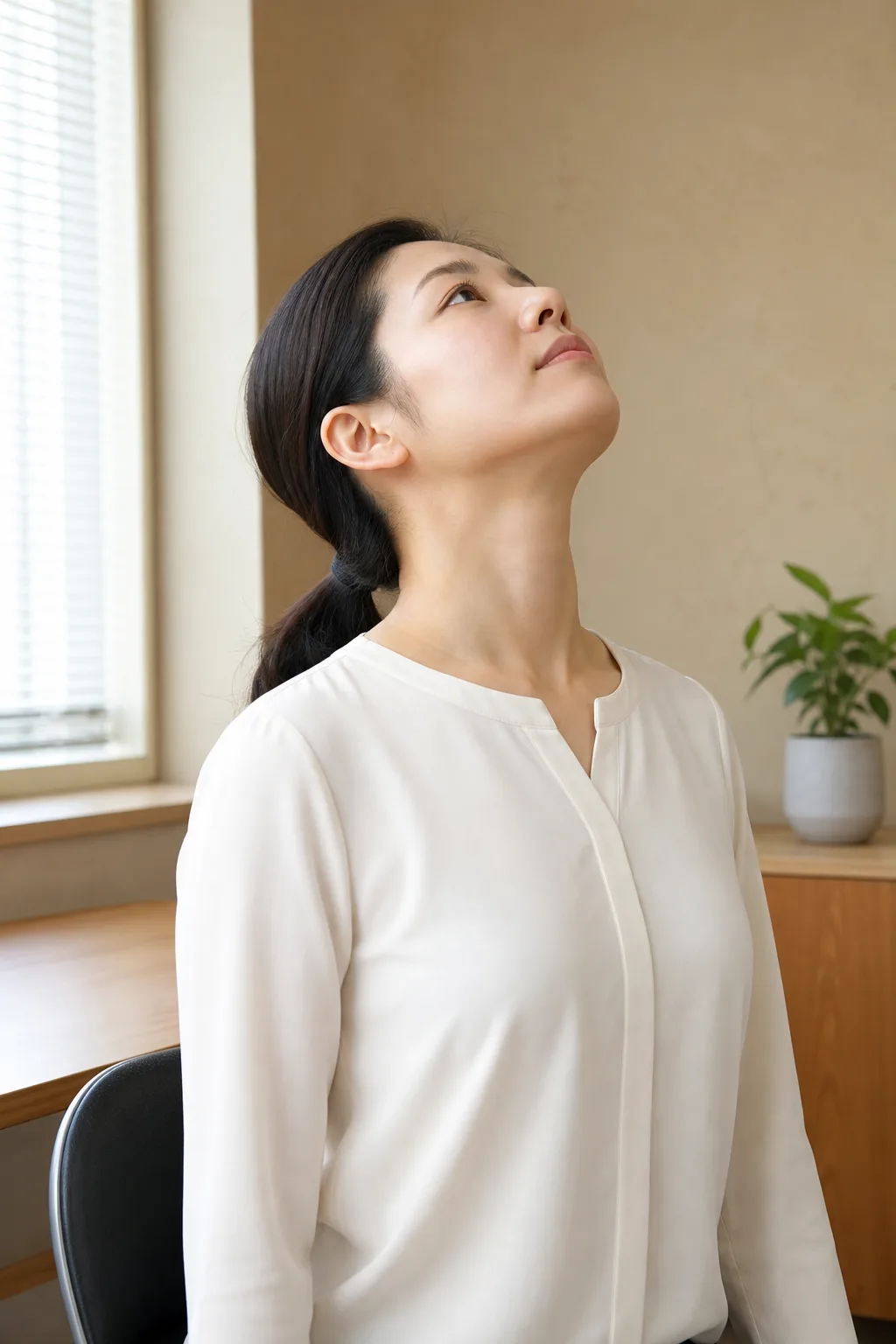
Stretch 1c · Neck
15 seconds
A controlled tip backward opens the front of the neck while the torso stays upright.
Stretch 2 · Shoulders
3–4 sets of 10–15
Slow shoulder rolls restore range after a slumped desk sit, while the neck stays quiet.
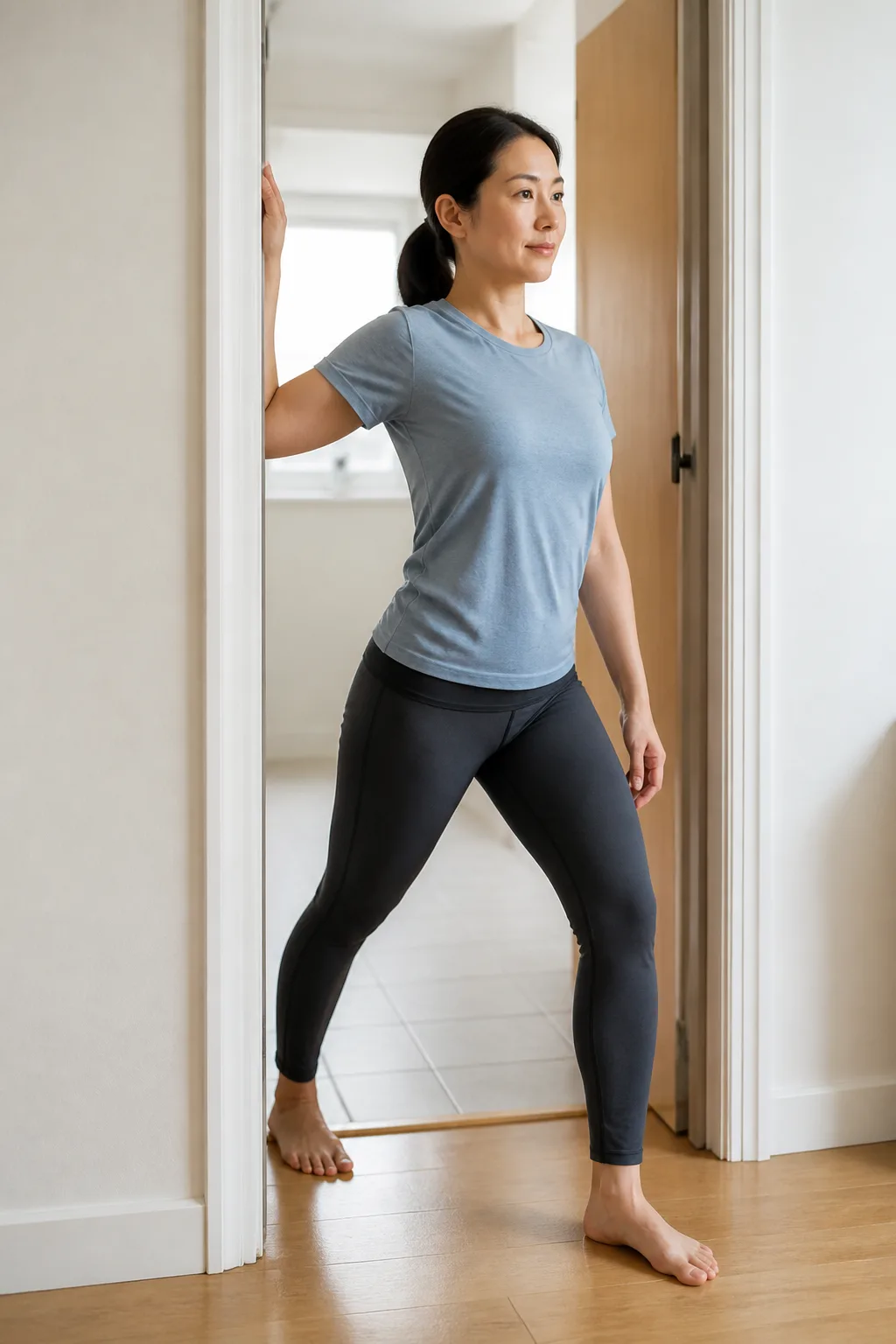
Stretch 3 · Chest
15 seconds · 2 sets
A high-lunge doorway open undoes the forward hunch of keyboard work.
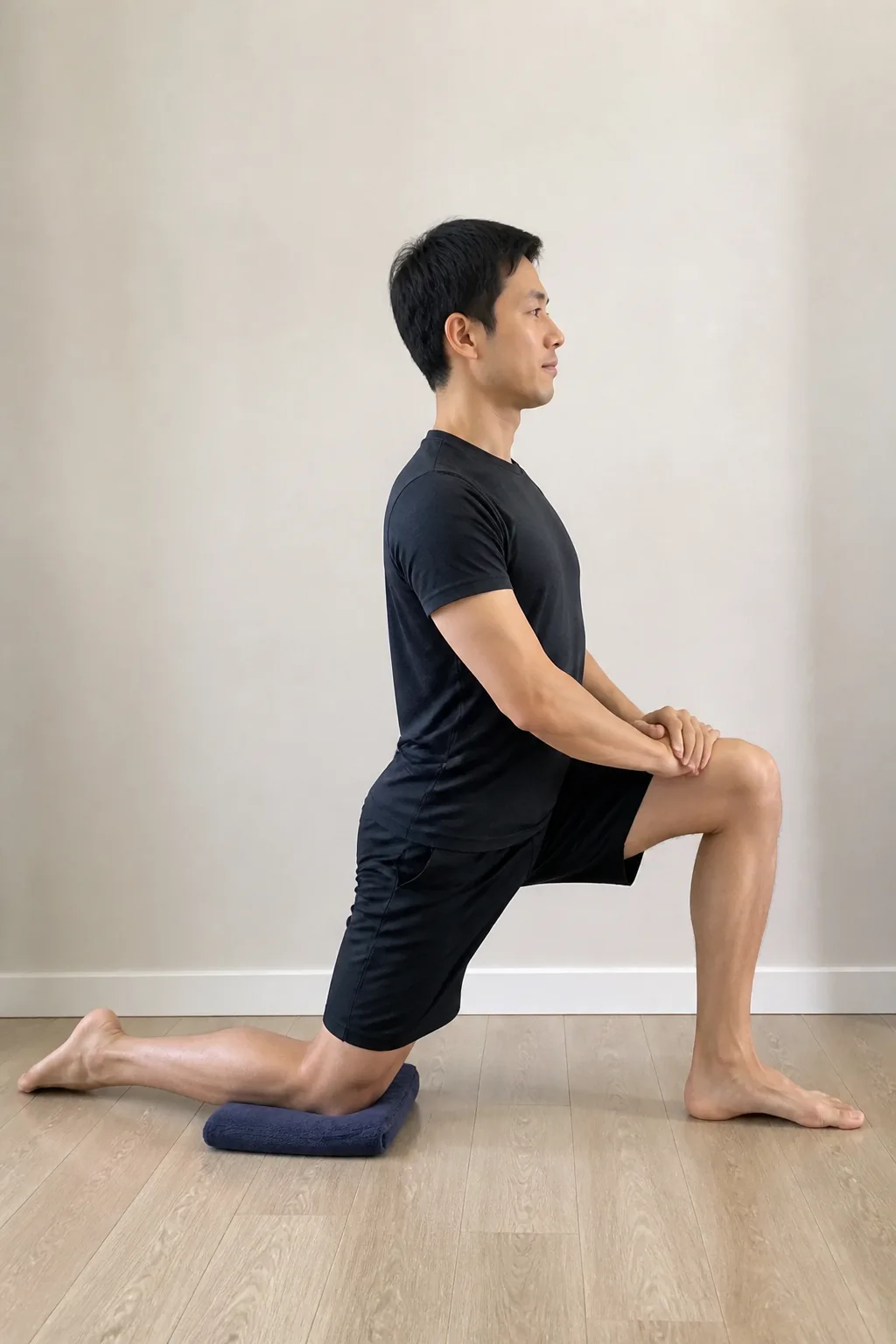
Stretch 4 · Hip flexor
15 seconds · 2 sets
Hours in a chair shorten the front of the hip. A padded kneeling lunge opens that line without forcing the front knee past the toes.
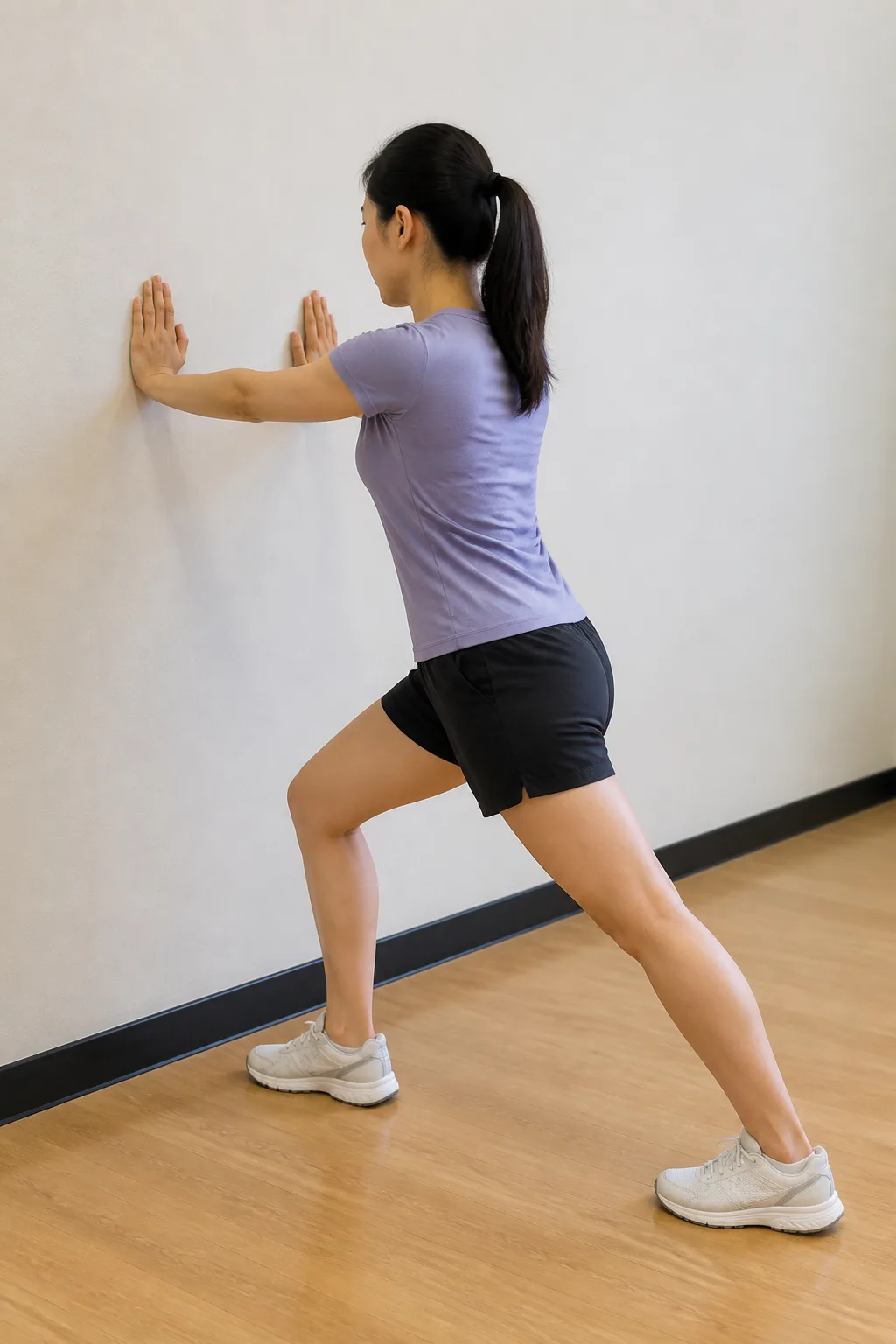
Stretch 5a · Calf
15 seconds each side
A straight back leg targets the longer calf layer after hours of sitting and pointed toes under the desk.
Stretch 5b · Calf
15 seconds each side
Bend the back knee in the same wall setup so the stretch sits lower in the calf.
Caution
If numbness, dizziness, or other discomfort appears during any of these stretches, stop immediately and seek professional advice before continuing.
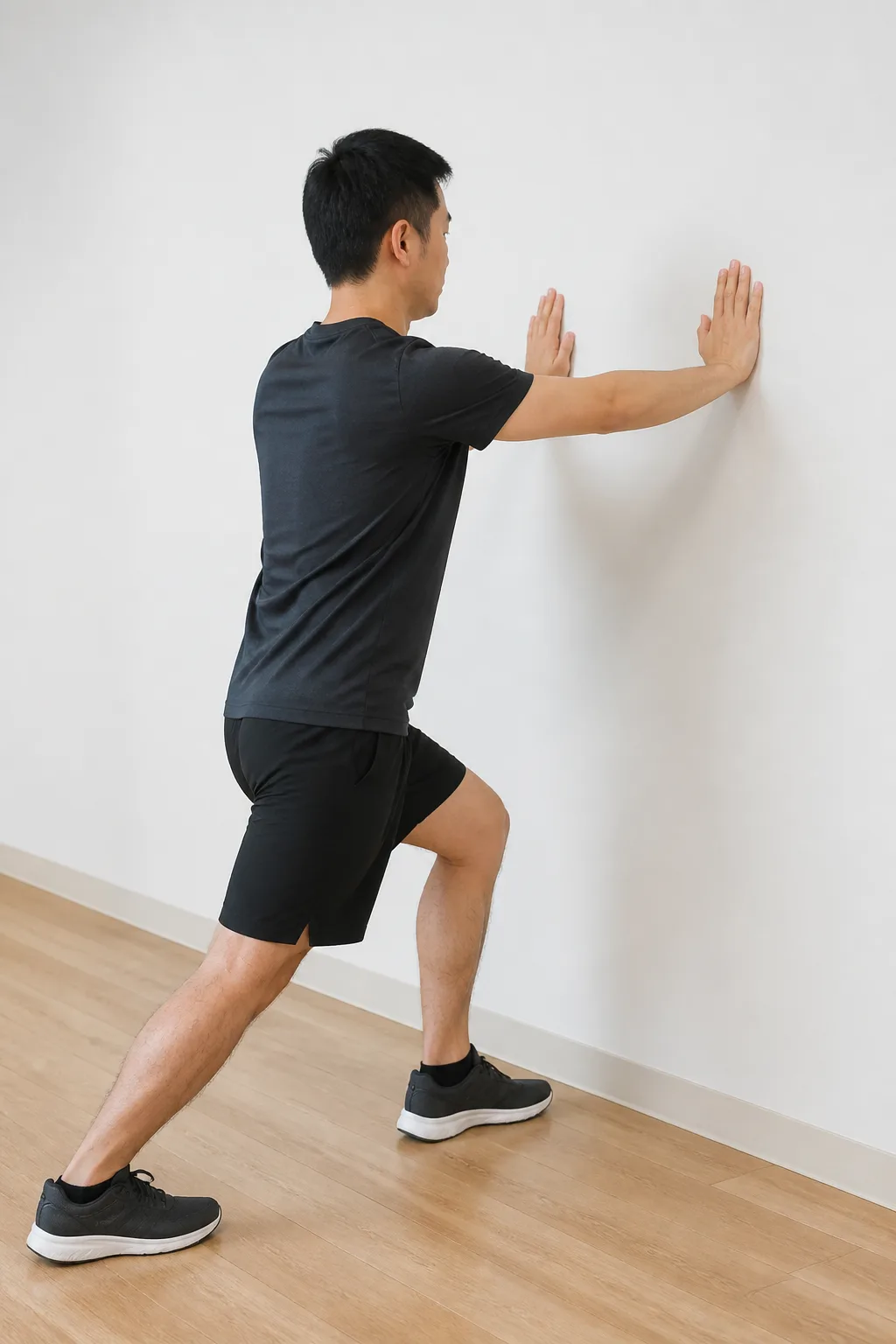
Sit-stand breaks and these five stretches support desk rhythm. Book when tightness keeps returning, or after trauma, progressive weakness, or neurological change. A physician can name the pattern and decide whether acupuncture, tuina, or other care belongs in your plan.

Clinically reviewed
Advisor (Science & Strategy) / Consultant Physician
MOH-licensed TCM physician and biomedical scientist, with clinical work in digestion, pain, sleep or fatigue, and constitution patterns that show as tendon and joint load.
View full profileEducational information based on clinical experience and TCM principles. Not a substitute for personalised consultation, physiotherapy, orthopaedics, or urgent care. Speak with your physician before starting new stretches in pregnancy or with a chronic condition. Stop immediately if numbness, dizziness, or other discomfort appears, and seek professional advice before continuing. Seek urgent care after trauma, progressive weakness, or pain that spreads with neurological change. TCM complements Western musculoskeletal care.
FAQs
Common questions on desk stretches, sit-stand timing, 久坐伤肉, and when to book.
Five short stretches used after prolonged sitting: neck sides, back, and front; shoulder circles; a doorway chest stretch; a kneeling hip-flexor lunge; and wall calf stretches with the back leg straight then bent. Most holds are about 15 seconds each side. The full set takes about five minutes.
Aim for a sit-stand cycle: after every 45 to 60 minutes of sitting, take a five to ten minute break of moving around. Pair that habit with the five stretches when the neck and hips feel tight.
In 《黄帝内经·素问·宣明五气篇》, the five labours include prolonged sitting harming the flesh (久坐伤肉). Long sitting can wear on muscle strength and spring, so joints feel less supported and pain shows up more easily.
Cool office air with thin clothes can leave the limbs feeling colder and less lively. TCM often links cold and stagnation with pain (不通则痛), and channels that lack nourishment with pain (不荣则痛). Layers plus movement help; stretches alone do not replace care for acute injury.
Side stretch: tilt the head, rest the same-side hand on the opposite side of the head near the ear, and let the hand weight gently deepen the stretch for 15 seconds, then switch. Forward: chin toward chest with both hands on the back of the head for 15 seconds. Back: tip the head back with an upright torso for 15 seconds without pressing with the hands.
Kneel on a cushion with the back knee down and the front foot forward so the front knee stays behind the toes. Brace the abs, keep the hips squared, squeeze the back glute, and sink the hip down and forward. Hold 15 seconds each side, rest, then repeat for two sets.
Stop immediately if numbness, dizziness, or other discomfort appears, and seek professional advice before continuing. Book when desk pain keeps returning despite sit-stand breaks and gentle stretching, or after trauma, progressive weakness, or neurological change.
Selected sources
Continue
Pathways and care options that sit next to this guide.

Insight
Fifteen-minute desk strength moves for neck, upper back, hips, calves, and side hip.
Explore
Insight
Morning 落枕, neck muscles, wind-cold, acupuncture, and pillow habits.
Explore
Insight
Lumbar patterns, clinic methods, DIY points, and home stretches.
Explore
Insight
Acute vs chronic pain, channel obstruction, and clinic plan.
Explore
Programme
Acupuncture, tuina, cupping, and targeted care for desk and sport load.
Explore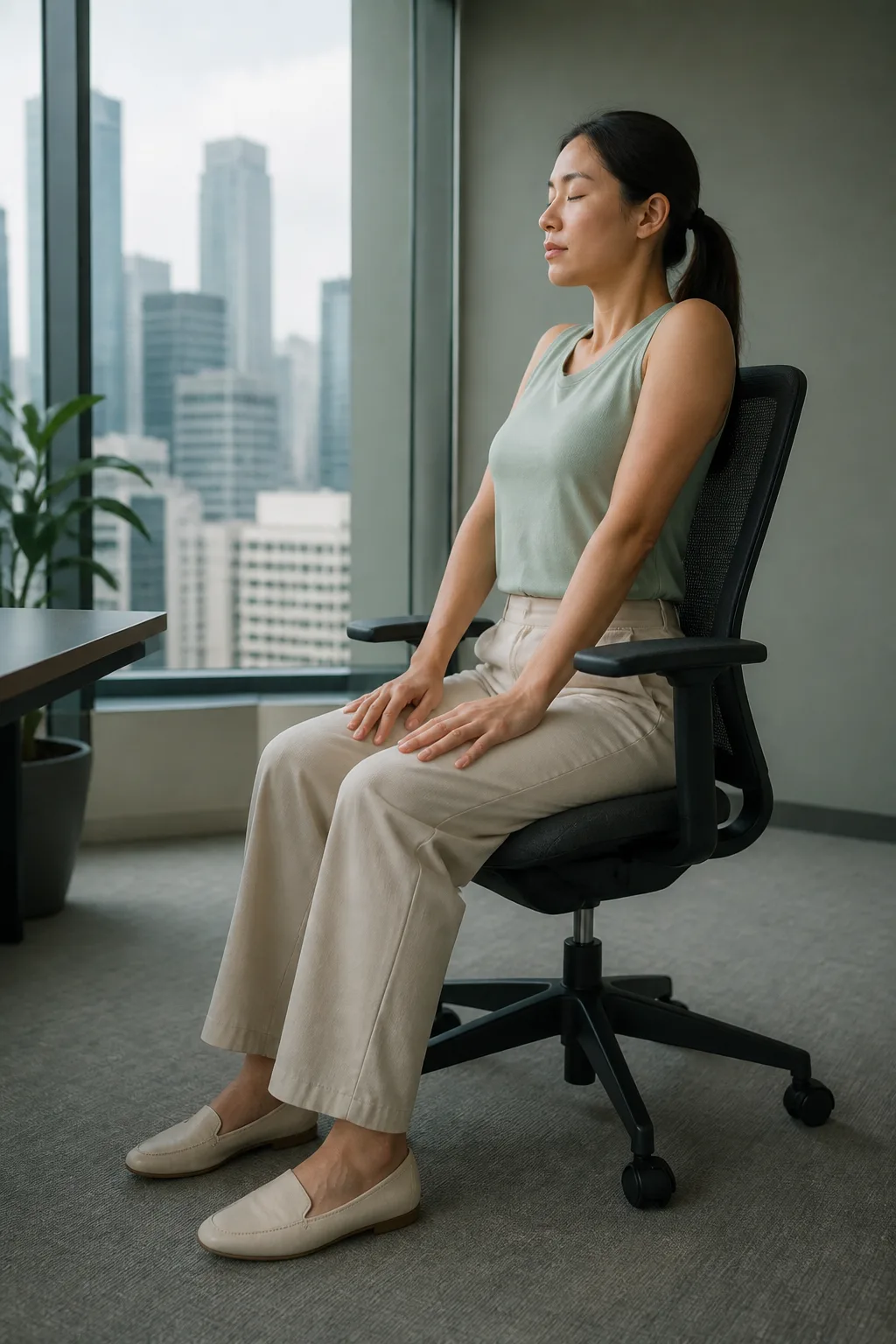
Bite
Shoulder drop and chair twist when stress stacks with posture.
Explore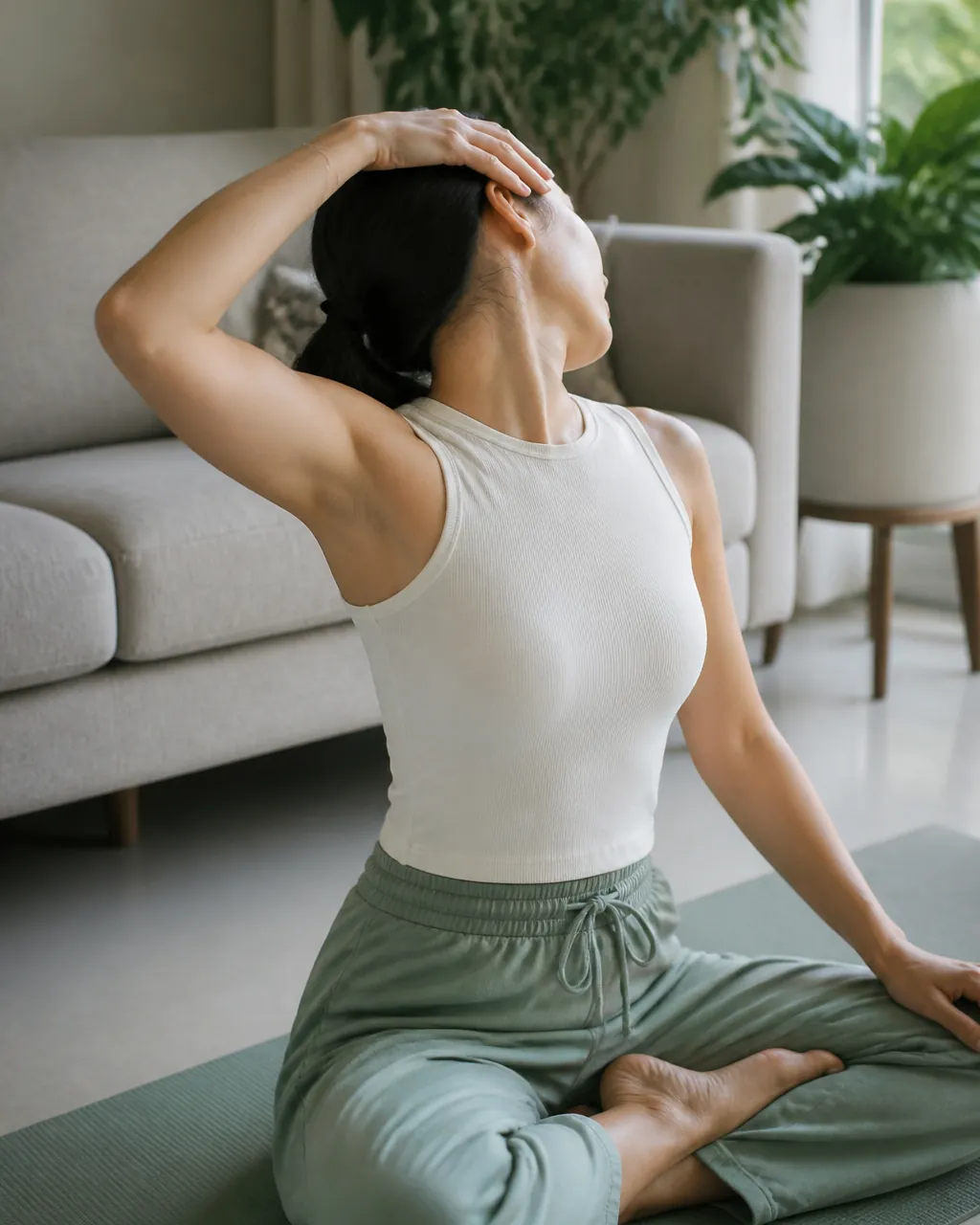
Bite
Gentle mobility, fist-height pillow, and keep the neck warm.
Explore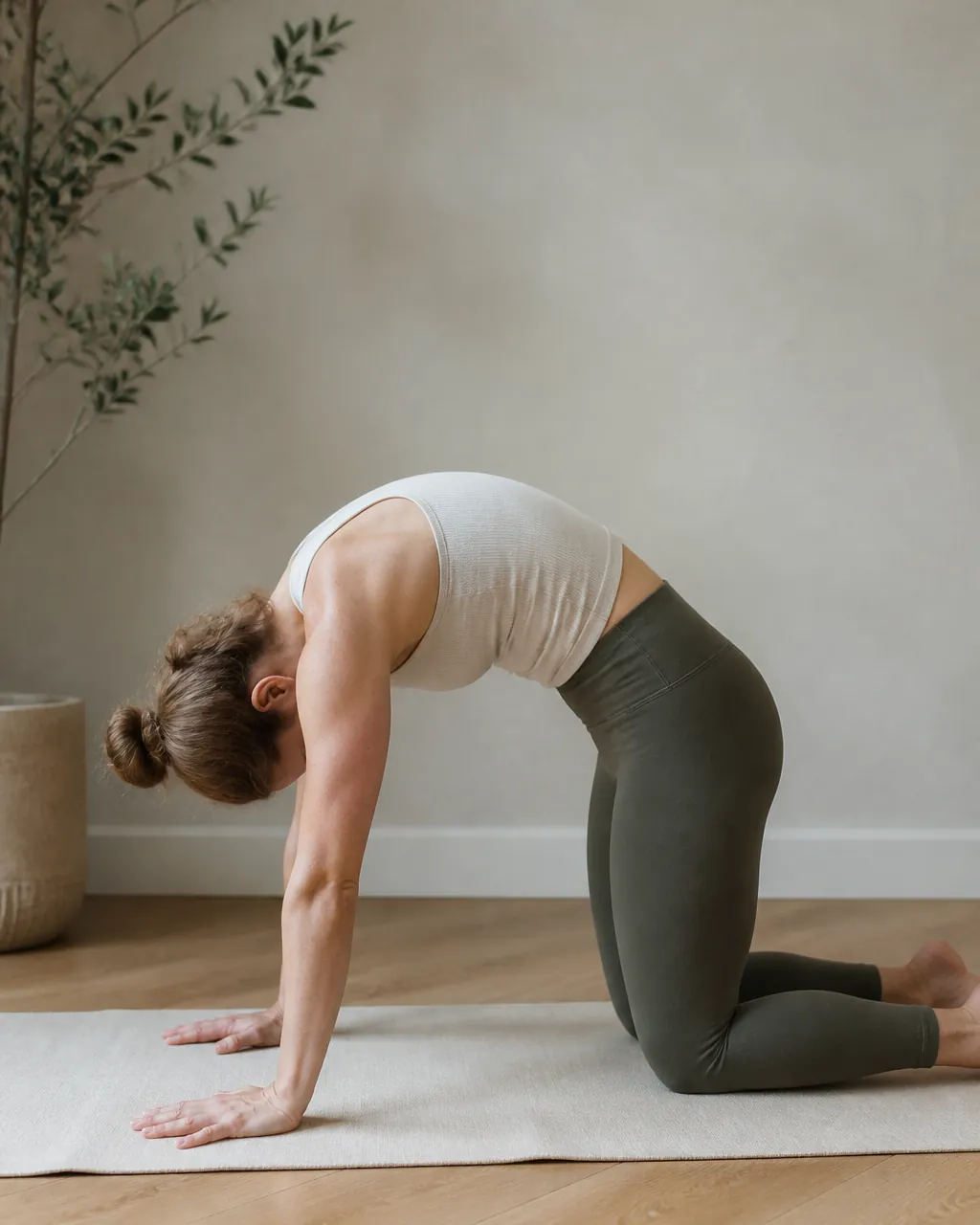
Bite
Short floor and chair moves when sitting loads the lumbar region.
Explore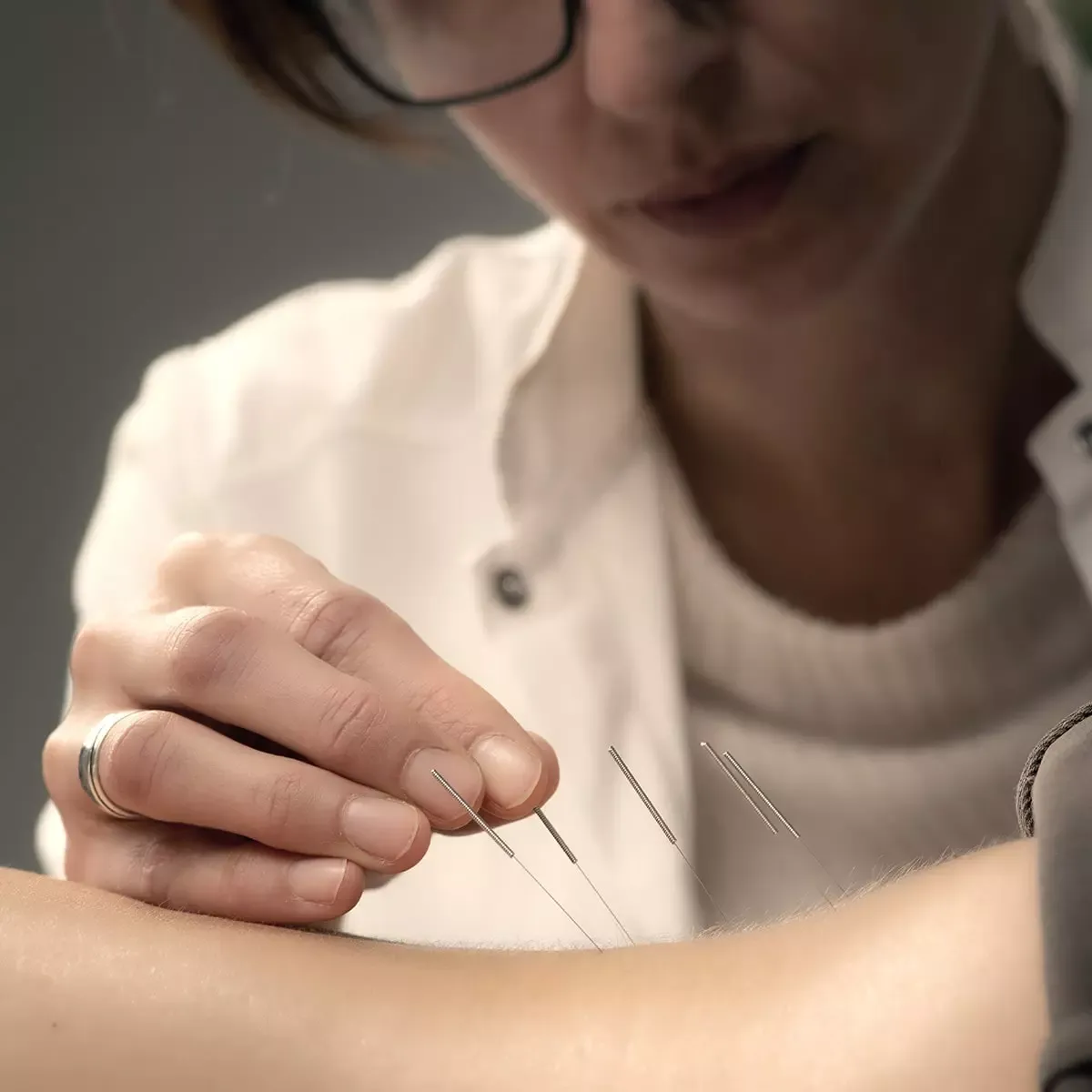
Treatment
Needle care that can include neck, shoulder, and lumbar points.
Explore
Next step
Bring how long the tightness has lasted, daily sitting hours, and whether numbness or dizziness appears with stretches. We will name the pattern and decide whether acupuncture, tuina, or other care belongs in your plan. The Pain & Injuries programme is for ongoing desk and soft-tissue load.