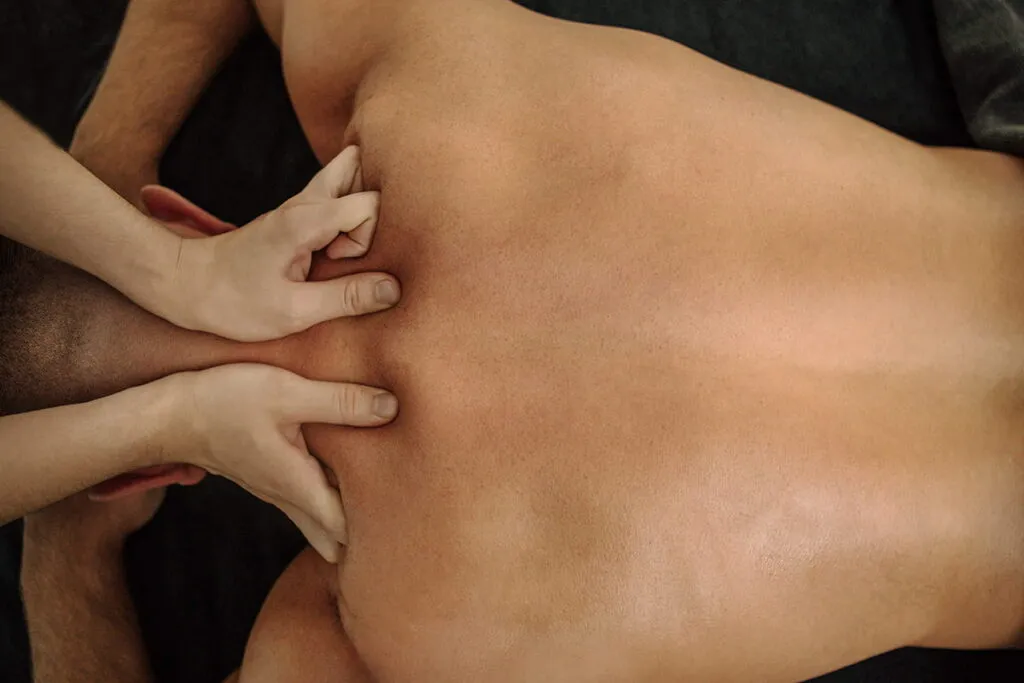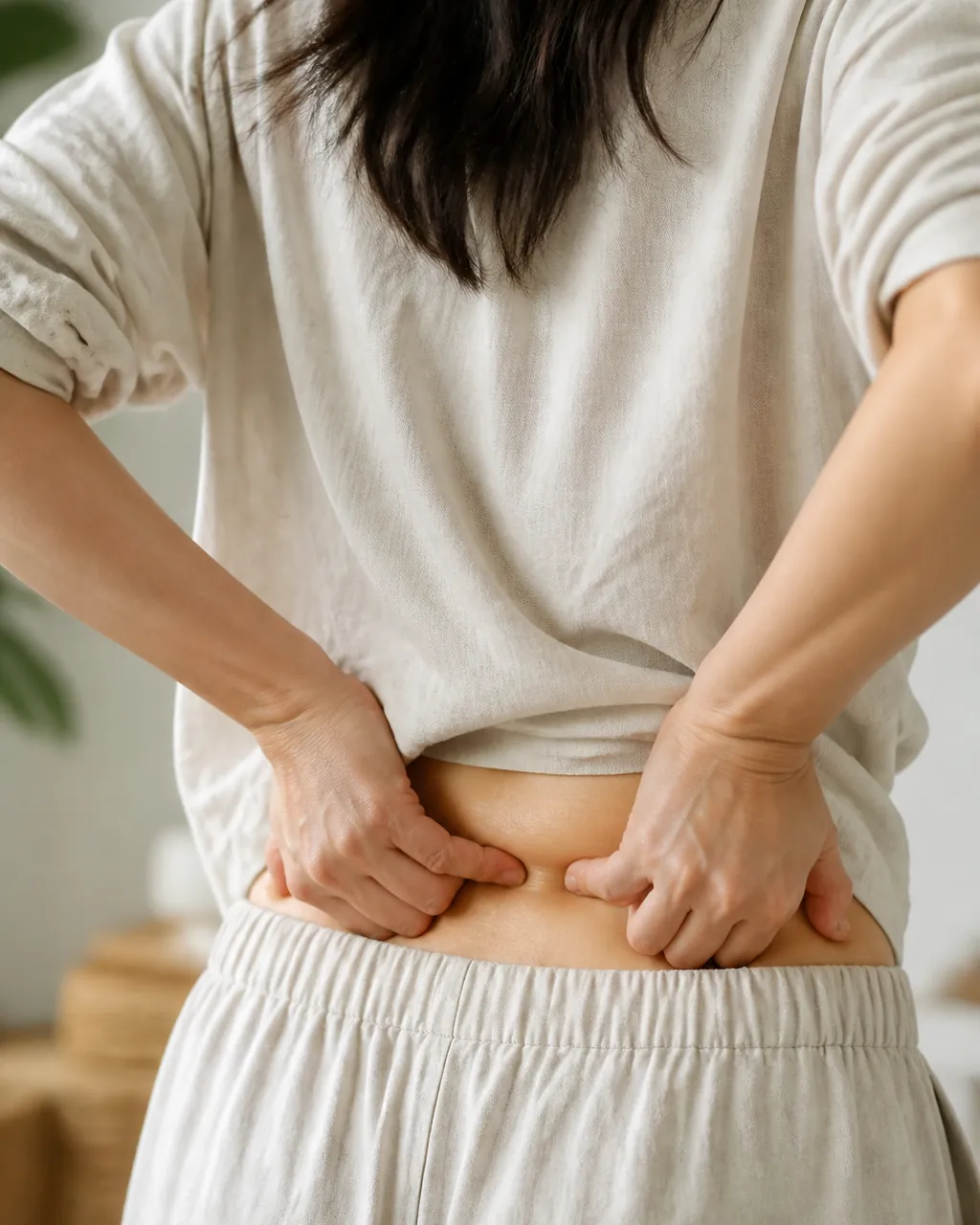
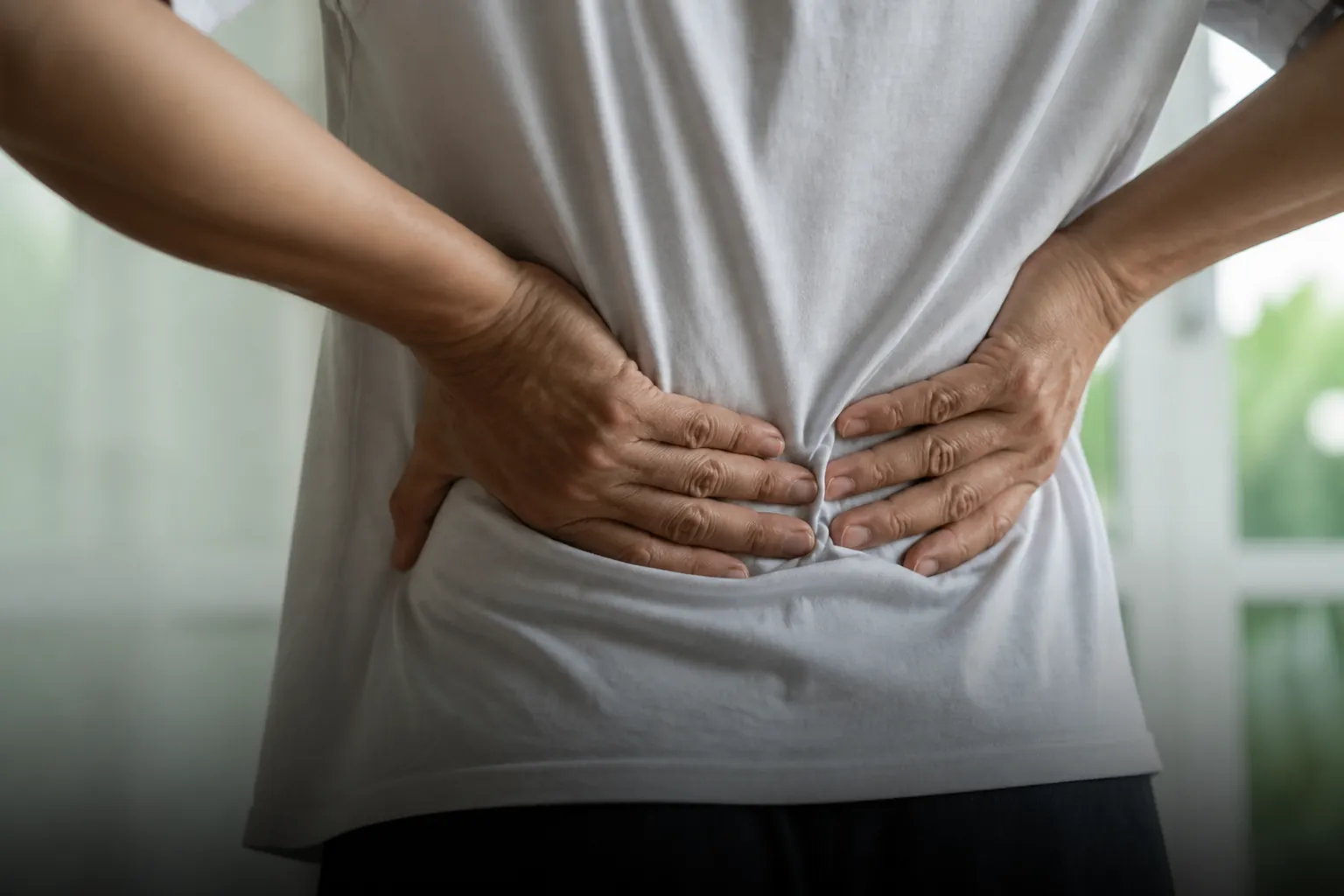
Hands holding the lower back at the lumbar region

Insights · Pain & Injuries

TCM for lower back pain

A dull ache or sharp pain in the low back often means the lumbar muscles or joints are under load. Acupuncture, tuina, home points, and gentle stretches usually fit alongside clinic care.

In brief

A dull ache, sharp local pain, or stiffness when you bend or lift often sits as lower back pain (腰痛, lumbar). Western labels range from sprain and disc wear to sciatica. TCM often names cold-damp or hot-damp, blood stasis, or Kidney deficiency. After pulse and tongue, care may mix acupuncture, tuina, cupping, and herbs. At home, points such as Yaoyangguan (DU3) and Weizhong (BL40), gentle stretches, and warmth for chronic ache can sit beside clinic care.

01 · What it is

What is lower back pain

腰痛 · lumbar vertebrae · channels

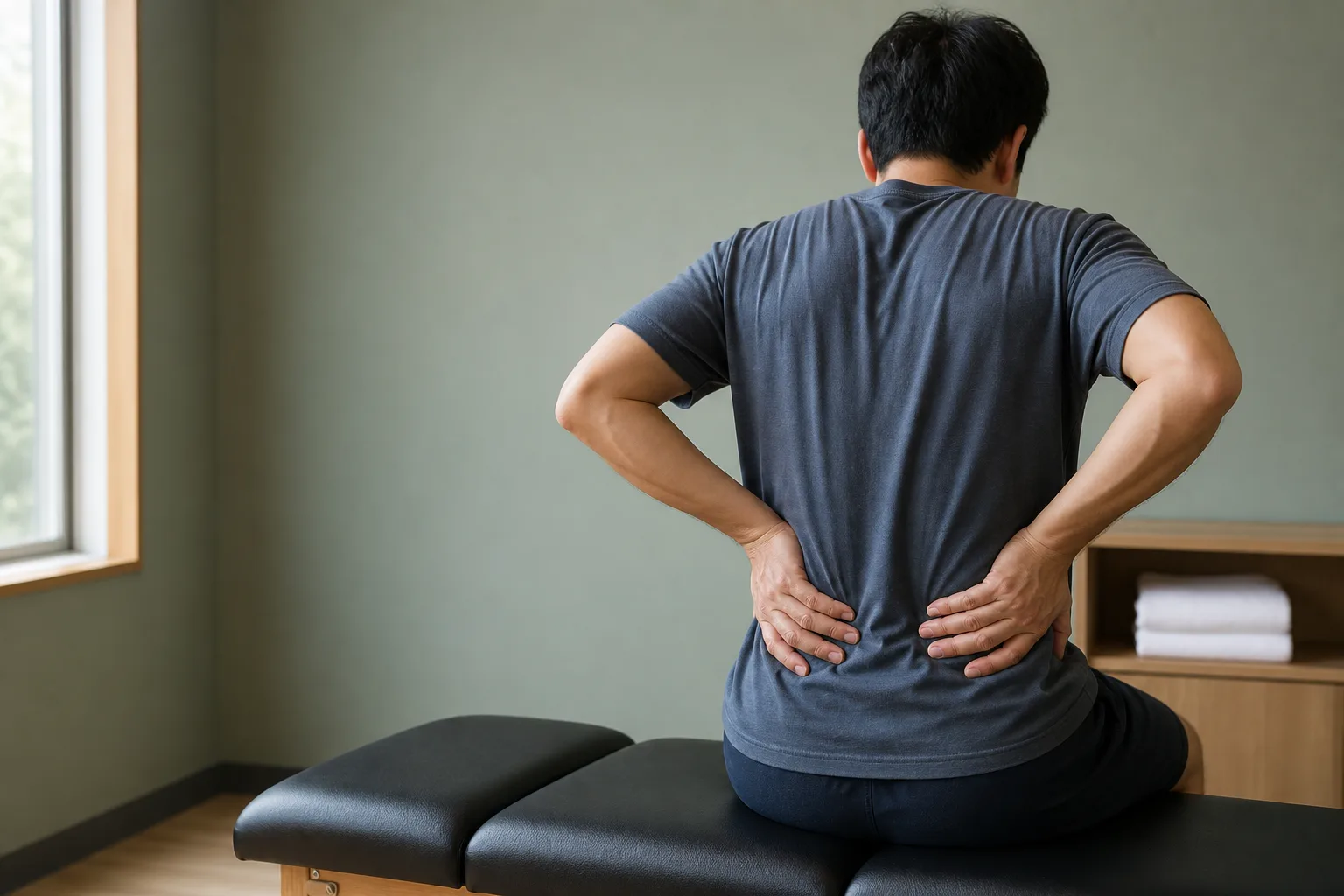
A dull ache or sharp pain between the lower ribs and the top of the buttock often reads as lower back pain. The lumbar vertebrae carry upper-body weight; injury to bone, muscle, or nerve here can shoot or ache.

Some lumbar pain stays local. Some travels with numbness or shooting pain down the legs when surrounding structures load a nerve. Western care often starts with the disc, the muscle, or the joint. TCM also asks whether qi and blood are moving, whether damp with cold or heat has settled in the channels, and whether the Kidney system that classically “mansions” the low back is under-nourished.
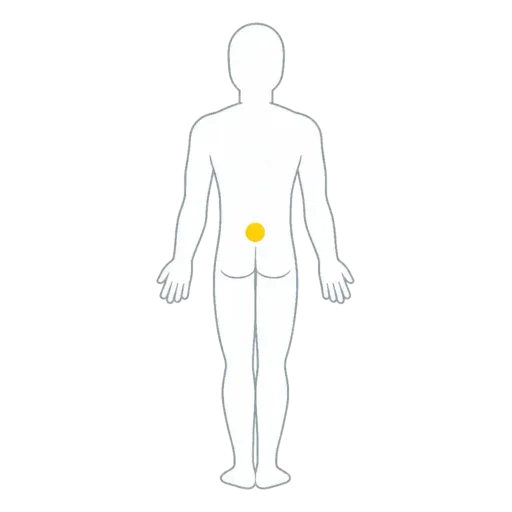
The lumbar zone

Diagram of the lumbar zone for lower back pain

Lumbar · Kidney mansion

This Insight stays in the lumbar band. Thoracic and neck-shoulder pain sit on the multi-zone back Insight.

All back zones

02 · Common causes

Common causes of lower back pain

Western labels group lumbar pain by how the tissue was loaded: trauma and wear are the most common; inflammation, congenital shape, nerve compression, and non-specific ache also appear.

Types and causes of lower back pain
Type Examples Typical load
TraumaSprain, strain, fracture, disc hernia. Ligaments overstretched; muscle or tendon tear; fracture; intervertebral disc hernia. Prolonged bending, poor posture, overexertion, sudden twist, or injury in exercise and weight-bearing.
DegenerativeDisc wear, spondylosis, osteoarthritis. Intervertebral disc degeneration, spondylosis, osteoarthritis. Reduced fluid between vertebrae; wear and tear on the spine over years.
Inflammatory or congenitalSpondylitis; scoliosis. Spondylitis (inflamed vertebrae) or scoliosis (curved spine) that loads the lumbar band unevenly. Inflammatory disease activity, or a curve present from early life that changes how force travels.
Nerve and spinal cordSciatica and related compression. Sciatica and other pictures where structures around the spine compress nerves. Disc, bone, or soft tissue pressing on a nerve root; pain may shoot down the leg.
Non-specificNo single named pathology. Lumbar pain without a clear lesion on imaging. Still real pain; TCM often names damp, stasis, or Kidney deficiency after pulse and tongue.

Signs that need urgent care

These sit outside a typical lower back pain (腰痛) picture. Get assessed the same day.

1. Sudden severe pain

Sudden severe back pain after a fall or trauma needs urgent conventional assessment first.

2. Leg weakness

Pain or increasing weakness in a leg can signal nerve compression that needs medical review.

3. Bowel or bladder change

New bowel or bladder change with back pain is an urgent-care boundary, not a home-care picture.

4. Spreading numbness

Numbness that spreads down a limb needs conventional assessment before further self-press or stretching.

03 · TCM patterns

Causes of back pain: a TCM view

Damp · blood stasis · Kidney

Chinese medicine reads the body with nature. For lumbar pain, damp with cold or heat, blood stasis, and Kidney deficiency are the patterns most often named after pulse and tongue.

External damp with cold or heat often tracks Singapore’s humidity and long hours in air-conditioning. Internal blood stasis follows stalled qi after poor posture, exercise strain, or weight-bearing injury. The low back is classically the mansion of the kidneys, so Kidney qi, yin, or yang deficiency can leave a dull, fatigue-linked ache.

TCM factors, symptoms, and what may help
Factor Symptoms May help
Cold-dampnessExternal · 寒湿 Pain intensifies on cold or rainy days or in air-conditioned rooms. Warmth, cover the lumbar zone; acupuncture and herbs that expel cold-damp when named.
Hot-dampnessExternal · 湿热 Pain intensifies on hot and humid days. Clear heat-damp methods after pulse and tongue; avoid packing more heat onto a hot pattern.
Blood stasisInternal · 血瘀 Sharp localised pain that worsens at night, often after posture strain or injury. Move qi and blood; acupuncture, tuina, and cupping often sit here.
Kidney deficiencyInternal · 肾虚 Dull, constant ache that worsens when overworked or before or during menstruation. Nourish Kidney; home points such as Shen Shu (BL23) and Tai Xi (KD3); herbs when prescribed.

Kidney deficiency: qi, yin, and yang

When the low back reads as Kidney deficiency, accompanying signs help name which branch leads.

1. Kidney qi

Frequent day or night urination, premature ejaculation or clear discharge, shortness of breath, chronic fatigue, and a pale face.

2. Kidney yin

Giddiness, tinnitus, poor sleep with frequent dreams, night sweat, warm hands and feet, dry throat, thirst, and flushed cheeks.

3. Kidney yang

Chronic fatigue, cold hands and feet, aversion to cold, a cold sensation in the back, early-morning diarrhoea, water retention, and frequent urination.

04 · Clinic methods

TCM treatments for lower back pain

Chinese medicine treatments are personalised to the root named after consultation. Acupuncture, herbs, tuina, and cupping can sit together once pulse and tongue decide the lead. In Singapore, some public hospitals now also offer acupuncture as an adjunct for selected acute lower back pain after medical assessment, the same complementary framing used in outpatient clinic care.

Clinic methods for lower back pain
Method What it does for the lumbar spine When it sits in the plan
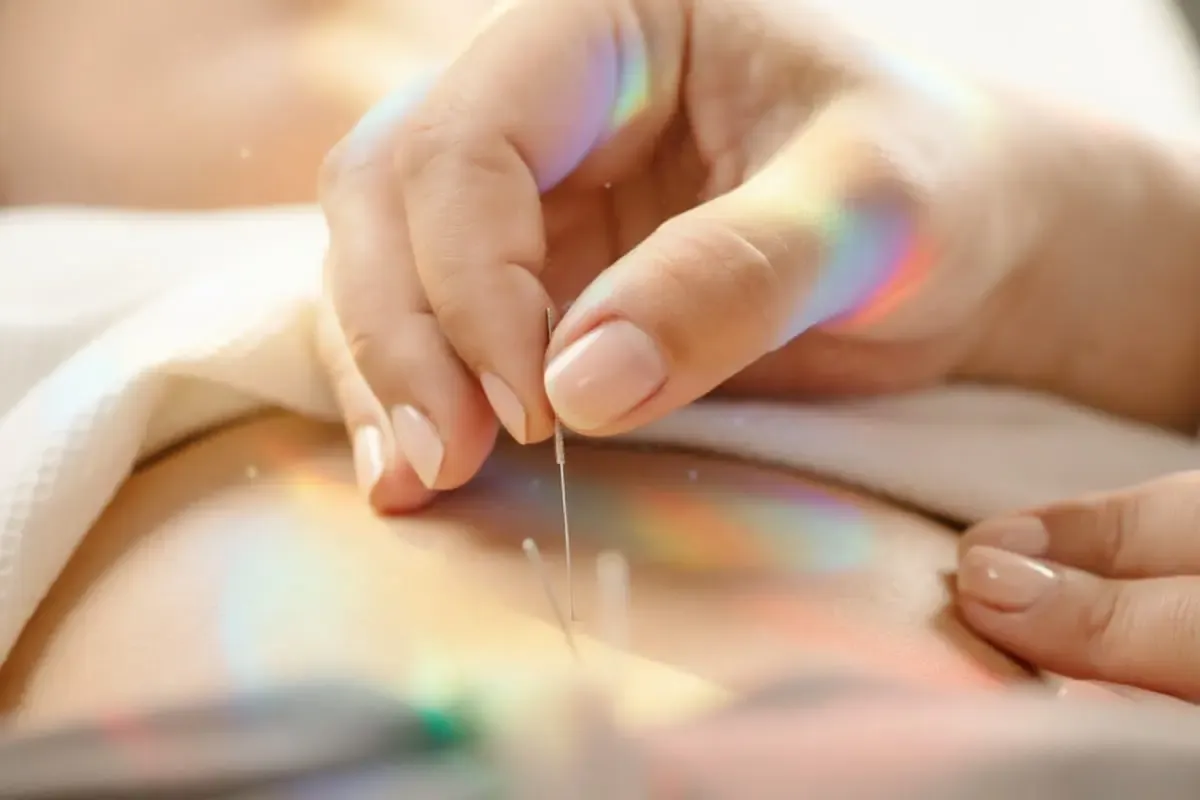
AcupunctureFine needles at selected points. Reduces pain, promotes healing, and stimulates the flow of qi along meridians. Often first-line for lumbar pain after the pattern is named.
Chinese herbal medicineFormulas after pulse and tongue. Tailored to strengthen the lower back, ease inflammatory load, and nourish Kidney or blood when those are named. When internal deficiency or stasis needs an oral formula.
Tuina massageRhythmic pressing and kneading. Improves blood circulation and eases muscle tension in the lumbar zone. When tight muscle and stagnation sit together.
Cupping therapySuction over tight muscle or an acupoint. Promotes blood flow and eases stagnation so pain can settle and healing can move. A 2024 systematic review found cupping had a stronger, more sustained effect on low-back pain than medication and usual care in the trials pooled, though methods varied. When local stagnation or dampness sits in the back.

Consultation and assessment

Pulse · tongue · history

From consultation and assessment, a physician advises which methods fit your picture. Treatments are not a fixed lower-back pack.

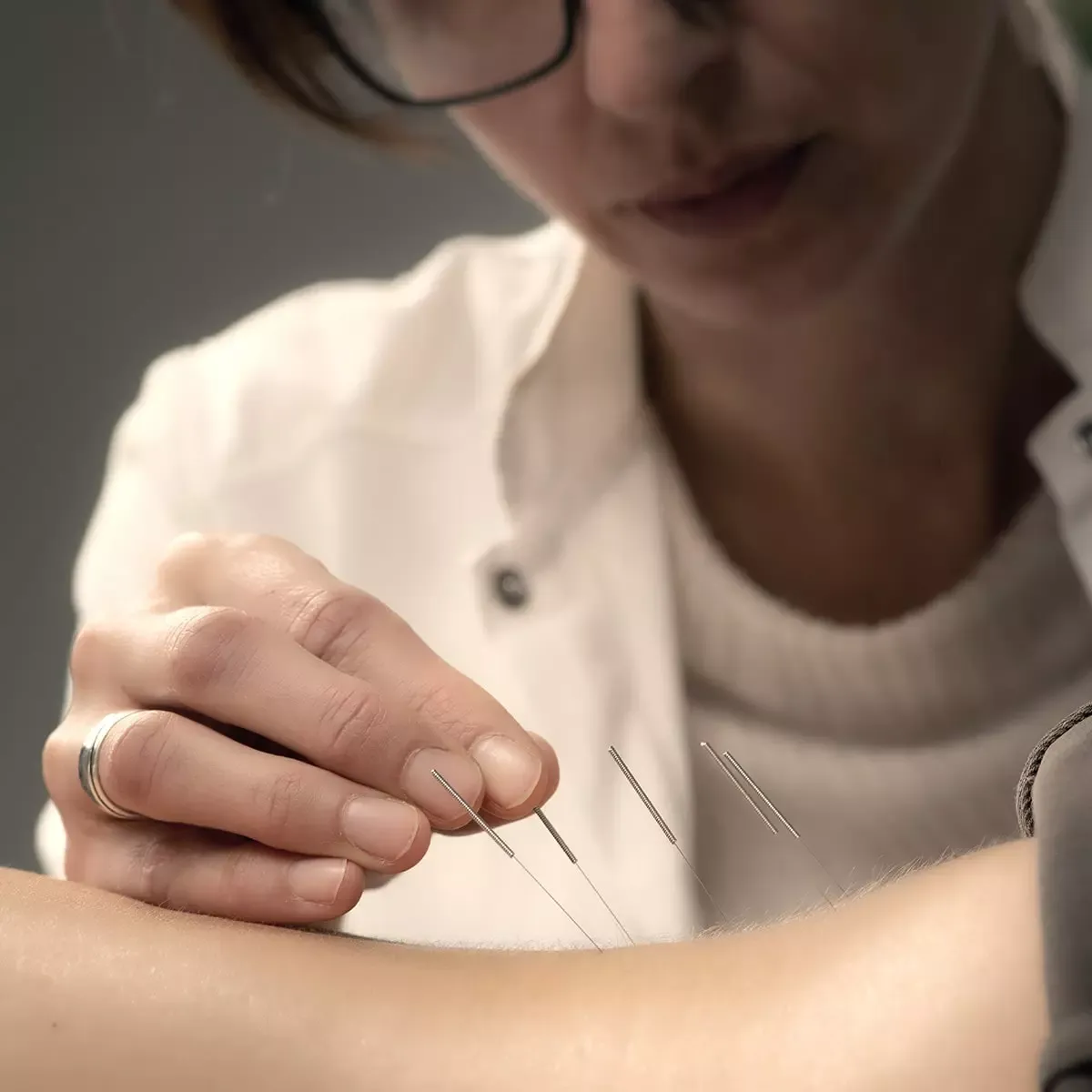
Acupuncture

Fine acupuncture needle at a point on the hand

Qi, blood, and organ support

Needling is used to move stalled qi and blood, and to support Kidney or blood when those organs are named on pulse and tongue.

Acupuncture at PULSE

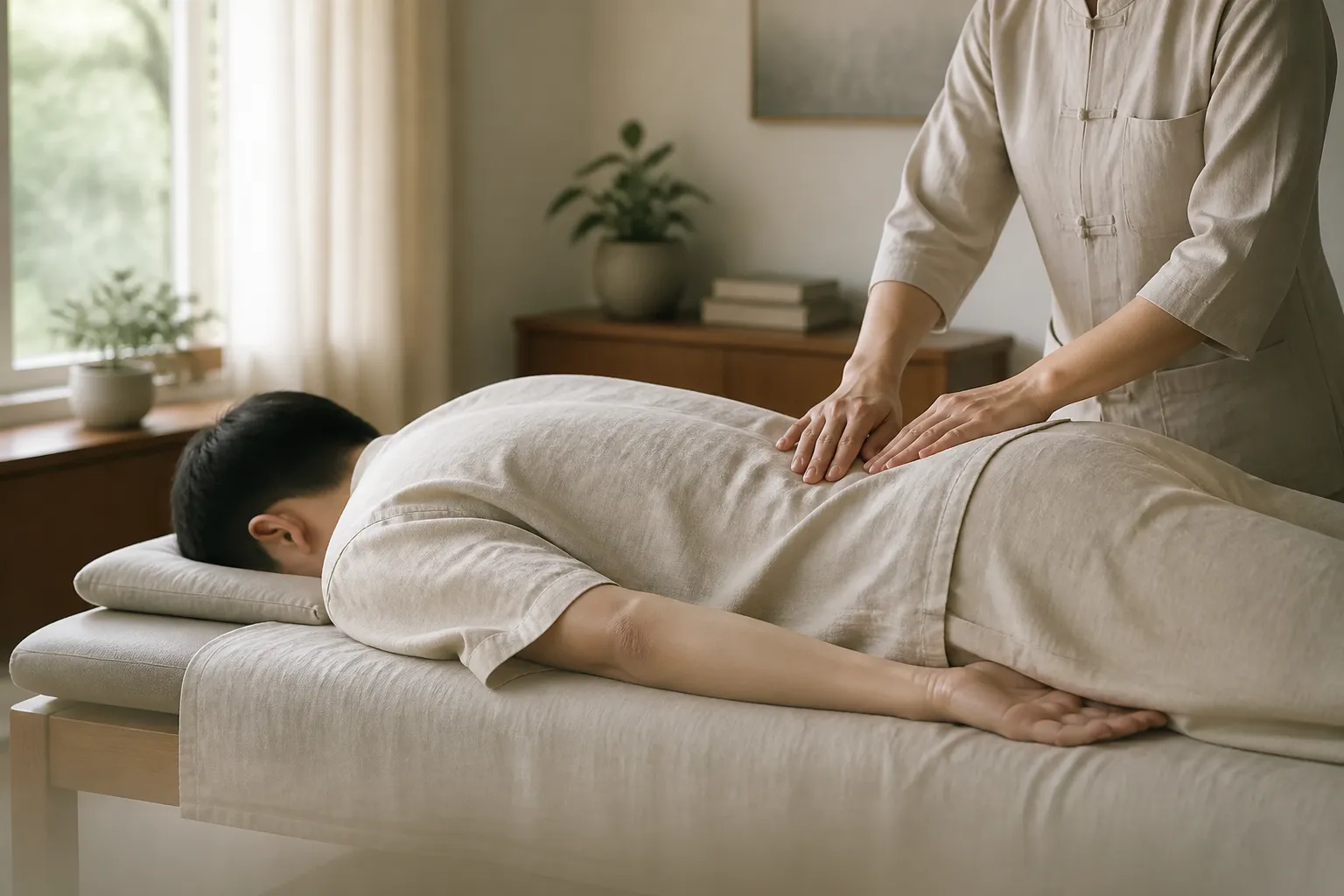
Tuina massage

Tuina massage treatment at a PULSE TCM clinic

Tight muscle and stagnation

Hands-on work sits when tight lumbar muscle and channel stagnation sit together, after the pattern is named.

Tuina at PULSE

When to book for lower back pain

If a dull lumbar ache, night-worse local pain, or weather-linked stiffness has lasted weeks, a physician can name whether it reads as damp, blood stasis, or Kidney deficiency and decide which methods belong in your plan.

05 · Home points

Acupressure for lower back pain

BL · GB · DU · 经脉所过,主治所及

Acupressure uses external pressure on points along channels that run through the back: Bladder, Gallbladder, and Governing vessel. Selection follows the path of the channel through the injured site.

Acupoint set · 腰痛

Five lumbar points

Yaoyangguan (DU3), Weizhong (BL40), Huantiao (GB30), Yaoyan, and Houxi (SI3). Locate each point, then press or rub for one to five minutes as the how-to describes.

Skip over inflamed skin, bruises, or acute injury. Seek urgent care for sudden severe pain, leg weakness, or bowel or bladder change.

Press the lumbar set

Acupoint · 肾俞穴

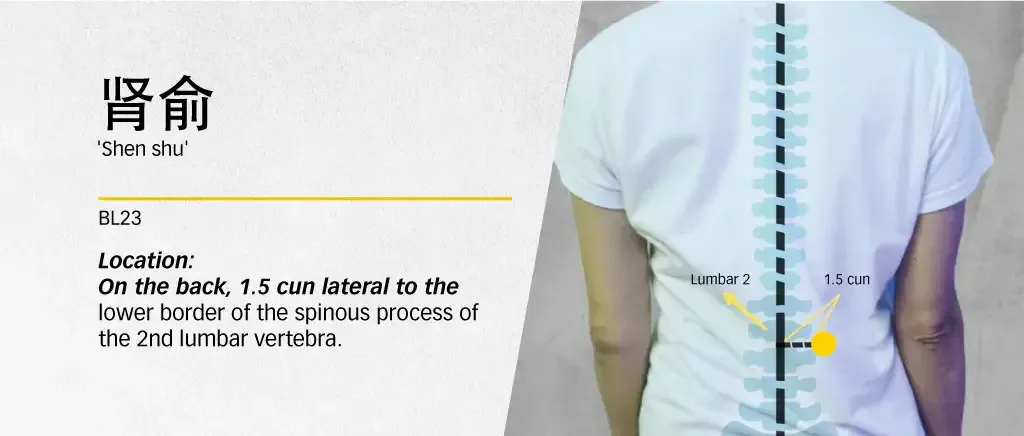
Shen Shu (BL23)

On the lower back, about two finger-widths lateral to the spine at waist level. Rub with knuckles or palms until the Kidney zone feels warmer.

Skip over inflamed skin, bruises, or acute back injury. In pregnancy, ask a physician before vigorous low-back rubbing.

Warm Shen Shu

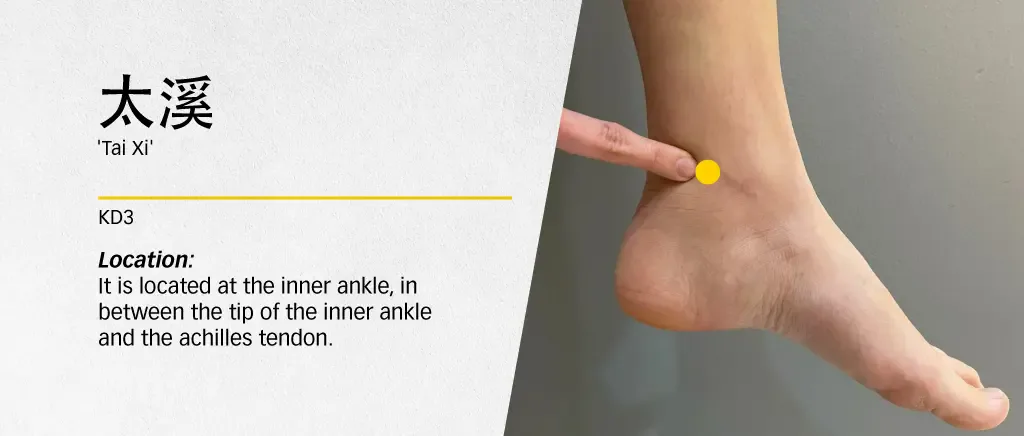
Acupoint · 太溪穴

Tai Xi (KD3)

In the depression between the inner ankle bone and the Achilles tendon. Circle a kind press for one to two minutes when the low back reads as Kidney deficiency.

A dull, tolerable ache is common. Ease off if the press turns sharp, or if numbness appears.

Press Tai Xi

06 · Ice or heat

Ice or heat for the lumbar spine

Acute · chronic

Cold packs suit acute injury under 24 hours when swelling is visible; constriction can limit inflammatory load. Heat packs suit chronic lumbar ache by easing tension and improving circulation. Monitor heat carefully to avoid burns, especially with a history of diabetes.

07 · Stretches and habits

Stretches, food, and daily load

Gentle range work, Kidney-nourishing kitchen habits, and how you sit or lift all load the lumbar spine.

Move · lumbar

Four stretches

Cat-Cow, knee-to-chest, trunk rotation, and an office chair twist. Hold each stretch about 10 to 20 seconds where noted, and stay inside a kind range.

Ease off if the stretch turns sharp. Skip forced twists after a fresh sprain or when numbness is spreading down a leg.

Do the stretch set

Food that may ease inflammatory load

Diet · Kidney colour

A diet rich in anti-inflammatory foods can support recovery; refined sugar, refined carbohydrate, and trans fats can aggravate the picture. For Kidney-deficiency lumbar pain, black foods are classically used to nourish Kidney. People with kidney disease need a clinician-directed diet; these kitchen ideas may not suit every case.

Anti-inflammatory food groups
Group Examples
Fruits Berries, grapes, apples, oranges, pomegranates, lime, lemon
Vegetables Soybean, broccoli, tomatoes, red bell pepper, cayenne, ginger, carrots
Protein Tofu, salmon, tuna, anchovies, striped sea bass
Carbohydrates and fats Whole grains; olive oil; grapeseed oil
Kidney yin and yang foods Yin: goji, kombu, nori, black chicken. Yang: goji, gorgon fruit (芡实), walnuts, Du Zhong when used as food-grade under guidance.

Black sesame milk

Liver · Kidney · blood

Nourish Liver, Kidney, and blood; supports bowel movement and hair lustre. Roast black sesame 20 g, blend with one glass of milk.

Black fungus red dates soup

Qi · blood · Lungs

Nourish qi and blood; moisten the Lungs. Black fungus 10 g, red dates 5 pieces, brown sugar to taste.

Black rice porridge

Digestion · Kidney · eyes

Nourish digestion, Kidney, eyes, and blood. Black rice 100 g, glutinous rice 80 g, peanut 50 g, red dates 10 pieces, water, rock sugar to taste.

Black bean pork rib soup

Kidney yin · blood · water

Nourish Kidney yin; promote blood flow; ease water retention. Pork rib 500 g, black bean 50 g, salt to taste.

Lifestyle changes that unload the lumbar spine

How long you sit, how you lift, and how you sleep change pressure on the discs and the channels through the back.

Daily habits for lower back comfort
Habit What to do
Breaks Avoid standing or sitting in one position for long stretches. Take frequent breaks and add simple stretches.
Posture Do not slouch or round the back when sitting, standing, or lying down. A more upright spine spreads load across the discs.
Lifting Avoid lifting heavy weights above the head. Lift from the ground by bending at the knees and holding the load close to the body.
Body weight Maintain a healthy BMI to reduce weight-related pressure on the spine.
Sleep support Use a back cushion when needed, or sleep on a firm mattress for better lumbar support.
Dr Sim Beng Joo

Clinically reviewed

Reviewed by Sim Beng Joo

Advisor (Science & Strategy) / Consultant Physician · TCMPB T1303003A

MOH-licensed TCM physician and biomedical scientist, with clinical work in digestion, pain, sleep or fatigue, and constitution patterns that show as tendon and joint load.

View full profile

Educational information based on clinical experience and TCM principles. Not a substitute for personalised consultation, medical care, or urgent attention. Speak with your physician before starting herbs or new self-care in pregnancy or with a chronic condition. People with kidney disease need a clinician-directed diet; black foods listed here may not suit every case. Seek urgent care for sudden severe back pain, pain or increasing weakness in the arm or leg, bowel or bladder change, or numbness that spreads. TCM complements orthopaedics and physiotherapy for disc, nerve, or suspected fracture.

FAQs

Questions, answered

Common questions on lumbar 腰痛, TCM patterns, acupuncture, home points, ice versus heat, and when to seek urgent care.

What is lower back pain in TCM?

Lower back pain is lumbar 腰痛 in the zone between the 12th rib and the gluteal fold. TCM reads it as blocked qi and blood, external damp with cold or heat, or Kidney deficiency in the mansion of the kidneys, not only a local muscle sprain. Pulse and tongue decide which reading leads.

What causes lower back pain from a TCM view?

External cold-damp or hot-damp from humid weather and air-conditioning can settle in the channels. Internal blood stasis often follows posture strain or injury. Kidney qi, yin, or yang deficiency leaves a dull ache that worsens with fatigue or around menstruation. A physician matches the pattern before choosing methods.

Can acupuncture help lower back pain?

Acupuncture is widely used for lumbar pain. Fine needles at selected points are used to move qi and blood, ease local tension, and support Kidney or blood when those are named. It often sits with tuina, cupping, or herbs. Singapore’s public hospitals have also expanded acupuncture as an adjunct for selected acute lower back pain after medical assessment. At PULSE the same idea applies in outpatient care: complementary, not a replacement for urgent or specialist Western review. Many patients notice easier movement after a short course; chronic Kidney or posture patterns need a longer plan.

Can TCM help a slipped disc or sciatica?

Acupuncture and cupping are commonly used alongside conventional care for the pain and muscle spasm that sit with a herniated disc and sciatica. Improving local circulation and easing spasm can take pressure off the picture. Seek a conventional medical assessment first for severe numbness or weakness. For multi-zone back patterns and clinic method depth, see TCM treatments for back pain.

Should I use ice or heat for lower back pain?

Ice suits acute injury with visible swelling in the first 24 hours, when constriction can limit inflammatory load. Heat packs suit chronic lumbar ache to ease tension and improve local circulation. Watch for burns, especially with diabetes. Prefer warmth once the acute sprain window has passed.

When should I seek urgent care for lower back pain?

Seek urgent conventional care for sudden severe back pain, pain or increasing weakness in a leg, bowel or bladder change, or numbness that spreads. TCM complements orthopaedics and physiotherapy; it is not a primary path for suspected fracture, cauda equina, or severe trauma.

References

Selected sources

  1. Andersson J.A.D. Problems of classification of low back pain. Rheumatol Rehabil. 1977;16:34–36. doi: 10.1093/rheumatology/16.1.34. https://doi.org/10.1093/rheumatology/16.1.34
  2. Lin J.G., Chen K.B., Lee Y.C. (2014) Low Back Pain. In: Lin YC., Hsu EZ. (eds) Acupuncture for Pain Management. Springer, New York, NY.
  3. Capell H.A., Daymond T.J., Dick W.C. (1983) Pain in the Neck, Low Back Pain and Degenerative Disc Disease. In: Rheumatic Disease. Treatment in Clinical Medicine. Springer, London.
  4. Wellington J. (2014), Nonmedical Management of Chronic Low Back Pain. Neuromodulation: Technology at the Neural Interface, 17: 24-30. doi: 10.1111/ner.12078. https://doi.org/10.1111/ner.12078
  5. Jiang H.L., Ji L.L., Ren X.J., Long X.Q., Tu Y. (2015) Exploration of acupuncture prescriptions for chronic low back pain: a review of ancient and modern literature. Journal of Beijing University of Traditional Chinese Medicine, 38(4): 280-283. doi: 10.3969/j.issn.1006-2157.2015.04.013.
  6. Sulindro-Ma M., Ivy C.L., Isenhart A.C. (2008) Nutrition and Supplements for Pain Management. In: Audette J.F., Bailey A. (eds) Integrative Pain Medicine. Contemporary Pain Medicine. Humana Press.
  7. Zhang Z, Pasapula M, Wang Z, Edwards K, Norrish A. The effectiveness of cupping therapy on low back pain: a systematic review and meta-analysis of randomized control trials. Complement Ther Med. 2024;80:103013. https://pubmed.ncbi.nlm.nih.gov/38184285/
  8. Lim V. From painkillers to acupuncture: Singapore's public hospitals expand TCM use in acute care. Channel NewsAsia. 28 Aug 2026. https://www.channelnewsasia.com/singapore/tcm-acupuncture-hospitals-stroke-cancer-6343971

Next step

Ready for a lumbar pattern read?

Bring how long the ache has lasted, whether it followed a lift or built slowly, and any GP or imaging notes. We will name damp, stasis, or Kidney deficiency in plain language and decide what belongs in your plan.

Hours
Most clinics daily 11:00 AM – 8:00 PM
Care
Physician-led consultation