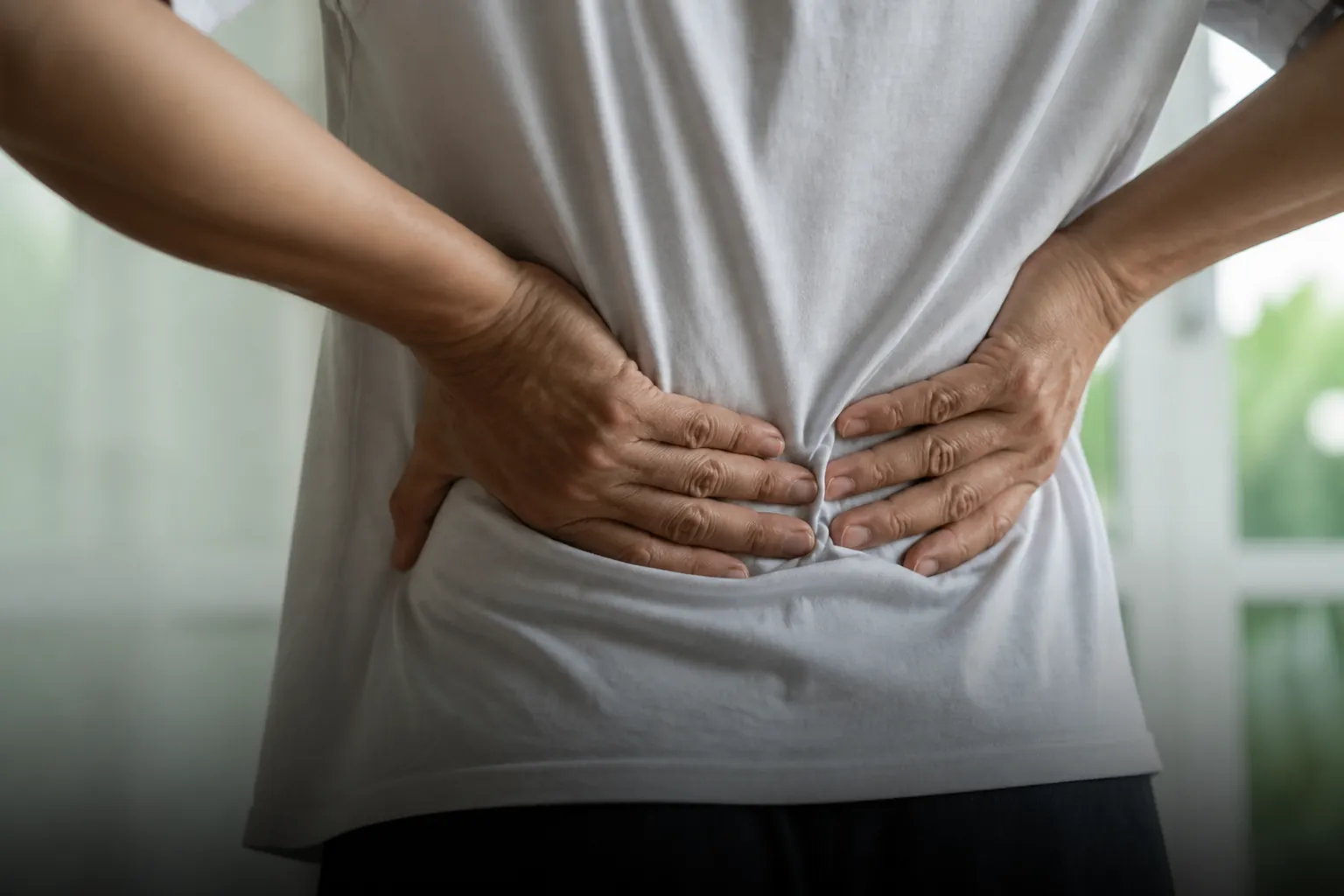
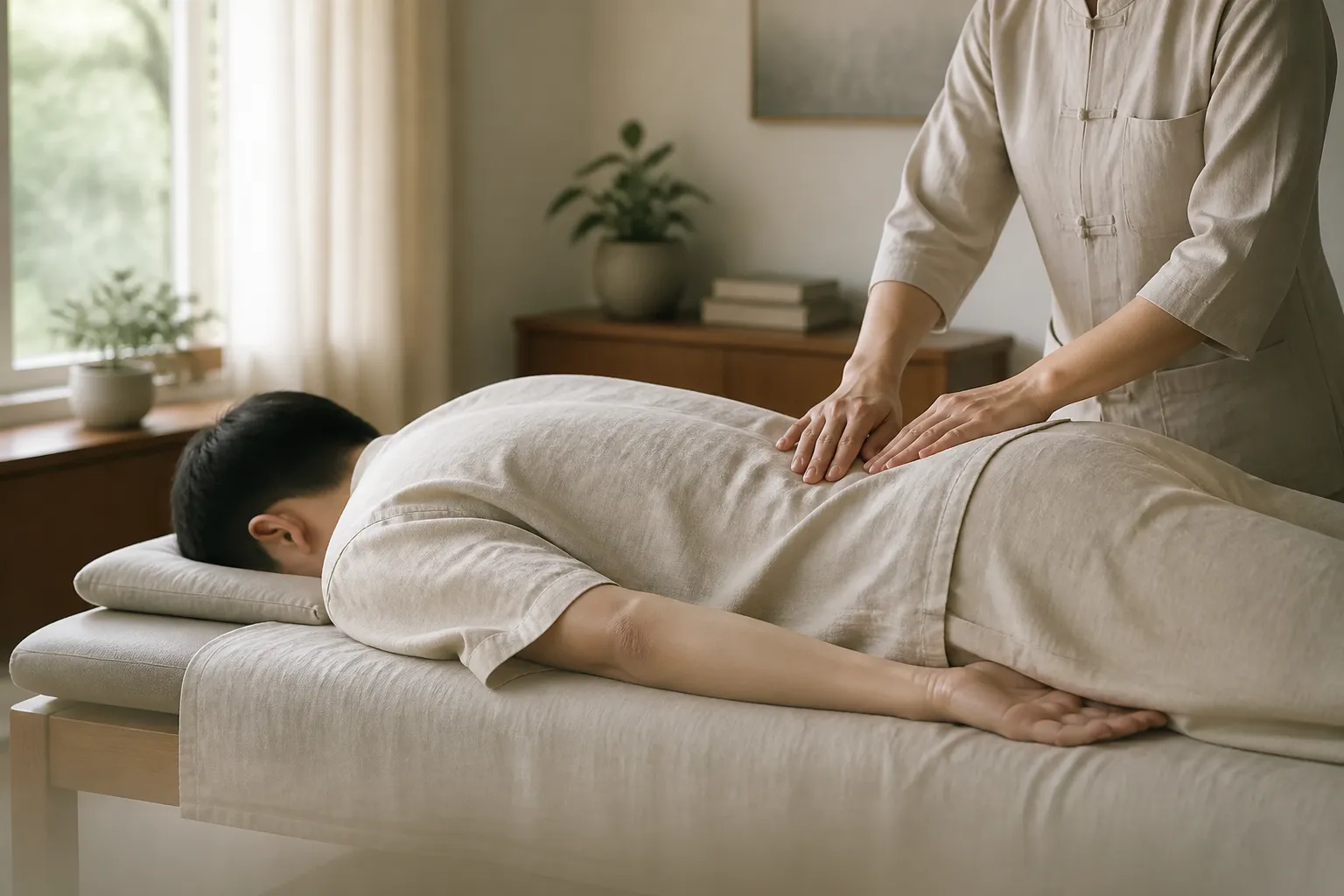
Physician treating lower back pain at PULSE TCM

Insights · Pain & Injuries

TCM treatments for back pain

A dull ache in the low back, mid-back, or neck and shoulders is 腰痛. Acupuncture, tuina, cupping, and herbs usually fit once the zone and pattern are named.

In brief

Back pain is 腰痛. Low-back ache is the most common; mid-back pain often sits with slouch; neck and shoulder pain with phones and a desk hunch. TCM names posture or strain, qi and blood stasis, Kidney deficiency (a dull low-back ache worse with fatigue), Liver qi stagnation, or damp-phlegm heaviness. After pulse and tongue, care may mix acupuncture, tuina, cupping, and herbs. At home, warm Shen Shu (BL23) and press Tai Xi (KD3) when the low back reads as Kidney deficiency.

01 · What TCM sees

How TCM reads back pain

腰痛 · qi and blood · organ imbalance

Back pain is 腰痛. TCM reads it as blocked qi and blood, or as an organ imbalance, not only a local sprain. Acupuncture, tuina, cupping, and herbs can sit together once a physician names the pattern.

Western care often starts with the disc, the muscle, or the joint. TCM also asks whether qi and blood are moving, whether the Kidney channel on the back is under-nourished, and whether Liver qi has stalled with stress. Pulse and tongue decide which of those readings leads.
02 · Three zones

Which back pain do you have

Low-back ache is the most common. Mid-back pain often sits with slouch. Neck and shoulder pain often sit with phones and a desk hunch.

Lower back, middle back, and neck-shoulder
Zone Where it sits Typical load
Lower backThe most common type. The low back, above the hips.
  • Muscle strain from lifting heavy objects
  • Excess weight or injury
  • Mild to severe; a few days, or long-standing
Middle backBetween the shoulder blades. The mid-back between the shoulder blades.
  • Poor posture, injury, or muscle strain
  • Hunched shoulders, slouching, rounded upper back
Upper backNeck and shoulders. The neck, upper back, and shoulders.
  • Neck strain, injury, poor posture, and stress
  • Looking down at devices for long periods
  • Hunching over workstations and tensing the shoulders

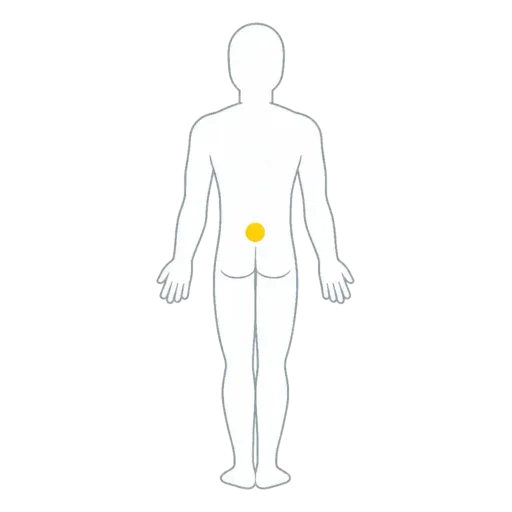
Lower back

Diagram of the low-back zone for lower back pain

Low back · Kidney

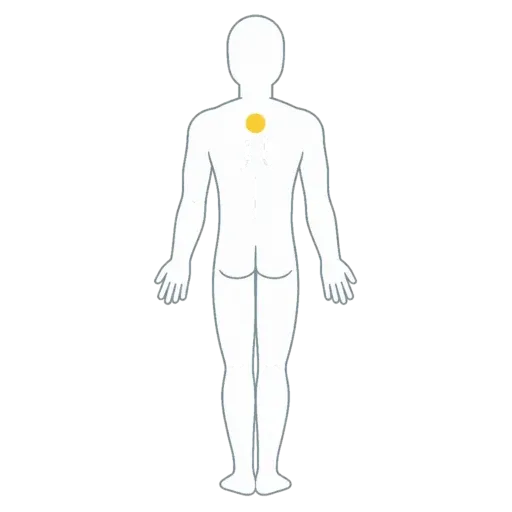
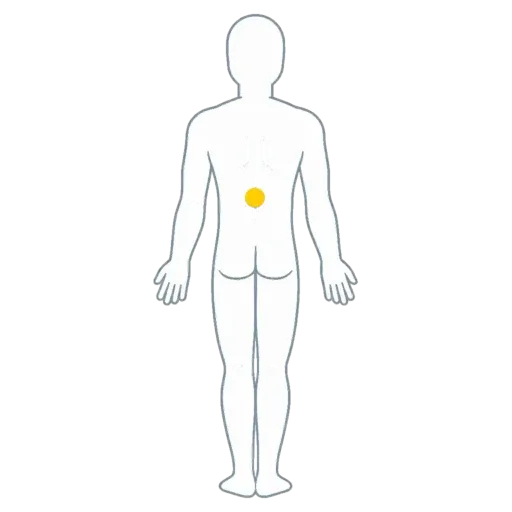
Middle back

Diagram of the mid-back zone for middle back pain

Mid-back · Liver qi

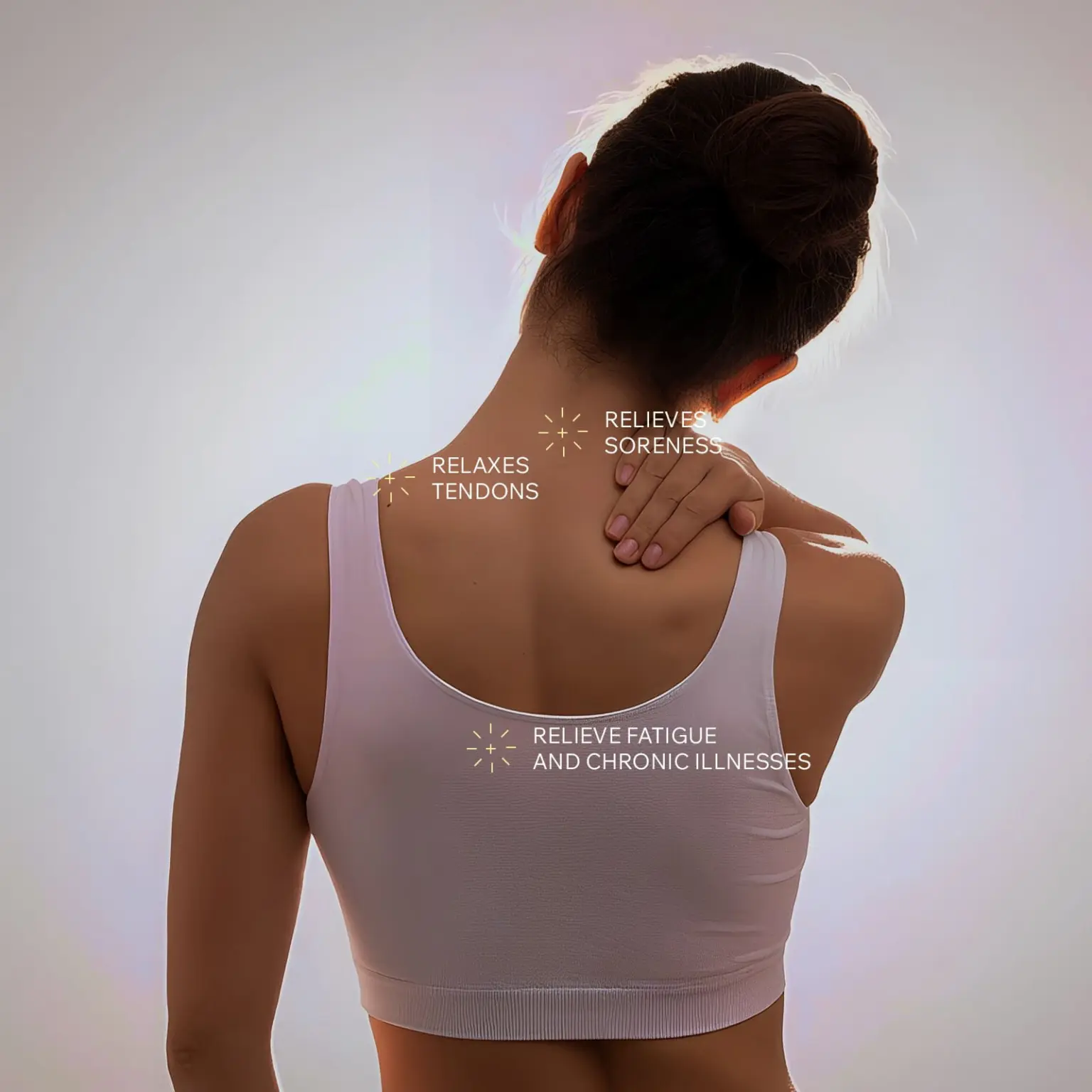
Upper back

Diagram of the neck and shoulder zone for upper back pain

Neck-shoulder · stasis

Signs that need urgent care

These signs sit outside a typical back pain (腰痛) picture. Get assessed the same day.

1. Sudden severe pain

Sudden, severe back pain, especially after a fall, twist, or impact.

2. Arm weakness

Pain or increasing weakness in the arm. Physicians refer to the appropriate specialist when that is needed.

3. Leg weakness

Pain or increasing weakness in the leg, or difficulty standing or walking.

4. Bowel or bladder change

New difficulty passing urine or stool, or loss of control.

5. Spreading numbness

Numbness that spreads down a limb or around the saddle area.

03 · Pattern scan

Causes of back pain from a TCM perspective

Qi and blood should move along the meridians. When flow stalls, or when the Kidney or Liver cannot nourish and move as they should, the back aches. Dampness and phlegm can add a heavy, stiff load.

Common TCM readings for back pain
Pattern Typical signs May help
Improper posture or strainMuscle and spine load from sitting or lifting.
  • Ache after long sitting or a bad lift
  • Tight back muscles and a loaded spine
Desk height, lifting close to the body, and a pause on the load that started it.
Qi and blood stasis气滞血瘀: flow stalls, then pain.
  • Dull aching when qi and blood cannot move
  • Pain that sits after stress, trauma, or injury
Needling and cupping after pulse, to move what has stalled.
Kidney deficiencyThe Kidney channel travels along the back.
  • Dull ache in the lower back that gets worse with fatigue
  • A sign the Kidney is under-nourished
Warm Shen Shu (BL23) and press Tai Xi (KD3) when the low back reads as Kidney deficiency.
Liver qi stagnationEmotional and physical health sit together.
  • Back pain, especially in the lower back
  • Stress, frustration, or unresolved emotion
Ease the stress load; clinic tuina once the pattern is named.
Dampness and phlegmPathogenic factors that accumulate.
  • A heavy, swollen sensation in the back
  • Stiffness that sits with the heaviness
Warmth and cupping when heaviness sits in the channels.

04 · Clinic methods

TCM treatments for back pain

Each person's back pain and root cause is unique. A physician assesses first, then matches acupuncture, tuina, cupping, and herbs to the pattern.

Clinic methods for back pain
Method What it does for the back When it sits in the plan
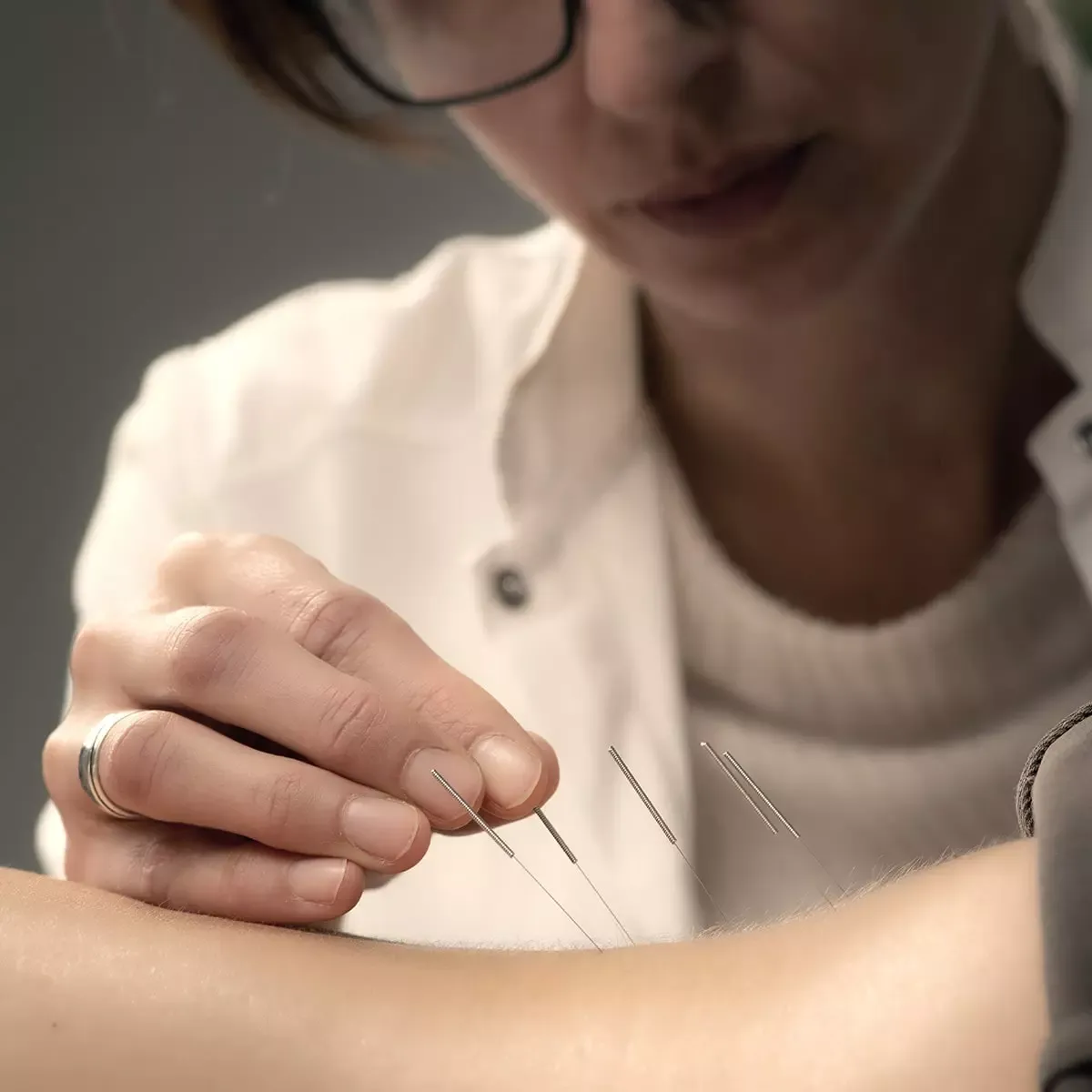
AcupunctureFine needles at selected points. Clears blockages, restores the flow of qi and blood, and addresses organ deficiency. Needling can also prompt the nervous system to release chemicals in the muscles, spinal cord, and brain that ease pain. Often first-line. Many patients notice easier movement after one or two visits; chronic patterns need a longer plan.
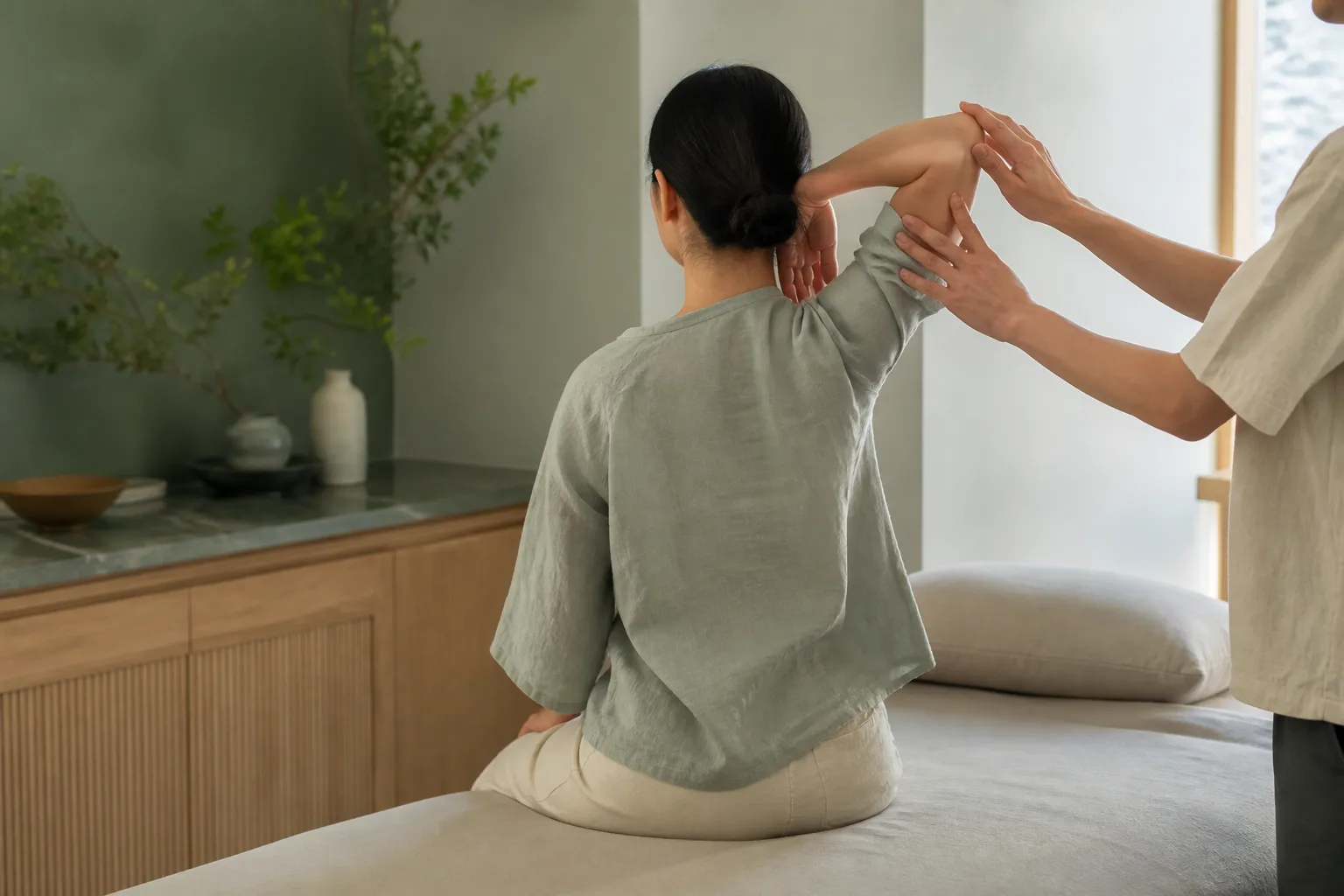
Tuina massageRhythmic pressing and kneading. Relaxes tight muscles, breaks up blockages, and works acupressure points so qi can move. When tight muscle and stagnation sit together, after the pattern is named.
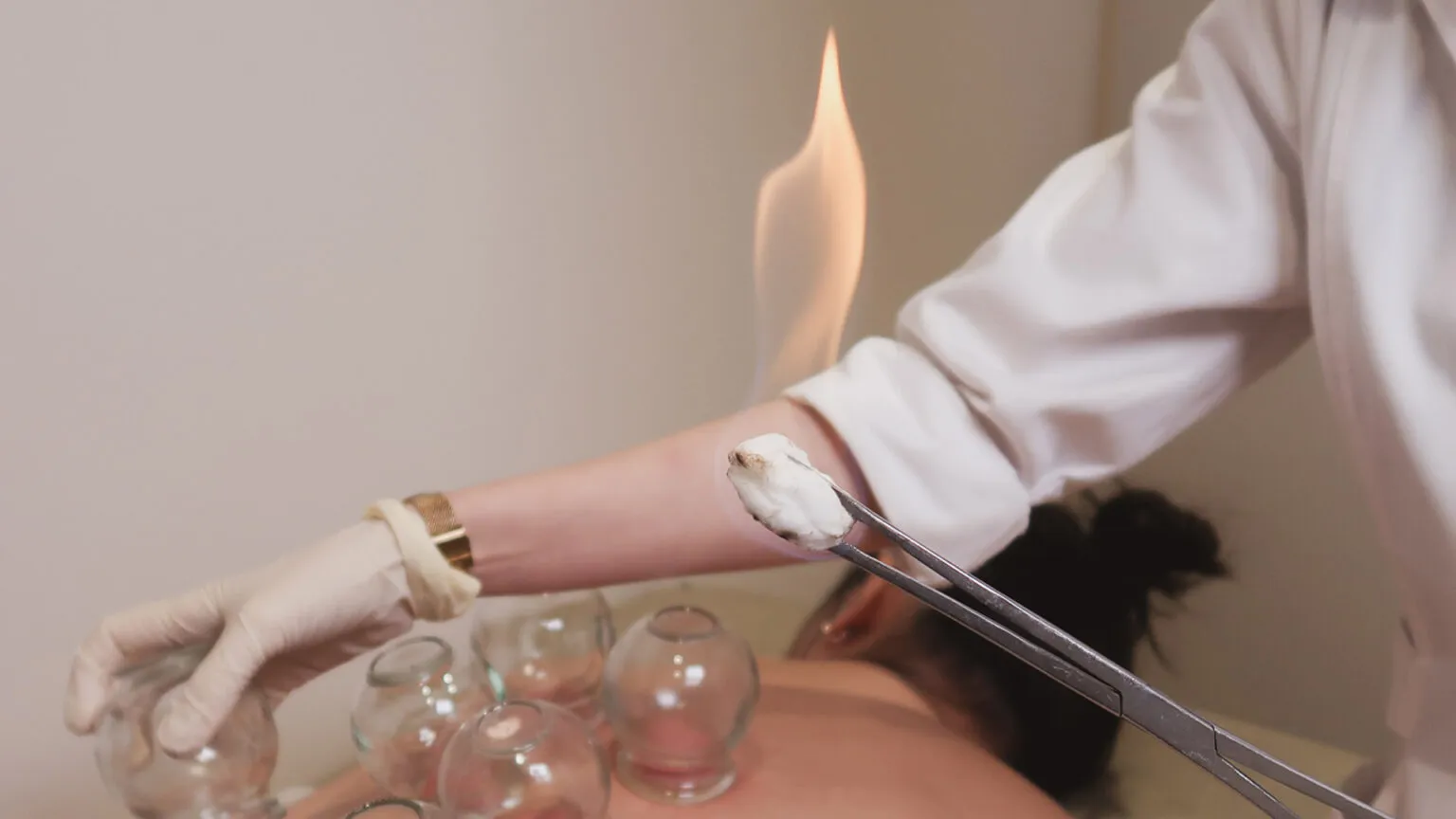
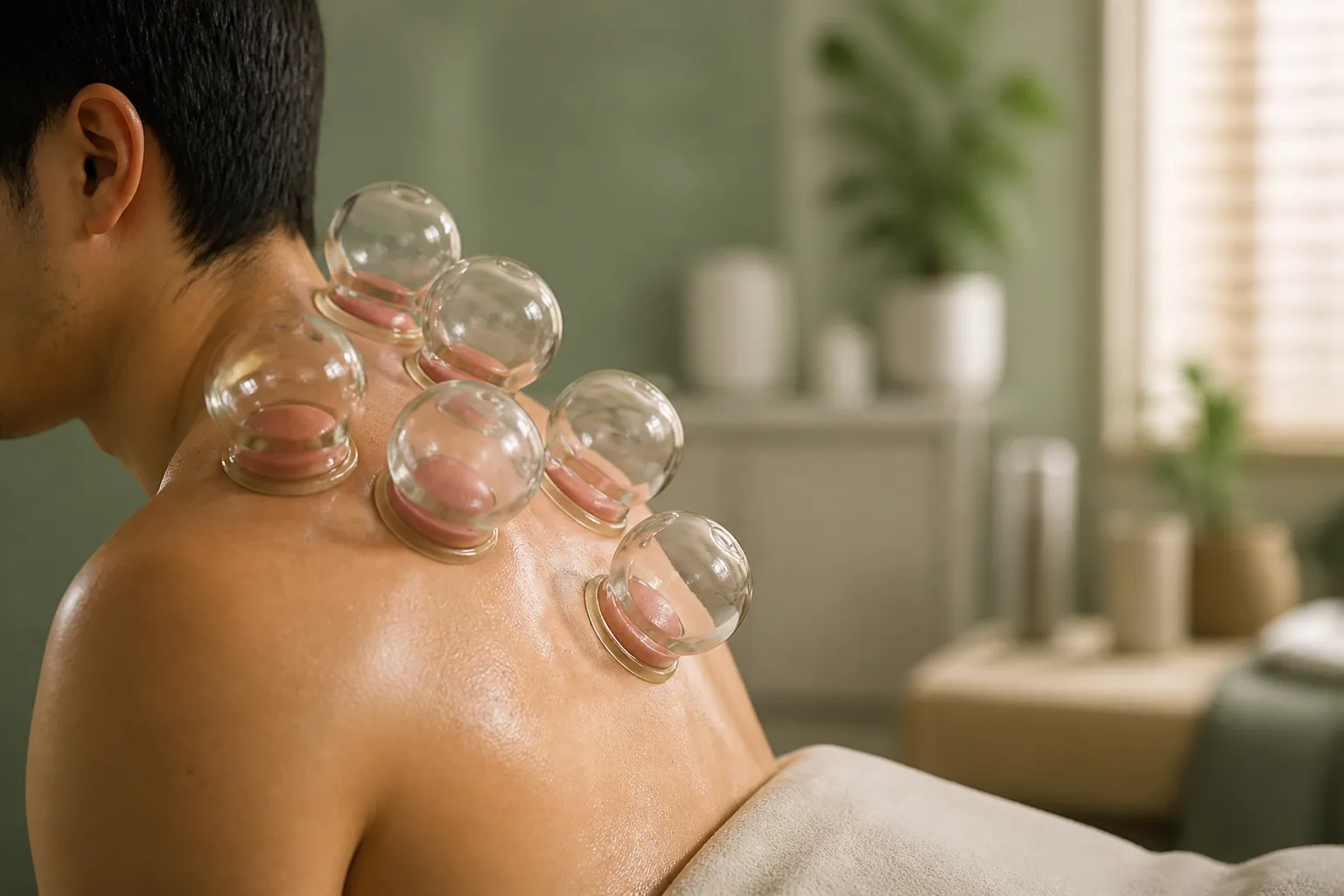
CuppingSuction cups at an acupoint or the area of pain. Improves circulation in the region. A 2024 systematic review of randomised trials found cupping had a stronger, more sustained effect on low-back pain than medication and usual care, though study methods varied. When local stagnation, tightness, or dampness sits in the back.
Chinese herbal medicineFormulas after pulse and tongue. Prescribed when the diagnosis asks for it. Research has also supported Chinese herbal medicine for neck and low-back pain. When Kidney deficiency, stasis, or another named pattern needs an internal formula.

Consultation and assessment

Pulse · tongue · history

A physician names whether the back reads as strain, stasis, Kidney deficiency, Liver qi, or damp-phlegm before matching methods. Treatments are tailored after this read, not as a fixed back pack.

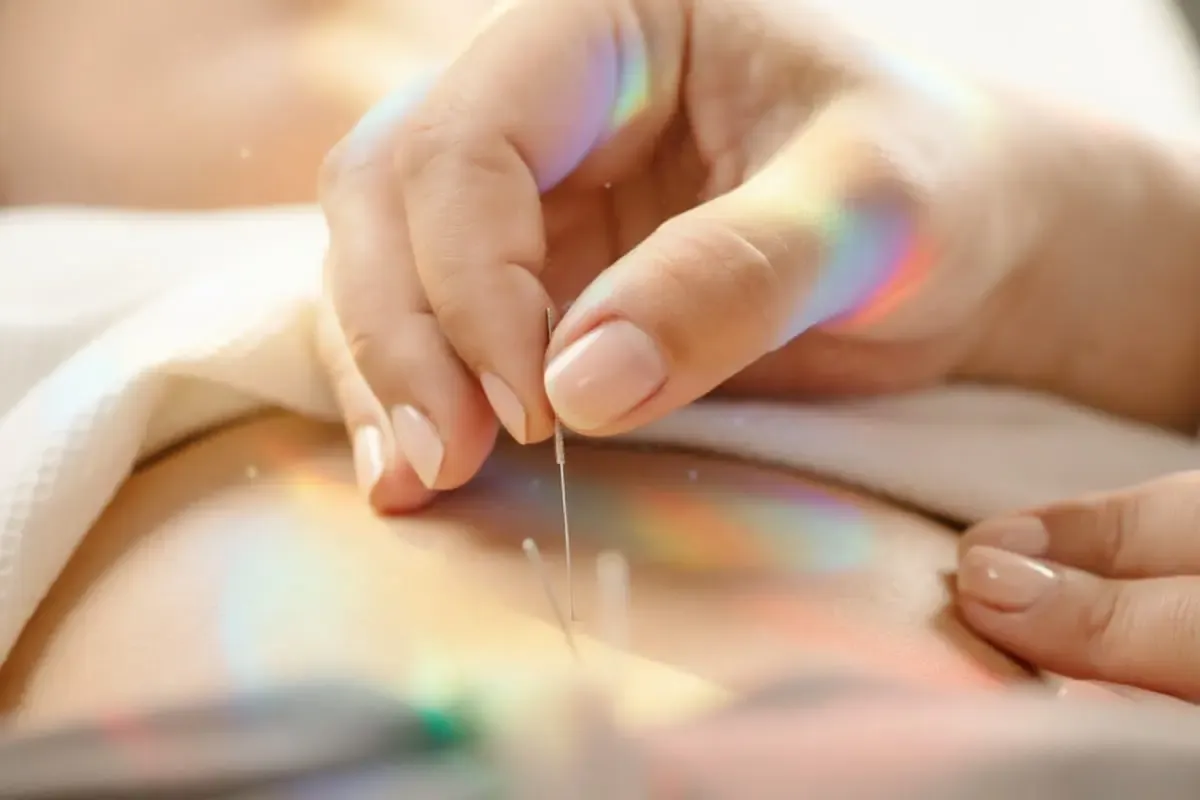
Acupuncture

Fine acupuncture needle at a point on the hand

Qi, blood, and organ support

Needling is used to move stalled qi and blood, and to support Kidney or Liver when those organs are named on pulse and tongue.

Acupuncture at PULSE

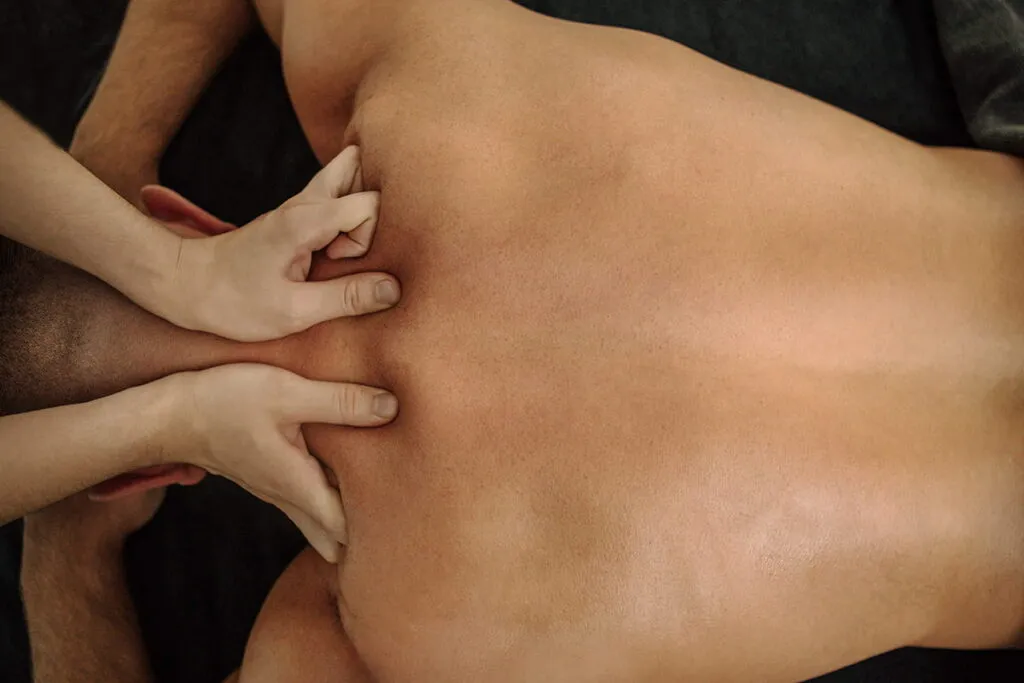
Tuina massage

Tuina massage treatment at a PULSE TCM clinic

Tight muscle and stagnation

Hands-on work sits when tight muscle and stagnation sit together, after the pattern is named, so qi can move through the back.

Tuina at PULSE

When to book for back pain

If a dull ache, a tight mid-back, or neck-shoulder strain has lasted weeks, a physician can name whether it reads as Kidney deficiency, qi-blood stasis, or Liver qi and decide which methods belong in your plan.

05 · Home care

Shen Shu and Tai Xi for Kidney-deficiency low back

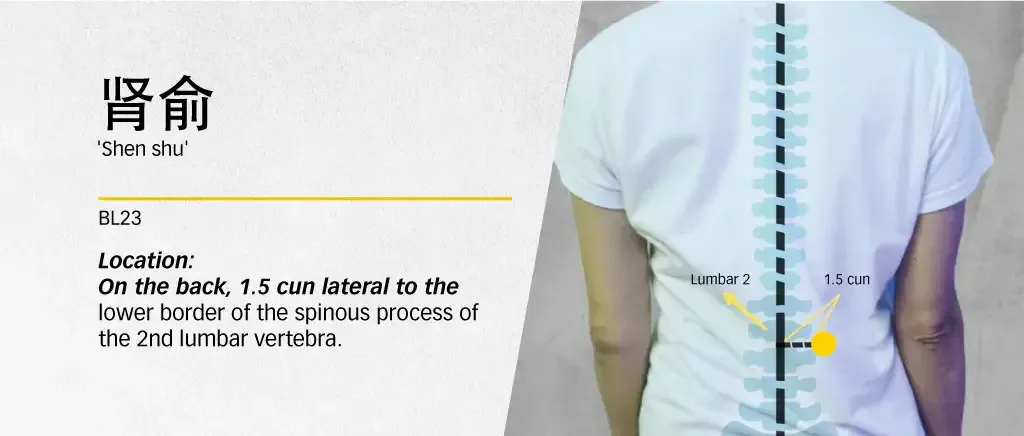
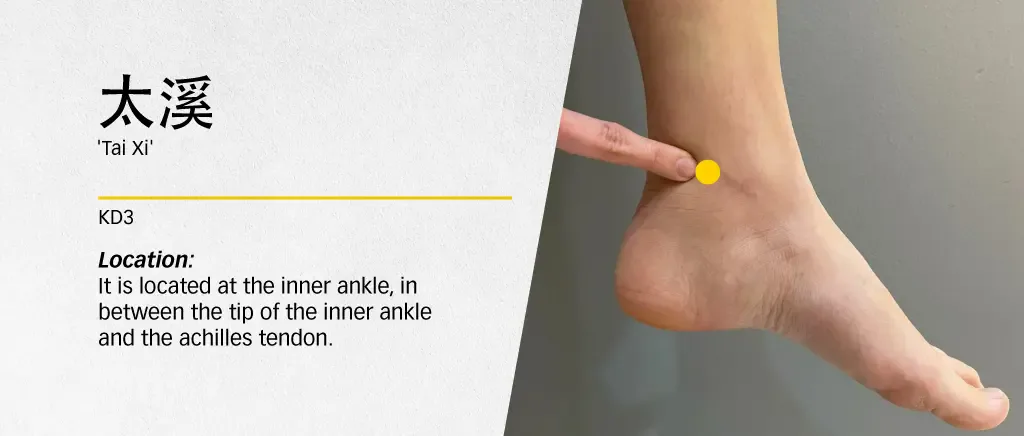
Shen Shu (BL23) and Tai Xi (KD3) are for Kidney-deficiency low back: a dull ache that worsens with fatigue. They are not a first step for every back pattern.

Acupoint · 肾俞穴

Shen Shu (BL23)

On the lower back, about two finger-widths lateral to the spine at waist level. Rub with knuckles or palms until the Kidney zone feels warmer.

Skip over inflamed skin, bruises, or acute back injury. In pregnancy, ask a physician before vigorous low-back rubbing.

Warm Shen Shu

Acupoint · 太溪穴

Tai Xi (KD3)

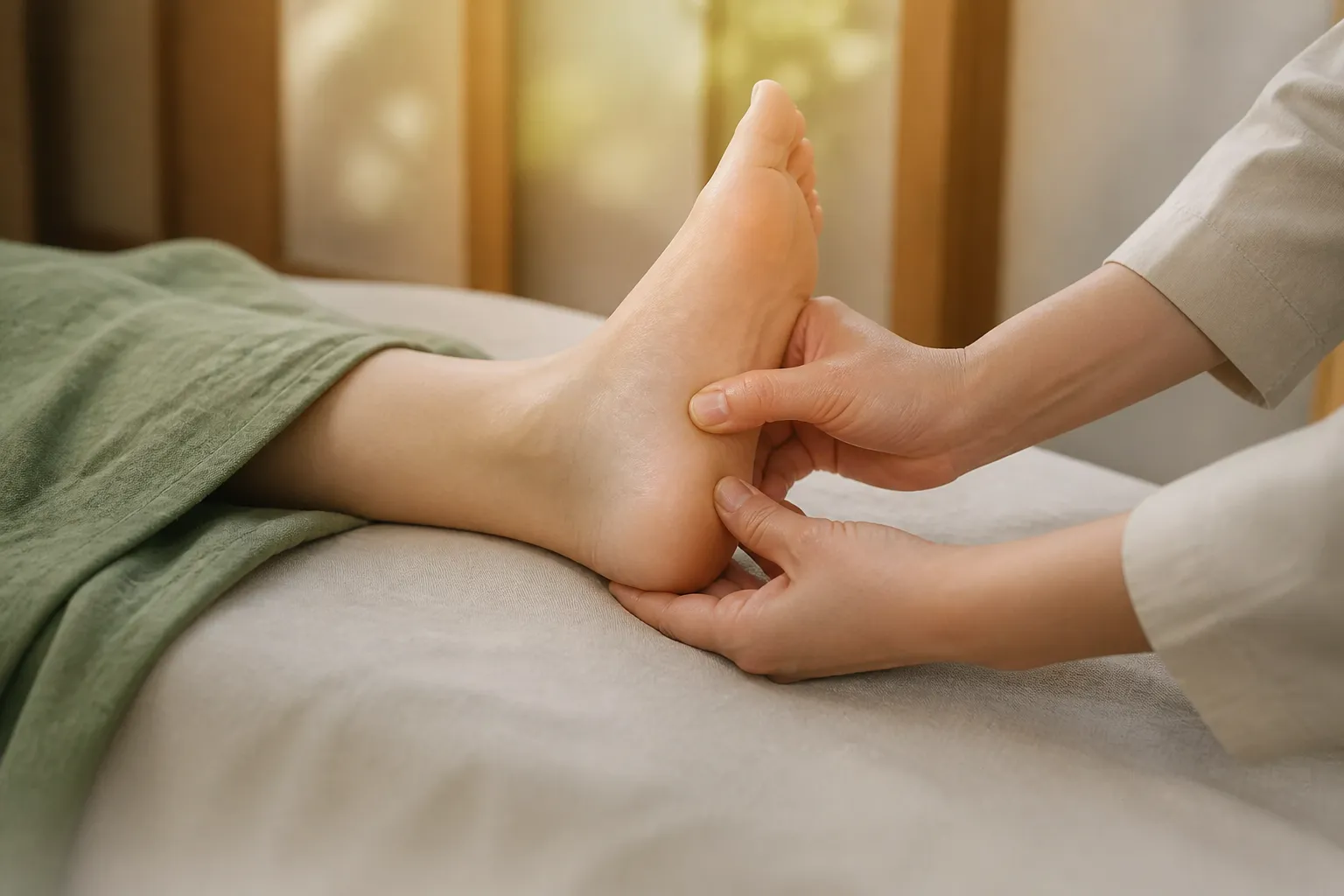
In the depression between the inner ankle bone and the Achilles tendon, level with the high point of the ankle. Circle a kind press for one to two minutes.

A dull, tolerable ache is common. Ease off if the press turns sharp, or if numbness appears.

Press Tai Xi

06 · Daily habits

Daily habits that load the back

Desk hunch, devices, lifting, and cold air on the back keep qi from moving. Warmth is usually kinder than ice once the acute sprain has passed.

Desk, devices, lifting, and warmth
Load What it does TCM lean
Desk hunchRounded upper back at a workstation. Loads the mid-back and tightens the shoulders. Raise the screen, sit on the sit-bones, and unround the mid-back through the day.
DevicesLooking down at a phone or laptop for long periods. Strains the neck and shoulders and can stall local qi. Bring the device up; ease the jaw and shoulders when the neck locks.
LiftingHeavy objects held away from the body. Strains the low back and can start a posture or stasis pattern. Keep the load close; bend at the hips and knees, not by rounding the low back.
Air-conditioningCold air on a bare or damp back. Cold can constrict the channels and leave the back stiff. Cover the low back in cold rooms; warmth after the acute sprain has passed.
Warmth versus iceCompress, bath, or cold pack. Ice can constrict qi and blood once the first inflammatory hours have passed. Prefer warmth for a dull, chronic, or Kidney-type low back. Ice only in the first hours after a fresh sprain, then switch.
Dr Sim Beng Joo

Clinically reviewed

Reviewed by Sim Beng Joo

Advisor (Science & Strategy) / Consultant Physician · TCMPB T1303003A

MOH-licensed TCM physician and biomedical scientist, with clinical work in digestion, pain, sleep or fatigue, and constitution patterns that show as tendon and joint load.

View full profile

Educational information based on clinical experience and TCM principles. Not a substitute for personalised consultation, medical care, or urgent attention. Speak with your physician before starting herbs or new self-care in pregnancy or with a chronic condition. Seek urgent care for sudden severe back pain, pain or increasing weakness in the arm or leg, bowel or bladder change, or numbness that spreads. TCM complements orthopaedics and physiotherapy for disc, nerve, or suspected fracture.

FAQs

Questions, answered

Common questions on acupuncture, session count, tuina versus spa massage, sciatica, cupping marks, and combining painkillers.

How effective is acupuncture for lower back pain?

Acupuncture is widely used for lower back pain. Fine needles at selected points help move stalled qi and blood so the back can ease. Many patients notice less pain and easier movement after one or two visits. A physician matches points to the pattern, often alongside tuina, cupping, or herbs.

How many TCM sessions will I need for back pain relief?

The number depends on whether the pain is recent or long-standing, and on the root cause named after pulse and tongue. Pain from a recent muscle strain might settle in 2 to 4 sessions. Pain tied to Kidney deficiency or long posture habits usually needs a longer, consistent plan so relief can hold and flare-ups ease.

What is the difference between Tuina massage and a regular massage?

A standard massage focuses mainly on superficial muscle relaxation. Tuina is a medical treatment. A registered TCM physician uses targeted pressing and kneading along specific acupressure points to move qi and blood stagnation. Tuina eases tight muscle and addresses the pattern behind the back pain, not only the surface ache.

Can TCM help manage a slipped disc or sciatica?

Acupuncture and cupping are commonly used alongside conventional care for the pain and muscle spasm that sit with a herniated (slipped) disc and sciatica. Improving local circulation and easing spasm around the affected nerves can take pressure off the picture. Seek a conventional medical assessment first for severe numbness or weakness, to rule out critical nerve damage.

Does cupping therapy hurt, and how long do the marks last?

Cupping is generally not painful. Most patients describe a deep, relieving pull, similar to deep-tissue work. The suction leaves circular marks that often read as stagnant blood and dampness being drawn toward the surface. The marks are harmless and typically fade within 3 to 7 days, depending on circulation.

Can I combine conventional painkillers with TCM treatments?

Acupuncture and tuina can generally sit alongside Western pain medication. If Chinese herbal medicine is prescribed, tell your TCM physician about any Western medicines or painkillers you take, so herb-drug interactions can be checked.

References

Selected sources

  1. National Center for Complementary and Integrative Health. Traditional Chinese medicine: What you need to know. 2019. https://www.nccih.nih.gov/health/traditional-chinese-medicine-what-you-need-to-know/
  2. World Health Organization. Traditional, complementary and integrative medicine. https://www.who.int/health-topics/traditional-complementary-and-integrative-medicine
  3. Zhang H, Zhao M, Wu Z, et al. Effects of acupuncture, moxibustion, cupping, and massage on sports injuries: a narrative review. Evid Based Complement Alternat Med. 2022;2022:9467002. https://pubmed.ncbi.nlm.nih.gov/35668787/
  4. Zhang Z, Pasapula M, Wang Z, Edwards K, Norrish A. The effectiveness of cupping therapy on low back pain: a systematic review and meta-analysis of randomized control trials. Complement Ther Med. 2024;80:103013. https://pubmed.ncbi.nlm.nih.gov/38184285/
  5. Liu AR, Zhu Q, Li J, Cao Y, Pei T, Shi L. Efficacy of acupuncture and pharmacotherapy for migraine prophylaxis: a systematic review and meta-analysis. J Pain Res. 2025;18:2521–2540. https://doi.org/10.2147/JPR.S519846
  6. Ministry of Health Singapore. TCM practitioners (Healthcare Professional Portal). https://hpp.moh.gov.sg/tcm-practitioners/

Next step

Ready for a back pattern read?

Bring how long the ache has lasted, whether it is lumbar, thoracic, or neck-shoulder, and any GP or imaging notes. We will name the pattern in plain language and decide what belongs in your plan.

Hours
Most clinics daily 11:00 AM – 8:00 PM
Care
Physician-led consultation