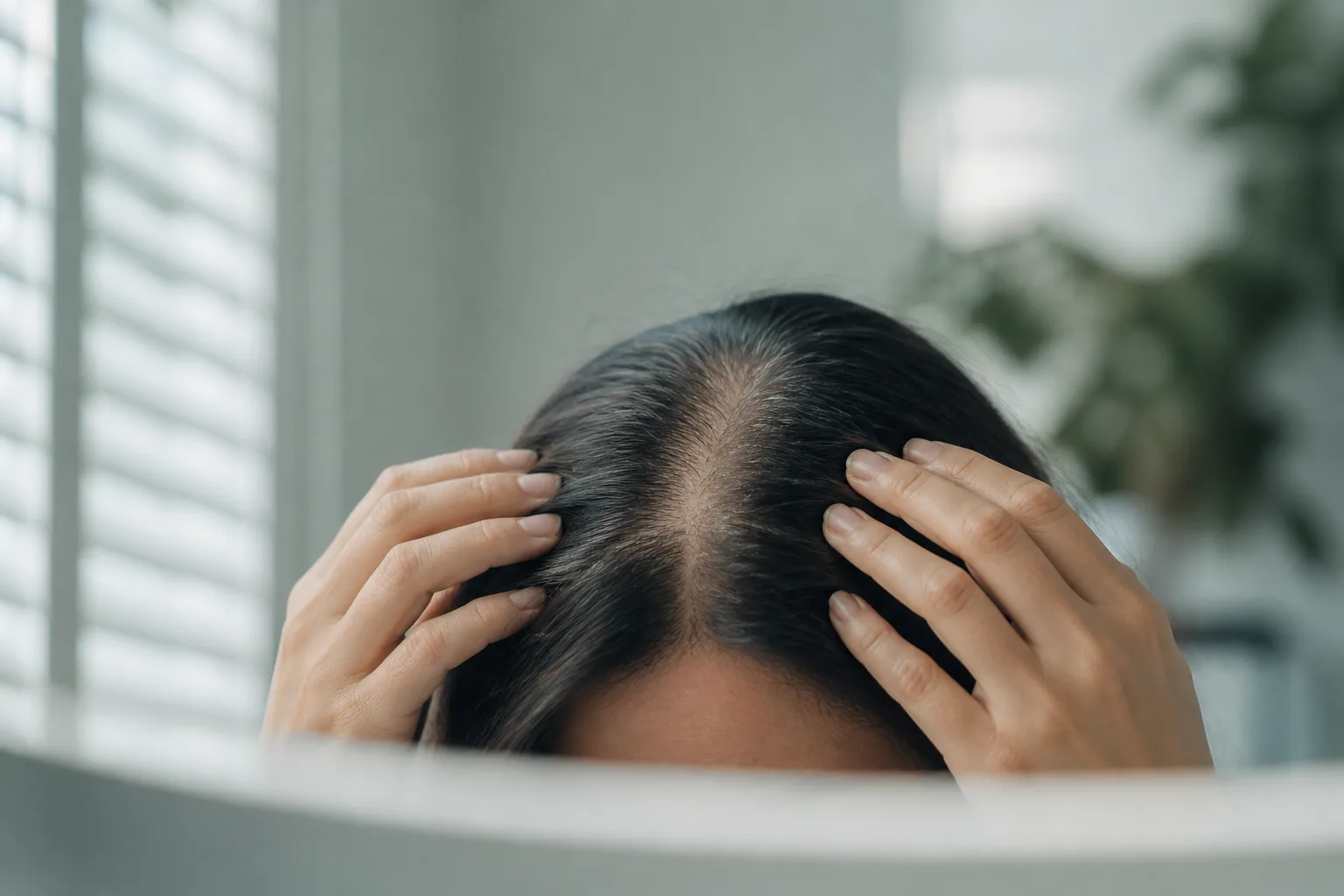
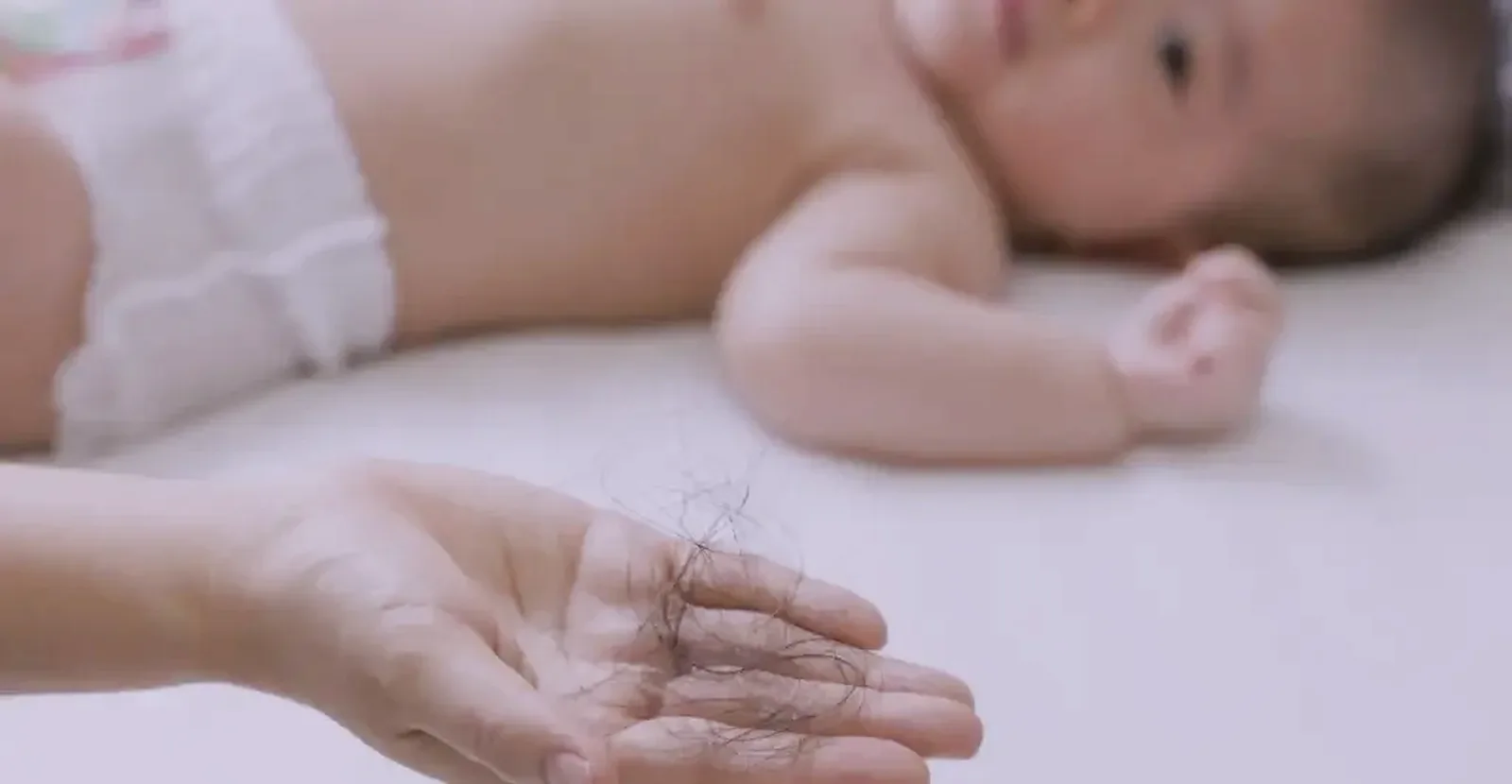
Hand holding shed postpartum hair with newborn soft-focus in the background

Insights & Wellness · Women's Health

Postpartum Hair Loss: Timing, Patterns & Care

Shedding often peaks months after birth. Name Blood, Kidney, or Qi leads, then match food, scalp care, and clinic support beside your gynae plan.

In brief

Postpartum hair loss often begins around three to six months after delivery and is usually temporary. Pregnancy can pause everyday shedding, so follicles that rested together may fall at once afterward. Density recovery follows the follicle cycle over months. TCM often reads Blood deficiency from delivery loss, Kidney Jing strain, and Liver Qi stagnation, then matches food, scalp gua sha, acupuncture, and herbs beside your gynae plan.

After birth

Why postpartum shedding feels sudden

Pregnancy often reduces everyday fall, so hair can look thicker. After delivery, follicles that rested together may enter the shed phase at once, often around three to six months later.

That synchronized shed can look abrupt even when the pattern is common. Density usually restaggers over months as follicle cycles reset. TCM still asks which lead is strongest, because Blood, Kidney Essence, and Liver Qi each nourish the scalp differently after birth.
Singapore context

Confinement ends; the shed window often comes later

Cultural confinement often lasts about a month, while the follicle-led shed wave commonly peaks later. Night feeds, air-con, and iced drinks can deepen postpartum depletion and stuck Qi beside that timing.

  • Timing mismatch: early recovery can feel underway before the three-to-six-month shed wave arrives.
  • Sleep debt: late nights and fragmented rest hinder Blood rebuilding when Qi is already low.
  • Cold load: long air-con hours with midriff or feet exposed, plus iced drinks, can aggravate cold and stagnation after birth.

TCM map

Three patterns behind postpartum hair loss

Hair sheds when Blood and essence run thin after birth. Clues below help name whether deficiency, heat, or stagnation leads.

1. Blood deficiency · 发为血之余

Hair is taught as the surplus of Blood. Blood loss at delivery can leave Blood thinner, so follicles receive less nourishment and shedding rises until Blood rebuilds. Often sits with pale colour, dizziness, lightheadedness, or low energy after feeds.

2. Kidney deficiency · 肾其华在发

The Kidney’s glory is said to show in the hair. Pregnancy and birth strain Kidney Essence (Jing / 精), which helps nourish the follicles. Companion signs may include fatigue, weak lower back and knees, frequent urination, and feeling cold.

3. Qi stagnation · 气为血之帅,血为气之母

Hair also links to the Liver’s job of keeping Qi and Blood moving. Hormones, physical recovery, and emotional load can stagnate Qi so less nourishment reaches the follicles. Often sits with tense mood, chest or rib-side tightness, and sleep that will not settle.

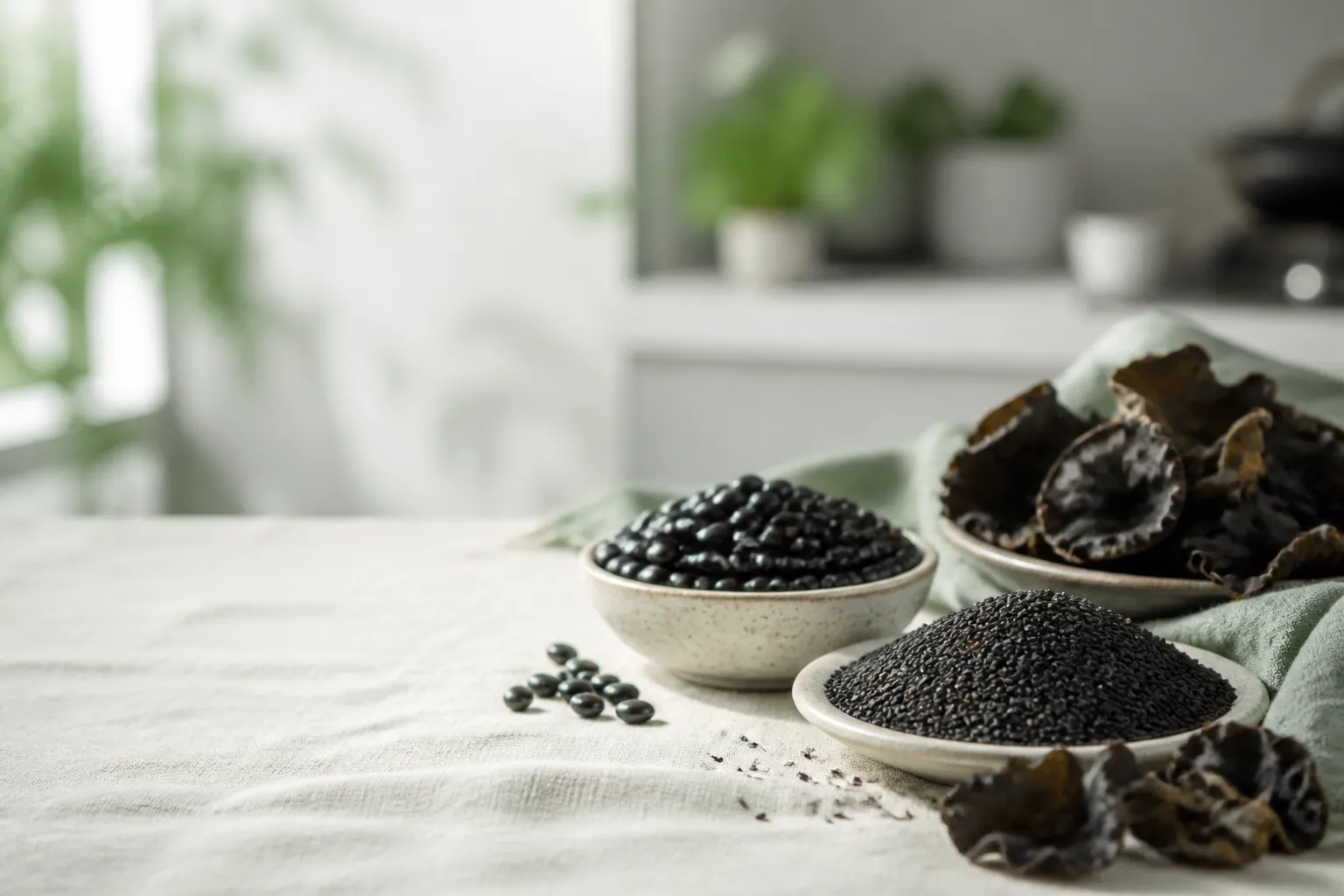
Black beans, black sesame, and black fungus for Kidney postpartum hair support

Kitchen and habits

Support matched to the pattern

Food therapy and gentle habits support hair recovery after birth. Match the row to your leading pattern; this is educational support beside physician assessment, not a substitute for it.

Postpartum hair support by pattern
Pattern What may help
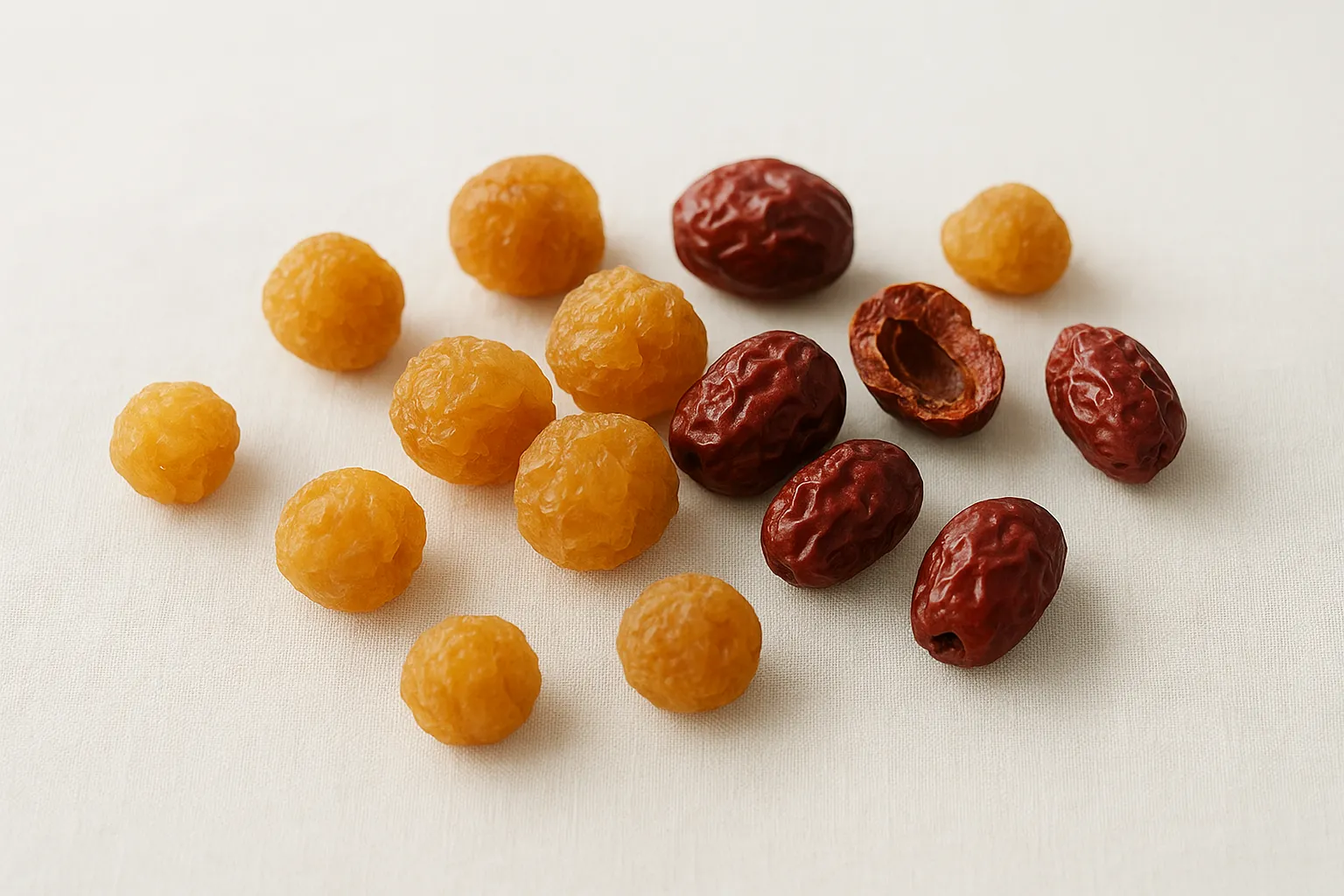
Blood deficiency Red dates and longan to replenish Blood and Qi when colour and energy run thin.
Kidney deficiency Black beans, black sesame, and black fungus; dark foods traditionally linked with Kidney support.
Qi stagnation Gentle movement such as tai chi or yoga, plus rest, deep breathing, and short calming teas when stress keeps Qi stuck.
Dried red dates and longans for tea at PULSE TCM

Blood deficiency · 血虚

Red date longan tea

Red dates and longan are a classic brew when postpartum Blood runs thin and shedding sits with pale colour or low energy.

Make the red date longan tea
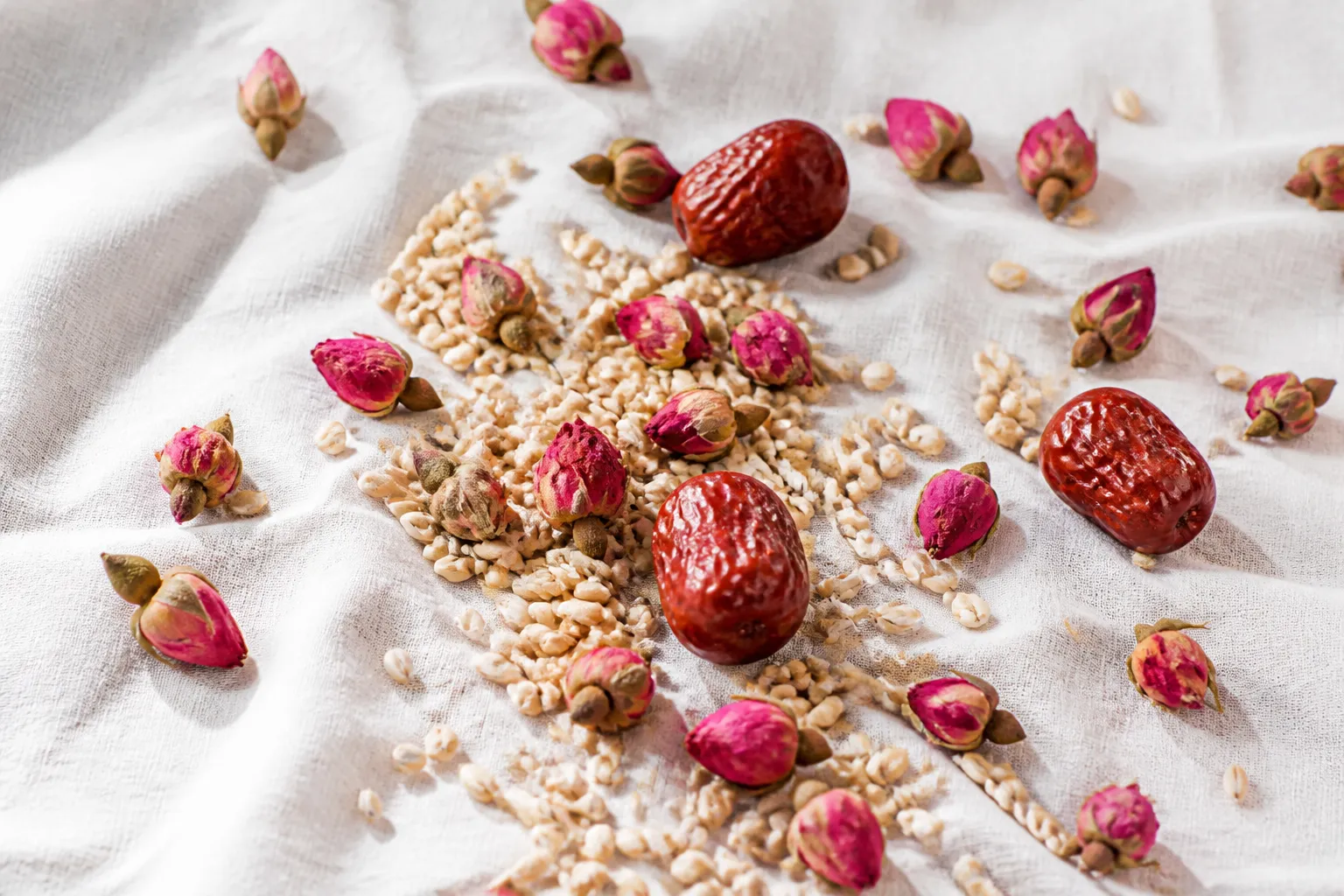
Dried rose buds, Fu Xiao Mai wheat, and red dates for tea at PULSE TCM

Qi stagnation · 气滞

Rose buds Fu Xiao Mai tea

Rose buds with Fu Xiao Mai and red dates are a short steep when postpartum stress keeps the chest tight and Qi stuck beside hair fall.

If there's any chance of pregnancy, don't use this often.

Make the rose buds tea
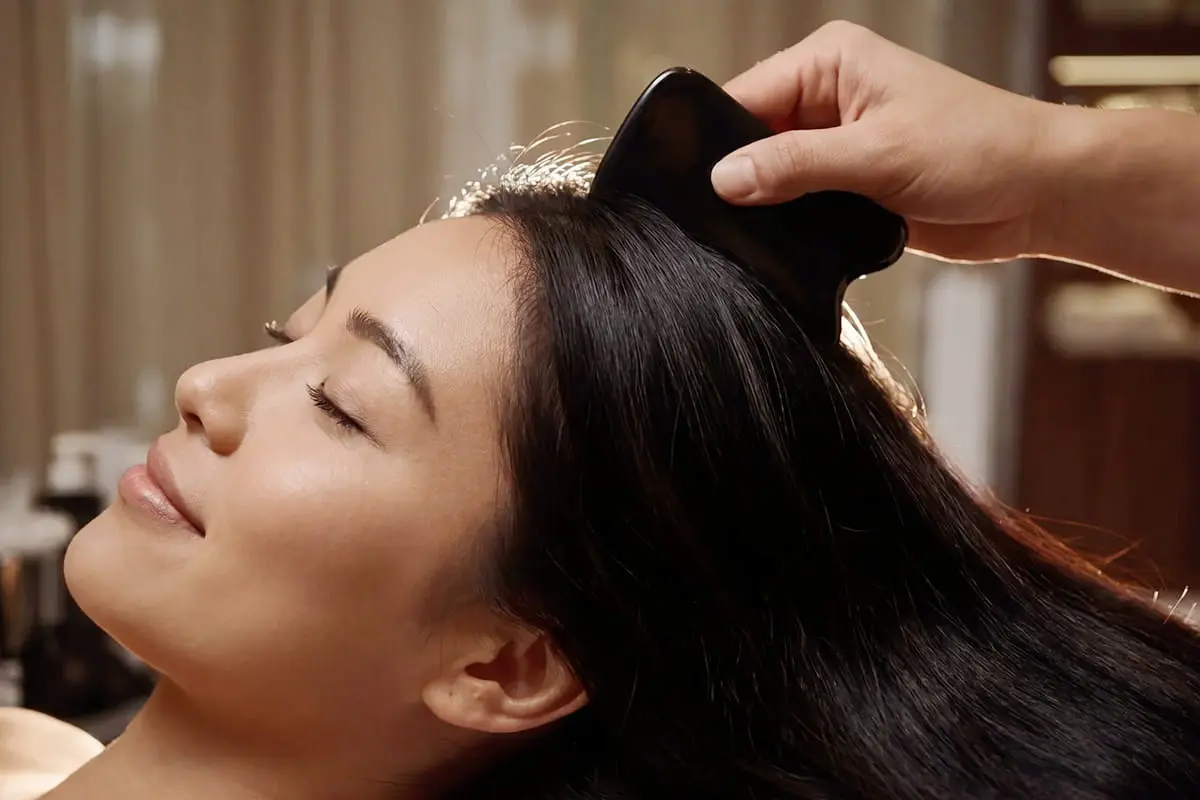
Scalp gua sha for postpartum hair circulation at PULSE TCM

Scalp care

Head gua sha and acupuncture

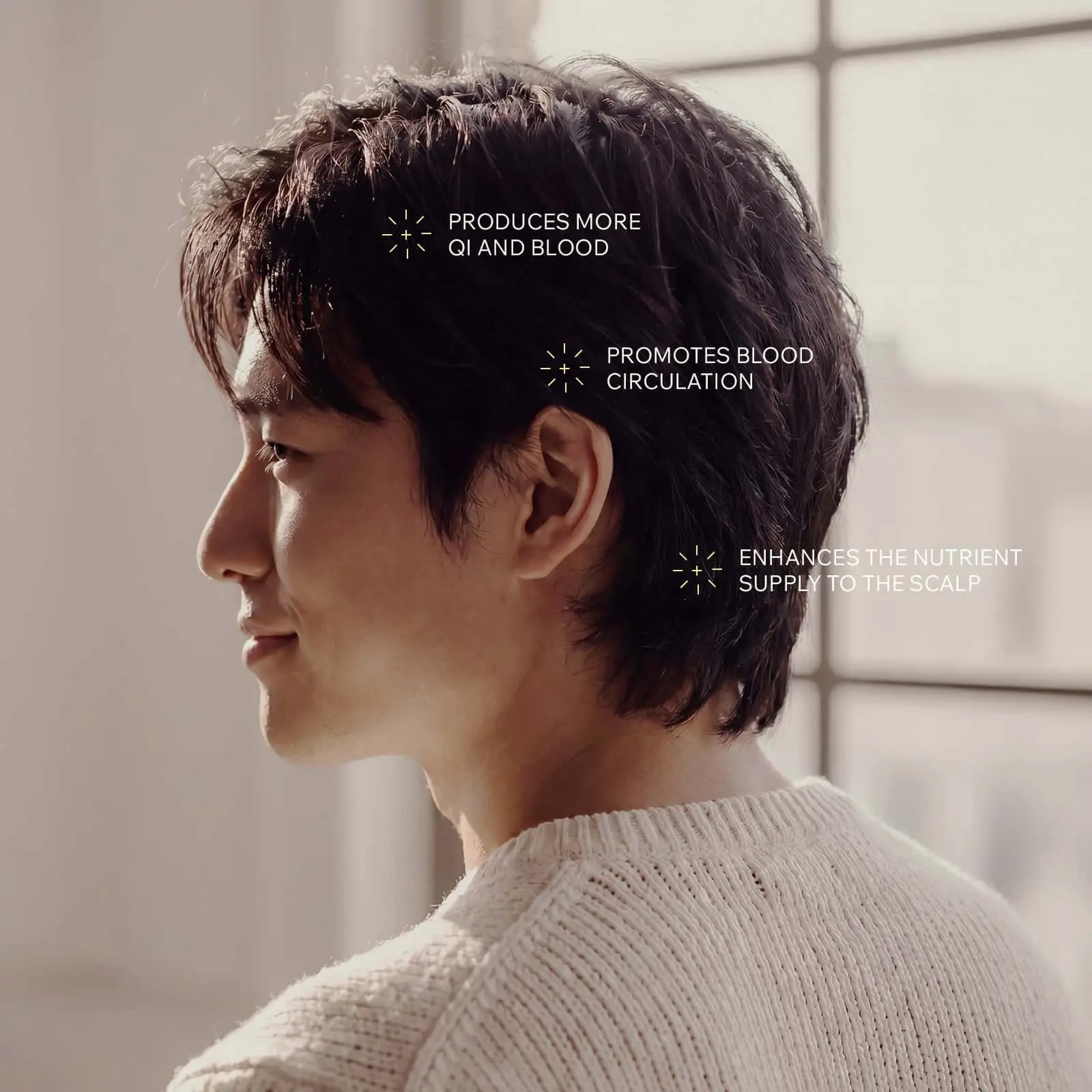
Gentle scalp work aims to ease tension and invite circulation so follicles receive more nourishment. Clinic needling can address the whole postpartum pattern, not only the scalp.

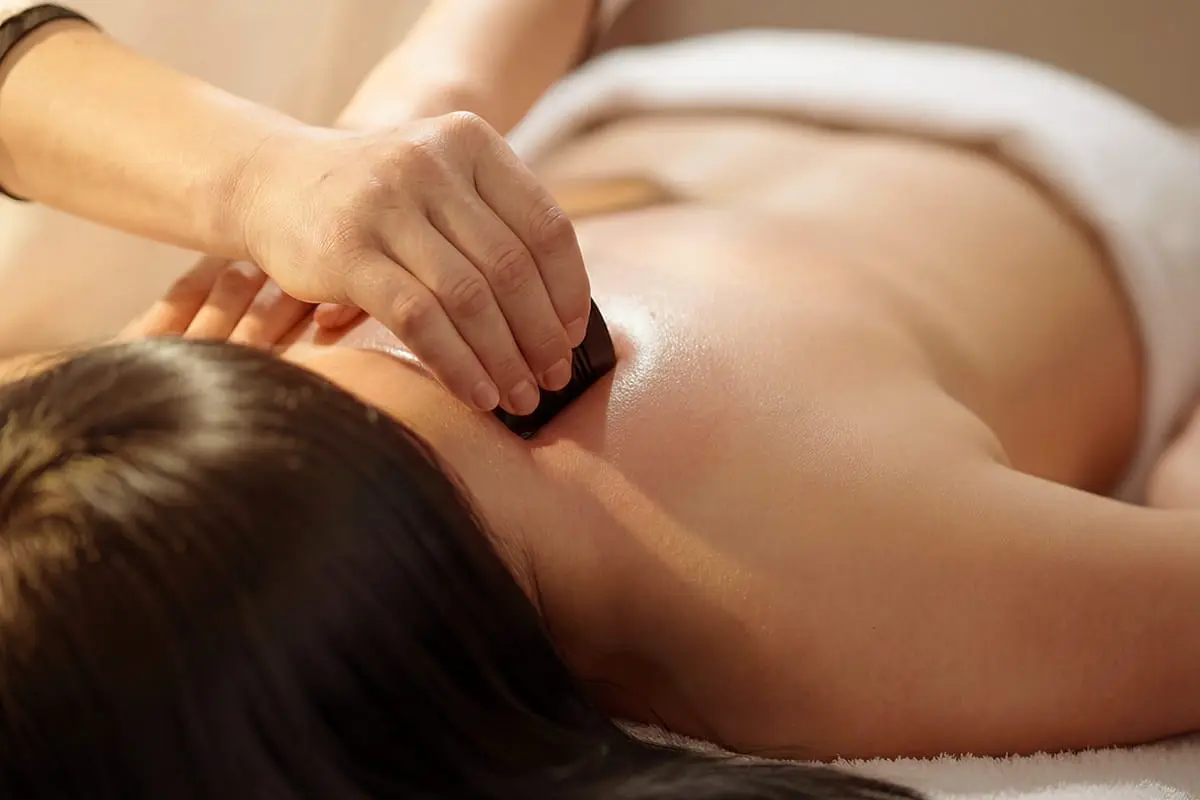
Head gua sha

A light scrape or massage across the scalp can encourage local circulation, release tension, and gently stimulate the follicles. Keep pressure comfortable; stop if the scalp feels sore or inflamed. Clinic gua sha may include scalp work when the pattern calls for it.

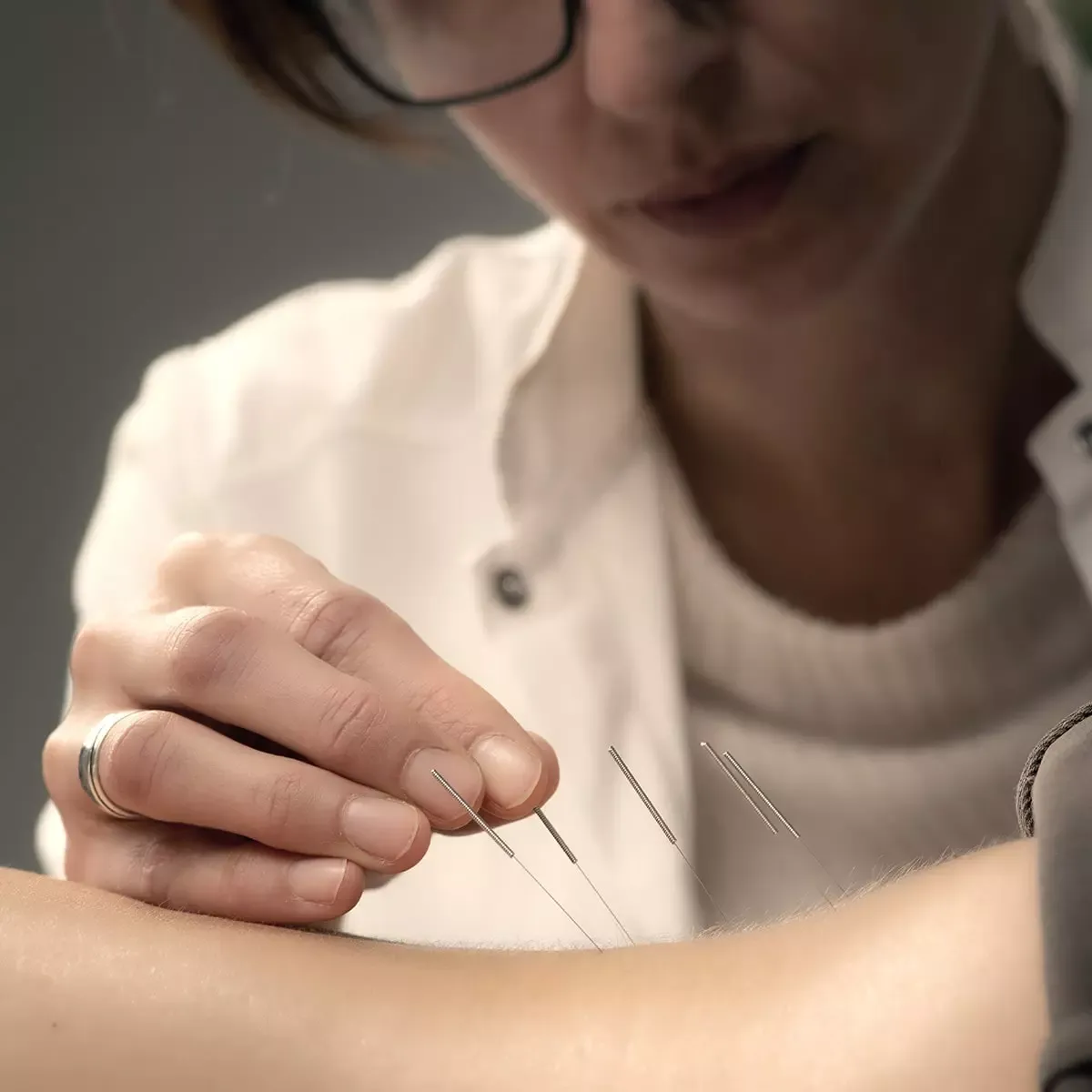
Acupuncture

Acupuncture uses fine needles at selected body and scalp points to help restore Qi flow and support self-healing for postpartum concerns. Plans stay pattern-led and sit beside, not instead of, dermatology when scalp disease or scarring is in view. The Hair Loss programme gathers scalp acupuncture, herbs, and related modalities in one pathway.

Clinic herbs

Nourishing Qi and Blood for postpartum hair

Symptom-only tonics treat the scalp in isolation. Pattern care aims at the root: replenishing Qi and Blood so the scalp and follicles are better nourished after birth.

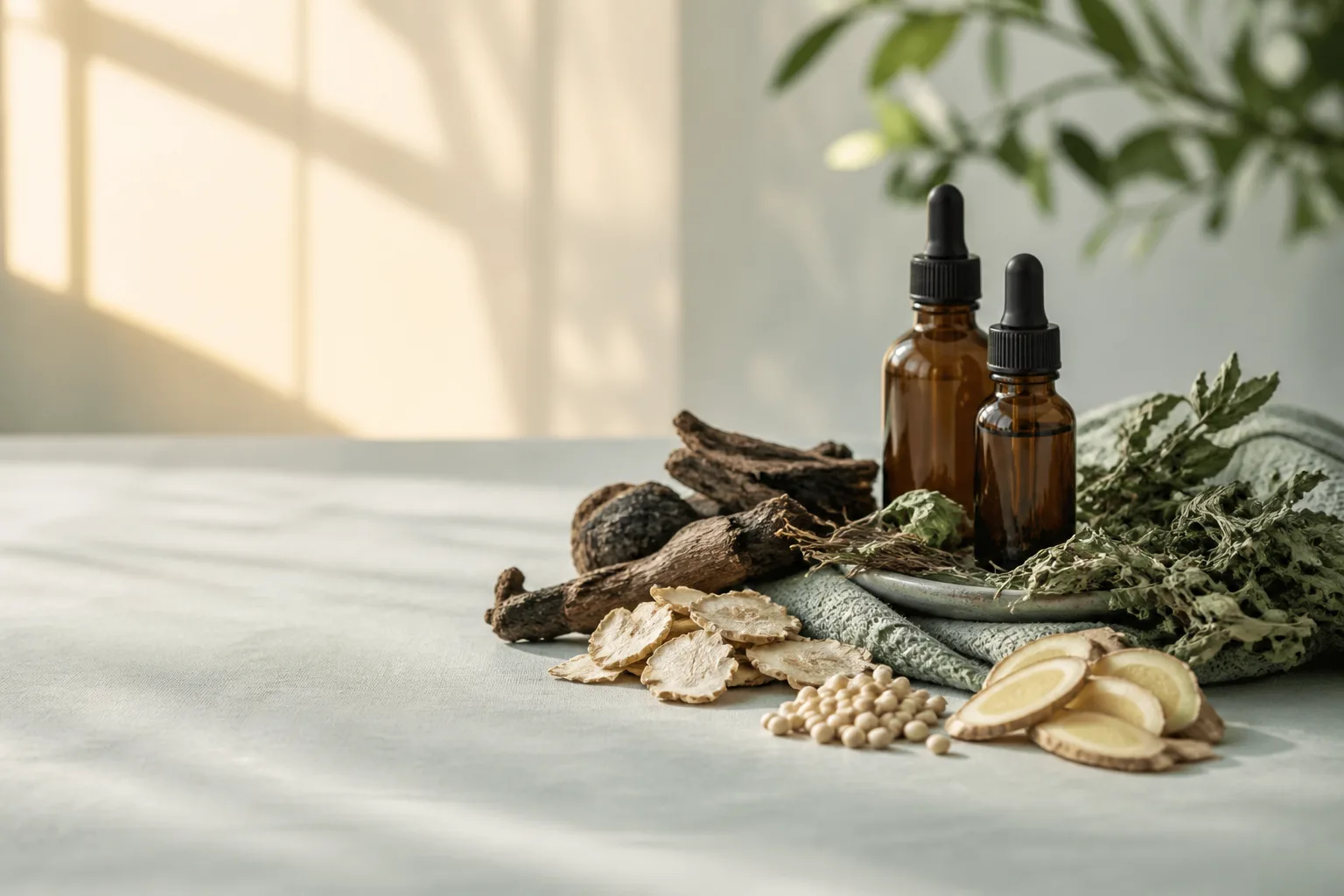
Herbs often discussed for this postpartum hair frame include Cuscuta seed (菟丝子 / Semen Cuscutae), Angelica root (当归 / Radix Angelicae Sinensis), and Chuanxiong rhizome (川芎 / Rhizoma Chuanxiong). Together they are used to replenish Qi and Blood, nourish the scalp, and invigorate the follicles when a physician matches the formula to your pattern.

PULSE in-house hair tonics and the Hair Loss programme sit with that same Qi-Blood logic. Chinese herbal medicine remains prescription-led; do not self-dose pregnancy or breastfeeding formulas from a label alone.

PULSE Classic and regrowth hair tonics for postpartum Qi-Blood scalp support

When to book for postpartum hair loss

If shedding began a few months after birth, sits with depletion or stress, or density has not settled after the usual window, a physician can name the pattern and decide whether food therapy, scalp gua sha, acupuncture, or herbs belong in your plan. Bring delivery notes and sleep load; we can route toward Hair Loss or the postpartum Women’s Health pathway.

Dr Sim Beng Joo

Clinically reviewed

Reviewed by Sim Beng Joo

Advisor (Science & Strategy) / Consultant Physician · TCMPB T1303003A

MOH-licensed TCM physician and biomedical scientist, with clinical work in digestion, pain, sleep or fatigue, and women's health patterns that show as postpartum depletion and hair fall.

View full profile

Educational information based on clinical experience and TCM principles. Not a substitute for personalised consultation, midwifery, obstetric, or dermatology care. Seek medical review for sudden patchy loss, scalp infection, scarring alopecia, or shedding that does not settle after the usual postpartum window. TCM complements, and does not replace, Western hair and postnatal care.

FAQs

Postpartum hair loss questions

Timing, how long density takes, Blood and Kidney patterns, stress, and when to book TCM beside dermatology.

When does postpartum hair loss usually start?

Shedding often begins around three to six months after delivery. The timing follows the follicle cycle more than the first weeks of confinement, so many mothers notice fall after early recovery already feels underway.

How long does postpartum hair loss last?

The active shed wave is usually temporary as follicle cycles restagger. Density recovery still follows the natural follicle cycle over months. Many people notice less active fall before thicker regrowth; patchy loss, scalp infection, or scarring need medical review rather than waiting it out.

Is postpartum hair loss normal and temporary?

In most cases, yes. Pregnancy often reduces everyday shedding, so hair can look thicker. After birth, resting follicles may enter the shed phase together, which looks sudden. The fall is usually temporary, though full density return still takes months beside rest, food, and pattern-led care.

How does Blood deficiency after delivery relate to hair fall?

TCM teaches that hair is the surplus of Blood (发为血之余). Blood loss at delivery can leave Blood quality and circulation thinner, so follicles receive less nourishment and shedding can increase until Blood rebuilds.

What Kidney deficiency signs sit with postpartum shedding?

The Kidney’s glory is said to show in the hair (肾其华在发). Pregnancy and birth strain Kidney Essence (Jing). Beside thinning, physicians may also note fatigue, weak lower back and knees, frequent urination, and feeling cold.

Can stress and Qi stagnation worsen postpartum hair loss?

Yes. Hair also links to the Liver’s role in moving Qi and Blood. Hormonal change, sleep debt, and emotional load after birth can stagnate Qi, so less nourishment reaches the follicles and hair quality or fall may worsen.

When should I book TCM versus see a dermatologist?

Book TCM when shedding sits with postpartum depletion, stress, or pattern signs and you want food, scalp, acupuncture, or herbal support beside gynae care. Seek dermatology or urgent medical review for sudden patchy loss, infected scalp, scarring alopecia, or fall that does not settle after the usual postpartum window.

References

Selected sources

  1. National Center for Complementary and Integrative Health. Traditional Chinese medicine: What you need to know. 2019. https://www.nccih.nih.gov/health/traditional-chinese-medicine-what-you-need-to-know/
  2. Ministry of Health Singapore. TCM practitioners (Healthcare Professional Portal). https://hpp.moh.gov.sg/tcm-practitioners/
  3. World Health Organization. Traditional, complementary and integrative medicine. https://www.who.int/health-topics/traditional-complementary-and-integrative-medicine
  4. Original article author: Physician Sow Lee Fong.

Next step

Ready for a postpartum hair pattern read?

Bring when shedding started, delivery blood loss notes, sleep and stress load, and any dermatology findings. We will name the pattern in plain language and decide whether Hair Loss or postpartum Women’s Health support fits best.

Hours
Most clinics daily 11:00 AM – 8:00 PM
Care
Physician-led consultation