Mother cradling a sleeping newborn during postnatal recovery care

Insights & Wellness · Women's Health

TCM Postnatal Care After Confinement: 5 Self-Care Precautions

Confinement may end at a month, but recovery continues. These TCM precautions help new mothers protect Qi and Blood through the wider postnatal window.

In brief

After birth, TCM often reads Qi-Blood deficiency, so mothers stay more open to wind, cold, and damp even once cultural confinement ends. Modern care frames the postnatal period as the first six weeks. Five precautions matter most: keep warm, eat gently, rest without late nights, start only light exercise with gynae clearance, and pause sex and bathtub baths for six weeks. Tongue colour and coating help decide whether warming tonifying food should continue or stop.

After confinement

Five TCM self-care precautions

In Singapore homes, air-con blast, cold dishwater, and late nights hit harder when Qi and Blood are already low after birth. These five habits protect against wind, cold, and damp while strength returns.

1. Keep warm; avoid wind, air-con blast, and cold water

Qi-Blood deficiency leaves the body more open to wind, cold, and damp, which can settle as joint ache later. Keep the room ventilated around 25–26°C. Avoid rain exposure and washing dishes in cold water.

2. Eat balanced, nutritious food; skip cold, spicy, oily, and raw

Digestion is often weak after birth. Spare Stomach and Spleen so meals rebuild without tipping into constipation or diarrhoea.

3. Skip strenuous work and late nights; prioritise rest

Overexertion and heavy lifting further deplete Qi. Late nights hinder Blood production. Aim to be asleep by 11pm with about 7–9 hours of rest when night feeds allow.

4. Start light, low-impact exercise only

Begin with gentle walking and build time and pace gradually. Avoid swimming until bleeding has stopped for at least seven days. Wait for your postnatal check at about 6–8 weeks and gynaecologist clearance before harder work. Steady movement supports circulation, strength, stress, and mood.

5. Six weeks: pause sex and bathtub baths

Through the six-week postnatal window, abstain from sex and bathtub baths to lower infection risk and healing complications while tissues recover.

Clinic view

What physicians read after birth

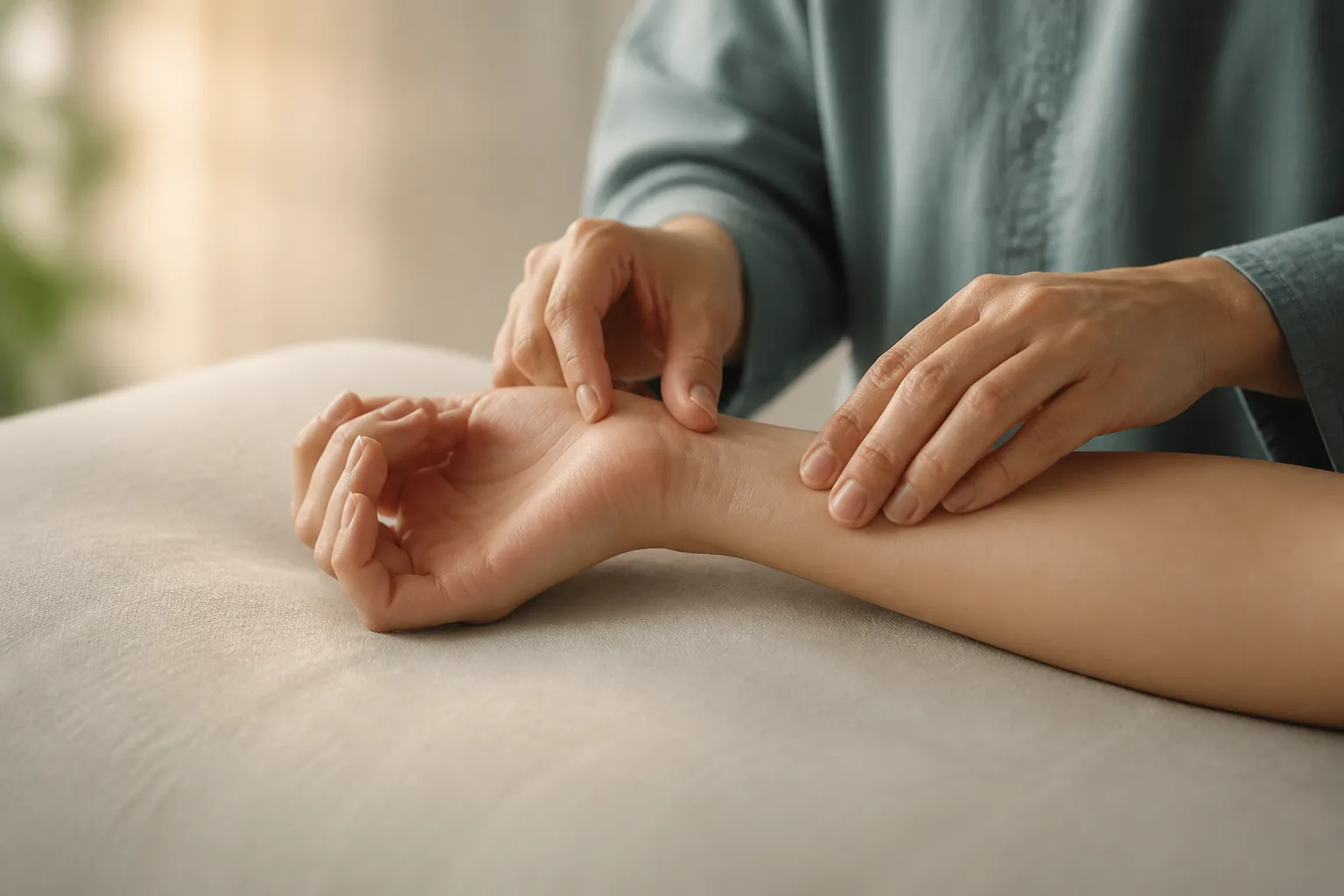
Keeping warm and resting well matter for almost every new mother. A consult goes further: pulse and tongue show whether the leading pattern is Qi-Blood deficiency, lingering Blood stasis, or heat from over-tonifying.

Qi-Blood deficiency is common after delivery: fatigue, pale colour, lightheadedness, and a sense that strength has not returned. When lochia stalls or lower-abdomen ache feels fixed and sharp, physicians also weigh Blood stasis rather than tonifying alone.

A first postpartum visit usually starts with history (delivery, feeding load, sleep, diet, and any Western clearance), then pulse and tongue. Care may include acupuncture, herbal medication, and dietary therapy matched to that pattern. Plans stay process-led; they do not replace midwifery or obstetric follow-up.

Seek urgent medical care for heavy bleeding, fever, chest pain, calf swelling with breathlessness, or a sudden collapse in mood or safety. Book TCM when depletion, heatiness from tonics, sleep debt, or joint ache persists after confinement and you want pattern-led support beside your gynae plan.


Rest rhythm

Sleep by 11pm on the TCM body clock

After birth, the practical takeaway is early sleep and enough hours when feeds allow, not forcing every organ wedge. TCM body-clock teaching favours being asleep by 11pm, with about 7–9 hours of rest across the night.

Postnatal rest priorities
Focus Why it helps
Asleep by 11pm Liver time opens the overnight window for Blood repair; late nights hinder recovery when Qi is already low.
About 7–9 hours Stack naps with night sleep when feeds interrupt; immunity and revitalising rest sit in the early hours.
Short afternoon nap Around the Heart window (about 11am–1pm), a nap of roughly 40 minutes can refill without stealing night sleep.
Evening stroll and foot soak A gentle stroll (about 7–9pm) and a warm foot soak toward 11pm support wind-down before Liver time.

Full organ clock

Use the full table as a map, not a checklist. Night feeds come first; borrow the rhythm where it fits.

TCM body clock activities
Time Organ system Suggested focus
11pm–1am Liver Foot soak; start of overnight sleep for immunity, detox, and revitalising rest
1am–3am Gallbladder Continue sleeping
3am–5am Lung Continue sleeping
5am–7am Large Intestine Bowel movement when the body is ready
7am–9am Stomach Breakfast
9am–11am Spleen Digestion
11am–1pm Heart Lunch; optional afternoon nap of about 40 minutes
1pm–3pm Small Intestine Drink more water
3pm–5pm Bladder Toilet break
5pm–7pm Kidney Dinner
7pm–9pm Pericardium Evening stroll
9pm–11pm Triple Burner Wind down toward rest; foot soak may begin toward 11pm

Warming food

Tonifying food and a simple tongue gauge

Warming and tonifying food or supplements are common after birth to boost Qi and Blood, move blood, and drive wind away. Excess can stagnate Qi, build damp, and generate heat, showing as constipation, dry mouth, sore throat, or irritability.

Tongue appearance is one simple way to decide whether to continue warming food in moderation or to pause.

Tongue signs for postnatal tonifying food
Tongue sign What it may mean What to do
Pale or pale-pink, little or no coating Qi or Blood deficiency Warming and tonifying food in moderation to rebuild Qi and Blood
Red tongue with yellow greasy coating Damp-heat or heatiness; often from over-tonifying Pause warming tonics for now, or seek a herbal prescription to clear heat and damp

A healthy tongue is usually pink with a thin coat. Do not inspect after coffee, tea, or other staining drinks, or within 30 minutes of eating. Prefer daytime natural light. If you are unsure, a physician visit gives a clearer constitution and pattern read.

More tongue indications in TCM →

When to book postpartum support

If depletion, heatiness from tonics, sleep debt, or joint ache persists after confinement, a physician can map your pattern and decide whether acupuncture, herbs, or dietary therapy belong in your plan.

Dr Sim Beng Joo

Clinically reviewed

Reviewed by Dr Sim Beng Joo

Advisor (Science & Strategy) / Consultant Physician · TCMPB T1303003A

MOH-licensed TCM physician and biomedical scientist, with clinical work in digestion, pain, sleep or fatigue, and women's health patterns.

View full profile

Educational information based on clinical experience and TCM principles. Not a substitute for personalised consultation, midwifery, or obstetric care. Follow your gynaecologist’s clearance for exercise, swimming, sex, and bathing. Seek urgent care for heavy bleeding, fever, chest pain, or acute illness.

FAQs

Postnatal care and TCM

Common questions after confinement ends and recovery continues.

What is the difference between confinement and the postnatal period?

In Singapore, cultural confinement often lasts about 30 days and varies by family practice. WHO and modern obstetrics frame the postnatal period as the first six weeks (42 days) after birth, when major physiological change continues for mother and infant.

What TCM precautions help after confinement?

Keep warm and away from cold wind or cold water, eat a balanced diet that spares Stomach and Spleen, rest without late nights, begin only light low-impact exercise with clearance, and abstain from sex and bathtub baths for six weeks to lower infection risk.

When should I sleep according to the TCM body clock?

TCM body-clock teaching favours sleep by 11pm, with about 7–9 hours of rest. Late nights hinder Blood production when Qi is already low after birth. Overexertion and heavy lifting can deplete Qi further.

How do I know if warming tonifying food is too much?

A pale or pale-pink tongue with little coating often supports warming food in moderation. A red tongue with yellow greasy coating can signal damp-heat from over-tonifying; pause warming tonics or seek a herbal prescription. Inspect in daylight, not after staining drinks or within 30 minutes of food.

When can I return to exercise after birth?

Start with gentle walking and build pace gradually. Avoid swimming until bleeding has stopped for at least seven days, and wait for your postnatal check at about 6–8 weeks plus gynaecologist clearance before harder work.

References

Selected sources

  1. World Health Organization. WHO technical consultation on postpartum and postnatal care. WHO/MPS/10.03. Geneva: WHO; 2010. https://apps.who.int/iris/bitstream/handle/10665/70432/WHO_MPS_10.03_eng.pdf
  2. Pregnancy, Birth and Baby (Australian Government). Safe return to exercise after pregnancy. https://www.pregnancybirthbaby.org.au/safe-return-to-exercise-after-pregnancy
  3. Description and treatment progress of postpartum body pain in Chinese medicine. Curr Res Med Sci. 2023;2(2). https://doi.org/10.56397/crms.2023.06.06
  4. Wikipedia contributors. Postpartum confinement (cultural practice overview cited for Singapore-length context). https://en.wikipedia.org/wiki/Postpartum_confinement

Book

Start with a postpartum consult

Share your delivery timeline, feeding load, and what still feels depleted. We will match you with a suitable physician.

Hours
Most clinics daily 11:00 AM – 8:00 PM
Care
Physician-led consultation