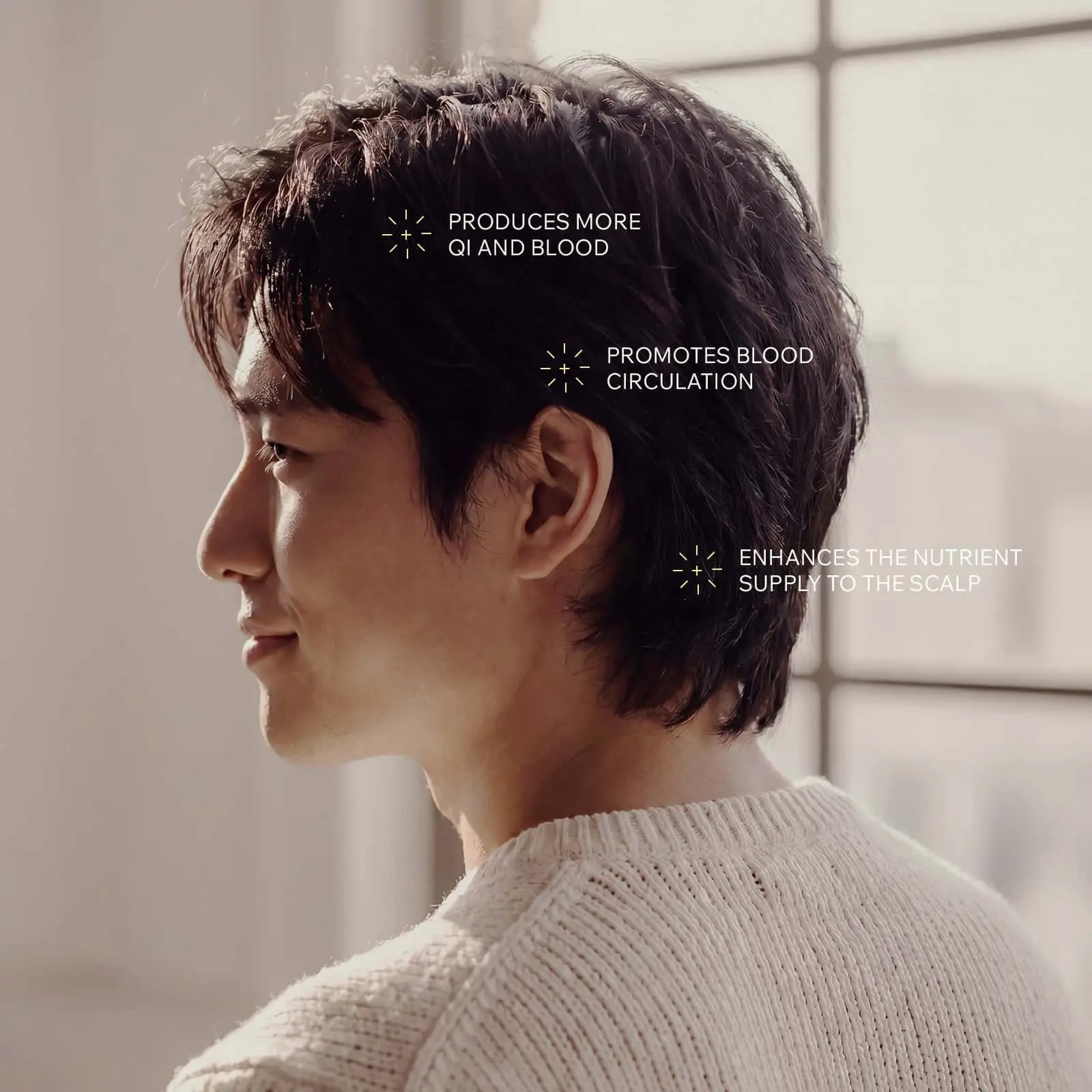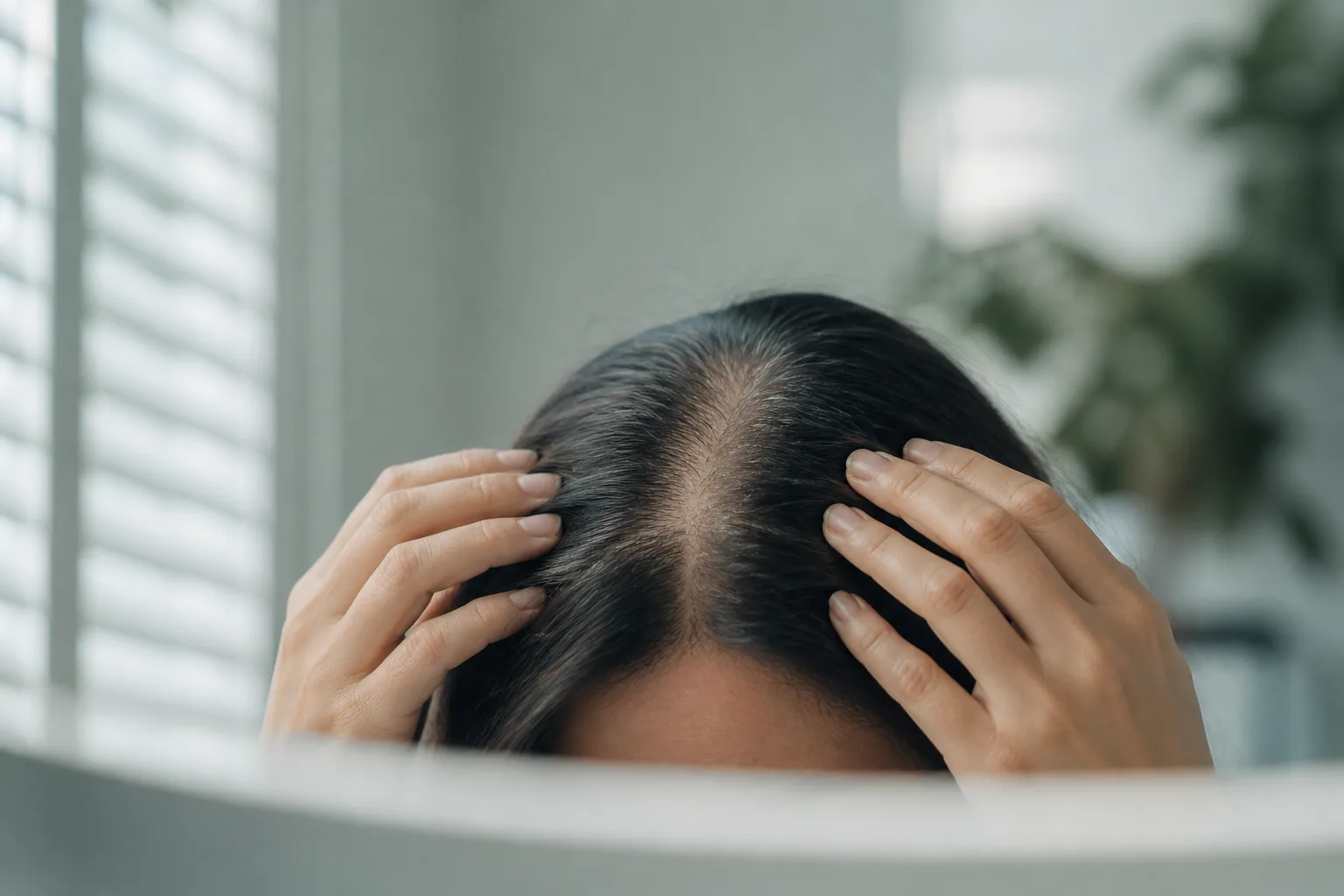
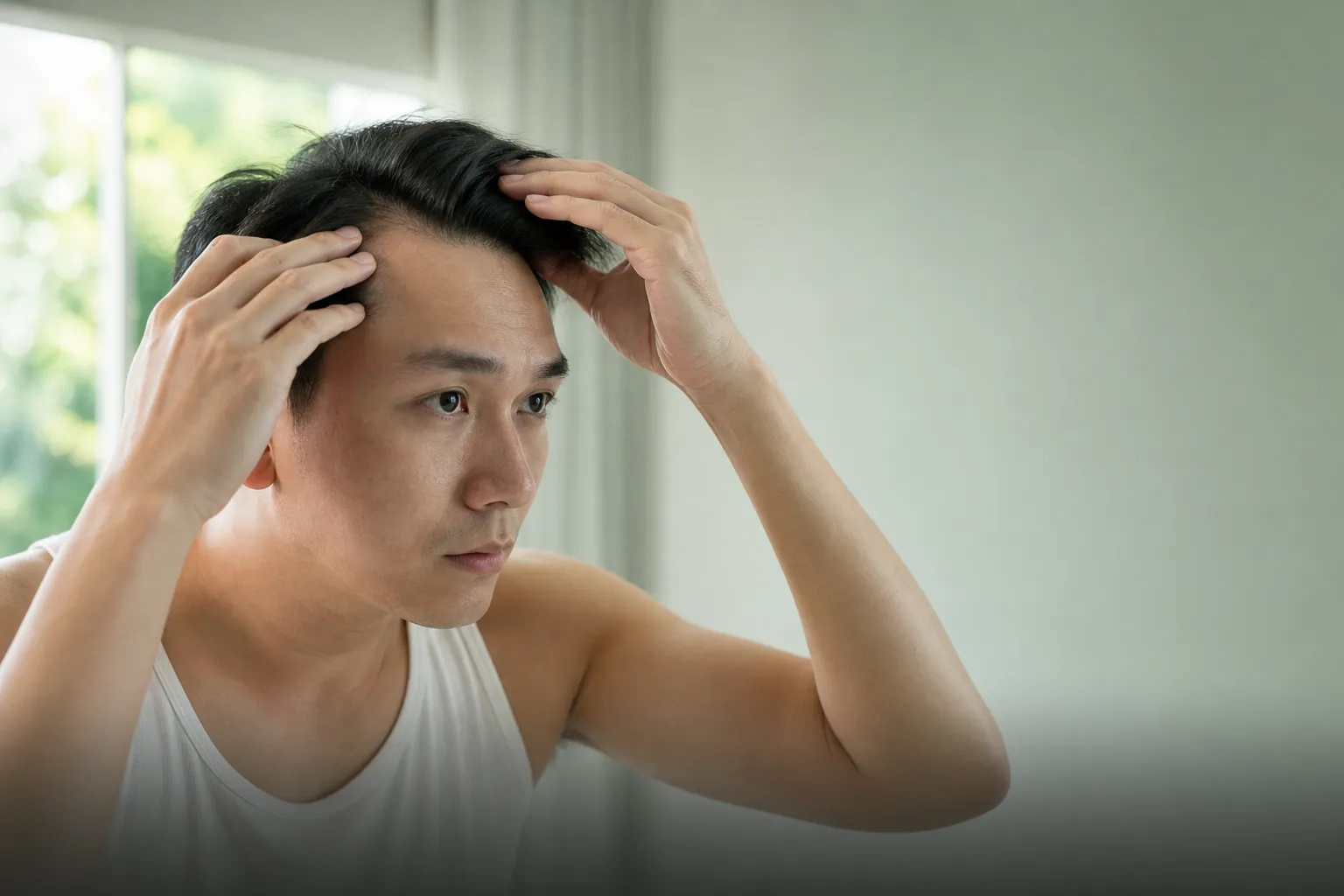
Man checking his hairline for hair loss concern at home

Insights · Hair Loss

The TCM’s way of combating hair loss

Thinning, pattern baldness, and patchy fall each ask a different question. Needling, herbs, and scalp care usually fit once Blood, stasis, or Damp-Heat is named.

In brief

Hair loss can sit as overall thinning, male or female pattern baldness, or patchy alopecia areata. Causes range across genetics, diet, stress, and conditions such as thyroid disease or anaemia. TCM commonly names Blood-heat, Qi and Blood stasis or deficiency, Liver and Kidney deficiency, or Damp-Heat on the scalp, then matches acupuncture and herbs to that pattern. Plum blossom needling may sit with scalp acupuncture. Visible new hair often follows the follicle cycle over months; less active fall may show first.

01 · Types

Several types, several drivers

Hair loss can arrive at any age. Drivers differ by gender, genetics, diet (including malnutrition), stress and pollutants, and conditions such as thyroid disorders, autoimmunity, or anaemia. Naming the pattern of fall sits beside naming the TCM root.
Which picture fits you?

Start with how the scalp looks, then read patterns and clinic methods below.

1. Overall thinning

Density drops across the scalp; the part may look wider. Often reads with Qi and Blood or Liver and Kidney deficiency.

2. Pattern baldness

Receding temples and crown in men, or a widening centre part in women. Acupuncture and herbs follow the named pattern, not a one-size plan.

3. Patchy bald spots

Circular clear patches often read as alopecia areata. Needling and herbs may sit with Blood-heat or wind readings.

4. Oily or itchy scalp

Oil, itch, or dandruff with fall often reads as Damp-Heat. Settling the scalp environment often comes before a stronger push on regrowth.

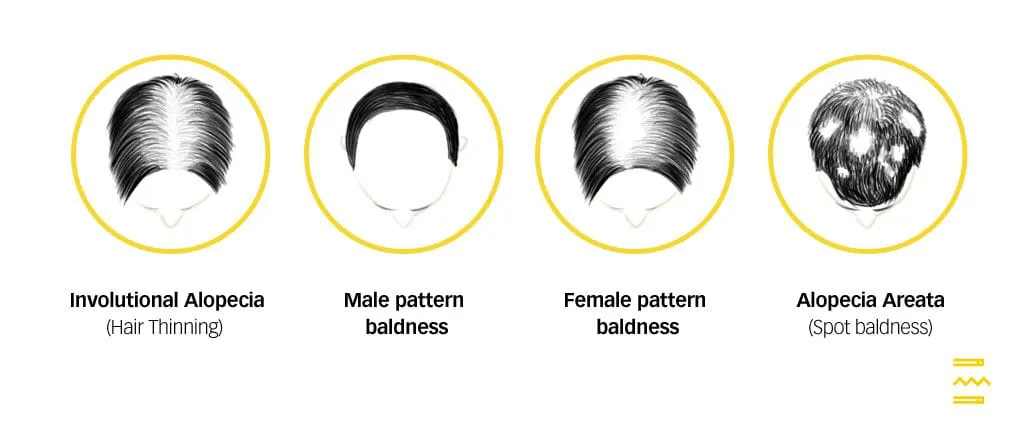
Diagram of four hair loss types: thinning, male pattern, female pattern, alopecia areata

Four common pictures

Thinning · pattern · patches

Involutional thinning, male pattern baldness, female pattern baldness, and alopecia areata (spot baldness) are the pictures patients most often recognise. Clinic care still starts from pulse, tongue, and scalp findings, not the diagram alone.

Western options and a TCM lane

People compare medicines, transplant, and other approaches. Acupuncture research includes work on alopecia, and some trials pair needling with plum blossom (dermal tapping). Results still take months, matched to the follicle cycle. Physician-led herbs and needling aim to restore balance; they do not guarantee regrowth or replace dermatology for sudden total loss or scarring disease.

02 · Acupuncture

Needling matched to the presentation

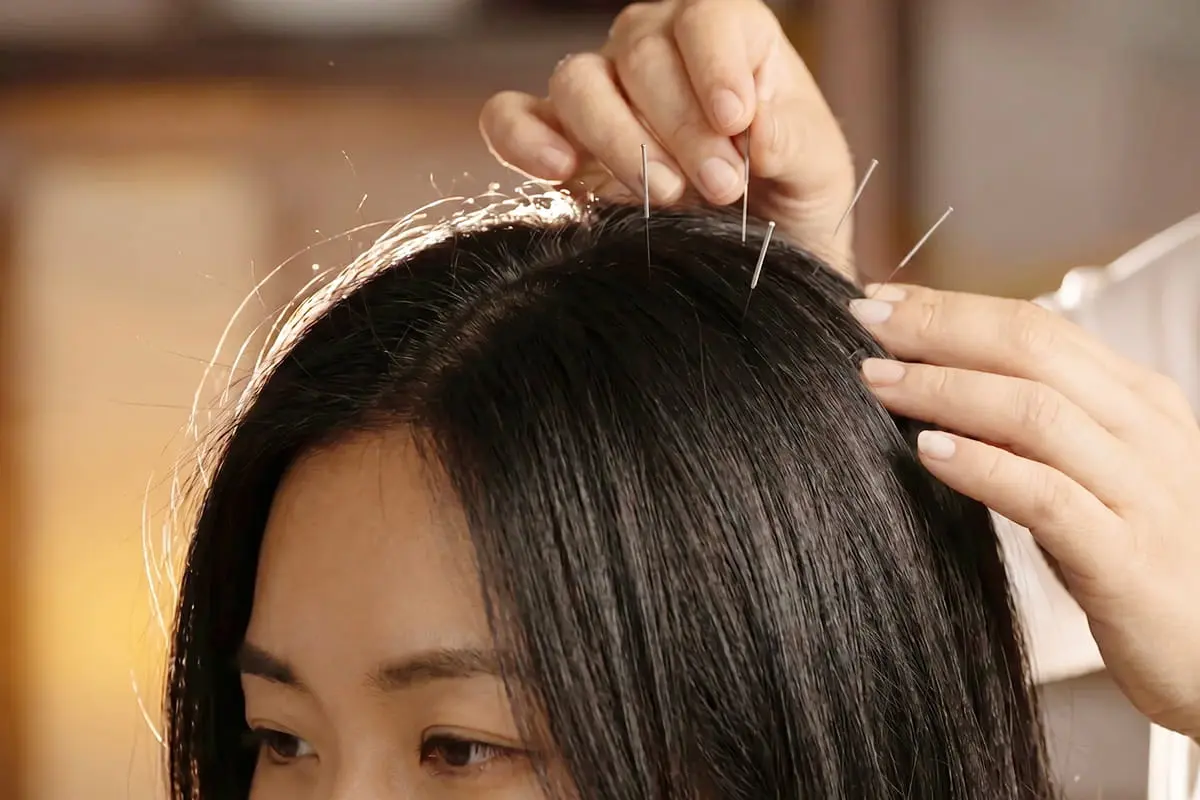
Acupuncture can support different hair-loss pictures. The intent shifts with the pattern and the scalp findings.

How acupuncture may support common hair-loss types
Presentation What acupuncture may support Clinic note
Alopecia areataPatchy, often circular bald spots. May help settle immune-driven reactions that clear a patch. Often paired with herbs when Blood-heat or wind sits with the fall.
Male pattern baldnessReceding temples and crown thinning. Often used when pattern thinning sits with local scalp stagnation. Works alongside pattern-matched herbs and scalp stimulation.
Physical or chemical damageFollicles stressed by heat, chemicals, or trauma. Stimulates nerve endings and local circulation to support healing. Timeline still follows follicle recovery, not overnight fill.

Scalp acupuncture

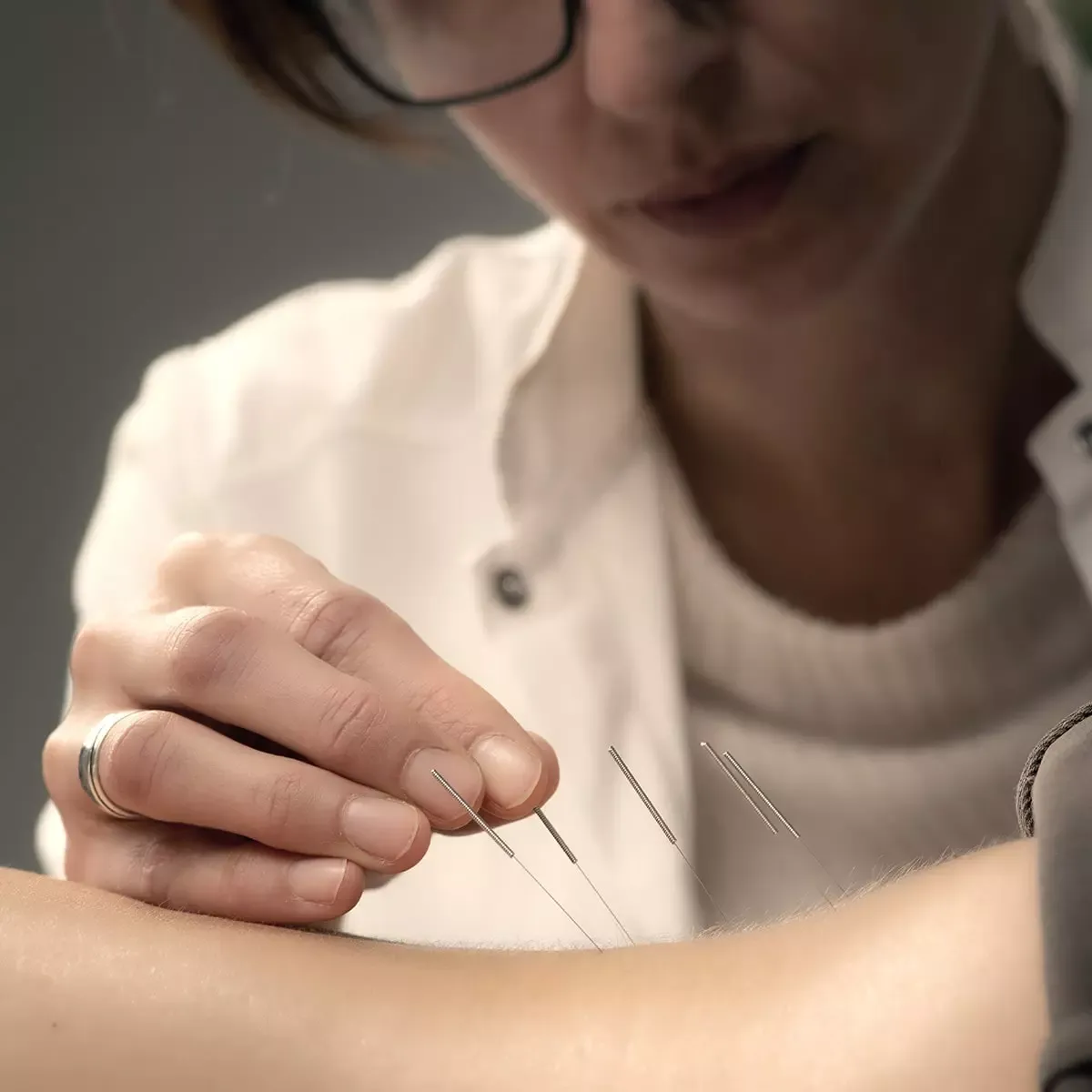
Scalp acupuncture for hair loss care at PULSE TCM

Local + pattern

Fine needles on scalp and body points move qi and blood and support the named pattern. Points are chosen after assessment, not as a fixed hair set.

Acupuncture at PULSE

03 · Patterns

Five patterns that drive the plan

Treatments follow the diagnostic pattern, not a single hair formula. Blood-heat, Qi and Blood stasis, Qi and Blood deficiency, Liver and Kidney deficiency, and Damp-Heat on the scalp are the common readings. Chinese herbs sit with acupuncture when the physician matches the formula after pulse and tongue.

Common TCM hair-loss patterns and herb groups
Pattern Typical signs Herb examples
Blood-heat血热: heat that agitates the Blood and scalp. Itchy, oily, or inflamed scalp with active fall. Platycladus orientalis (侧柏叶), Paeonia suffruticosa (牡丹皮), Eclipta prostrata (墨旱莲) to clear Blood-heat.
Qi and Blood stasis气滞血瘀: circulation that sticks in the scalp network. Stubborn thinning with tight scalp or fixed patches. Saffron flower (红花), Salvia miltiorrhiza (丹参), Ligusticum striatum (川芎) to move Qi and Blood.
Qi and Blood deficiency气血不足: not enough Qi and Blood to nourish the hair. Diffuse thinning with fatigue, pale complexion, or postpartum load. Angelica sinensis (当归), Astragalus (黄芪), Fructus Mori (桑椹) to build Qi and Blood.
Liver and Kidney deficiency肝肾不足: Liver and Kidney stores that fail to nourish the hair root. Pattern baldness or age-related thinning with lower-back or knee ache. Chinese knotweed (何首乌), Rehmannia glutinosa (熟地), White peony root (白芍), Cuscuta (菟丝子) to nourish Liver and Kidney.
Damp-Heat scalp湿热: oil and heat that clog the follicle environment. Oily, itchy scalp; dandruff; fall that follows scalp irritation. Coptis chinensis (Huang Lian / 黄连) and related clearing herbs when the physician names Damp-Heat.

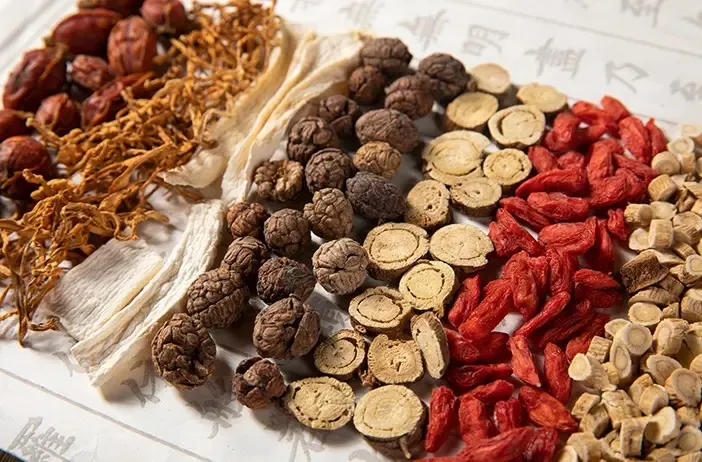
Chinese herbal medicine

Chinese herbal medicine prepared for hair loss pattern care at PULSE TCM

Pattern-matched

Custom prescriptions clear heat, move stasis, build Qi and Blood, or nourish Liver and Kidney after pulse and tongue. Herbs are not a fixed hair pack.

Chinese herbal medicine

04 · Clinic methods

Plum blossom, timeline, and limits

Scalp acupuncture and plum blossom needling often work alongside herbs. Expectations stay honest: follicles need months, and scarred follicles may not regrow.

What sits in a typical hair-loss plan
Topic What to expect Clinical note
Plum blossom needleSeven-star dermal tapping on the scalp. Light surface taps for micro-stimulation, not retained needles. Used to wake dormant follicles, ease scalp tension, and improve local flow.
TimelineFollicle cycle, not overnight fill. Less active fall often within 4–8 weeks; finer new hair after about 3–6 months of consistent care. Early sessions work on the pattern before you see density change.
Minoxidil or FinasterideWestern medicines beside TCM. Often compatible when the physician knows every medicine you take. Western drugs target DHT or follicle stimulation; TCM works on Qi and Blood patterns.
Scarring alopeciaWhen the follicle is permanently closed. Most useful while follicles are active but weak. Scarred spots may not regrow; surrounding hair can still be strengthened.
ComfortHow scalp needling usually feels. Fine needles; light tingling or heavy Qi sensation is common. Many people find sessions settling because stress eases with the plan.

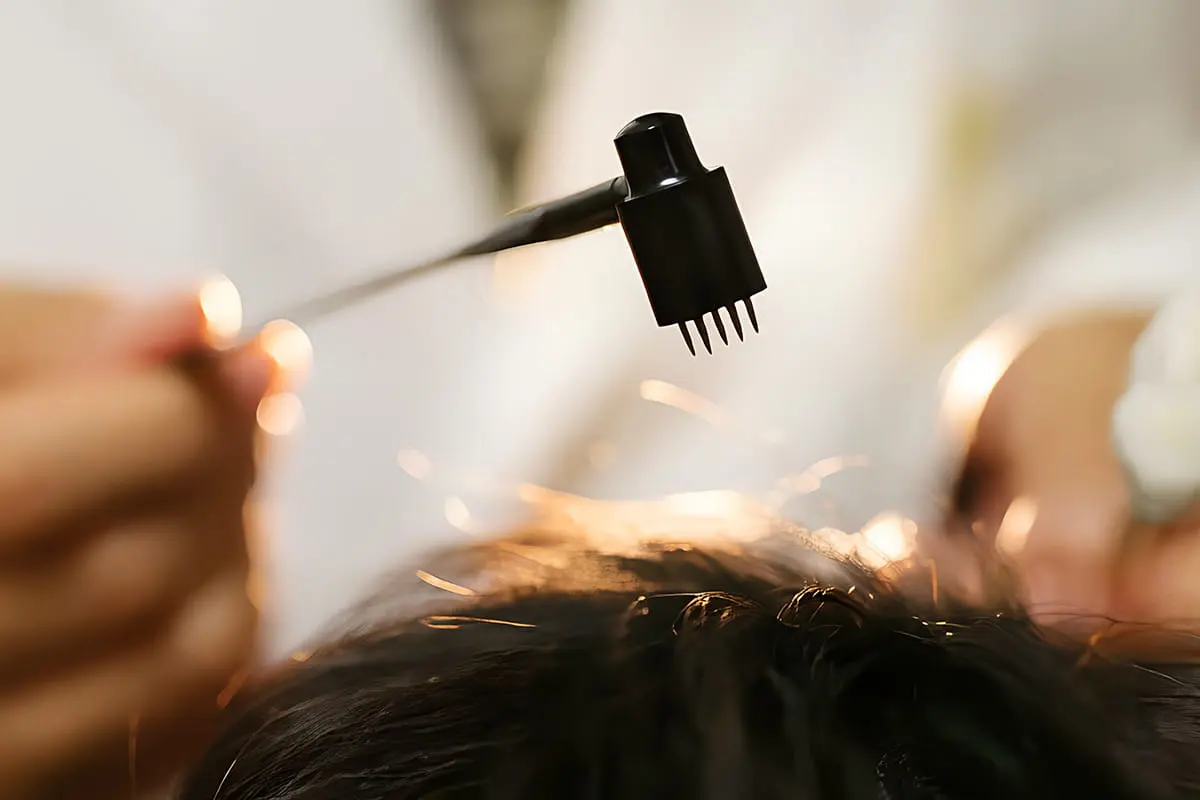
Plum blossom needling

Plum blossom needling for scalp hair loss care at PULSE TCM

Seven-star · scalp

Light dermal tapping wakes dormant follicles and eases scalp tension. It often sits with retained scalp acupuncture in the same plan.

Hair Loss programme

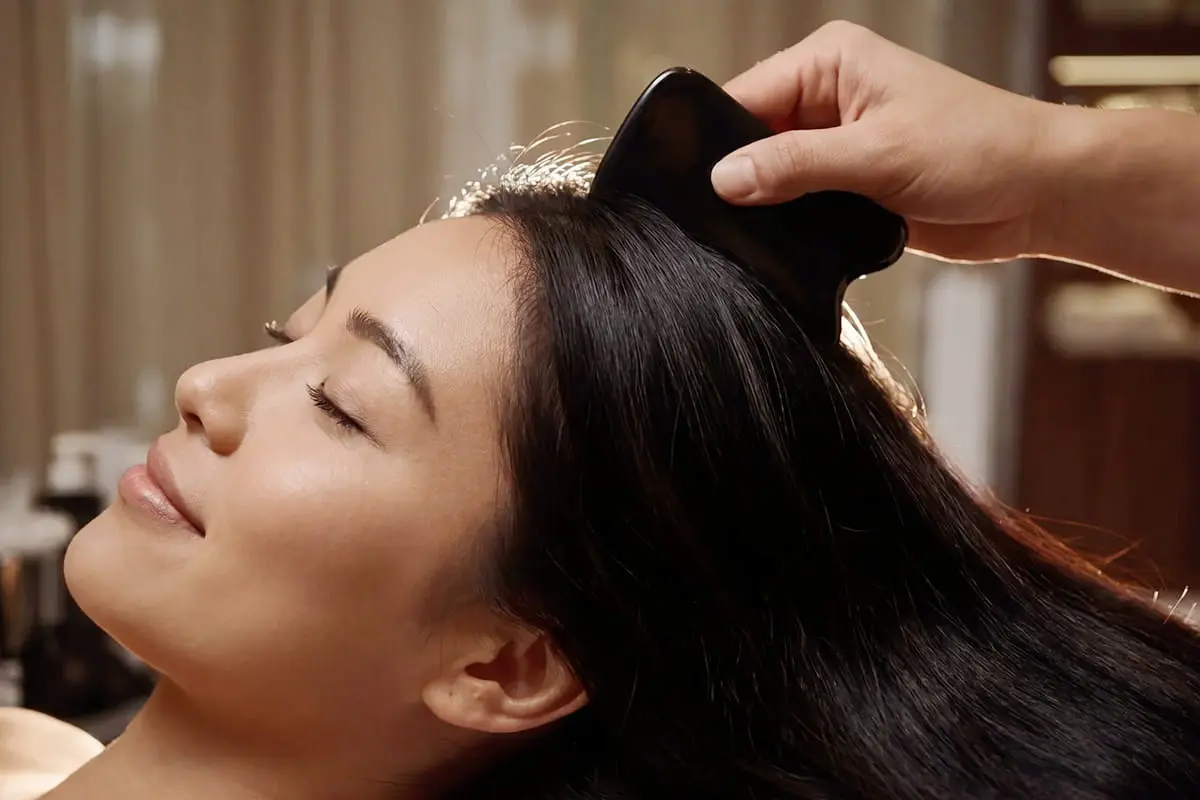
Scalp gua sha

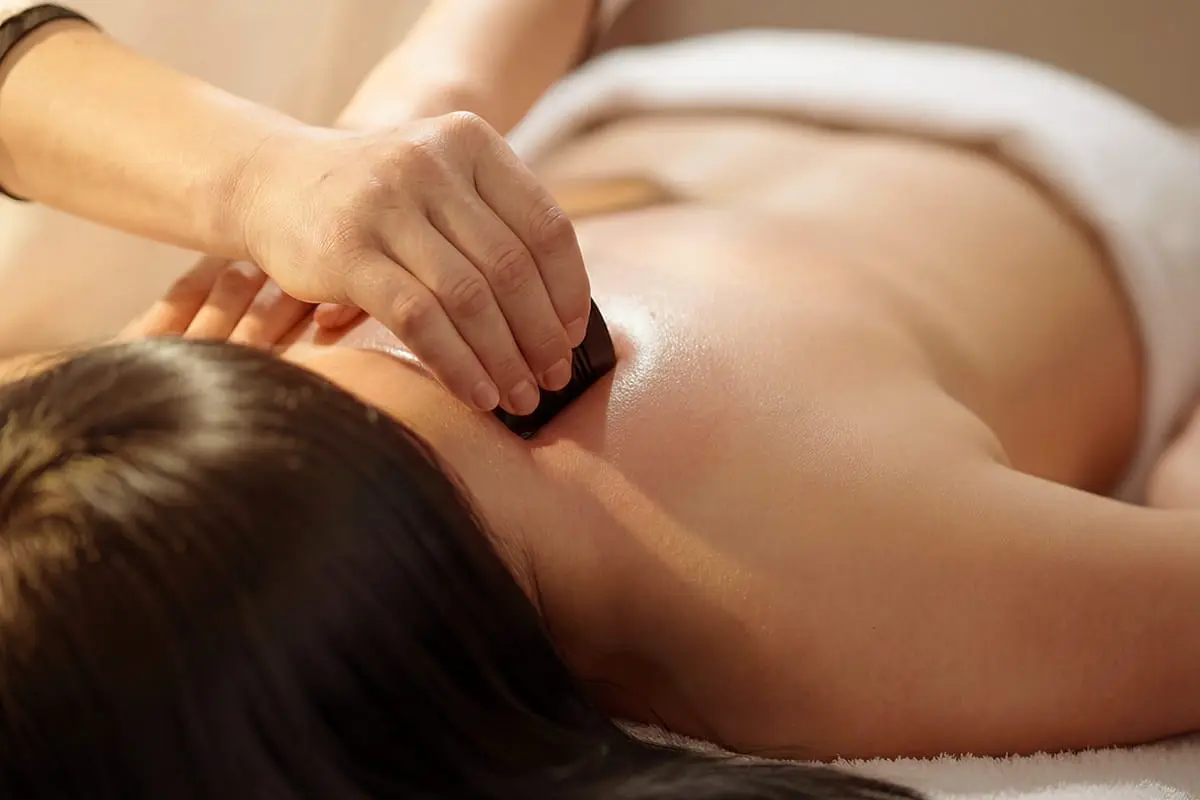
Scalp gua sha for hair loss care at PULSE TCM

Circulation

Gentle scraping may sit in a hair-loss plan when the physician wants to move stagnation and open local flow around the follicles.

Gua sha at PULSE

Explore the Hair Loss programme

If thinning, postpartum fall, or an itchy oily scalp has lasted months, a physician can name the pattern and decide whether scalp acupuncture, plum blossom needling, gua sha, and herbs belong in your plan.

05 · Scalp and food

Damp-Heat scalp and kitchen cautions

When Damp-Heat sits on the scalp, settling oil and itch often comes before a stronger focus on density. Food habits support that plan; they do not replace a consult.

When to seek medical review

Sudden total hair loss, infectious scalp disease, or clear scarring alopecia needs medical assessment. Tell your TCM physician about Minoxidil, Finasteride, or other medicines before herbs are prescribed.

Reducing damp-heat foods (very oily, spicy, or sugary items) may help when oil and clogged follicles counteract herbal care. Hair health also links to the Liver and Kidney systems in TCM.

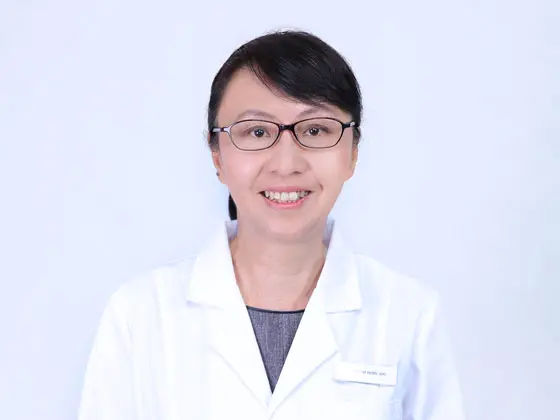
Dr Sim Beng Joo

Clinically reviewed

Reviewed by Sim Beng Joo

Advisor (Science & Strategy) / Consultant Physician · TCMPB T1303003A

MOH-licensed TCM physician and biomedical scientist, with clinical work in digestion, pain, sleep or fatigue, and constitution patterns that show as scalp and follicle load.

View full profile

Educational information based on clinical experience and TCM principles. Not a substitute for personalised consultation, medical care, or urgent attention. Speak with your physician before starting herbs, scalp needling, or new self-care in pregnancy or with a chronic condition. Seek medical review for sudden total hair loss, infectious scalp disease, or scarring alopecia. TCM complements dermatology and does not replace it.

FAQs

Hair loss questions

Common questions on timeline, Minoxidil or Finasteride, plum blossom needling, scarring alopecia, food, scalp itch, and comfort.

How long does it take to see new hair growth with TCM treatments?

Acupuncture and herbs begin working on the pattern from early sessions. Visible regrowth still follows the natural follicle cycle. Many people notice less active hair fall within about 4 to 8 weeks, with finer “baby” hair often appearing after 3 to 6 months of consistent care.

Can I undergo TCM hair loss treatments while using Minoxidil or Finasteride?

Yes. TCM can often sit beside Western hair medications. Those drugs focus on DHT blocking or follicle stimulation; TCM works on Qi and Blood patterns that may limit how well the scalp responds. Tell your TCM physician every medicine you take so herbs can be matched safely.

What is the “Plum Blossom Needle” and how does it help hair loss?

The plum blossom (or seven-star) needle is a TCM tool for dermal tapping. Unlike standard needles that stay in place, it lightly taps the scalp surface for micro-stimulation. Physicians use it to wake dormant follicles, ease scalp tension, and improve local circulation so nutrients reach the roots.

Does TCM work for permanent hair loss or scarring alopecia?

TCM is most useful when follicles are still active but weak, such as thinning hair, postpartum fall, or alopecia areata. Where a follicle has fully scarred, regrowth in that spot may not be possible. Care can still strengthen surrounding hair and slow further recession.

Are there specific foods I should avoid to help my TCM hair treatment work better?

Hair health in TCM links closely to the Liver and Kidney systems. Reducing damp-heat foods (very oily, spicy, or sugary items) may help when an oily scalp and clogged follicles sit with the pattern. Herbs and needling still need a physician match; food alone is not the plan.

Can TCM help with an oily or itchy scalp that leads to hair fall?

Yes. An oily, itchy scalp often reads as Damp-Heat. Alongside acupuncture, physicians may prescribe herbs such as Coptis chinensis (Huang Lian / 黄连) to clear internal heat. Settling the scalp environment often comes before a stronger focus on regrowth.

Is TCM hair loss treatment painful?

Scalp acupuncture is usually well tolerated. Needles are much finer than vaccination needles. Many people feel a light tingling or heavy sensation that marks Qi moving. Sessions can feel settling because they also ease systemic stress, a common driver of hair fall.

References

Selected sources

  1. National Center for Complementary and Integrative Health. Traditional Chinese medicine: What you need to know. 2019. https://www.nccih.nih.gov/health/traditional-chinese-medicine-what-you-need-to-know/
  2. World Health Organization. Traditional, complementary and integrative medicine. https://www.who.int/health-topics/traditional-complementary-and-integrative-medicine
  3. Liang Y, Yuan J, Shazada NE, Jiang J, Wu J. Traditional Chinese Medicine Treatment for Androgenetic Alopecia Based on Animal Experiments: A Systematic Review and Meta-Analysis. Evid Based Complement Alternat Med. 2022;2022:2588608. https://doi.org/10.1155/2022/2588608
  4. Ministry of Health Singapore. TCM practitioners (Healthcare Professional Portal). https://hpp.moh.gov.sg/tcm-practitioners/
  5. Li F, Zhang L, Li Y, Zheng X. Anwuligan promotes the transition of the hair follicle cycle via the Wnt/β-catenin signaling pathway. Front Pharmacol. 2025;16:1704083. https://doi.org/10.3389/fphar.2025.1704083
  6. Original article author: Physician Joyce Chee.

Next step

Ready for a hair-loss pattern read?

Bring how long the fall or thinning has lasted, scalp itch or oiliness, medicines you already use, and any dermatology notes. We will name the pattern in plain language and decide what belongs in your plan.

Hours
Most clinics daily 11:00 AM – 8:00 PM
Care
Physician-led consultation