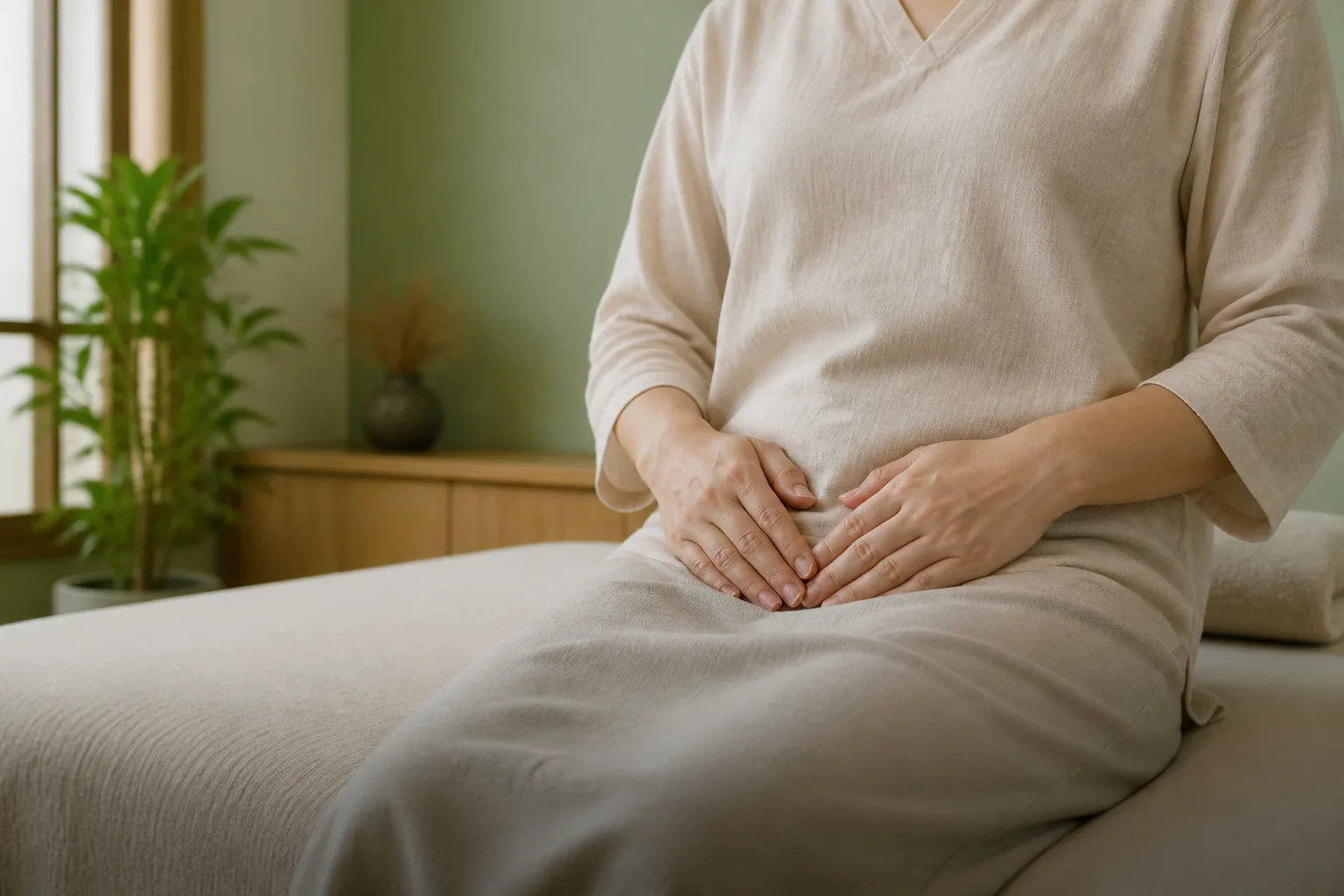
Hands resting gently on the lower abdomen during postpartum pelvic recovery care

Insights & Wellness · Women's Health

Postpartum Pelvic Pain: How TCM Can Help

When PGP, gait change, or sitting pain linger after birth, name the joint load and the TCM lead (Qi-Blood, stasis, Kidney, or cold-damp), then match clinic care beside your gynae or physio plan.

In brief

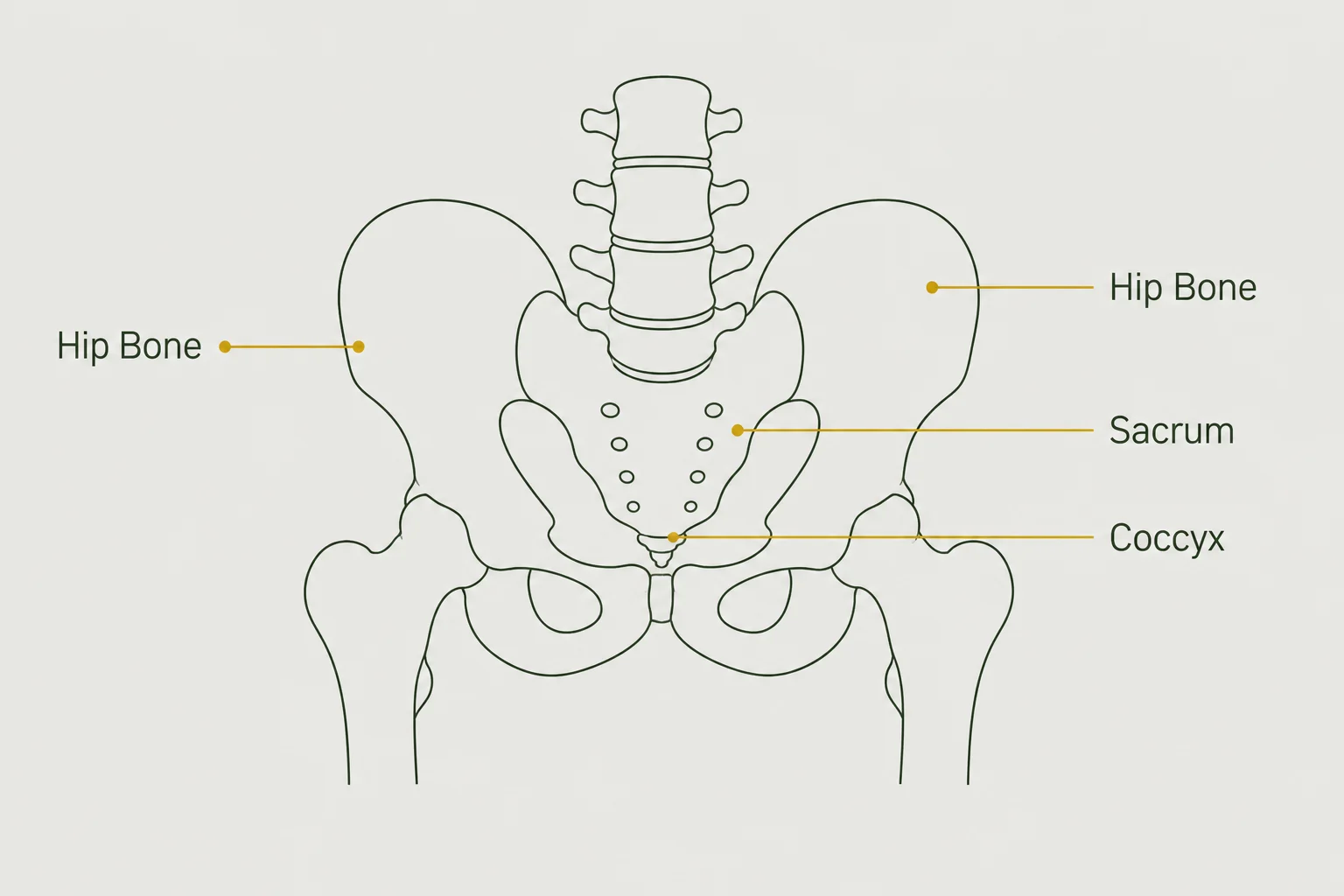
Postpartum pelvic girdle pain (PGP) often starts when pregnancy stretches the ligaments between the sacrum, coccyx, and hip bones so the pelvis can open. After birth, unequal ligament shortening, scar tissue, or a pubic symphysis that does not settle can leave pain, awkward gait, or sitting discomfort. TCM often weighs Qi-Blood deficiency, Blood stasis, Kidney deficiency, and cold-damp, then may use acupuncture, tuina, and bone setting beside your gynae or physio plan.

Sage-line pelvic girdle diagram on mist labelling Hip Bone, Sacrum, and Coccyx with gold callouts

01 · Pelvic girdle

What is postpartum pelvic girdle pain?

Hip Bone · Sacrum · Coccyx · PGP

The pelvic skeleton is the sacrum and coccyx at the back and two hip bones that form an arch and meet at the pubic area. In pregnancy, ligaments between these bones stretch so the pelvis can open for the growing uterus.

That stretch often shows as lower back or pelvic girdle pain (PGP). Pain can be severe for some mothers, and many everyday pain medicines are limited in pregnancy. Shifting pelvic bones may also load nearby nerves, and the growing uterus can press on the bladder or colon, so constipation and urinary incontinence can worsen from the second or third trimester.

These bowel and bladder signs often lighten after birth. For some women they remain milder but present, or return later in life. The pelvic story does not always end when confinement ends.
Safety

Signs that need urgent care

These sit outside a typical postpartum PGP picture. Seek medical assessment the same day; TCM waits until you are cleared.

1. Sudden severe pain

Sudden severe pelvic or low-back pain, especially with fever or feeling unwell, needs urgent conventional assessment first.

2. Heavy bleeding

Heavy postnatal bleeding, clotting that worries you, or bleeding that worsens after it had settled needs obstetric review.

3. New leg weakness

New or increasing leg weakness with pelvic or back pain can signal nerve compression that needs medical review.

4. Bowel or bladder change

New bowel or bladder change after birth is an urgent-care boundary, not a self-care or TCM-first picture.

02 · After birth

Why pelvic issues can linger

After delivery, ligaments try to shorten toward a pre-pregnancy position. When shortening is uneven, or when scar tissue, delivery mechanics, or a pubic joint that does not settle stay in the picture, pain and function can linger.

Mechanisms that may keep postpartum pelvic issues going
Mechanism What may follow
Scar tissue hypothesisMechanical stress and nerve compression in pregnancy. Some clinicians hypothesise that stress and compression encourage scar tissue in the pelvic region. Scar tissue is less flexible than normal soft tissue and may disrupt smooth bladder or colon contractions, so constipation or incontinence can last longer.
Unequal ligament shorteningLigaments do not always rebound evenly. After birth, individual ligaments shorten to reposition the pelvic bones. Overstretched segments may lag, so the postpartum pelvic configuration can stay more irregular than before pregnancy and load the low back unevenly.
Epidural and spinal loadOne possible factor among several. Some mothers report lingering low-back ache after labour with epidural analgesia. Nerve irritation from a spinal needle is one possible contributor, not an automatic outcome for everyone who had an epidural. Combined with irregular pelvic configuration, it can add to chronic backache of varying severity.
Symphysis pubis that does not settleRapid birth, forceps, or a larger baby. The pubic joint separates to a degree in childbirth. When it fails to return toward its pre-pregnancy state, pelvic floor pain, outward-pointing feet, awkward gait, and sitting discomfort can follow. Body-image strain is common when walking or sitting still feels different.
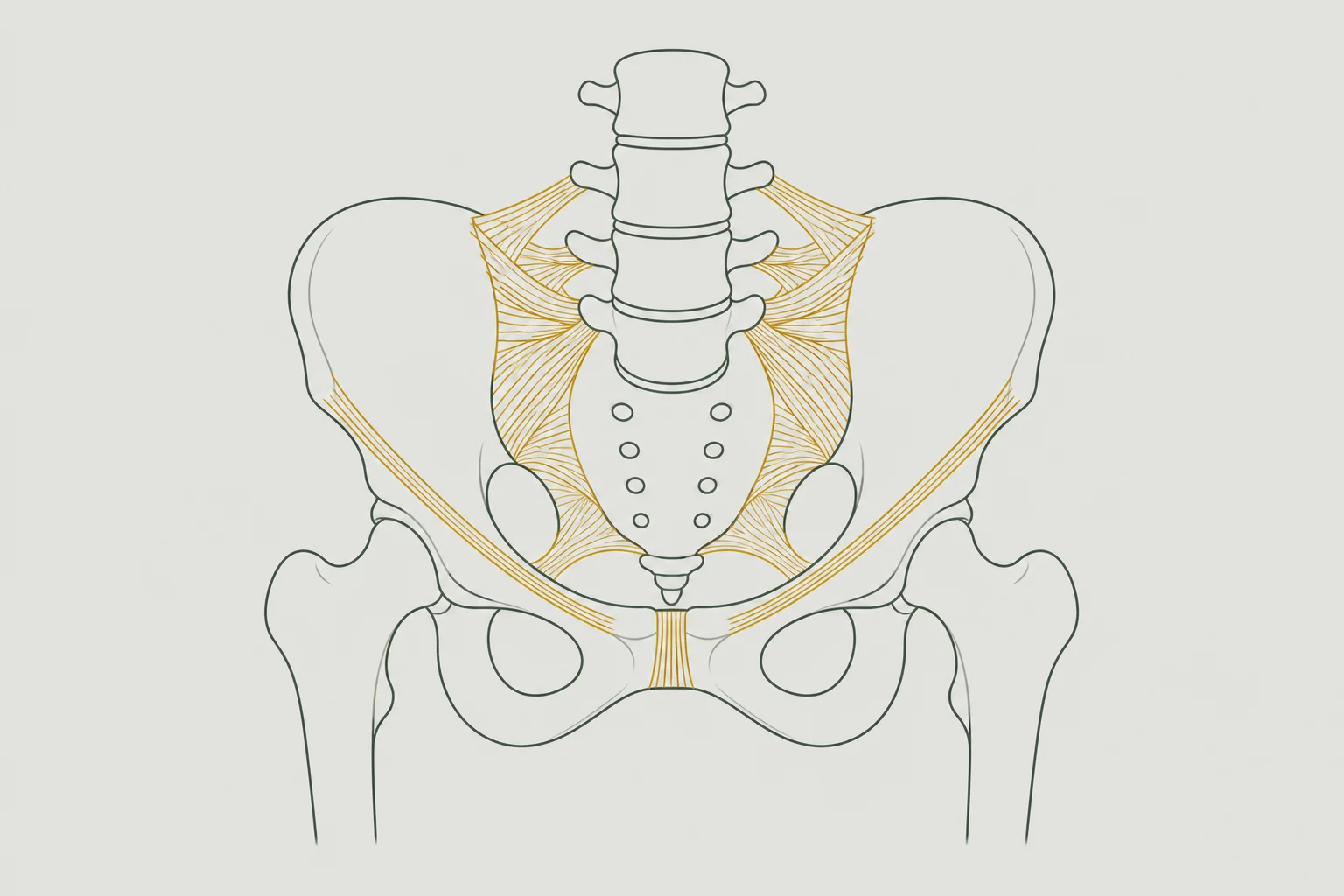
Sage-line pelvic girdle diagram with gold ligament bands at the sacroiliac joints, pubic front, and hip support

02a · Ligament map

Pelvic ligaments under load

Sacroiliac · pubic · hip support · gold = ligaments

Read the diagram left to right: sage outlines are bone; the gold bands are ligaments that hold the girdle while it opens in pregnancy and tries to rebound afterward. Uneven shortening after birth is one reason walking or sitting can still feel wrong.

  • Sacroiliac bands: gold fibres from the sacrum into each hip bone. Stretch here often reads as one-sided low-back or buttock ache when you stand or turn in bed.
  • Pubic and front support: fibres toward the pubic join. Load here can sit with front pelvic ache, especially when rising from a chair or rolling over.
  • Hip and lower fan: bands toward the upper femur. Tightness here can change how the pelvis sits over the legs and tip gait outward.
How to read the ligament diagram clinically
What the map shows What mothers often feel
Sacroiliac ligamentsBack of the girdle. One-sided sacral or buttock pain that worsens with standing, climbing stairs, or turning in bed.
Pubic and front fibresFront midline support. Front pelvic ache when rising, separating the legs, or rolling; sitting can feel unstable.
Hip-support fanSide and lower pelvis. Hip or groin tightness that changes stride length or makes the feet point outward.
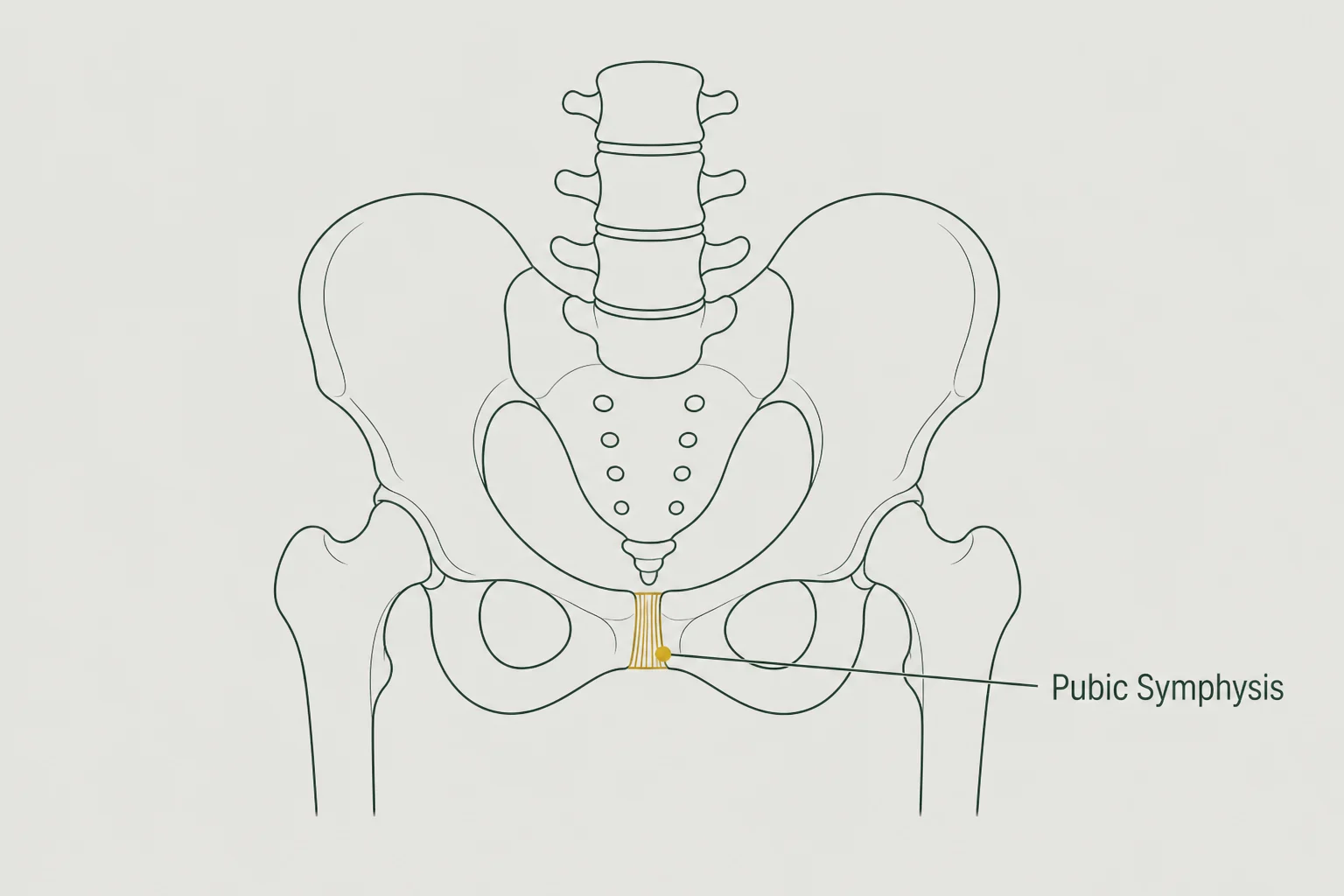
Sage-line pelvic diagram on mist with a gold callout labelled Pubic Symphysis at the front midline

02b · Pubic joint map

The symphysis pubis

Pubic Symphysis · pelvic floor · gold callout

The gold callout marks the Pubic Symphysis, the midline joint where the two pubic bones meet. That joint opens in labour. When it does not settle toward its pre-pregnancy state, the front of the pelvis can stay tender and the feet or gait can change.

  • Find the callout: the gold dot and Pubic Symphysis label sit on the front midline join, not on the sacrum at the back.
  • Why labour opens it: rapid birth, forceps, or a larger baby can leave the joint wider or more irritable than before pregnancy.
  • What travels with it: pelvic floor pain, outward-pointing feet, awkward gait, or sitting that will not settle comfortably.
Symphysis pubis: map to everyday signs
On the diagram In daily life
Pubic SymphysisGold callout at the front midline. Front pelvic or pubic ache when standing on one leg, climbing stairs, or getting out of a car.
Pelvic floor under the joinSoft tissue below the bones. Sitting discomfort, a sense of heaviness, or pain that worsens with prolonged sitting.
Legs and gaitHow the girdle sits over the femurs. Outward-pointing feet or a wider, cautious walk while the joint is still irritable.

Singapore context

Confinement ends; pelvic recovery may continue

Cultural confinement often lasts about a month, while WHO frames the wider postnatal window as the first six weeks. PGP, gait change, or sitting pain can outlast both. Pelvic-floor physiotherapy and TCM often sit side by side once your gynae has cleared you.

  • Timing mismatch: early confinement recovery can feel underway before ligament and joint load settle.
  • Co-care: pelvic-floor physio addresses muscle and function; TCM may add acupuncture, tuina, or bone setting for pattern and soft-tissue load.
  • Cold load: long air-con hours with a bare midriff or iced drinks can aggravate cold and stagnation after birth when Qi and Blood are already thin.

TCM map

Four patterns behind postpartum pelvic pain

Western labels name the joint and ligament load. TCM also asks whether Qi and Blood are rebuilding, stuck, or cold-damp after birth. Physicians often weigh these leads after pulse and tongue.

1. Qi-Blood deficiency · 气血亏虚

Delivery loss and night feeds leave Qi and Blood thinner. Pelvic ache may feel dull and tired, worse with standing or carrying, and sit with pale colour, dizziness, or low energy. Rebuilding comes before forceful manipulation.

2. Blood stasis · 血瘀

Fixed, stabbing, or night-worse pain around the low abdomen, sacrum, or pubic joint can read as Blood that is not moving freely after labour trauma or a joint that will not settle. Moving Blood sits beside soft-tissue release when the pattern fits.

3. Kidney deficiency · 肾虚

The Kidney classically mansions the low back. Pregnancy and birth strain that store, so dull sacral ache with weak knees, fatigue, or feeling cold often travels with the pelvic picture. Companion signs help separate this from pure ligament stretch.

4. Cold-damp in the channels · 寒湿

Ache that stiffens in air-con, rain, or after iced drinks, with heaviness in the hips or sacrum, can point to cold-damp settling in the channels after birth. Warmth and movement usually ease it more than further cold exposure.

03 · Clinic care

How TCM can help postpartum pelvic issues

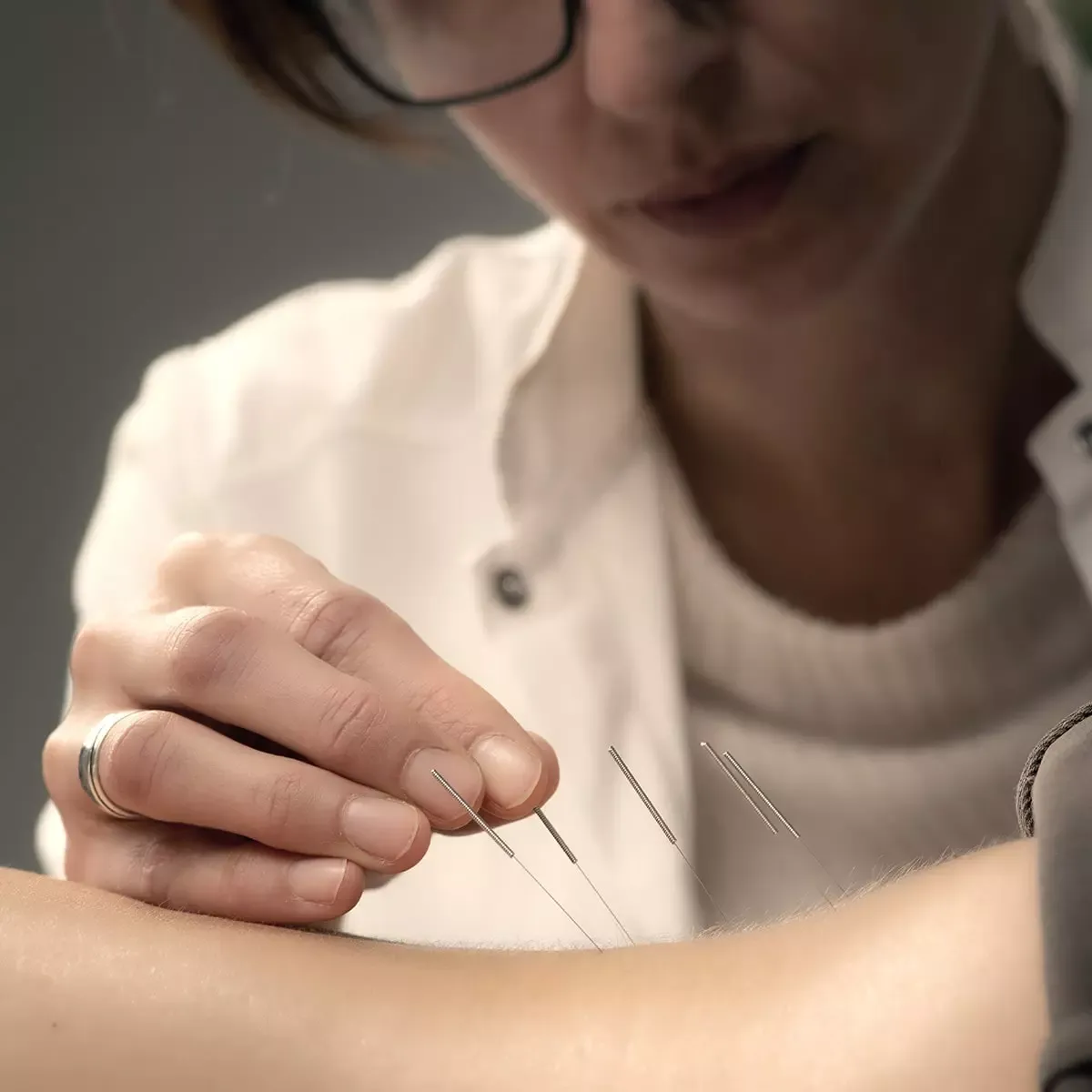
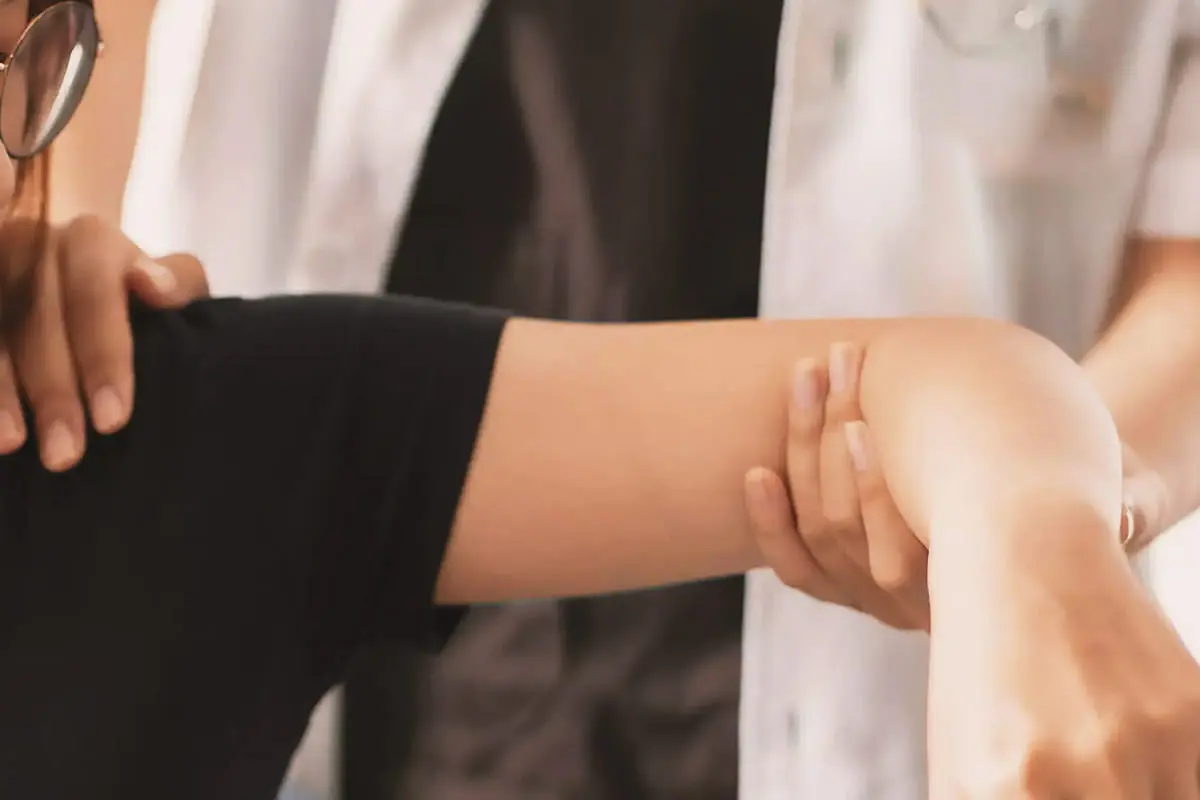
After naming the pattern, physicians may combine acupuncture, tuina, and bone setting. Care usually runs over several sessions with guided self-training. Comfort often improves stepwise; results vary and are not guaranteed.

1. Trigger points and muscle release

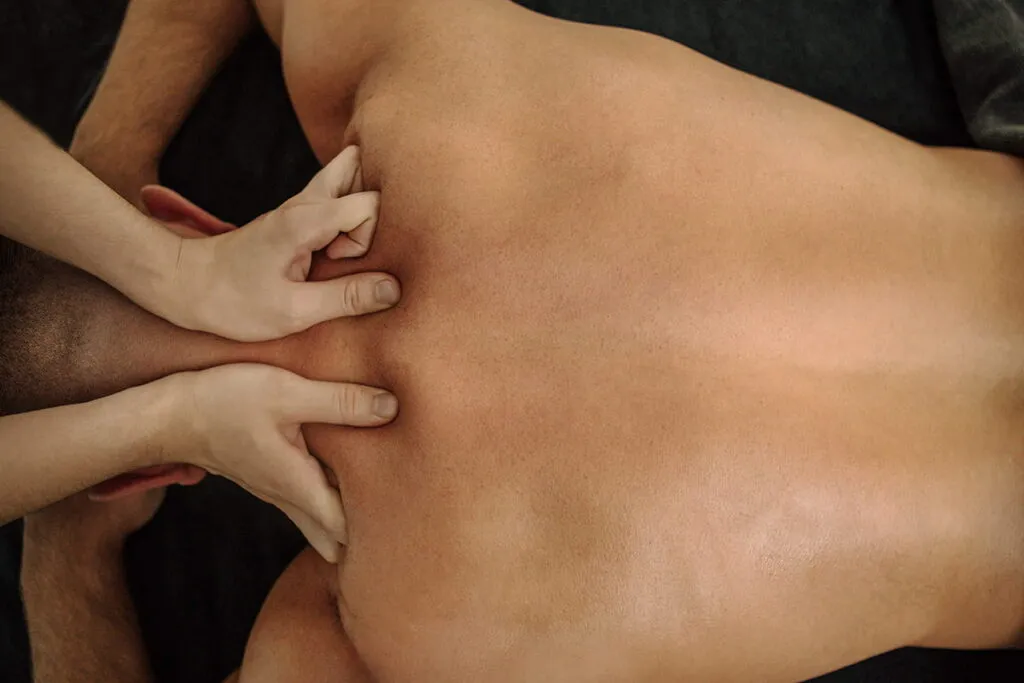
Tuina and needling can target trigger points linked with pelvic pain, helping release tight muscles around the girdle so walking and sitting load the joints more evenly.

2. Pain relief through acupuncture

Acupuncture is used to ease discomfort and may support the body’s own pain-modulating pathways. It sits beside, not instead of, gynae or physiotherapy advice when those teams are already involved.

3. Realignment after soft-tissue work

Once muscles around the pelvis loosen, bone setting may support realignment when the postpartum configuration stays irregular. The aim is steadier gait and sitting comfort under physician guidance.

Hands resting gently on the lower abdomen during postpartum pelvic recovery care

Next step

Ready for a postpartum pelvic consult?

Bring delivery notes, where pain sits when you walk or sit, and any gynae or physio findings. We will name the pattern in plain language and decide what belongs in your plan.

Dr Sim Beng Joo

Clinically reviewed

Reviewed by Sim Beng Joo

Advisor (Science & Strategy) / Consultant Physician · TCMPB T1303003A

MOH-licensed TCM physician and biomedical scientist, with clinical work in digestion, pain, sleep or fatigue, and women's health patterns that show as postpartum pelvic and recovery concerns.

View full profile

Educational information based on clinical experience and TCM principles. Not a substitute for personalised consultation, midwifery, obstetric, physiotherapy, or urgent medical care. Seek medical review for sudden severe pain, fever, heavy bleeding, new leg weakness, or bowel or bladder change after birth. TCM complements, and does not replace, Western postnatal care.

FAQs

Postpartum pelvic pain questions

PGP, TCM patterns, why pain can linger, epidural framing, and when to book beside gynae or physio care.

What is postpartum pelvic girdle pain (PGP)?

PGP is pain linked to the pelvic skeleton: the sacrum and coccyx at the back and the two hip bones that meet at the pubic area. In pregnancy, ligaments between these bones stretch so the pelvis can open for the growing uterus. Many women feel this as lower back or pelvic pain during pregnancy, and some still feel it after birth.

Why can pelvic pain linger after birth?

After delivery, ligaments try to shorten toward a pre-pregnancy position, but they do not always shorten evenly. Scar tissue from mechanical stress, an irregular pelvic configuration, or a pubic symphysis that does not fully settle can leave pain, gait change, or sitting discomfort. A physician assesses which mechanism is leading before planning care.

What TCM patterns sit behind postpartum pelvic pain?

Physicians often weigh Qi-Blood deficiency after delivery loss, Blood stasis when pain is fixed or worse at night, Kidney deficiency with dull sacral ache and weak knees, and cold-damp when ache stiffens in air-con or rain. Pattern naming guides whether rebuilding, moving Blood, warming, or soft-tissue release leads the plan.

Can TCM help postpartum incontinence or constipation?

Shifting pelvic bones and uterine pressure in pregnancy can aggravate constipation and urinary incontinence; for some mothers those symptoms lighten but do not fully clear. TCM may support the wider postpartum picture with acupuncture, tuina, and pattern care beside gynae or pelvic floor physiotherapy. It does not replace medical assessment for new or severe bladder or bowel change.

Does an epidural cause chronic backache?

Some mothers report lingering low-back ache after labour with epidural analgesia. Nerve irritation from a spinal needle is one possible factor among several, not an automatic outcome for everyone who had an epidural. Irregular pelvic configuration after birth can also load the low back. Tell your physician your delivery history so the plan matches what you feel.

When should I see a gynae or physio for pelvic pain?

Follow your gynaecologist’s postnatal checks, and seek physiotherapy when pelvic floor, gait, or sitting pain limits daily life. Book TCM when you want acupuncture, tuina, or bone-setting support beside that plan. Seek urgent medical care for sudden severe pain, fever, heavy bleeding, new leg weakness, or bowel or bladder change after birth.

References

Selected sources

  1. National Center for Complementary and Integrative Health. Traditional Chinese medicine: What you need to know. 2019. https://www.nccih.nih.gov/health/traditional-chinese-medicine-what-you-need-to-know/
  2. Ministry of Health Singapore. TCM practitioners (Healthcare Professional Portal). https://hpp.moh.gov.sg/tcm-practitioners/
  3. World Health Organization. Traditional, complementary and integrative medicine. https://www.who.int/health-topics/traditional-complementary-and-integrative-medicine
  4. Original article author: Physician Ardy Quek.

Next step

Ready for a postpartum pelvic pattern read?

Bring delivery notes, where the pain sits when you walk or sit, and any gynae or physio findings. We will name the pattern in plain language and decide what belongs in your plan.

Hours
Most clinics daily 11:00 AM – 8:00 PM
Care
Physician-led consultation