Hands resting gently on the lower abdomen during quiet bloating self-care

Insights · General Health

Beat the bloat

Tight, full, or swollen after meals often means a named pattern, not only a bad dinner. Food stagnation, stress-bound Liver qi, damp-phlegm, and Spleen weakness each call for different food, points, and clinic care.

In brief

Abdominal bloating is gas and fullness, often with burping, wind, or pain. TCM commonly names four pictures: food stagnation after overeating, Liver-Stomach disharmony when stress expands the belly, damp-phlegm retention with sticky stools and humid heaviness, and Spleen qi deficiency with all-day post-meal puffiness. High-FODMAP foods can ferment and add gas in some people. Clinic care may combine acupuncture, acupressure, herbs, and diet shifts. At home, clockwise Mo Fu circles and Zu San Li (ST36) support motility. Skip tummy work in diarrhoea; book if bloating lasts beyond six weeks or limits daily life.

01 · Causes

What commonly fills the belly with gas

Habits · food load · FODMAP

Most people describe bloating as tight, full, uncomfortable, or swollen in the abdomen. Gas in the gut often sits with burping, wind, or pain, and it can change how the belly looks as well as how it feels.

  • Irregular meal timing
  • Overeating or eating too fast
  • Legumes, cruciferous vegetables, garlic, onion, and carbonated drinks
  • Wheat allergy or lactose intolerance
  • Constipation
  • Premenstrual and menstrual weeks (about one to two weeks before and during the cycle)
  • Foods high in FODMAPs

In Singapore, iced drinks, cold salads, and long air-conditioned days often stack cold load on top of irregular meals, which can weaken how the Spleen transforms food and fluids. FODMAP stands for fermentable oligosaccharides, disaccharides, monosaccharides, and polyols: carbohydrates and sugar alcohols that many people digest poorly. When those carbs reach the distal gut, hydrogen-producing bacteria can ferment them. Excess hydrogen links to bloating, wind, constipation, or diarrhoea in sensitive people. A food diary helps name personal triggers; it does not replace a TCM pattern read. Unguided low FODMAP diets carry nutrient and disordered-eating risks; the 3-in-1 IBS Insight covers supervised dietetics with psychology and TCM.
Common foods high in FODMAPs
Group Examples
Fruits Apple, apricot, blackberry, cherry, peach, pear, prune, watermelon
Vegetables Asparagus, broccoli, cauliflower, garlic, mushroom, shallot
Legumes Baked beans, chickpeas, kidney beans, lentils
Grains Wheat, barley, or rye
Dairy Milk from cows, goats, or sheep; yoghurt; ice cream
Sweeteners Sorbitol, mannitol, maltitol, xylitol, high fructose corn syrup
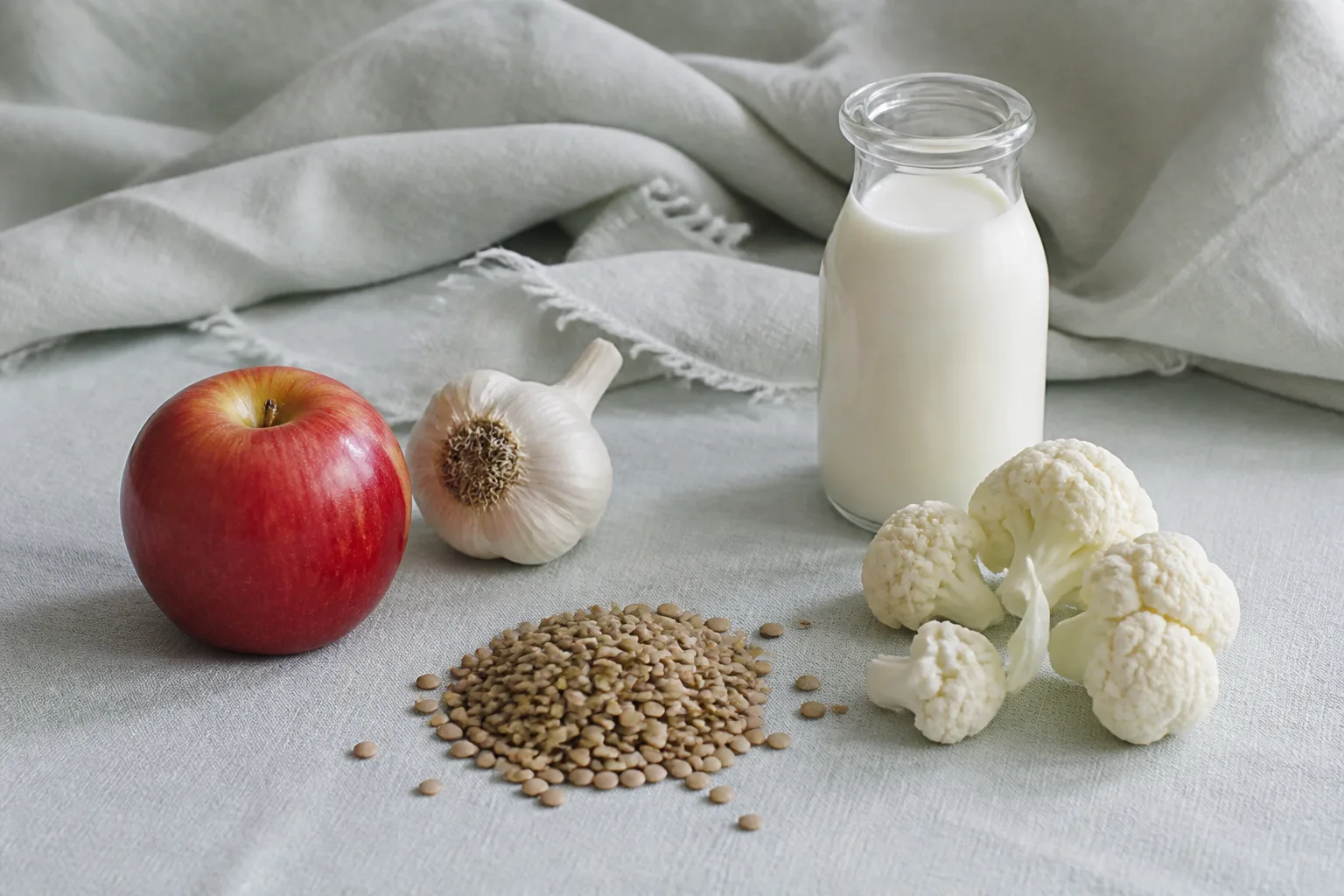
Apple, garlic, beans, and dairy foods that often raise FODMAP bloating load

Food load

High-FODMAP foods as a trigger layer

Apples, garlic, beans, and dairy are common fermentable loads. Personal sensitivity varies; the table keeps the full educational list.

02 · Patterns

Four TCM types of bloating

Pulse, tongue, timing, and accompanying signs decide which picture leads. Mixed patterns are common. This page is the bloating deep dive; the common digestive issues Insight maps indigestion, constipation frames, and IBS beside it.

TCM bloating patterns
Pattern What it feels like May help
Food stagnation (饮食内停)Common after overeating.
  • Nausea, flatulence, bad breath, smelly stools
  • Abdominal distention worse after food
Liver-Stomach disharmony (肝胃不和)Often stress- or mood-linked.
  • Expanding bloating triggered by stress or negative emotion
  • Excessive sighing, mood swings, low appetite, bitter taste, irregular stools
Dampness and phlegm retention (痰湿中阻)Humid heaviness with rich cravings.
  • Abdominal and chest discomfort
  • Oily face or scalp, cravings for fatty or sugary food, aversion to humid weather, sticky stools
Spleen qi deficiency (脾胃虚弱)Weak transform and transport all day.
  • Bloating through the day, especially after meals
  • Easy fatigue, low appetite, morning eye or face puffiness, loose stools

02b · Clinic tells

Tongue and timing clues that separate the four

The table names the picture. These tells help a physician confirm which pattern leads before matching tea, points, or herbs.

1. Food stagnation

Worse right after a large or greasy meal; foul burping or wind; tongue often shows a thick greasy coat. Chen pi with hawthorn suits food that sits heavy.

2. Liver-Stomach disharmony

Belly expands with stress, deadlines, or mood swings; sighing and chest tightness are common; tongue may look redder with dark sides or a dry coat. Soft PC6 work helps when emotion hits the gut.

3. Dampness and phlegm

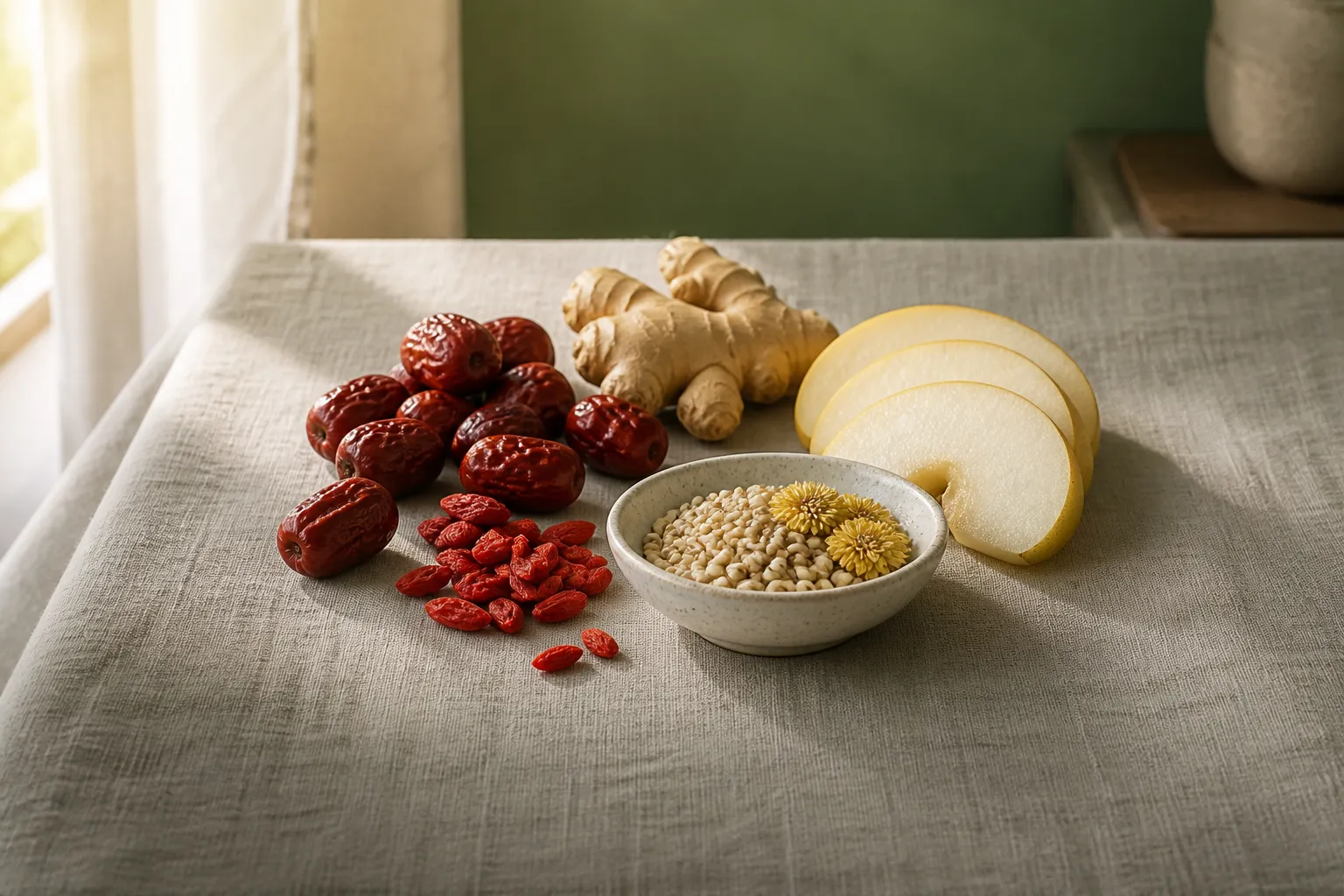
Heaviness worse in humid weather; sticky stools; oily face or scalp; tongue coat often thick and greasy. Ease cold, fried, and sugary load; coix soup suits damp Spleen pictures.

4. Spleen qi deficiency

All-day post-meal puffiness with fatigue and morning facial puffiness; stools tend to loosen; tongue is often plump and pale with teeth marks. ST36 and steady warm meals support a weak transform and transport.

03 · What may help

Home massage for bloating

Gently massage these points at home alongside prescribed care. Soft pressure only.

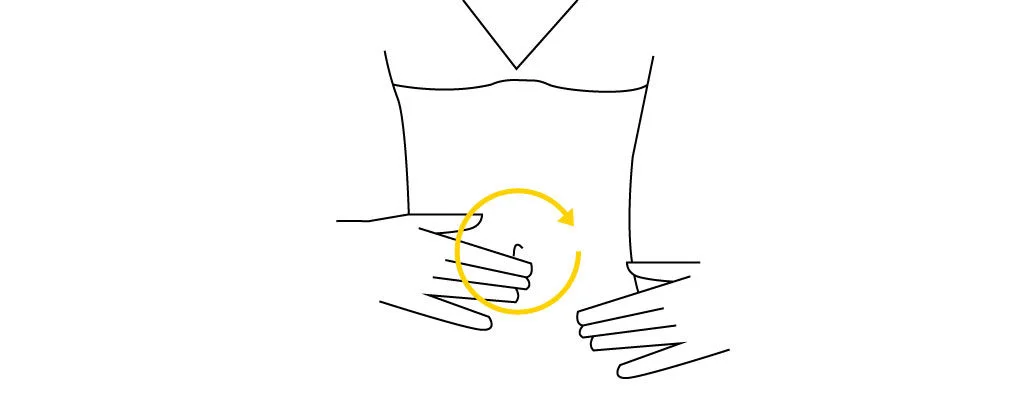
Line diagram of clockwise Mo Fu palm circles around the navel for bloating

Mo Fu · 腹摩

Rub the tummy clockwise 36 times daily

Mo Fu · gut motility

You can do this before sleep or just after waking. Lie on your back. Place one hand above the navel and the other on top. Move both hands together in a light clockwise circle around the belly button about 36 times.

Skip during diarrhoea

Clockwise tummy work promotes intestinal motility. People with diarrhoea should avoid Mo Fu until stools settle.

This habit supports gut motility and circulation and may ease bloating, indigestion, or constipation when the pattern fits.

Zu San Li · 足三里

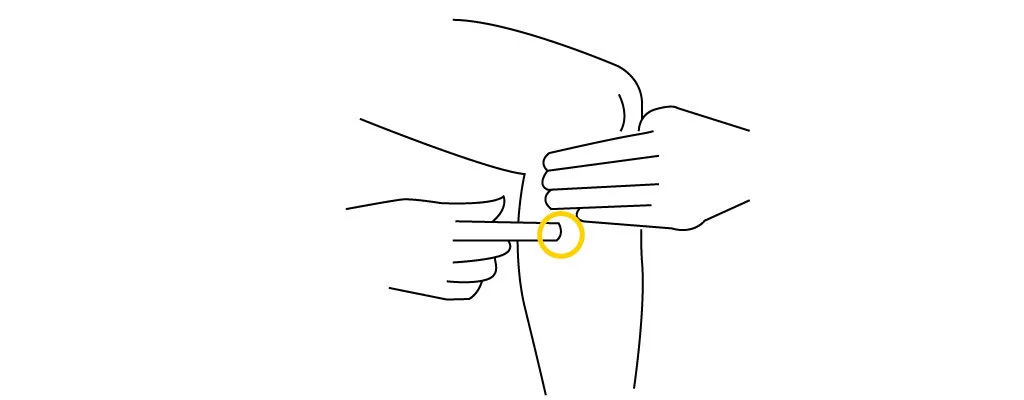
Massage Zu San Li (ST36) on both legs for one minute daily

ST36 · Spleen-Stomach

Also called the point of longevity, ST36 supports gastrointestinal function and Spleen qi. Locate it about three inches, or four finger-widths, down from the dent on the anterolateral edge of the kneecap, one finger-width from the shin bone. Circle each side kindly for about one minute.

Line diagram locating Zu San Li ST36 below the outer kneecap

Related home sets

Fuller press and kitchen support when fullness lingers

When fullness sits with nausea, sluggish stools, or cold drinks, a fuller press set or warm kitchen brew may fit.

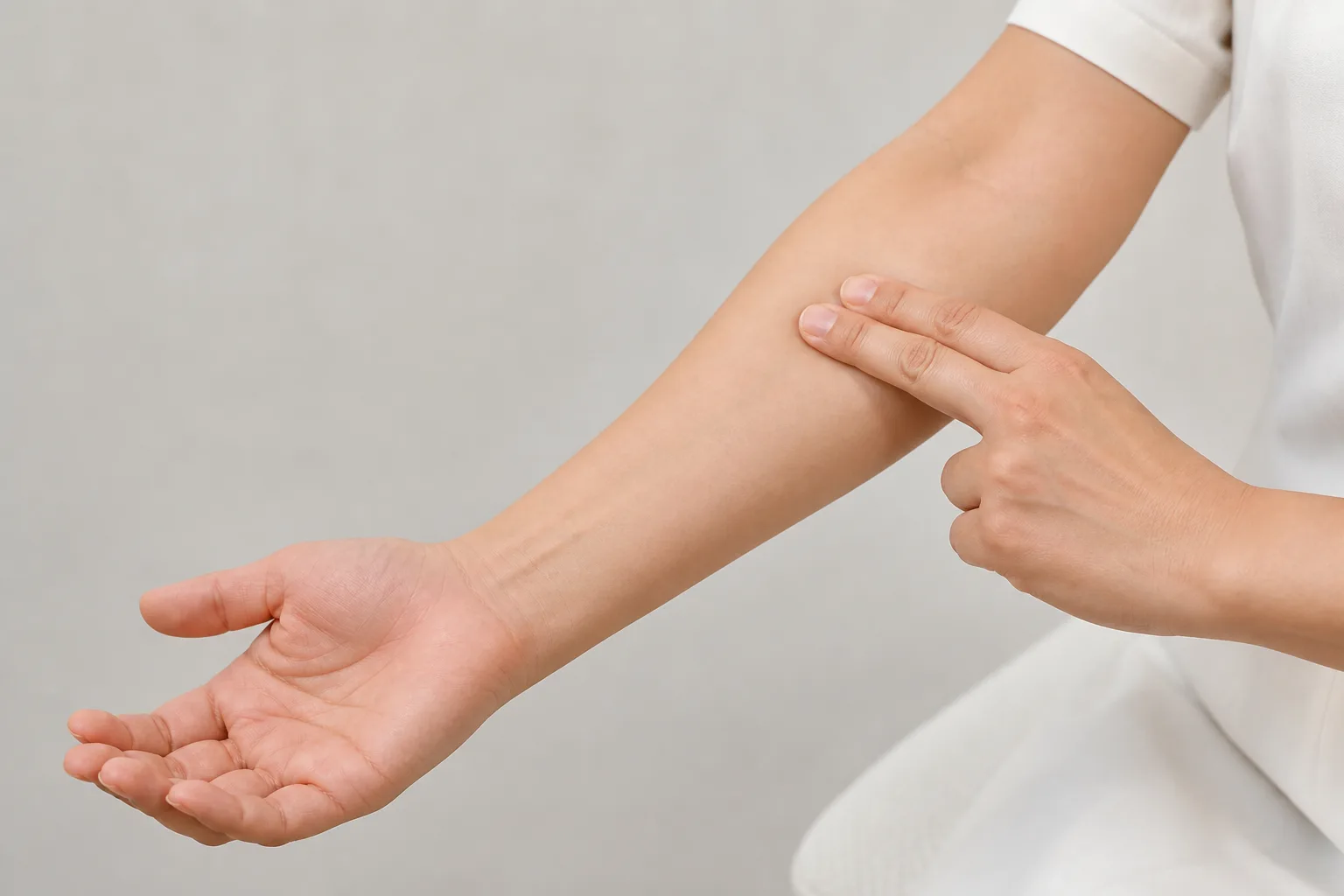
Fingers pressing Nei Guan PC6 on the inner forearm

Acupoint · indigestion

Press PC6, ST36, and CV12

Nei Guan settles nausea and chest tightness. Zu San Li supports Spleen and Stomach. Zhong Wan sits over the stomach centre.

Soft pressure only; skip strong press over pain or a very full stomach.

Press the indigestion set
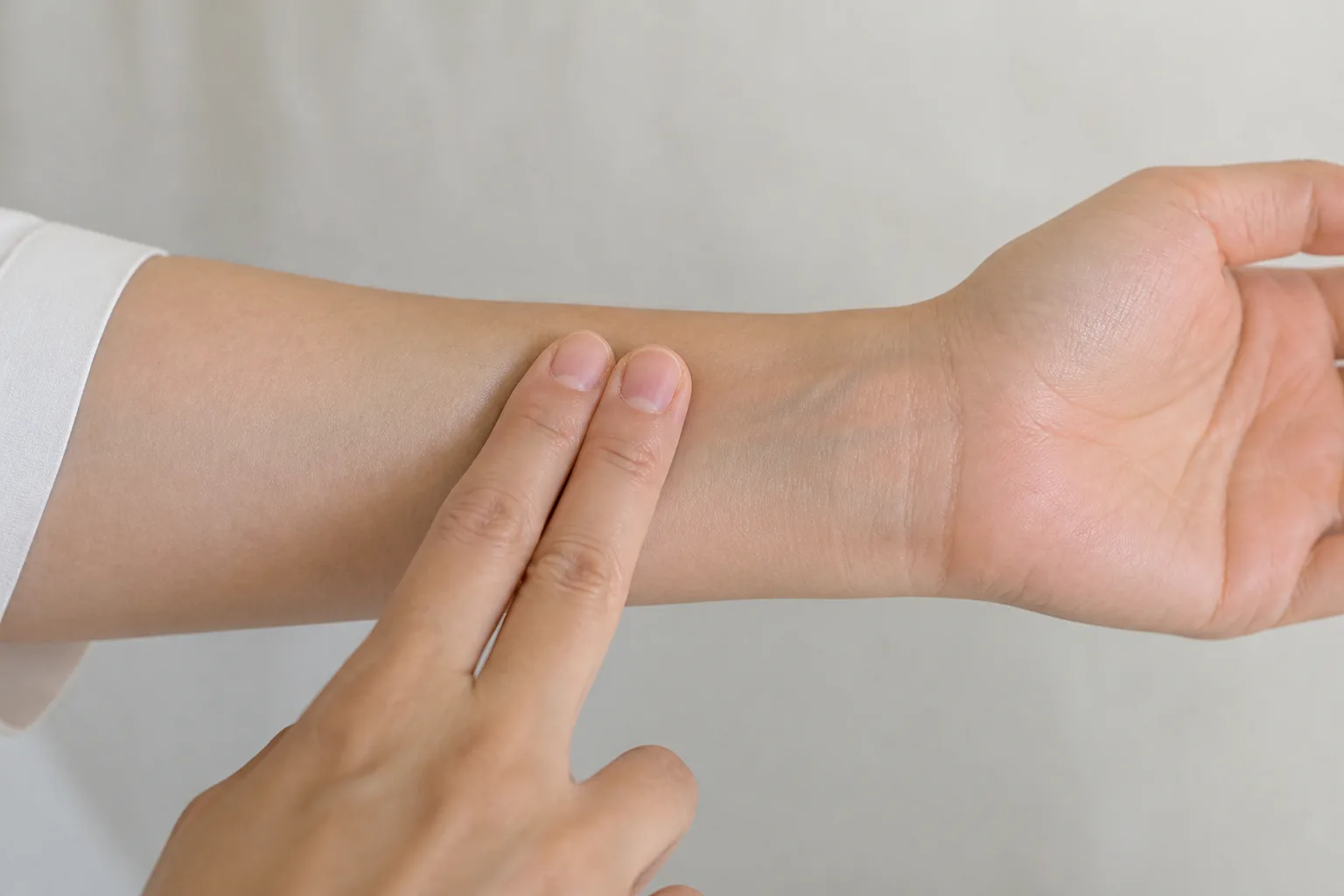
Fingers pressing Zhi Gou SJ6 on the outer forearm

Acupoint · Mo Fu

Press SJ6, ST36, and Mo Fu

Zhi Gou moves the intestines. Zu San Li supports Spleen and Stomach. Mo Fu is the same light clockwise palm circle taught above.

Skip belly work during diarrhoea.

Press the Mo Fu set
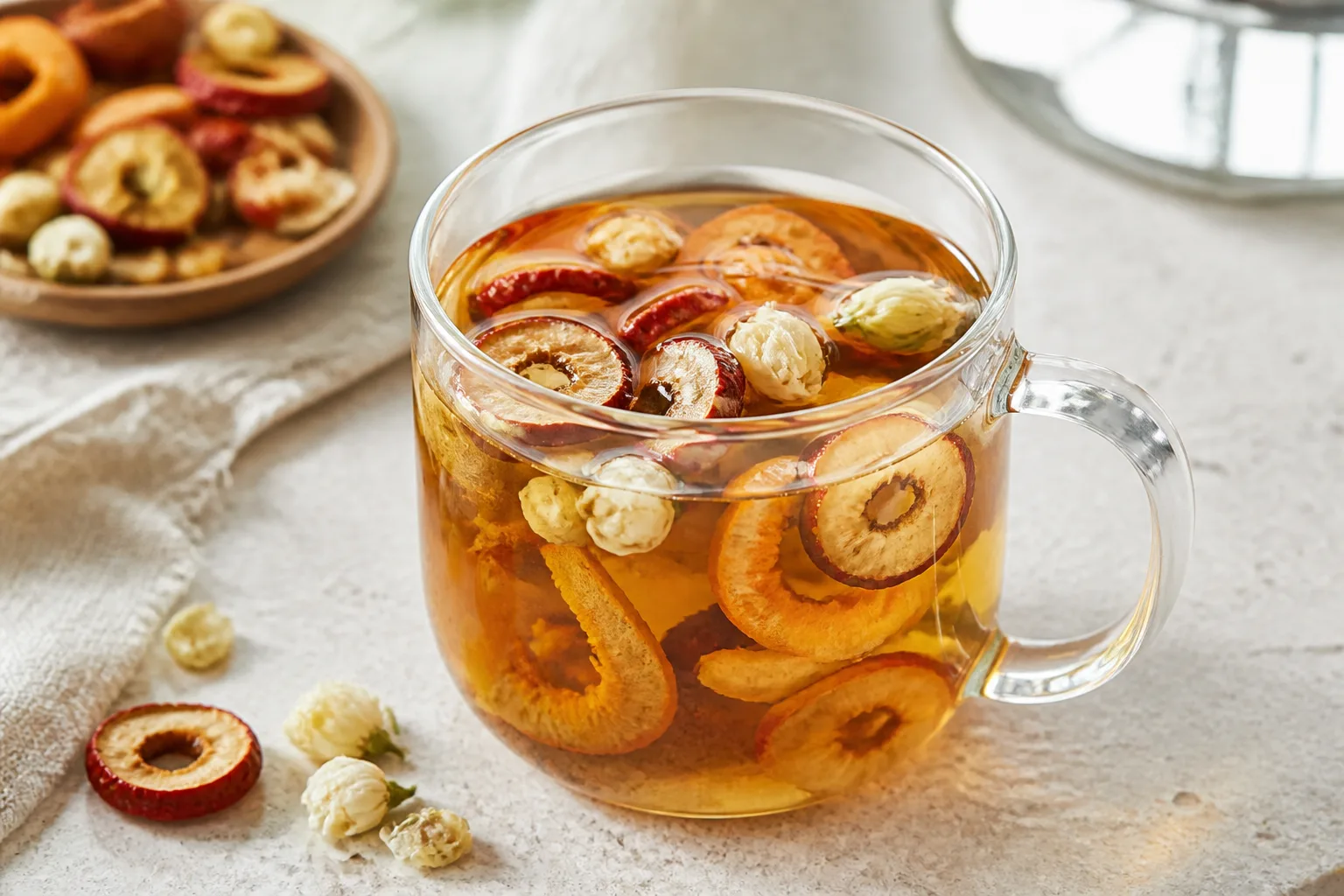
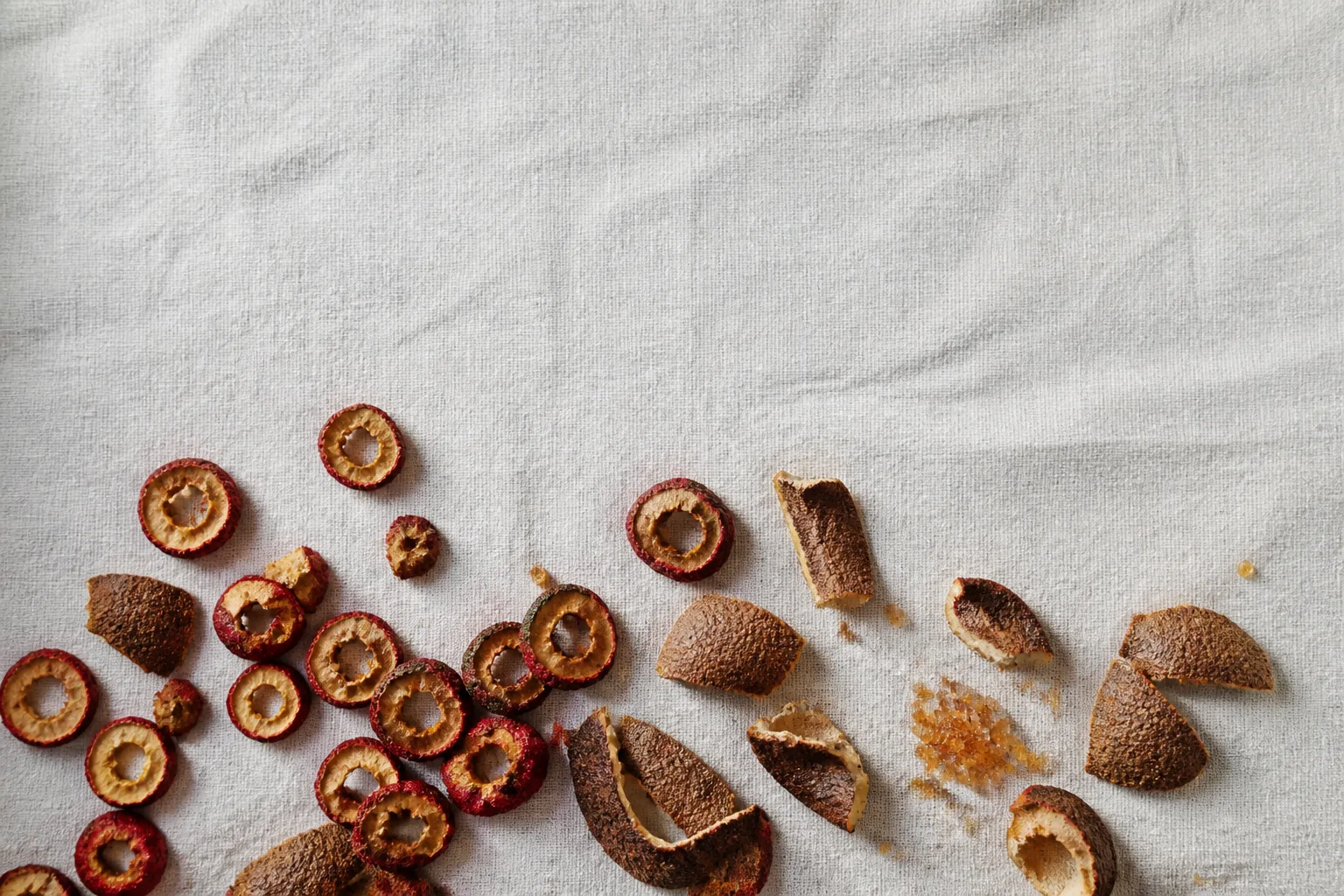
Glass mug of chen pi, hawthorn, and jasmine tea

Tea · food accumulation

Chen pi hawthorn jasmine tea

Dried mandarin peel, hawthorn, jasmine, and a pinch of brown sugar when food sits heavy after a large or irregular meal.

Skip strong daily hawthorn use in pregnancy unless advised.

Make the chen pi tea
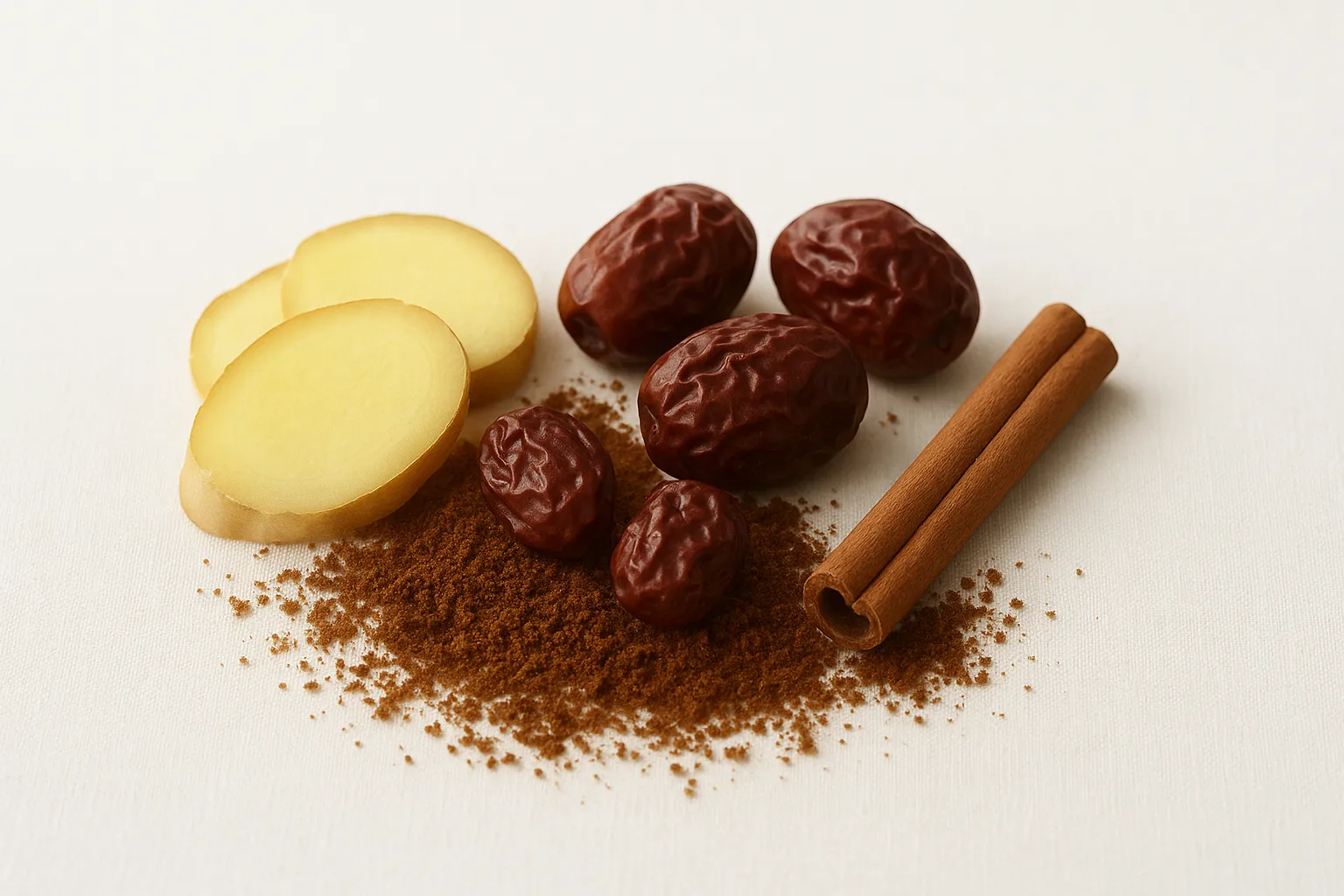
Ginger, red dates, cinnamon, and brown sugar for tea at PULSE TCM

Tea · warm belly

Cinnamon ginger tea

Ginger, cinnamon, and red dates when cold drinks and chilled food leave the belly tight and under-warmed.

Warming brew. Ease off if you already run strongly heaty.

Make the cinnamon ginger tea

04 · Habits

Ways to reduce or settle everyday bloating

Meal rhythm · warmth · movement

Food and stress are external loads. Small, steady habits reduce how often the Spleen and Liver are asked to catch up.

  • Chew thoroughly: about 20 chews per bite.
  • Eat and drink mindfully and slowly.
  • Keep a regular meal time.
  • Know your intolerances: keep a food diary of what triggers bloating.
  • Drink warm water or ginger-cinnamon tea; avoid cold drinks and cold food.
  • Exercise regularly: at least 30 minutes of moderate aerobic exercise at least twice a week to support qi, circulation, and intestinal motility.

When to seek care

Bloating has many possible reasons. In rare cases it can sit with an abdominal mass. If bloating persists and causes discomfort for more than about six weeks, or it significantly affects daily life, seek medical assessment. Seek urgent care for severe pain, persistent vomiting, blood in the stool, black stools, high fever, or a sudden inability to pass gas or stool.

05 · Clinic care

How TCM approaches abdominal distention

Acupuncture · acupressure · herbs · diet

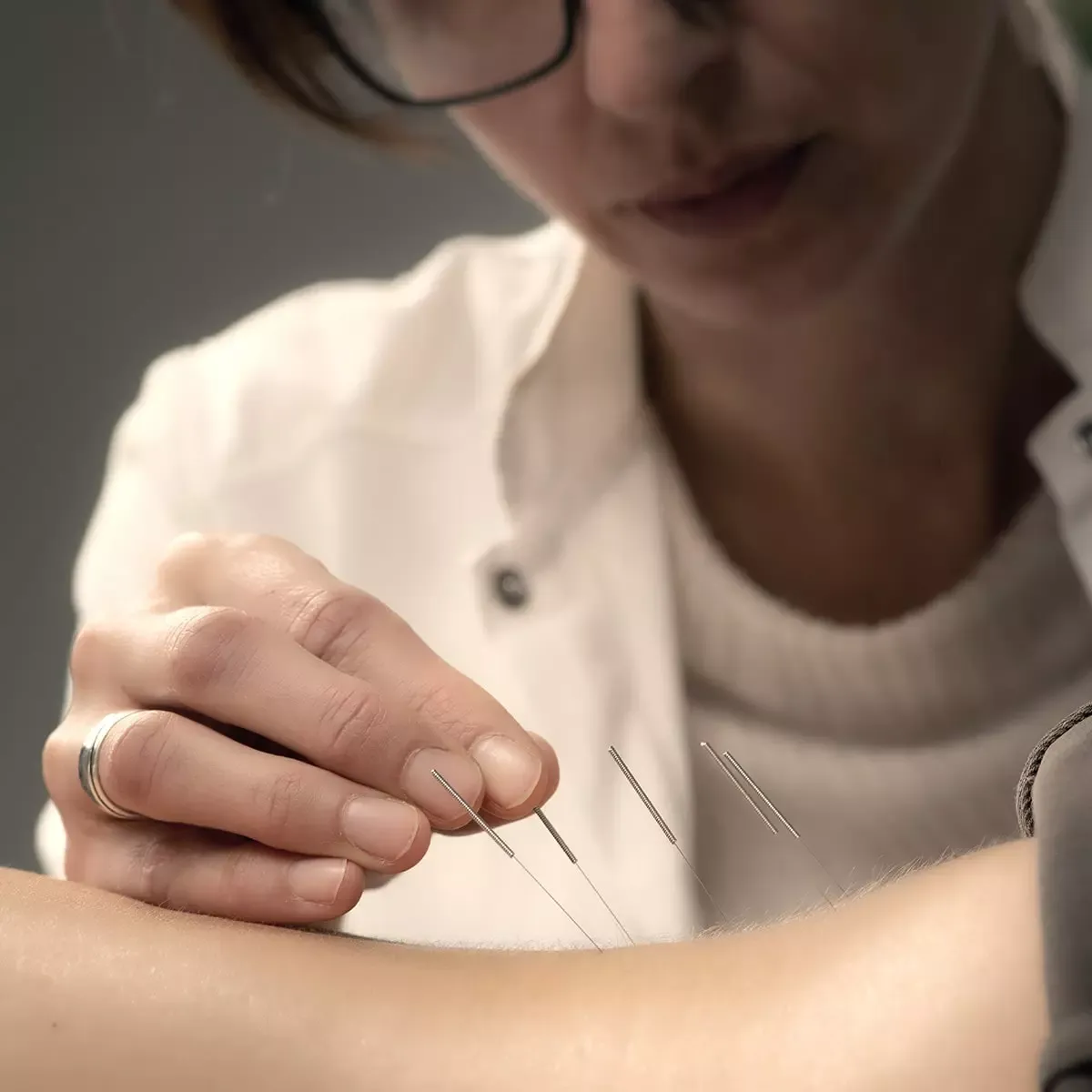
A first visit usually starts with history (how long the fullness lasts, meal timing, stool form, stress load, and any GP notes), then pulse and tongue. Cause, duration, and the living pattern decide the mix.

  • Acupuncture matched to the named pattern
  • Acupressure teaching for home support between visits
  • Herbal medication when the constitution needs it
  • Dietary and lifestyle modifications, including FODMAP and meal timing

Plans stay process-led. They do not replace urgent Western care for red-flag belly pain, bleeding, or blockage signs.

When bloating keeps returning

If fullness lasts beyond about six weeks, limits daily life, or sits with worrying signs, book a pattern read. Bring meal timing, stool form, and any GP notes.

Dr Sim Beng Joo

Clinically reviewed

Reviewed by Sim Beng Joo

Advisor (Science & Strategy) / Consultant Physician · TCMPB T1303003A

MOH-licensed TCM physician and biomedical scientist, with clinical work in gastrointestinal syndromes, pain, sleep or fatigue, and constitution patterns that show as bloating, irregular stools, or IBS-type swings.

View full profile

Educational information based on clinical experience and TCM principles. Not a substitute for personalised consultation, medical care, or urgent attention. Speak with your physician before starting herbs or new self-care in pregnancy or with a chronic condition. Seek urgent care for severe abdominal pain, persistent vomiting, blood in the stool, black stools, high fever, a sudden inability to pass gas or stool, or a new abdominal mass.

FAQs

Questions, answered

Common questions before you change food, try home massage, or book a first visit for bloating.

What causes bloating from a TCM view?

Everyday bloating often tracks irregular meals, overeating, eating too fast, bloat-prone foods, wheat or lactose intolerance, constipation, premenstrual swings, and high-FODMAP loads. TCM then names the pattern underneath: food stagnation, Liver-Stomach disharmony, damp-phlegm, or Spleen qi deficiency.

What are the four TCM types of bloating?

Food stagnation (饮食内停) after overeating, with nausea, foul wind, and worse distention after food. Liver-Stomach disharmony (肝胃不和) when stress expands the belly with sighing and mood swings. Dampness and phlegm retention (痰湿中阻) with chest-abdomen heaviness, oily cravings, and sticky stools. Spleen qi deficiency (脾胃虚弱) with all-day post-meal bloating, fatigue, and morning facial puffiness.

How do FODMAPs relate to bloating?

FODMAP stands for fermentable oligosaccharides, disaccharides, monosaccharides, and polyols. These poorly digested carbohydrates can reach the distal gut and ferment, raising hydrogen and symptoms such as bloating, wind, constipation, or diarrhoea in sensitive people. A food diary helps spot personal triggers; it does not replace a pattern read.

How do I massage Zu San Li (ST36) for bloating?

ST36 sits about four finger-widths below the outer dent of the kneecap, one finger-width from the shin bone. Circle each side kindly for about one minute daily. It is a classic Spleen-Stomach support point, sometimes called the point of longevity.

How do I do clockwise tummy massage for bloating?

Lie on your back. Stack both palms over the abdomen and move in a light clockwise circle around the navel, about 36 times, on waking or before sleep. This Mo Fu habit supports motility for bloating, indigestion, or constipation. Skip it during diarrhoea.

What habits help reduce bloating?

Chew thoroughly (about 20 chews per bite), eat and drink slowly, keep regular meal times, track intolerances in a food diary, favour warm water or ginger-cinnamon tea over cold drinks and cold food, and aim for at least 30 minutes of moderate aerobic exercise at least twice a week.

How is this different from the common digestive issues Insight?

This article is the bloating deep dive: four TCM bloating patterns, FODMAP triggers, Mo Fu and ST36 home care, and everyday habits. The common digestive issues Insight is the broader map across indigestion, constipation frames, and IBS. Use both when gut symptoms stack: bloating detail here, wider map there.

When should I see a TCM physician for bloating?

Book when bloating keeps returning, lasts more than about six weeks, or limits work, sleep, or daily life. Seek urgent Western care for severe pain, persistent vomiting, blood in the stool, black stools, high fever, a sudden inability to pass gas or stool, or concern about an abdominal mass.

References

Selected sources

  1. National Center for Complementary and Integrative Health. Traditional Chinese medicine: What you need to know. 2019. https://www.nccih.nih.gov/health/traditional-chinese-medicine-what-you-need-to-know/
  2. Ministry of Health Singapore. TCM practitioners (Healthcare Professional Portal). https://hpp.moh.gov.sg/tcm-practitioners/
  3. World Health Organization. Traditional, complementary and integrative medicine. https://www.who.int/health-topics/traditional-complementary-and-integrative-medicine
  4. Original article author: Physician Tan Kang Ting.

Next step

Ready for a bloating pattern read?

Bring how long the fullness lasts, meal timing, stool form, stress load, and any GP notes. We will name the pattern in plain language and decide what belongs in your plan.

Hours
Most clinics daily 11:00 AM – 8:00 PM
Care
Physician-led consultation