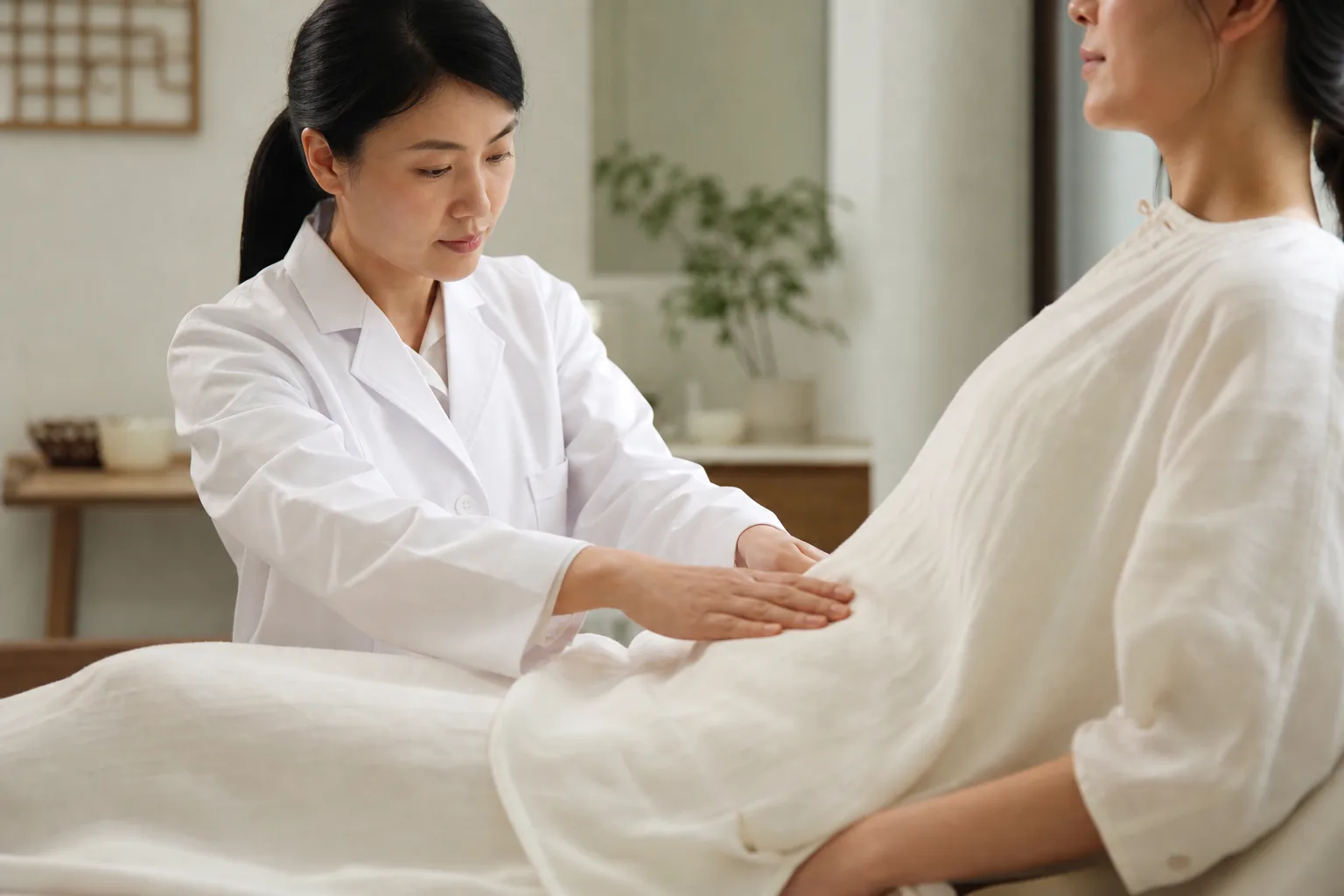
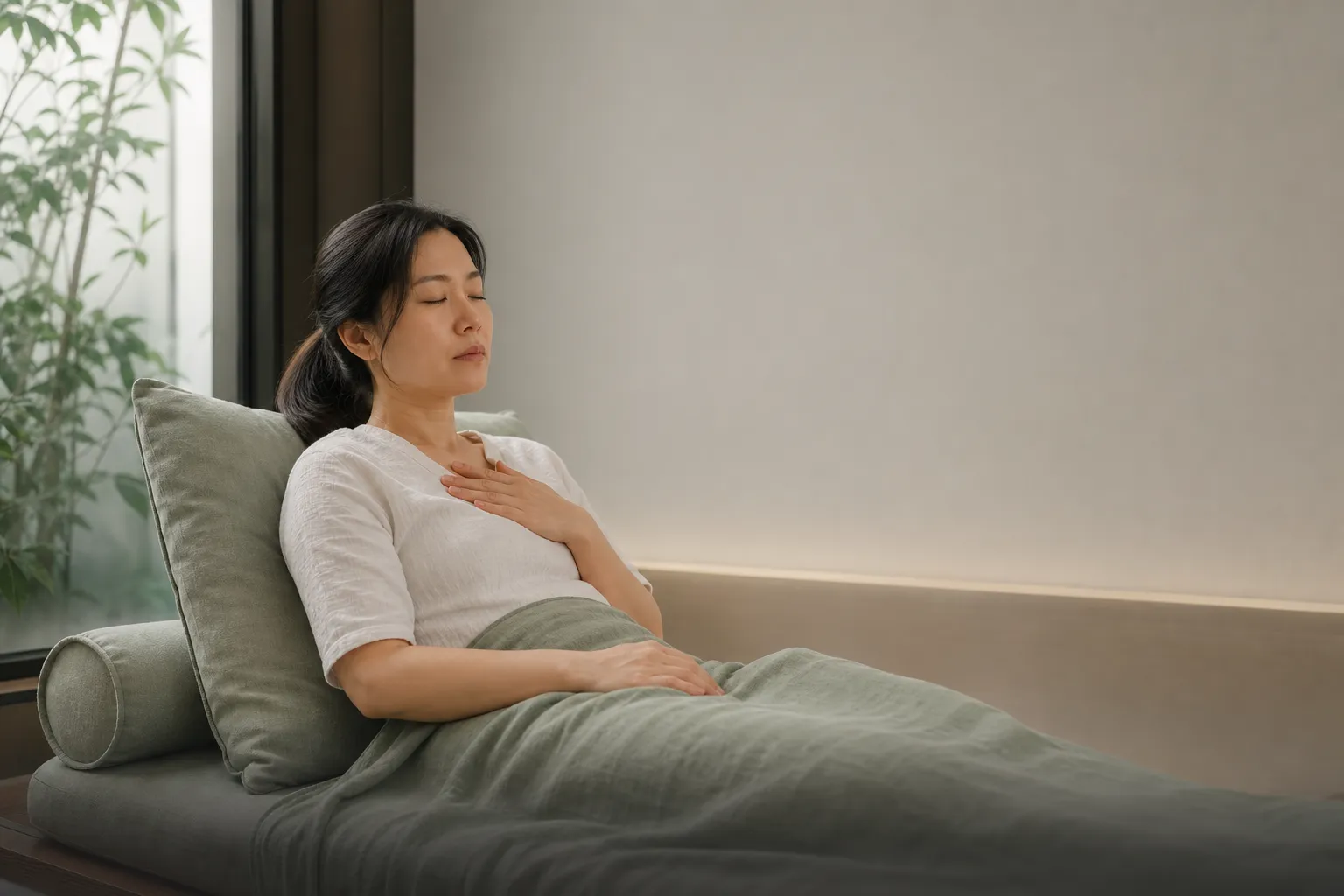
Adult resting after mild effort with a hand on the chest, Long COVID recovery support at PULSE TCM

Insights · Immunity

Long COVID symptoms: how TCM can help

Lingering post-COVID symptoms often read as Qi and Yin depletion or organ disharmony. Points, kitchen teas, and clinic care can match the pattern.

In brief

Long COVID (post-COVID condition) lasts at least two months and usually starts within three months of COVID-19, without another diagnosis that explains it. In TCM, lingering fatigue, easy breathlessness, brain fog, sleep change, pain, cough, and smell loss often track Qi, Yin, or organ disharmony. Self-press, food therapy, and clinic moxibustion or acupuncture may support the pattern. Book if home tips are not enough; seek urgent care for chest pain or severe breathlessness.

01 · Definition

What are post-COVID conditions?

According to the World Health Organization, post-COVID condition (also called Long COVID) is a wide collection of long-term symptoms in people with a history of probable or confirmed COVID-19.1 Symptoms last at least two months, usually appear within three months of onset, and cannot be explained by an alternative diagnosis. Most people recover within a few weeks. A smaller share still carries mid- and long-term effects after the acute illness settles.1

02 · Pattern map

How TCM reads Long COVID

Qi · Yin · Lung · Spleen · Heart

Lingering load after infection often reads as Qi and Yin depletion, residual damp-heat, or organ disharmony rather than a single residual virus label.

Qi and Yin depletion often shows as easy fatigue, breathlessness on light effort, dry cough, and thin sleep.

Residual damp or heat can sit with heavy limbs, foggy head, sticky throat, or unsettled bowels.

Lung-Spleen-Heart patterns commonly stack: Lung for breath and cough, Spleen for energy and digestion, Heart for palpitations, mood, and sleep. Pulse and tongue decide which organ leads before points, food therapy, or clinic care.
03 · Singapore

Heat, AC, and return-to-work load

Humid heat · AC · stairs

In Singapore, humid outdoor heat and cold office air often sit together. Moving between both can tax Qi that is already thin after illness.

Iced drinks and raw-cold meals can further burden a weak Spleen when fatigue and loose stools stack. Long AC exposure on the midriff or nape may aggravate wind-cold feel in the neck and chest. Stairs, MRT standing, and a full work day after infection are common triggers for post-exertional breathlessness. Pace return-to-work, keep the neck and midriff covered in strong AC, and prefer warm drinks while the pattern recovers.

04 · Symptom clusters

Common Long COVID symptom clusters

These signs can affect work, exercise, and household chores.1,2 Not every person has every item. The wider picture can also include headache, dizziness, mood changes, and diarrhoea.1,2 In clinic we often see fatigue with light-effort breathlessness first, then foggy thinking with thin sleep, chest symptoms, or a dry cough.

How Long COVID symptoms often cluster in TCM
Cluster What you notice Often tracks
Fatigue and easy breathlessnessStairs, walking, or a normal work day wipe you out even after night sleep.
  • Fatigue and restlessness after previously easy tasks
  • Breathing difficulty or shortness of breath on light effort
  • Post-exertional wipe-out
Qi and Yin depletion; Spleen and Lung Qi
Brain fog and sleep problemsThinking feels slow or cloudy; sleep is thin or unrefreshing.
  • Brain fog: mental cloudiness, slower attention or memory
  • Trouble falling asleep, staying asleep, or waking unrefreshed
Heart-Kidney disharmony; unsettled Shen
Chest tightness and palpitationsA heavy chest or awareness of heartbeat with ordinary activity.
  • Chest pain or tightness
  • Heart palpitations without another clear diagnosis
Pericardium and Heart Qi (seek urgent care for sudden chest pain or severe breathlessness)
Persistent dry cough and smell or taste changeA dry or lingering cough, or reduced smell and taste after COVID-19.
  • Persistent dry cough
  • Loss of smell or taste
Lung Yin or Lung Qi; see also smell and taste tips below
Aches, headache, mood, and bowel changeJoint or muscle pain, head symptoms, mood change, or loose stools that continue after the acute phase.
  • Joint or muscle pain
  • Headache and dizziness
  • Mood changes (low mood, irritability, or anxiety)
  • Diarrhoea or bowel change
Channel stagnation or Spleen load; mood and bowels also under Also common

Smell and taste self-care sits under loss of smell or taste. Headache points sit under headache and dizziness. Mood and diarrhoea have a short close under Also common.

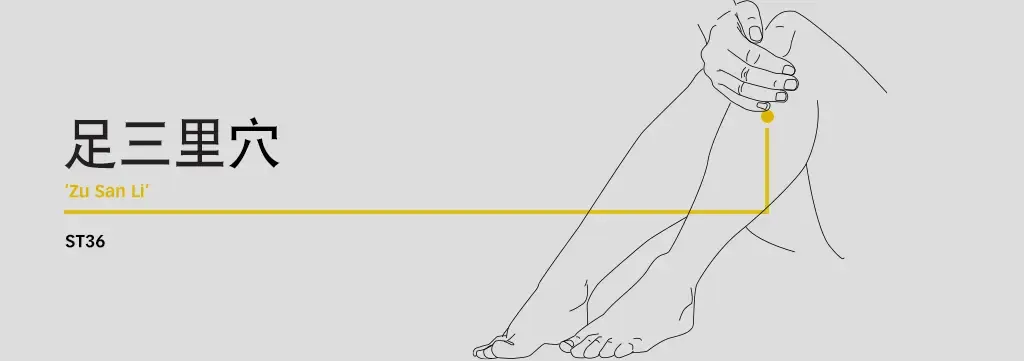
Diagram locating Zu San Li ST36 below the outer kneecap for Long COVID fatigue

05 · Fatigue

Fatigue after Long COVID

ST36 · CV6 · CV4 · Spleen Qi

You may still feel tired or restless after activities that were previously manageable, even with enough night sleep. Quality of life can drop both physically and mentally.

Zu San Li (足三里, ST36) regulates Spleen and Stomach Qi and is a classic healthcare point for vitality. Find the lower border of the kneecap, then the outer dimple beside the thick middle tendon. From that outer dimple, place four fingers (index to pinky) down the shin. The point sits where the pinky edge falls. Press firmly with a fingertip for about 30 seconds; a dull soreness is expected. Once or twice daily.

Illustration locating Zu San Li ST36 below the outer kneecap

Acupoint · Spleen Qi

Press Zu San Li (ST36)

ST36 supports Spleen and Stomach Qi when post-viral fatigue sits with digestive weakness.

Dull ache is the cue. Ease off if the leg feels sharp or wrong.

Press Zu San Li
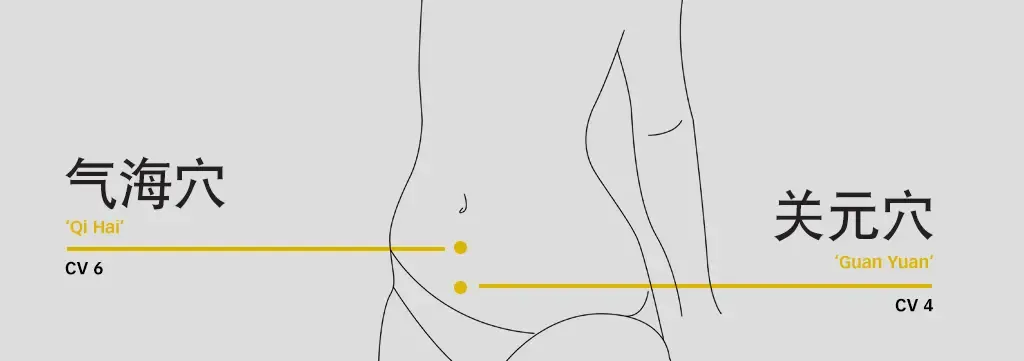
Diagram locating Qi Hai CV6 and Guan Yuan CV4 on the lower abdomen

Abdomen

Qi Hai, Guan Yuan, and clockwise massage

Qi Hai (气海, CV6) and Guan Yuan (关元, CV4) sit on the lower abdomen. Guan Yuan is about four fingers below the navel. Qi Hai sits midpoint between the navel and Guan Yuan. Warm the area with a heat pack, or press gently.

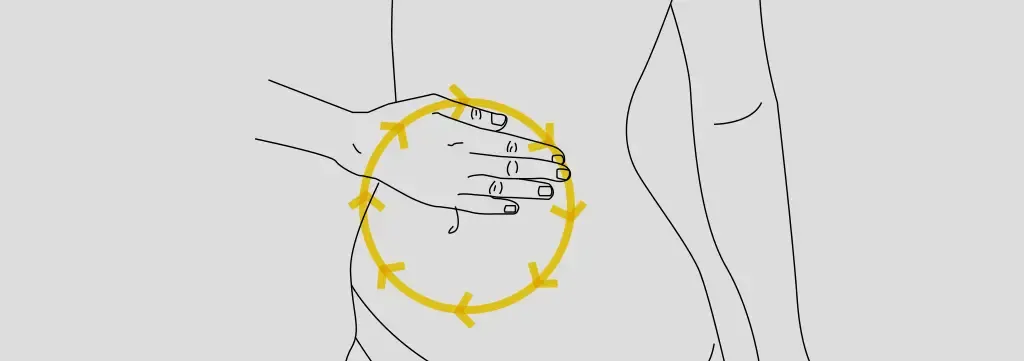
Add a clockwise abdominal massage to cover these points and support bowel movement. In TCM the Large Intestine and Lungs are paired, so smoother stools may support Qi flow in the chest.

Clockwise abdominal massage covering Qi Hai and Guan Yuan

Massage tip

Clockwise palm circles over the lower abdomen

Warm palms, then circle clockwise over the lower abdomen so Qi Hai and Guan Yuan sit inside the path. Keep the pressure kind; stop over sharp pain.

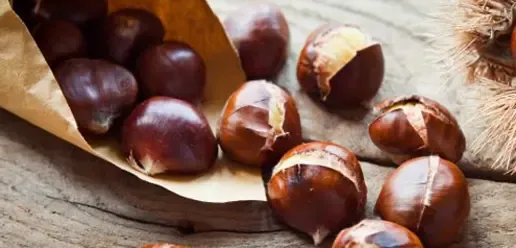
Roasted chestnuts as a slow energy food for Long COVID fatigue

06 · Diet

Chestnuts for steady energy

Chestnuts provide complex carbohydrates that digest slowly and may reduce blood-sugar spikes.3 They also supply fibre, vitamin C, copper, B vitamins, manganese, and antioxidants.3

A common serving is about 100 g (roughly 10 chestnuts), up to three times a week.4

Chinese yam Shan Yao for Spleen and Lung Qi support

Chinese yam

Chinese yam (山药)

Chinese yam tonifies deficiency, nourishes Lung and Spleen Qi, and supports digestion as the source of acquired nutrition. About 100 g a day, boiled in soup or stir-fried with vegetables, is a typical kitchen amount.

Clinic

Moxibustion for deep fatigue

Moxibustion burns mugwort (Artemisia vulgaris) on or near acupoints to warm the meridians, support Qi, improve circulation, and strengthen resistance. For fatigue after Long COVID it is best done by a TCM professional.

Moxibustion at PULSE

Clinic next step

Fatigue still stacking after home care?

Bring how long it has lasted, what worsens on stairs or work days, and any GP notes. We will read Qi and Yin patterns and match moxibustion, acupuncture, or herbs.

07 · Breathlessness

Easy breathlessness after light effort

Qi · Yin · Sheng Mai Yin

Climbing stairs or a short walk may leave you more breathless than before. In TCM this often sits with Qi and Yin depletion after infection.

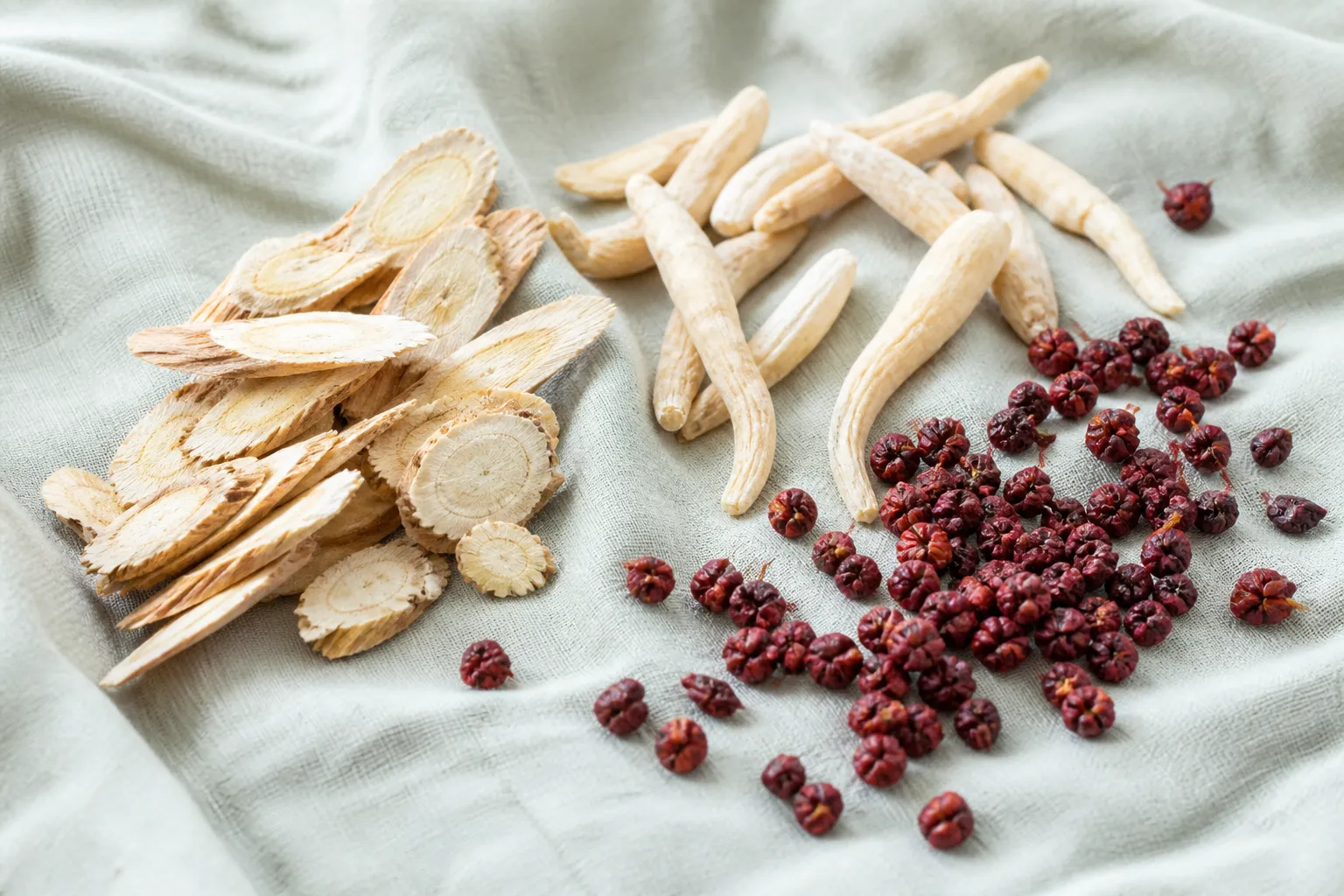
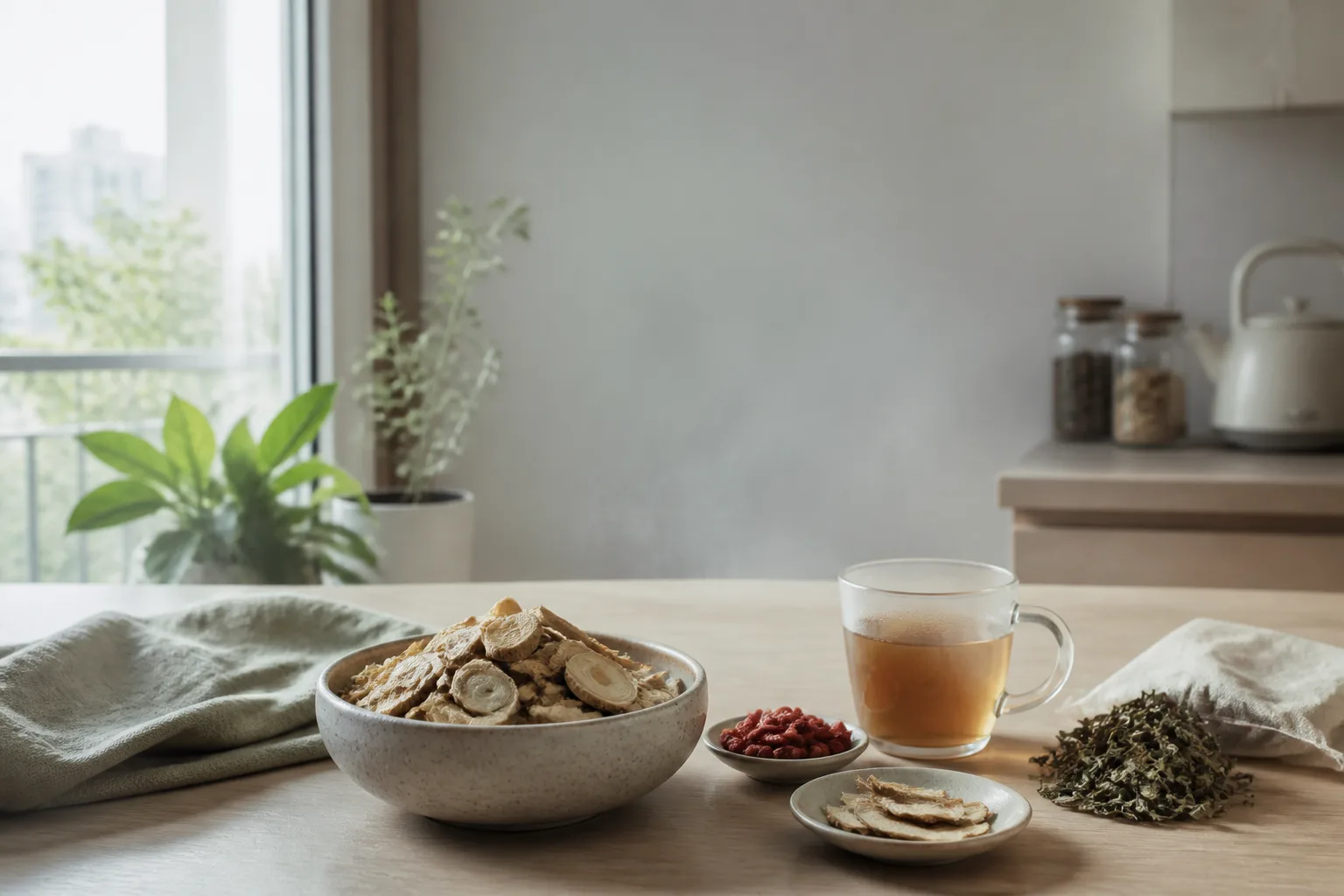
Dried Dang Shen, Mai Dong, and Wu Wei Zi for Sheng Mai Yin tea at PULSE TCM

Tea · Restoring Pulse

Sheng Mai Yin (生脉饮)

Dang Shen 9 g, Mai Dong 9 g, and Wu Wei Zi 6 g simmered about 15 minutes. Supports Qi, nourishes Yin, and clears empty heat.

Educational food therapy. Seek urgent care for sudden or severe breathlessness.

Make Sheng Mai Yin
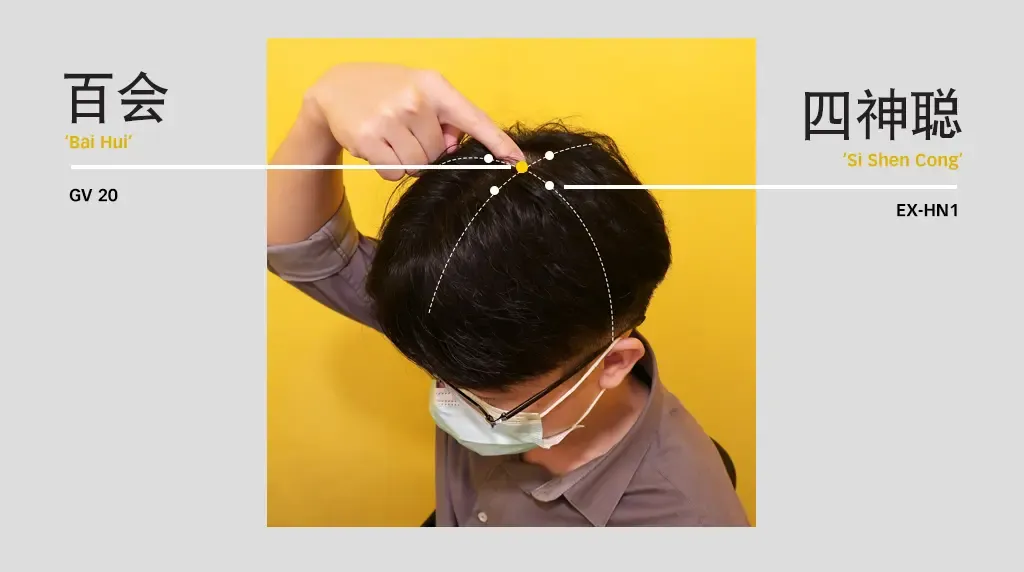
Diagram locating Bai Hui GV20 and Si Shen Cong on the crown for brain fog

08 · Brain fog

Mental cloudiness and brain fog

GV20 · EX-HN1 · Yin Tang

Thinking may feel fuzzy, sluggish, or less sharp than before. Research has linked COVID-19 with changes in brain tissue volume and cognitive performance in some people.5

Locate the points below and apply gentle fingertip pressure for 3–5 minutes, or until you feel clearer.

Bai Hui (百会, GV20) clears the mind, lifts the spirits, and tonifies Yang. Draw a line between the tips of both ears over the head; the midpoint is the point.

Si Shen Cong (四神聪, EX-HN1), the Alert Spirit Quartet, sits one thumb-width left, right, front, and back of Bai Hui. These four points stimulate Shen (神), calm and clear the mind, and support memory.

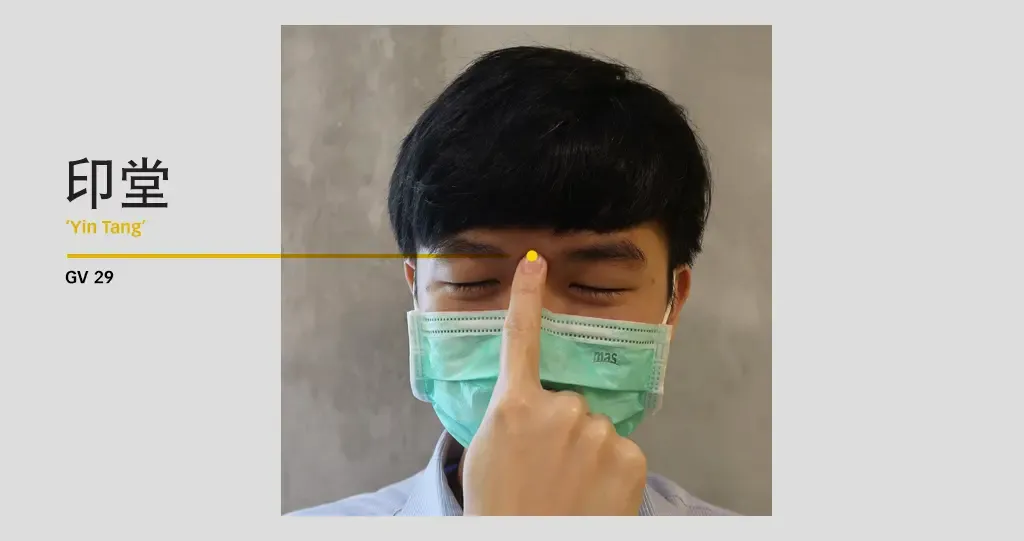
Diagram locating Yin Tang between the eyebrows

Yin Tang

Yin Tang between the brows

Yin Tang (印堂) dispels wind, calms Shen, and may ease anxiety, agitation, or insomnia. It sits at the midpoint between the inner ends of the eyebrows.

Grapes contain resveratrol and other compounds that may support memory, attention, and mood.6,7 They also supply copper for energy production, plus nutrients linked to immune, sleep, and heart support.6,7 A common kitchen amount is about half a cup (around 16 grapes) a day.8 Do not over-consume; they are high in sugar.

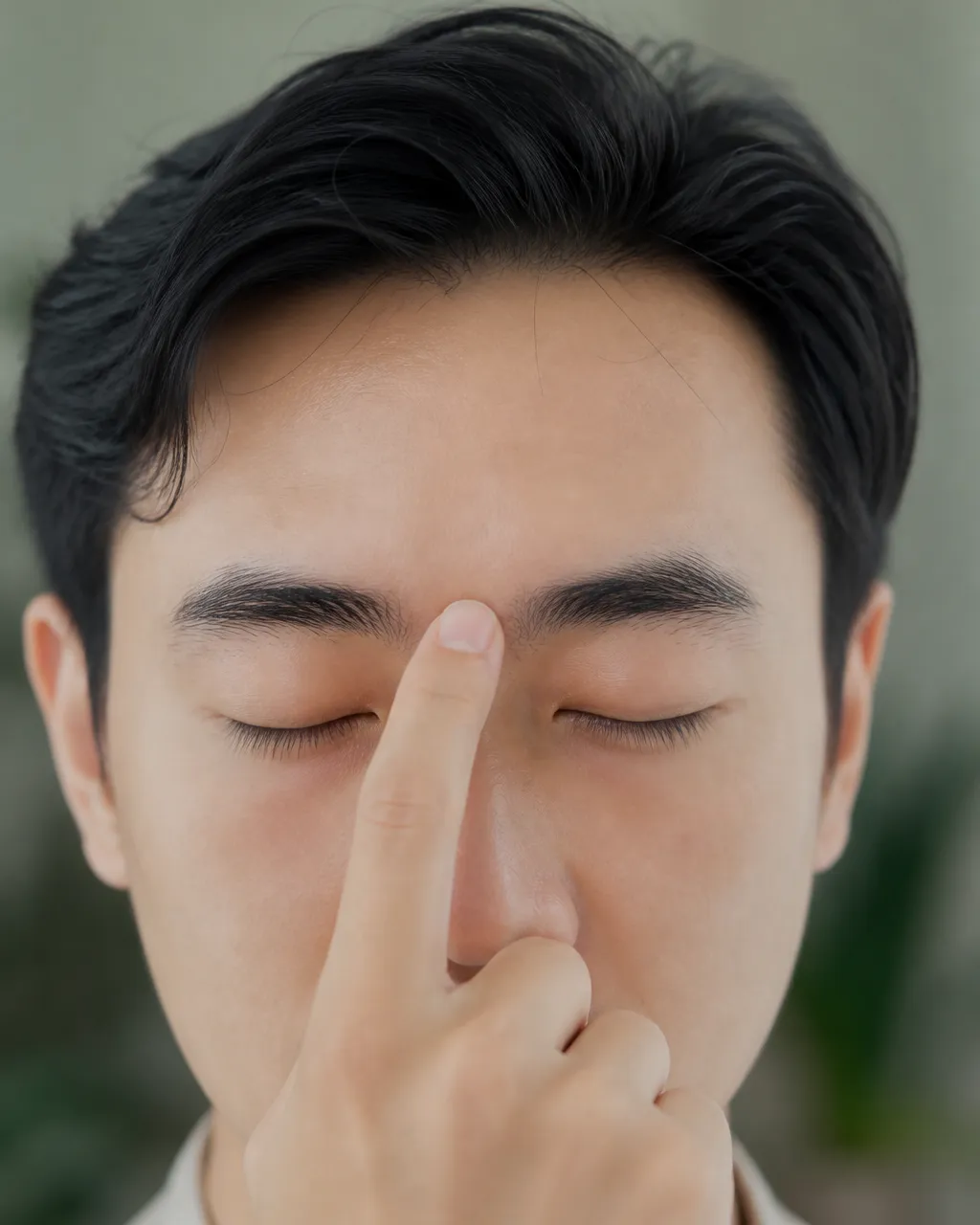
Finger locating Yin Tang EX-HN3 at the midpoint between the eyebrows

Acupoint · EX-HN3

Press Yin Tang (印堂)

Yin Tang sits at the midpoint between the inner ends of the eyebrows. Hold about five seconds, then stroke up to the hairline about fifteen times.

Skip broken skin or a boil on the forehead. Ease off if the press turns sharp.

Press Yin Tang
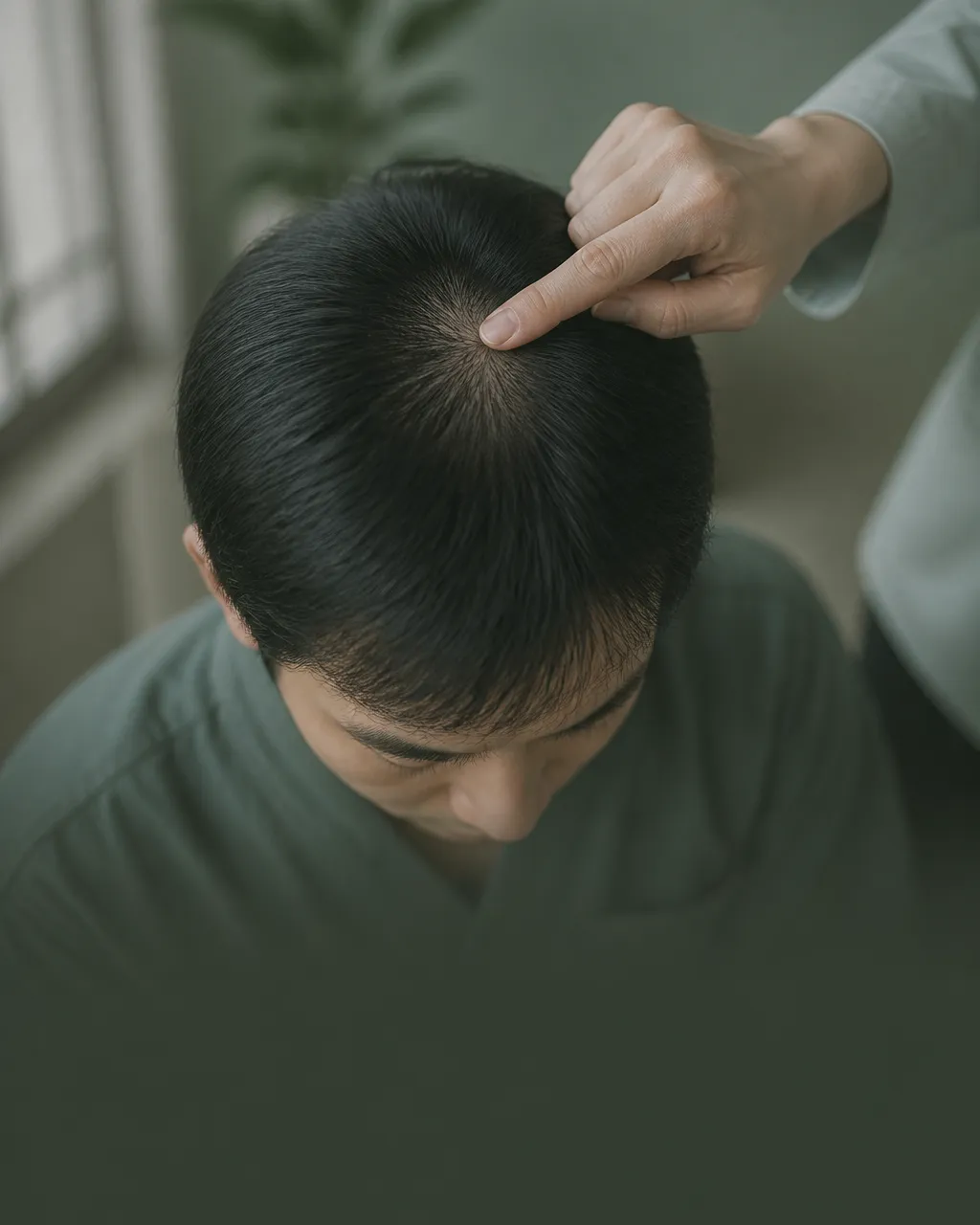
Finger locating Bai Hui GV20 at the crown of the head

Acupoint · GV20

Press Bai Hui (百会)

Bai Hui sits at the crown where the ear apexes meet the midline. Kind fingertip massage when brain fog sits with a busy mind.

Skip cuts or recent head injury. Ease off if dizziness appears.

Press Bai Hui
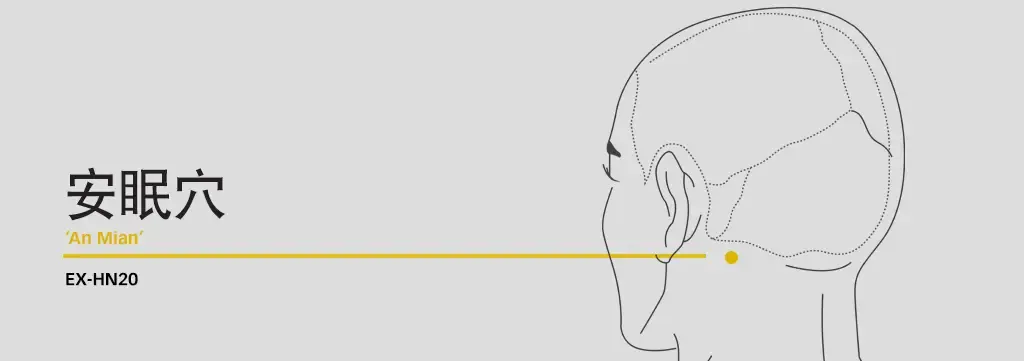
Diagram locating An Mian behind the ear for insomnia

09 · Sleep

Sleep problems after COVID

An Mian · HT7 · SP6

Restless sleep or difficulty settling often sits with Heart and Kidney disharmony after illness.

An Mian (安眠) is a traditional insomnia point that may also ease anxiety, headaches, and dizziness. Place a finger behind the earlobe, then shift back just behind the bony protrusion. Either side. Gentle fingertip pressure for 3–5 minutes.

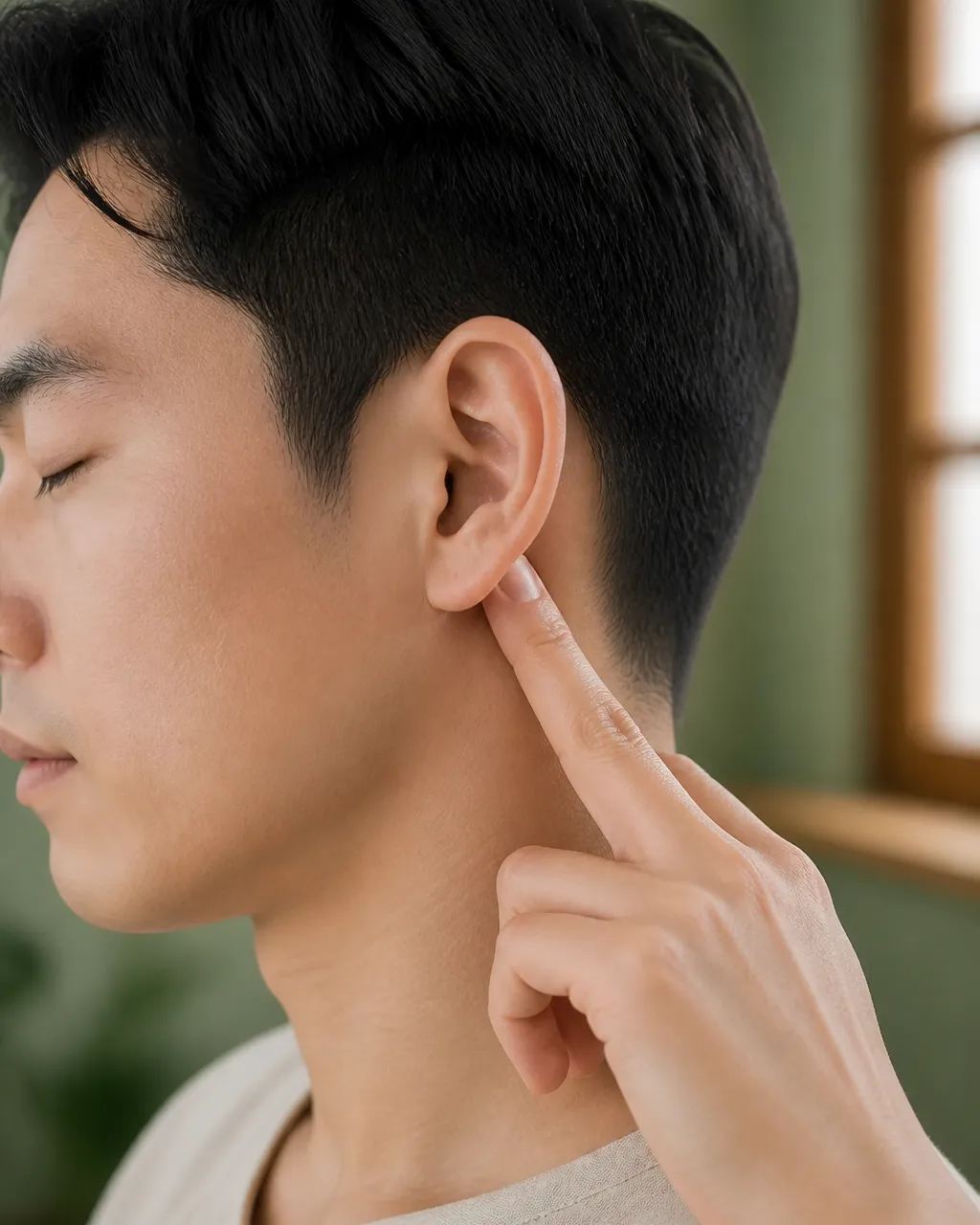
Finger locating An Mian EX-HN20 just under the earlobe

Acupoint · EX-HN20

Press An Mian (安眠)

An Mian sits just under the earlobe on either side. Kind fingertip pressure when thin sleep sits with anxiety or dizziness.

Skip swollen glands or ear infection. Ease off if the press turns sharp.

Press An Mian
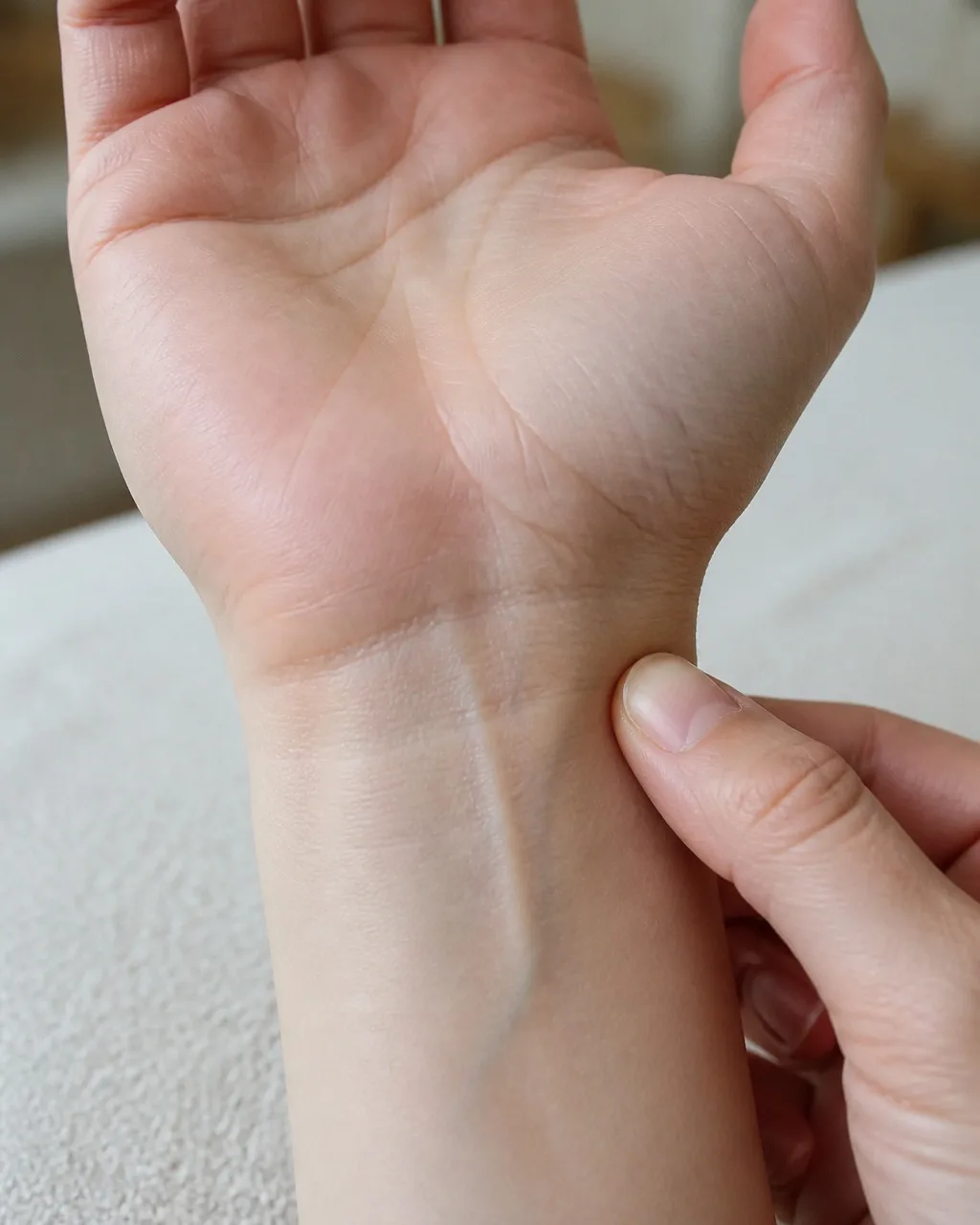
Finger locating Shen Men HT7 on the ulnar palmar wrist crease

Acupoint · sleep

Press Shen Men (HT7)

Shen Men on the ulnar wrist crease regulates Heart Qi and Blood and calms the mind for insomnia, stress, and anxiety.

Firm pressure 3–5 minutes with slow breaths.

Press Shen Men
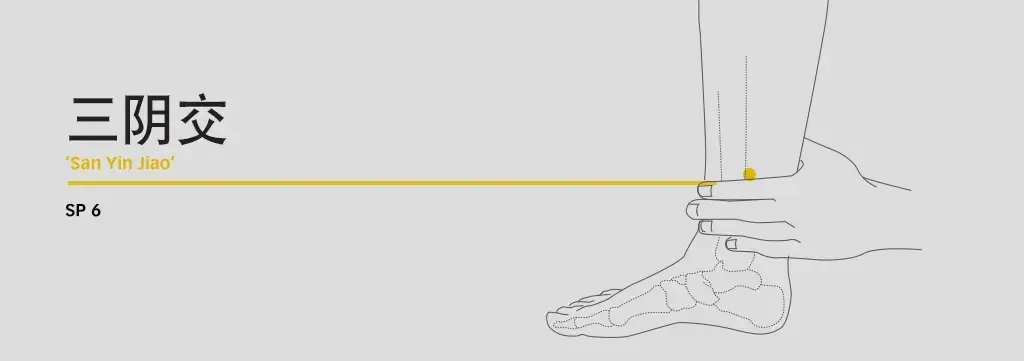
Diagram locating San Yin Jiao SP6 above the inner ankle

San Yin Jiao

San Yin Jiao (SP6) for deeper sleep

San Yin Jiao (三阴交, SP6) strengthens the Spleen, moves Liver Qi, tonifies the Kidneys, and supports deeper sleep. Place four fingers above the medial ankle bone; the point sits just behind the shin bone. Deep pressure for 3–5 minutes.

Pregnancy

Pregnant people should avoid this point.

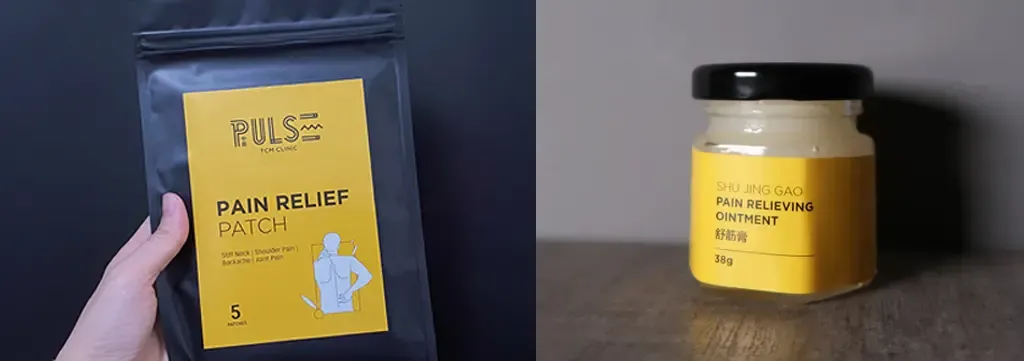
Pain-relief patches applied on the lower back for muscle ache

10 · Pain

Joint or muscle pain

Acupuncture · Cupping · topical

Lingering aches often track Qi and Blood stagnation in the channels. Clinic needling and cupping move circulation; home ointment or patches may ease local stuck Qi between visits.

Clinic and home methods for lingering joint or muscle pain
Method What it does When it often sits
AcupunctureFine needles at selected points. Promotes Blood and Qi circulation and encourages the body’s own pain-relief response. When aches linger after infection or stack with fatigue.
CuppingSuction cups on tight muscle areas. Improves circulation of Blood, Qi, and lymph and eases muscle tension. When soft tissue feels stuck or heavy.
MoxibustionWarm mugwort on or near points. Warms meridians and supports Qi when cold-type ache sits with fatigue. Best done in clinic for post-viral fatigue with cold limbs.
Shu Jin Gao / pain patchesOintment or patch over the sore area. Increases local flow and helps unblock stagnated Qi between visits. Quick home support for focal muscle or joint ache.

11 · Chest and heart

Chest tightness or palpitations

PC6 · Heart · Pericardium

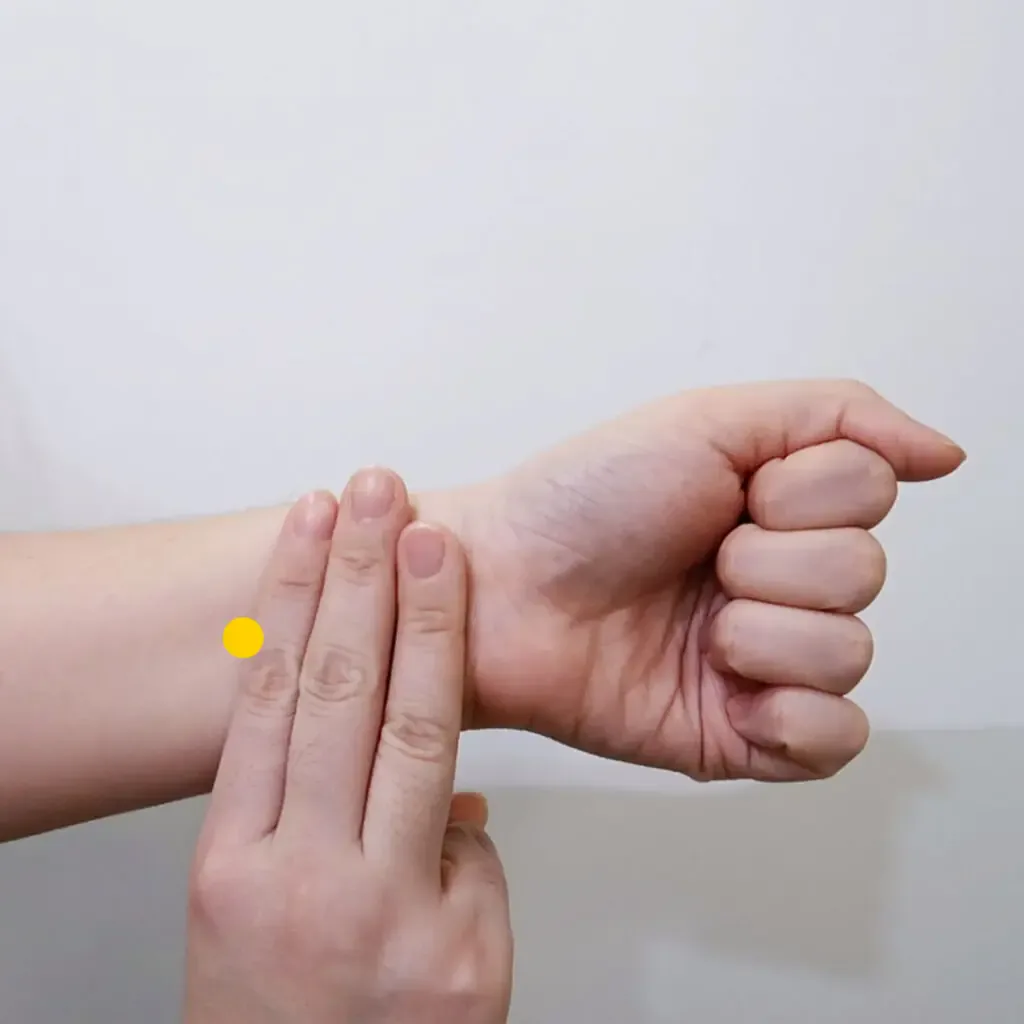
Nei Guan opens the chest and regulates Heart Qi. Persistent palpitations with light activity and no alternative Western diagnosis still need physician acupuncture; self-press alone is not enough.

Three fingers on the inner forearm locating Nei Guan PC6 between two tendons

Acupoint · chest

Press Nei Guan (PC6)

Three fingers below the inner wrist crease, between the two central tendons. Firm pressure 3–5 minutes with deep breaths.

Seek urgent care for sudden chest pain or severe breathlessness.

Press Nei Guan
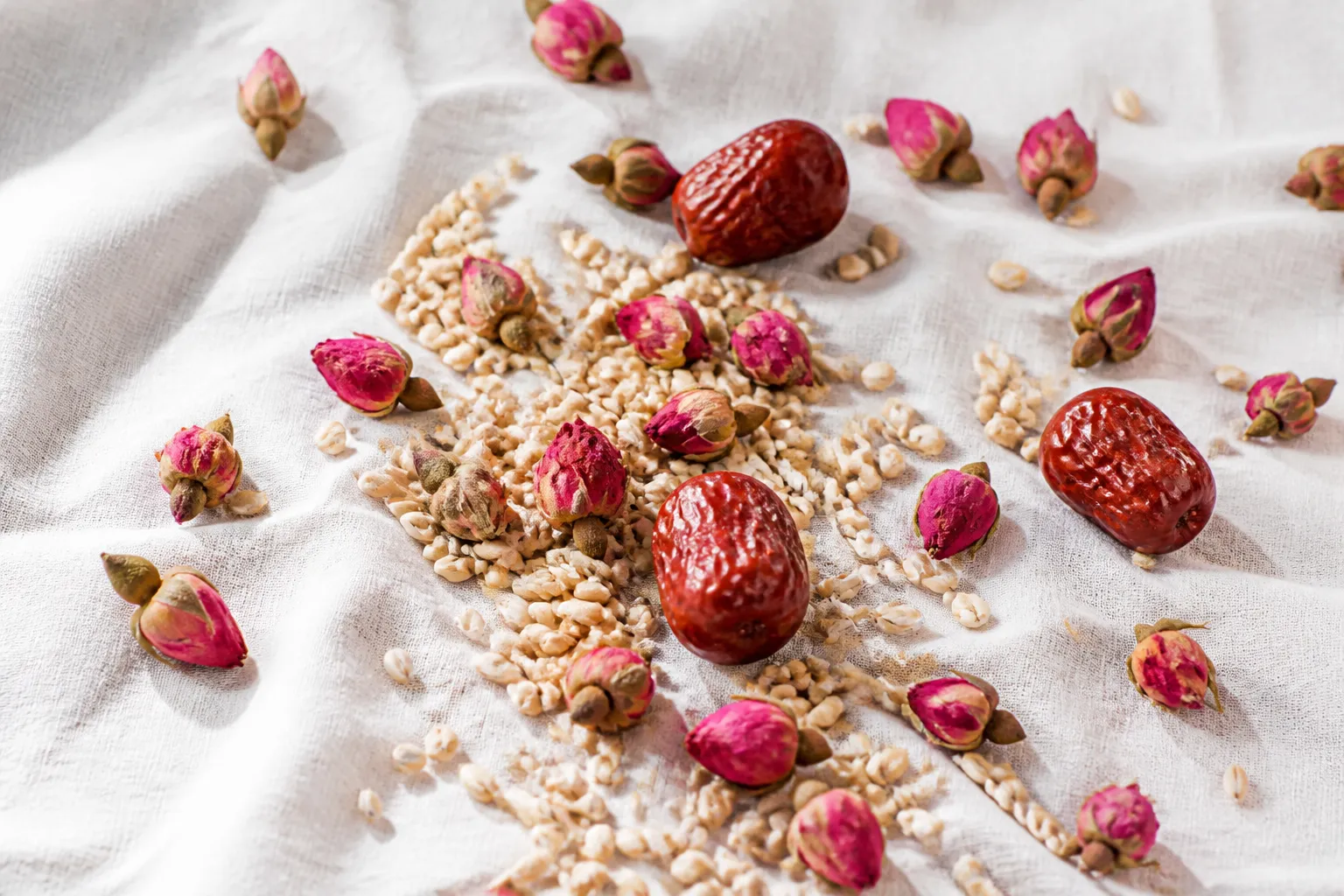
Dried rose buds, Fu Xiao Mai wheat, and red dates for tea at PULSE TCM

Tea · stuck Qi

Rose buds Fu Xiao Mai tea

Five rose buds, 30 g Fu Xiao Mai, and 2–3 red dates steeped 5–10 minutes. Supports Blood and Qi circulation and eases mood.

If there's any chance of pregnancy, don't use this often.

Make the rose buds tea

12 · Dry cough

Persistent dry cough

Lung Yin · apricot kernels

Apricot kernels (Chinese almonds) are commonly used to support respiratory patterns. Sweet kernels (南杏 / 甜杏仁) nourish the Lungs for dryness. Bitter kernels (北杏 / 苦杏仁) have a stronger anti-asthmatic effect and a mild laxative action; they must be cooked or roasted and stay within 10 g a day.

A classic kitchen pot is Chinese snow pear almond soup: moistens Yin, clears heat, and helps resolve phlegm in dry or heaty cough patterns.

Unsure of the cough type? Open Understanding cough and its remedies .

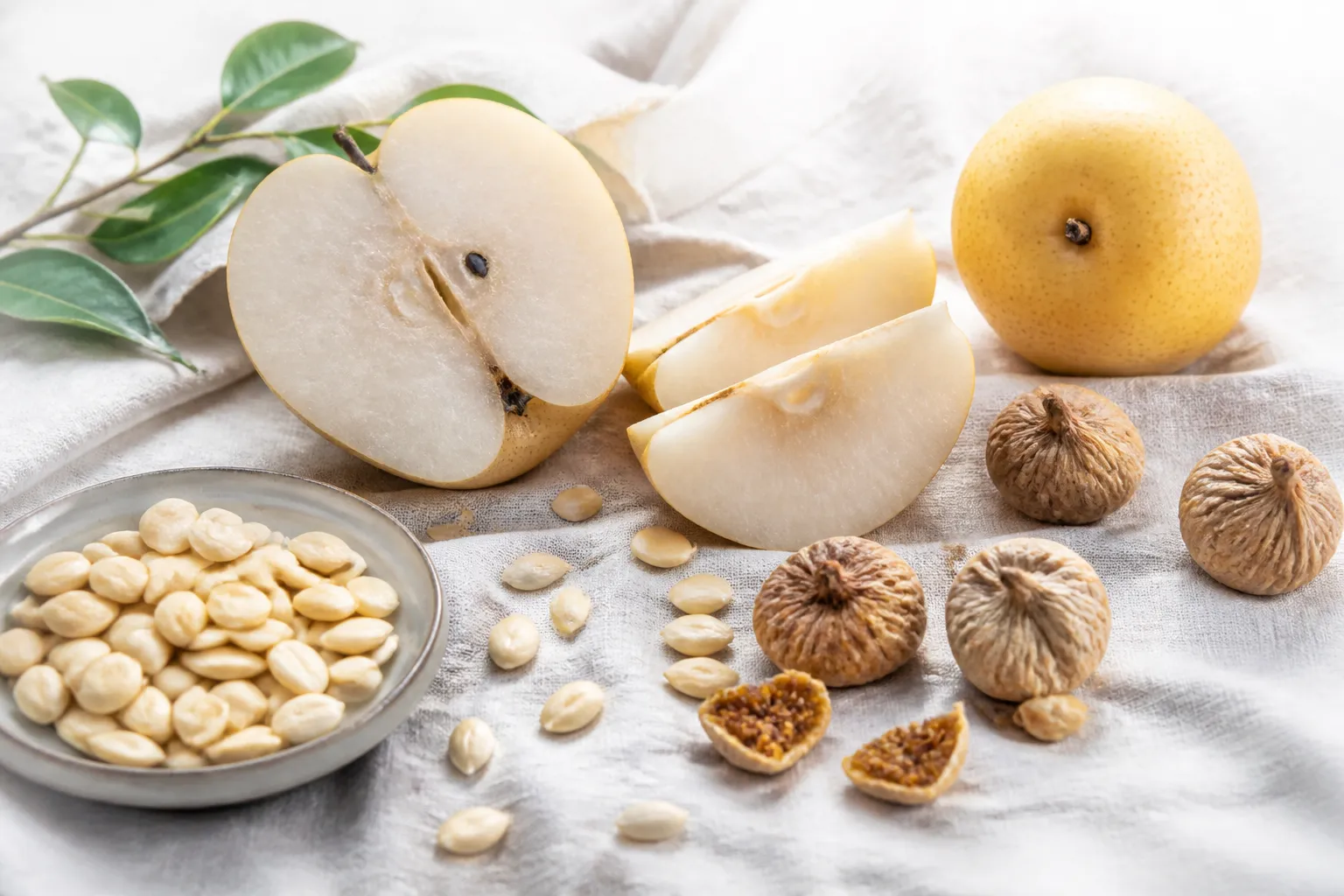
Snow pear slices, apricot kernels, and dried figs for soup at PULSE TCM

Soup · dry heat

Snow pear apricot kernel soup

Two snow pears, 5–10 g Nan Xing, 5–10 g Bei Xing, and 2–3 figs simmered about one hour.

Do not eat bitter kernels raw. Ask before use in pregnancy or for young children.

Make the snow pear soup
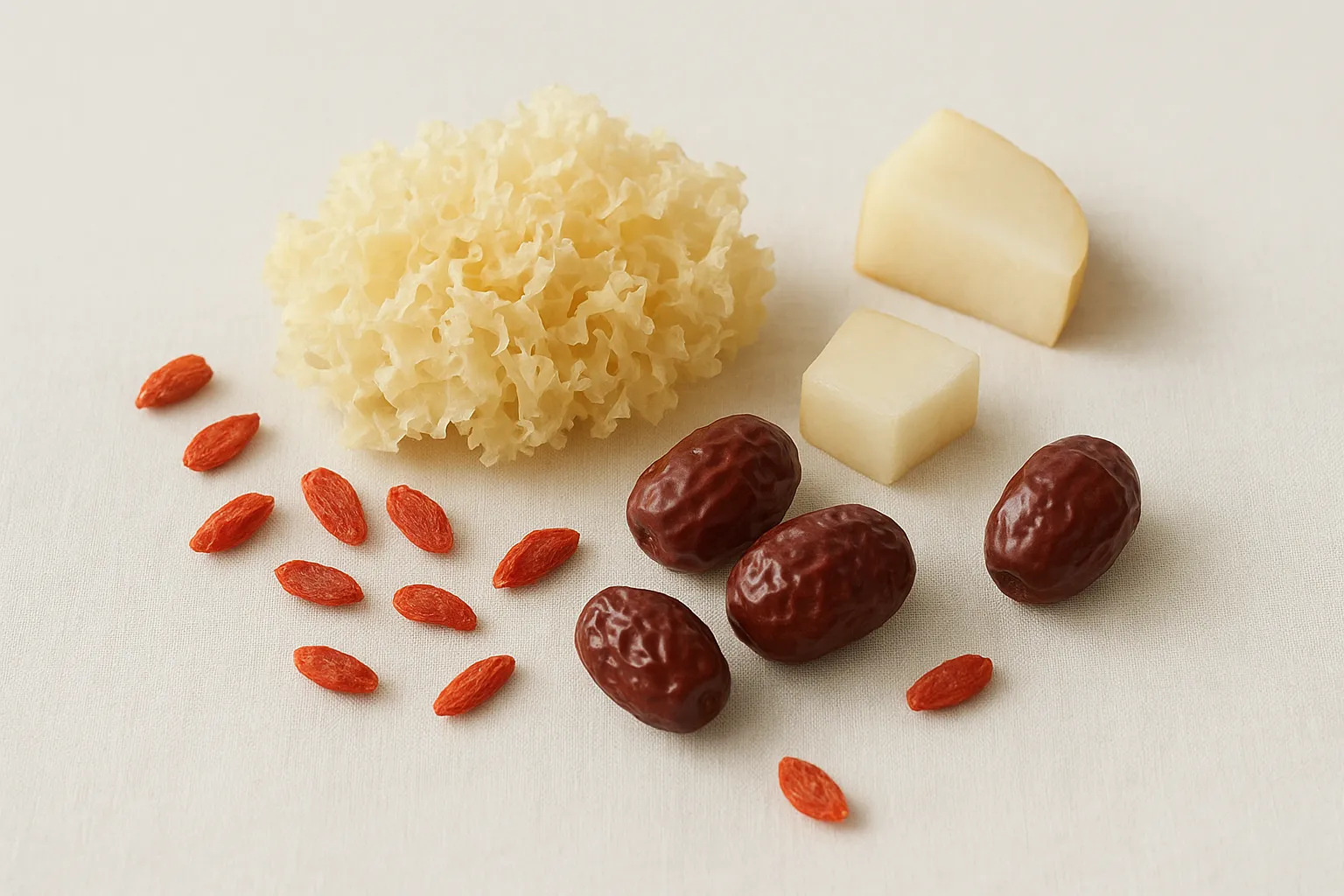
Dried snow fungus, pear, goji, and red dates for soup at PULSE TCM

Soup · Lung dryness

Snow fungus soup with pears

A sibling moistening pot with snow fungus, pear, goji, and red dates when dryness leads.

Food therapy, not a cosmetic collagen claim.

Make snow fungus pear soup
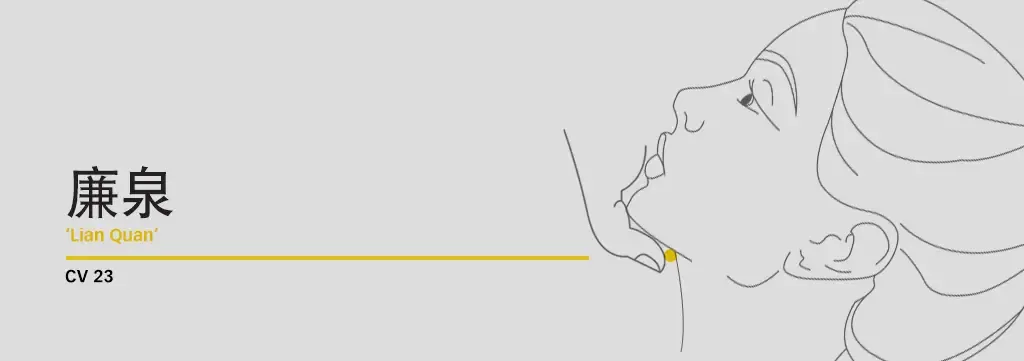
Diagram locating Lian Quan CV23 above the hyoid bone for taste and swallow

13 · Smell and taste

Loss of smell or taste

LI20 · CV23

Ying Xiang unblocks the nose. Lian Quan benefits the tongue and descends Qi when swallowing feels off. Severe congestion or lasting taste loss often needs acupuncture and customised herbs.

Lian Quan (廉泉, CV23) sits on the midline of the neck, in the depression at the upper border of the hyoid bone.

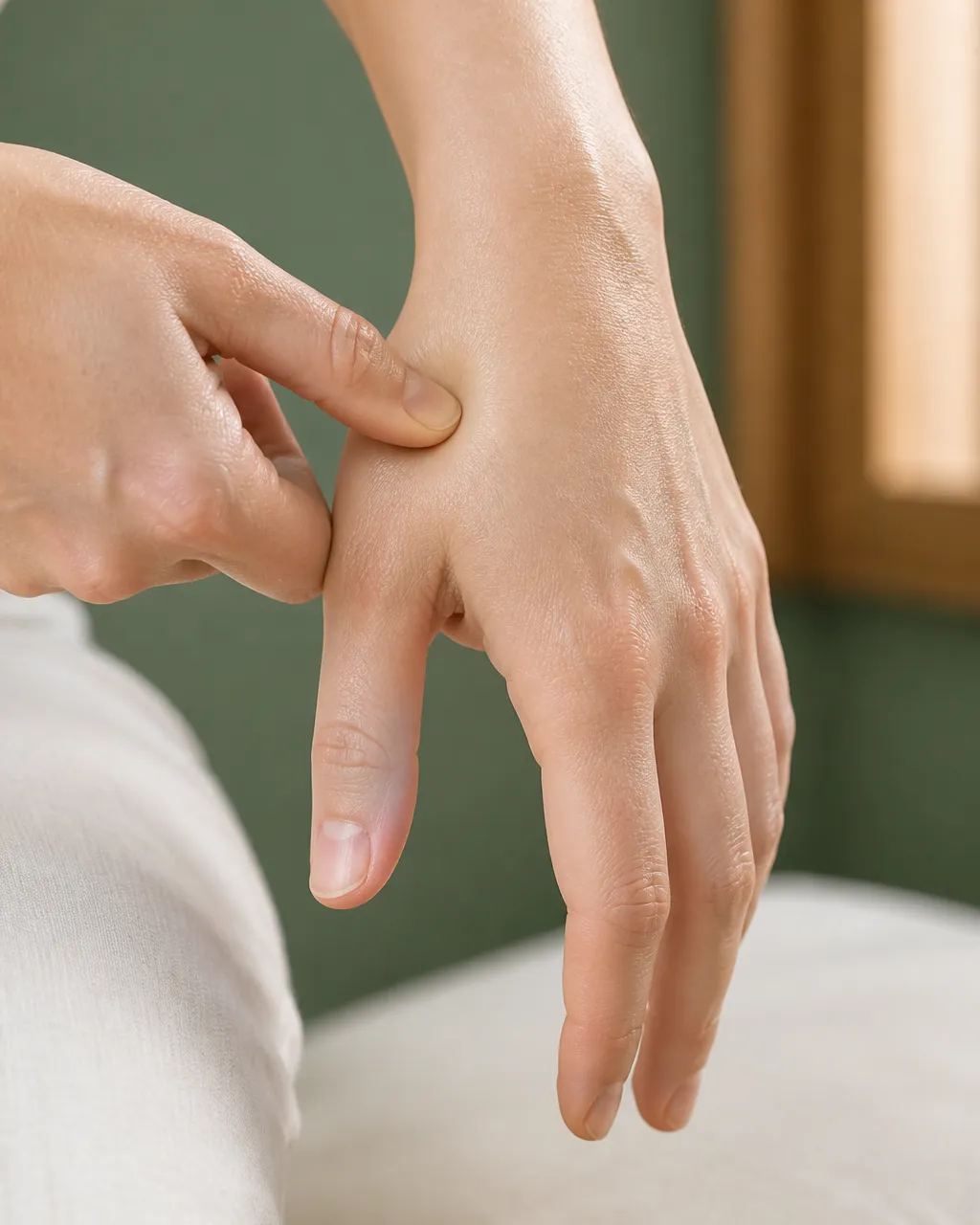
Finger locating He Gu LI4 in the hand webbing

Acupoint · nose

Press Ying Xiang (LI20) and He Gu (LI4)

Ying Xiang sits in the nasolabial groove beside each nostril. Gentle press 1–3 minutes supports local nasal flow and smell.

Skip He Gu in pregnancy.

Press Ying Xiang and He Gu
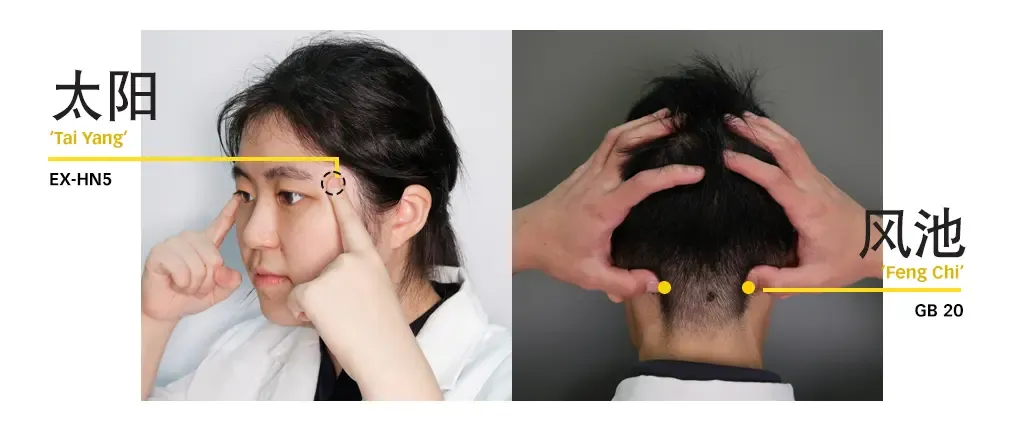
Diagram locating Tai Yang at the temple and Feng Chi at the nape

14 · Headache

Headache and dizziness

Tai Yang · ST8 · LI4 · GB20

These points promote Qi and Blood circulation and unblock stagnated Qi to ease head pain and dizziness. Gentle fingertip pressure for 3–5 minutes.

Tai Yang (太阳, EX-HN5) sits at the temples: take the midpoint between the end of the eyebrow and the outer eye corner, then move about a middle-finger width back into the depression.

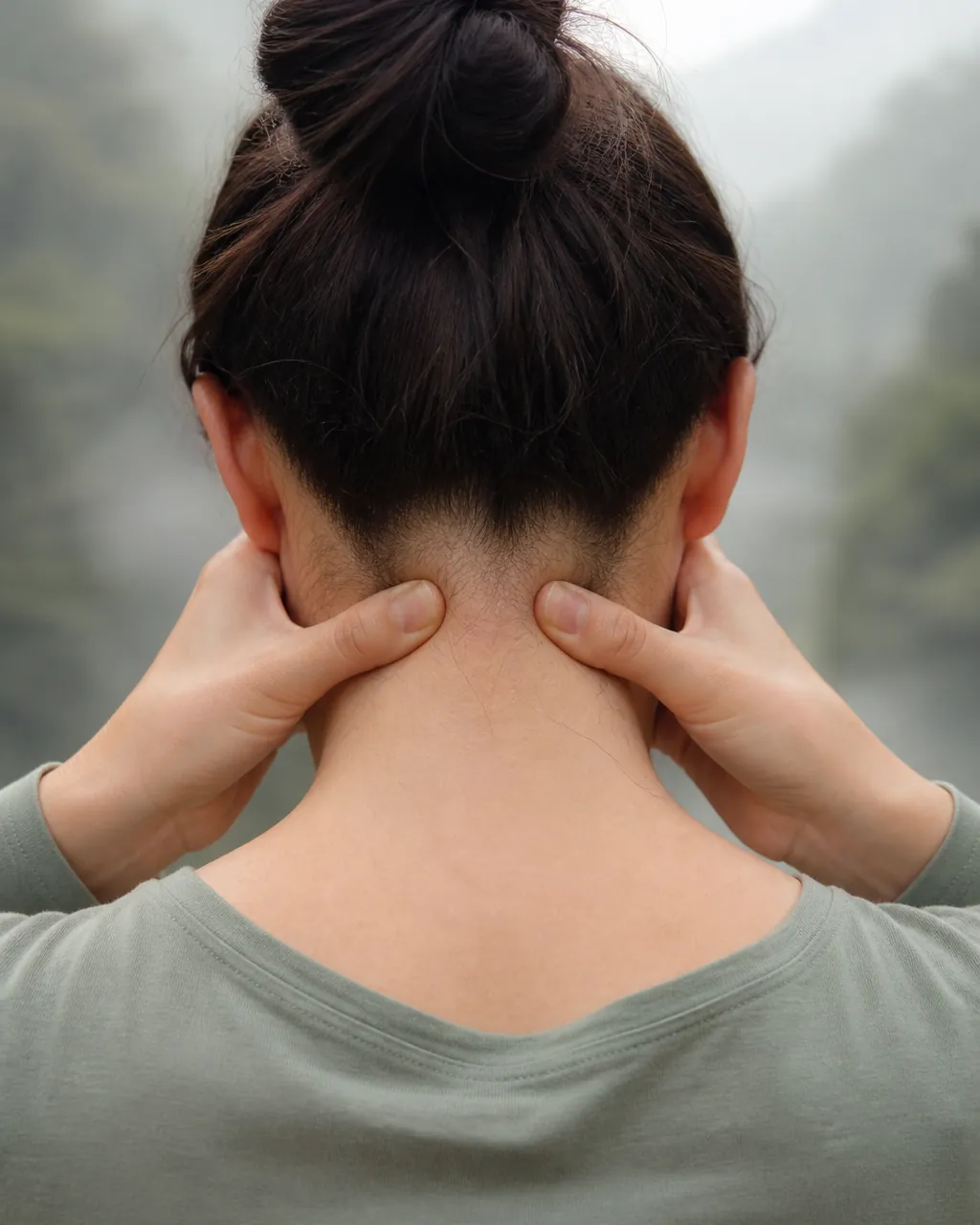
Thumbs locating Feng Chi GB20 at the base of the skull

Acupoint · nape

Press Feng Chi (GB20)

Interlock both hands and hug the base of the skull. The depressions under the thumbs are Feng Chi. Often paired with Jian Jing when the shoulder tops feel tight.

Keep the press kind. Ease off if pain sharpens.

Press Feng Chi
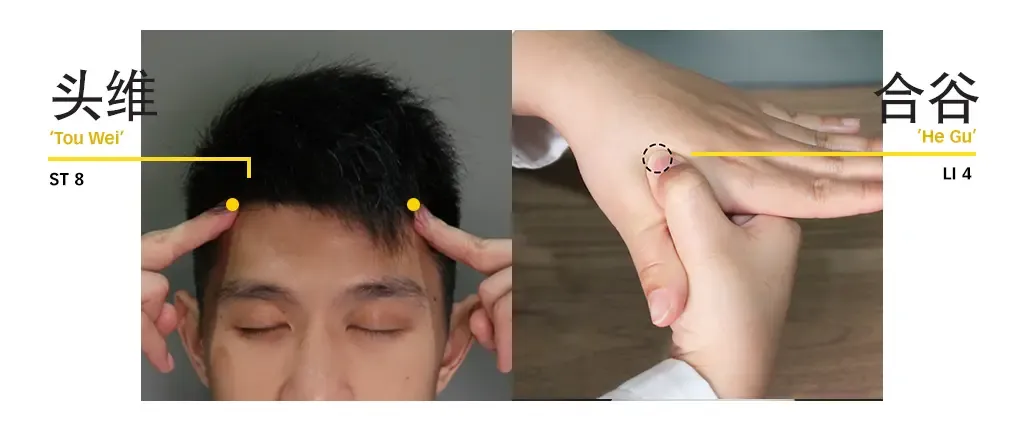
Diagram locating Tou Wei ST8 at the hairline and He Gu LI4 in the hand webbing

Forehead and hand

Tou Wei and He Gu

Tou Wei (头维, ST8) sits at the forehead corners of the hairline. He Gu (合谷, LI4) sits in the web between thumb and index finger, at the tip of the opposite thumb when it rests in the webbing.

Pregnancy

Pregnant people should avoid He Gu (LI4).

If self-help tips are not enough, book a consult. There is no one-size plan; pulse and tongue decide the constitution-matched next step.

15 · Also common

Mood changes and bowel change

Heart · Spleen

Low mood, irritability, or anxiety often track with thin sleep and Heart Qi unsettled after infection. Loose stools or bowel change often sit with Spleen Qi weakness, especially when iced drinks and irregular meals stack.

For sleep and stress patterns that sit with mood change, see the sleep points above and consider clinic care under Sleep & Stress. For lingering digestive change, open the digestive map.

Sleep & Stress programme · Common digestive issues and TCM

Dr Sim Beng Joo

Clinically reviewed

Reviewed by Sim Beng Joo

Advisor (Science & Strategy) / Consultant Physician · TCMPB T1303003A

MOH-licensed TCM physician and biomedical scientist, with clinical work in digestion, pain, sleep or fatigue, and constitution patterns that show as lingering post-viral load.

View full profile

Educational information based on clinical experience and TCM principles. Not a substitute for personalised consultation, medical care, or urgent attention. Seek urgent care for sudden chest pain, severe breathlessness, fainting, or neurological red flags. Speak with a physician before herbs, apricot kernels, new acupressure, or self-care in pregnancy or for young children. Lingering post-COVID symptoms still need a proper assessment.

FAQs

Questions, answered

Common questions before you change teas, points, or book a first visit for lingering post-COVID symptoms.

What counts as Long COVID or post-COVID condition?

According to the World Health Organization, post-COVID condition is a wide set of long-term symptoms in people with probable or confirmed COVID-19. Symptoms last at least two months, usually appear within three months of onset, and cannot be explained by another diagnosis.

How can TCM help Long COVID fatigue?

Fatigue after COVID often tracks Qi and Spleen or Kidney depletion in TCM. Home support can include Zu San Li (ST36), Qi Hai and Guan Yuan with clockwise abdominal massage, chestnuts and Chinese yam in the diet, and clinic moxibustion to warm the meridians. Patterns still need a physician read when fatigue does not settle.

What is Sheng Mai Yin (Restoring Pulse Tea) for?

Sheng Mai Yin combines Dang Shen, Mai Dong, and Wu Wei Zi. In kitchen food therapy it is used to support Qi, nourish Yin, and clear empty heat when light effort brings easy breathlessness. It is educational support, not a substitute for medical review of ongoing dyspnoea.

Which acupoints help Long COVID sleep problems?

Common educational points include An Mian behind the ear, Shen Men (HT7) on the wrist, and San Yin Jiao (SP6) above the inner ankle. Pregnant people should avoid SP6. Persistent insomnia still warrants clinical assessment.

Can I use apricot kernels for a dry post-COVID cough?

Sweet (南杏) and bitter (北杏) apricot kernels appear in snow-pear almond soup for dry or heaty cough. Bitter kernels must be cooked and stay within 10 g a day; do not eat them raw. Ask a physician before use in pregnancy or for young children.

Do I need to see a GP before TCM for Long COVID?

New or worsening chest pain, severe breathlessness, fainting, or neurological red flags need urgent Western assessment first. For lingering fatigue, fog, sleep change, or cough after a clear acute recovery, many people book TCM alongside GP follow-up. Bring any existing notes so both plans can sit together.

When should I book a TCM consult for Long COVID?

Book when self-care is not enough, symptoms stack across several systems, or you need a constitution-matched herbal or acupuncture plan. Seek urgent Western care for sudden chest pain, severe breathlessness, fainting, or neurological red flags. Persistent palpitations with light activity need medical assessment before relying on self-press alone.

References

Selected sources

  1. World Health Organization. Coronavirus disease (COVID-19): Post COVID-19 condition. https://www.who.int/news-room/questions-and-answers/item/coronavirus-disease-(covid-19)-post-covid-19-condition
  2. Centers for Disease Control and Prevention. Long COVID or Post-COVID Conditions. https://www.cdc.gov/coronavirus/2019-ncov/long-term-effects/index.html
  3. Good Housekeeping. Health benefits of chestnuts. https://www.goodhousekeeping.com/health/diet-nutrition/a25557872/chestnut-benefits/
  4. World Today News. How many chestnuts can you eat. https://www.world-today-news.com/how-many-chestnuts-can-you-eat-to-keep-your-figure-and-be-good-for-your-health/
  5. Channel NewsAsia. Mild COVID-19, brain tissue, and cognitive performance (commentary citing research). https://www.channelnewsasia.com/commentary/mild-covid-19-brain-shrink-grey-matter-research-2557671
  6. WebMD. Health benefits of grapes. https://www.webmd.com/diet/ss/slideshow-health-benefits-of-grapes
  7. Healthline. Benefits of grapes. https://www.healthline.com/nutrition/benefits-of-grapes
  8. Fruits & Veggies. How many grapes to eat each day. https://fruitsandveggies.org/expert-advice/how-many-grapes-are-you-allowed-to-eat-every-day/

Next step

Ready for a post-COVID pattern read?

Bring how long symptoms have lasted, which ones stack (fatigue, fog, sleep, cough), stairs or work limits, and any GP notes. We will name the pattern in plain language and decide what belongs in your plan.

Hours
Most clinics daily 11:00 AM – 8:00 PM
Care
Physician-led consultation